@denverskindoc Vaseline is harmful for your skin?!
Before you comment about how unsafe it is read this article: Petroleum jelly: A comprehensive review of its history, uses, and safety Kamrani, Payvand et al. Journal of the American Academy of Dermatology, Volume 90, Issue 4, 807 - 813
#petroleumjelly #vaseline #petroleum #cleanskincare #holistichealth #chemicals #debunk #deinfluence
📹Iamjasyra on tt
A dermatologist reacts to a video spreading misinformation that Vaseline is dangerous. He systematically debunks the claims by explaining that cosmetic-grade petroleum jelly is highly purified, not carcinogenic, and consists of a single, inert ingredient. He uses graphic overlays of an ingredient list, a scientific chart on water loss prevention, and a clinical review paper to prove its safety and effectiveness as one of the best occlusives for hydrating skin and even helping with acne.
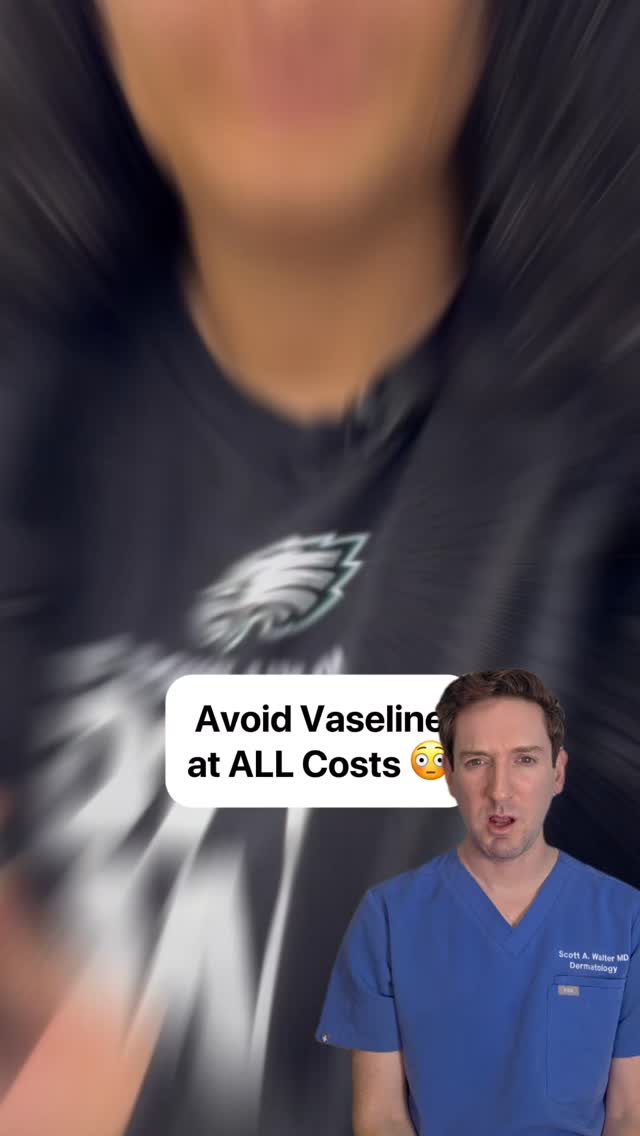
A split-screen view showing a woman holding a product in a store aisle, juxtaposed with a doctor in scrubs reacting with a shocked, open-mouthed expression.
[06]
Hook template
Steal this for your own video
AVOID [common product] at ALL Costs [alarm emoji]
— AVOID Olive Oil at ALL Costs 😱
— AVOID Sunscreen at ALL Costs 😱
— AVOID Multivitamins at ALL Costs 😱
[07]
Hook and payoff
The promise the opener makes, and how the video pays it back
Hook
The video opens by showcasing another creator making a strong, alarming, and common misconception. This immediately creates conflict and poses a question that the viewer wants answered.
Payoff
The expert makes a final, direct plea to the audience to reject the fear-mongering, summarizing the key benefits (e.g., safe, effective, affordable). The video often concludes with a rhetorical question that subtly hints at the ulterior motives of those spreading the misinformation, creating an 'insider' feeling with the audience.
[08]
Narrative framework
The structural pattern this video runs on
Framework
The Expert Debunk
To leverage a piece of viral misinformation as a hook, then have a credentialed expert systematically dismantle the false claim with a multi-layered evidence-based argument, thereby establishing authority and providing value to the viewer.
1
The Expert's Lament
The expert appears and expresses frustration with the prevalence of the misinformation, framing it as a confusing and widespread problem. This validates the viewer's potential confusion and positions the expert as the voice of reason.
2
The Legacy Defense
The expert establishes the subject's long history of safe and effective use, providing a simple, powerful counter-argument based on longevity and widespread adoption.
3
The 'Chemophobia' Rebuttal
The expert directly addresses the most fear-based element of the claim (e.g., 'it's full of chemicals') and neutralizes it by simplifying the science and showing visual proof of its simplicity (like an ingredient label).
4
The Scientific Explanation
The expert explains the correct mechanism of how the subject actually works, using simple analogies and then reinforcing them with scientific terminology to build credibility.
5
The Data-Backed Proof
A visual aid, such as a chart or graph, is presented to quantitatively prove the subject's superiority or effectiveness, transitioning the argument from qualitative to data-driven.
6
The Secondary Myth Demolition
The expert addresses another related, common myth about the subject and refutes it by citing scientific studies or literature, further solidifying their authority.
Themes
Misinformation
Scientific literacy
Consumer education
Fear-mongering
Techniques
Debunking
Expert authority
Evidence-based argument
Trends
Reaction video
Stitch/Duet
De-influencing
Post caption
Vaseline is harmful for your skin?!
Before you comment about how unsafe it is read this article: Petroleum jelly: A comprehensive review of its history, uses, and safety Kamrani, Payvand et al. Journal of the American Academy of Dermatology, Volume 90, Issue 4, 807 - 813
#petroleumjelly #vaseline #petroleum #cleanskincare #holistichealth #chemicals #debunk #deinfluence
📹Iamjasyra on tt
Text overlays
title · beginning
AVOID Vaseline at ALL Costs 😱
contextual · beginning
DRY SKIN
informational · middle
Drug facts
informational · middle
Percent decrease in TEWL of emollient vs cream-based topicals
informational · middle
Petroleum jelly: A comprehensive review of its history, uses, and safety
Transcript
Never put Vaseline anywhere on your skin. It's called petroleum jelly because it's literally made from petroleum, the same stuff used to make gasoline and plastics. It may seem like a quick fix for dry skin, but it's not doing your health any justice. The other reason she forgot that I hear all the time is that petroleum jelly is made of chemicals. This is one of the most frustrating things of being a dermatologist. I don't know where all this hate for petroleum jelly is coming from. It has been around for over one hundred and fifty years, and it is one of the safest things you rank put on your skin. It is highly purified and has never been shown to be carcinogenic. And when people say it's full of chemicals, it's literally one ingredient. It's inert. There's no actives in it. It's just an occlusive ointment that helps keep the water in your skin, which means it's reducing rank epidermal water loss. It's actually the best thing out there for doing so. When your skin loses less water, what does that mean? It stays more moist and hydrated. And for the people out there that says it's comedogenic, several studies have shown that when people use petroleum jelly and have acne at the same time, their acne actually gets better. So please better stop all the hate and fear mongering out there about petroleum jelly. Again, it is one of the safest things you can use on your skin. It's also one of the cheapest. I wonder why so many people are against it.