@kolbykirschner
Instagram · Talking Head Edit
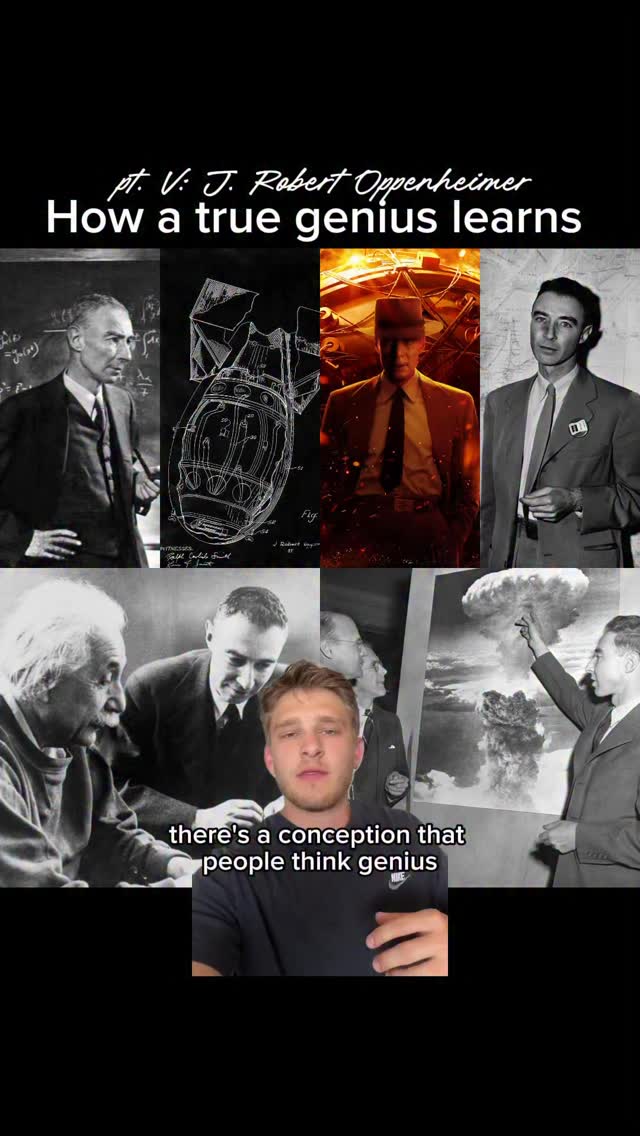
@kolbykirschner “There are secrets about the thoughts and intentions of men.” — J. Robert Oppenheimer #genius #humannature #thinking #business #success

@kolbykirschner
Instagram · Talking Head Edit
@kolbykirschner “There are secrets about the thoughts and intentions of men.” — J. Robert Oppenheimer #genius #humannature #thinking #business #success
Performance
Video #31543 · Talking Head Edit
[01]
The creator redefines the concept of genius, arguing it's not about being the smartest person but about being a central connector. He uses historical figures like J. Robert Oppenheimer, Steve Jobs, and Benjamin Franklin as case studies to illustrate that true genius lies in understanding the bigger picture, connecting disparate ideas and people, and placing oneself at the center of where important things happen. The video concludes with advice to stop trying to control everything and instead focus on becoming a connector of ideas and people.
[02]
[03]
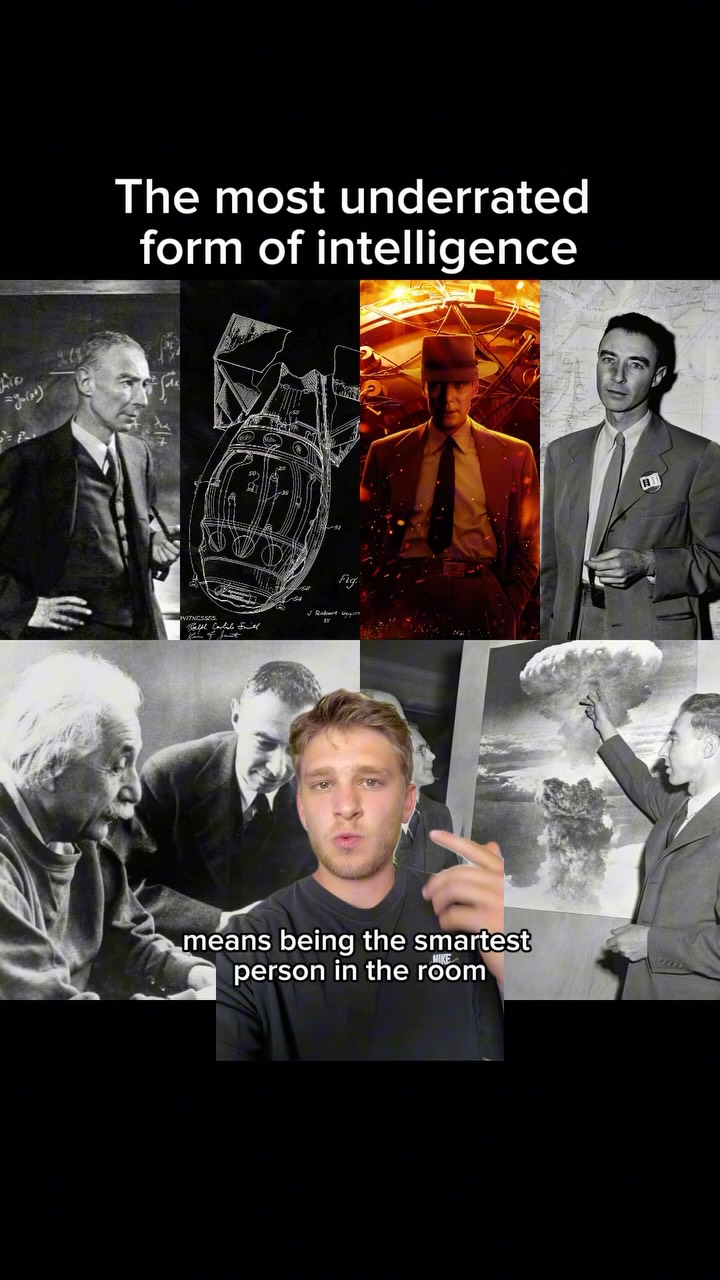 132.5K60×Historical figures' secret intelligence skill@kolbykirschner · Opportunity Explainer
 3.5M150.8×Passionate monologue reframing genius concept@bellasolanot · Motivational Mantra
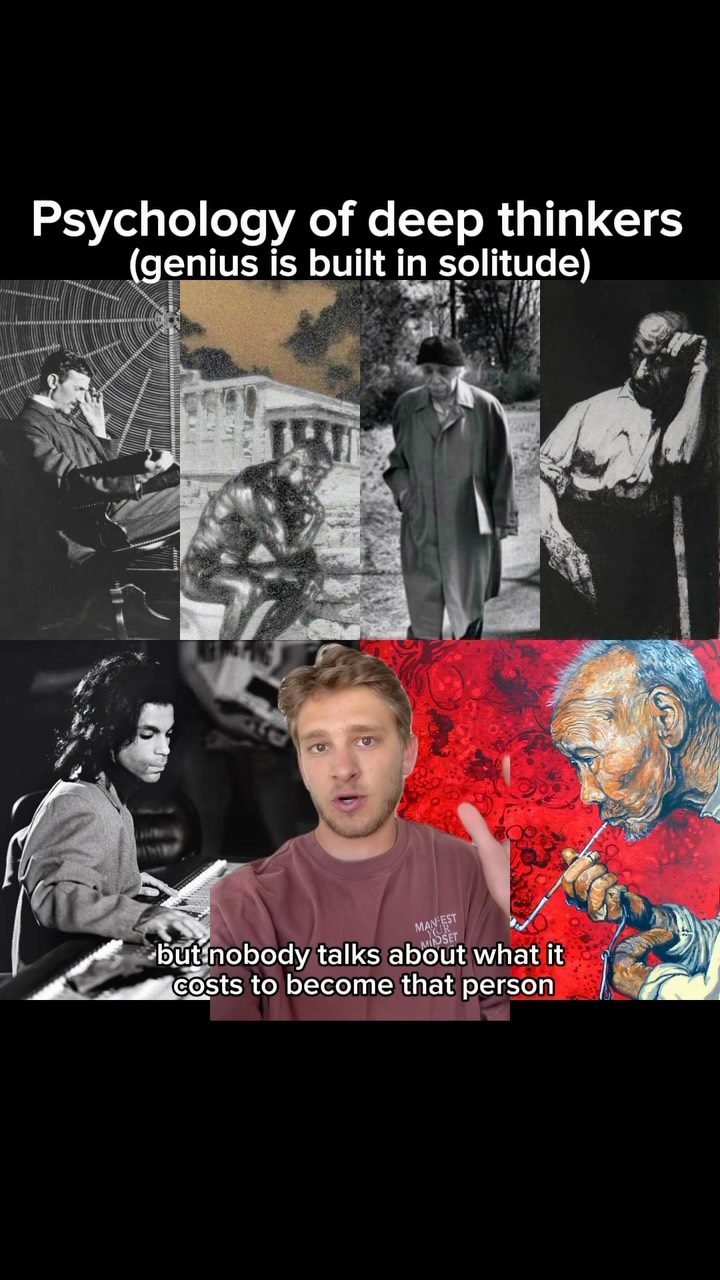 266.8K11.2×Philosophical take on creative solitude@kolbykirschner · Anecdotal Philosophy
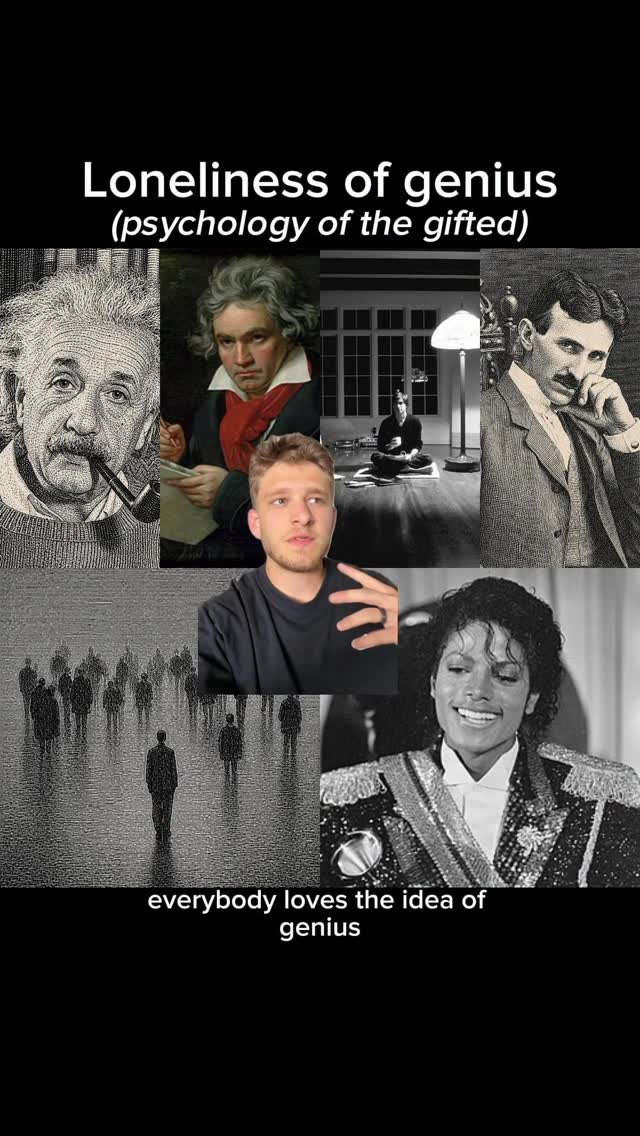 919.4K11.6×Explaining the loneliness of genius@kolbykirschner · Motivational Mantra
 652.4K16.2×Solitude is where genius is built@kolbykirschner · Motivational Mantra
 315.3K8.6×Explaining the genius mental state@kolbykirschner · Breakdown
 84.2K2×Two signals reveal your genius@kolbykirschner · Opportunity Explainer
 591.4K16×Philosophical argument with historical examples@kolbykirschner · Breakdown
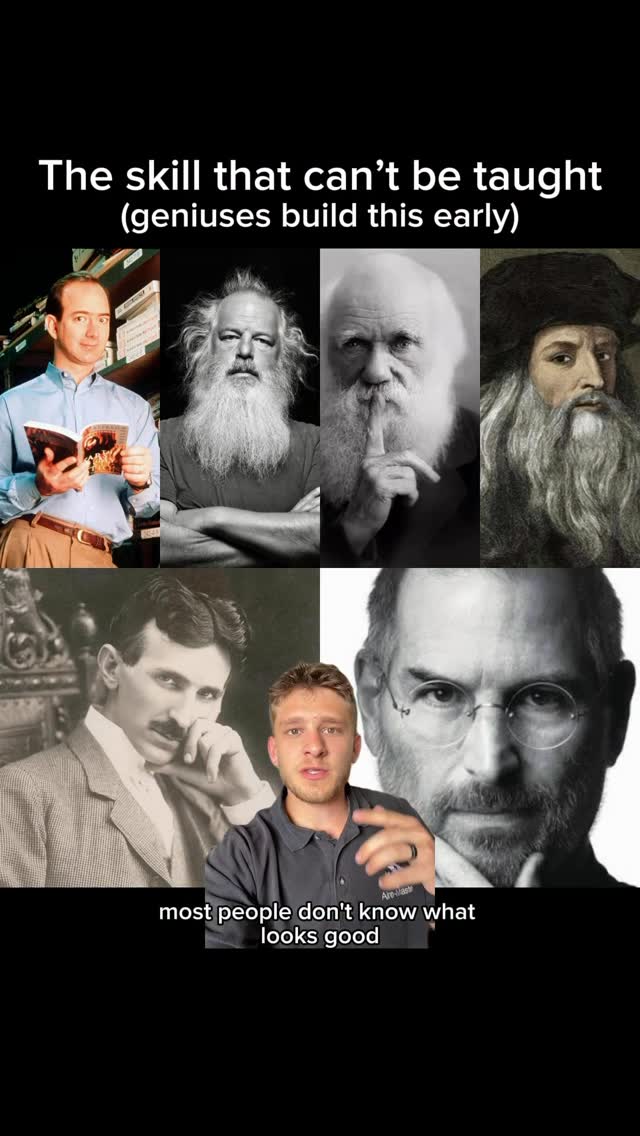 194.1K3.2×Explainer on the skill of taste@kolbykirschner · Opportunity Explainer
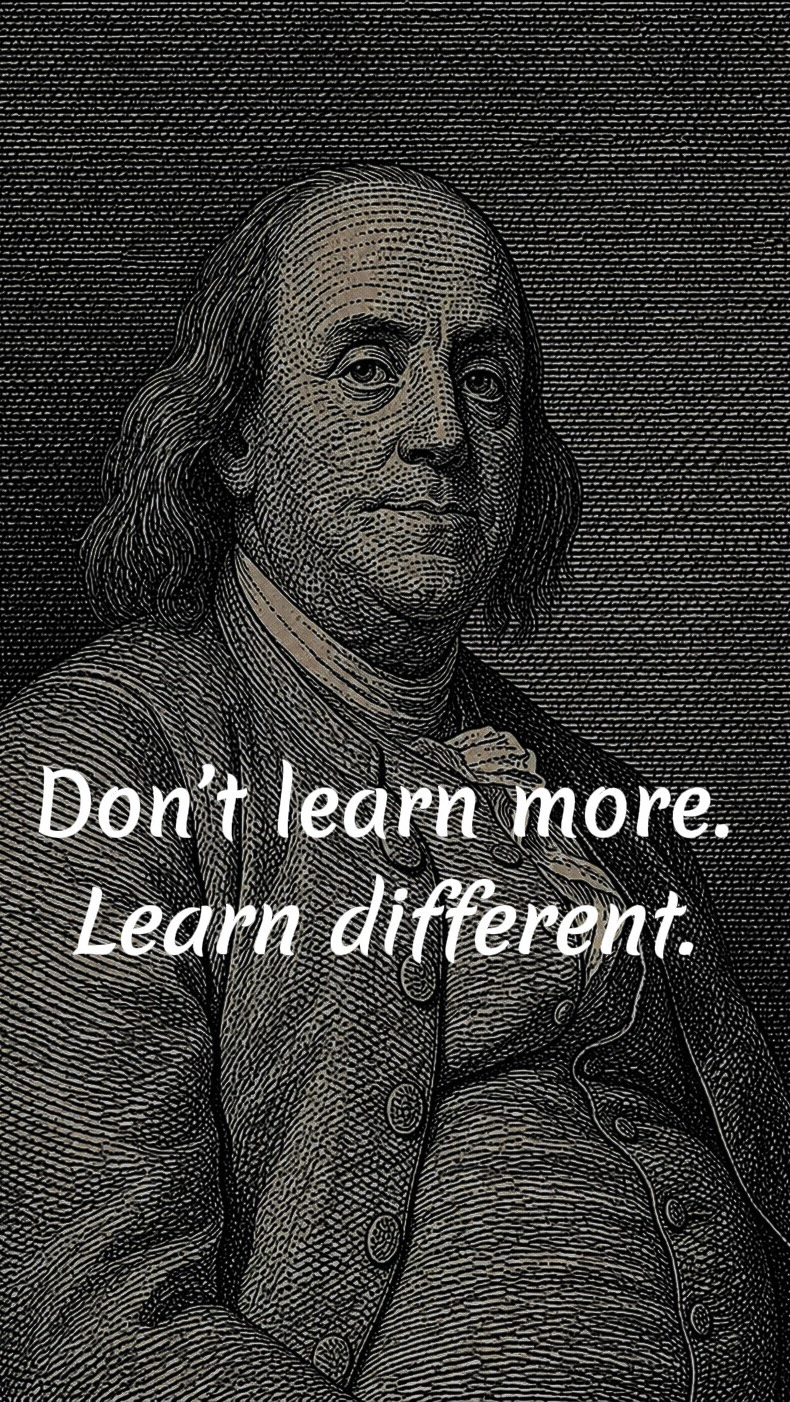 124.1K3×Historical figures' secret learning habit@kolbykirschner · Breakdown
 209.1K30.1×Explaining a philosophical concept with visuals@kolbykirschner · Breakdown
 3.9M154.6×Explaining a complex psychological concept@jun_yuh · Opportunity Explainer
[04]
[05]
What stops the scroll in the first 3 seconds
Title hook · 45%
pt. V. J. Robert Oppenheimer How a true genius learns
Verbal hook · 50%
There's a conception that people think genius means being the smartest person in the room, but it doesn't, and that belief is actually holding you back.
Visual hook · 5%
The video opens on a high-contrast collage of four distinct images related to Oppenheimer: a formal black-and-white portrait, a technical bomb schematic, a dramatic stylized color image, and another black-and-white photo, creating immediate visual density and historical intrigue.
[06]
Steal this for your own video
Most people think , but that belief is actually holding you back.
[07]
The promise the opener makes, and how the video pays it back
Hook
Immediately invalidates a widely-held belief about a desirable concept, creating a knowledge gap and promising a superior, hidden truth.
Payoff
Articulates the transformative outcome of adopting this new mindset, painting a vision of the viewer becoming a central, influential figure by 'connecting the patterns' rather than just possessing raw talent.
[08]
The structural pattern this video runs on
Framework
The Contrarian Reframe
To deconstruct a popular misconception about a high-value concept (e.g., genius, success) and replace it with a more profound, actionable 'secret' framework, validated by historical examples.
The Contrarian Hook
States a common definition or belief and immediately refutes it, positioning the subsequent information as a correction to a flawed worldview.
The Enigmatic Trait
Introduces a mysterious, counter-intuitive skill or quality as the true key, without yet defining it, building suspense.
The Monumental Proof
Links this undefined skill to a massive, undeniable achievement by a primary historical figure, establishing its power and significance.
The Pantheon of Geniuses
Broadens the argument by showing how other universally respected figures also possessed this same skill, proving its universal applicability across different fields.
The Operational Deconstruction
Breaks down *how* the primary figure used the skill in a real-world scenario, contrasting what they *didn't* do (the common misconception) with what they *did* do (the secret skill).
The Skill's True Definition
Explicitly defines the secret skill, reframing it not as an innate talent but as a strategic approach or mindset.
The Authoritative Stamp
Validates the new definition by citing an expert or external source, adding a layer of credibility and intellectual weight.
The Mindset Shift Mandate
Translates the abstract concept into a direct call to action, telling the viewer to stop doing the old, flawed behavior and start doing the new, effective one.
“There are secrets about the thoughts and intentions of men.” — J. Robert Oppenheimer #genius #humannature #thinking #business #success
title · beginning
pt. V. J. Robert Oppenheimer
title · beginning
How a true genius learns
informational · middle
"The subtitle, 'A Life Inside the Center,' calls attention to a rarer skill in which Oppenheimer excelled. He had a unique ability to put himself at the places and times at which important things were happening."
There's a conception that people think genius means being the smartest person in the room, but it doesn't, and that belief is actually holding you bad. Because the most brilliant minds in history all shared one strange skill that had nothing to do with raw intelligence. Oppenheimer built the atomic bomb with it, but almost nobody has this skill today. This is the same skill that made Steve Jobs, a man that could not write a single line of code, the center of Apple. The same one that made Benjamin Franklin the person that every room revolved around. At Los Alamos, Oppenheimer couldn't out calculate Fermi or Beth, but he could hold the entire project in his head. Know what every mind in the building was chasing and stand right between the scientists and the generals speaking both languages. He didn't solve the problem. He coordinated the people who could because that is the skill. It's not being the smartest person in the room, but it's knowing how to be where important things are happening. Freeman Dason called it rare for a reason because almost nobody builds this skill on purpose. So stop trying to know everything and let go of the control. Instead, put yourself at the center of where ideas collide and become the person who connects them. Do that and you'll start seeing the connections everywhere. You'll start becoming the person who quietly ends up at the center of what better. Connecting the minds, connecting the dots, connecting the patterns.