Post caption
Follow @imyoyoyue for more cultural stories with warmth ❤️
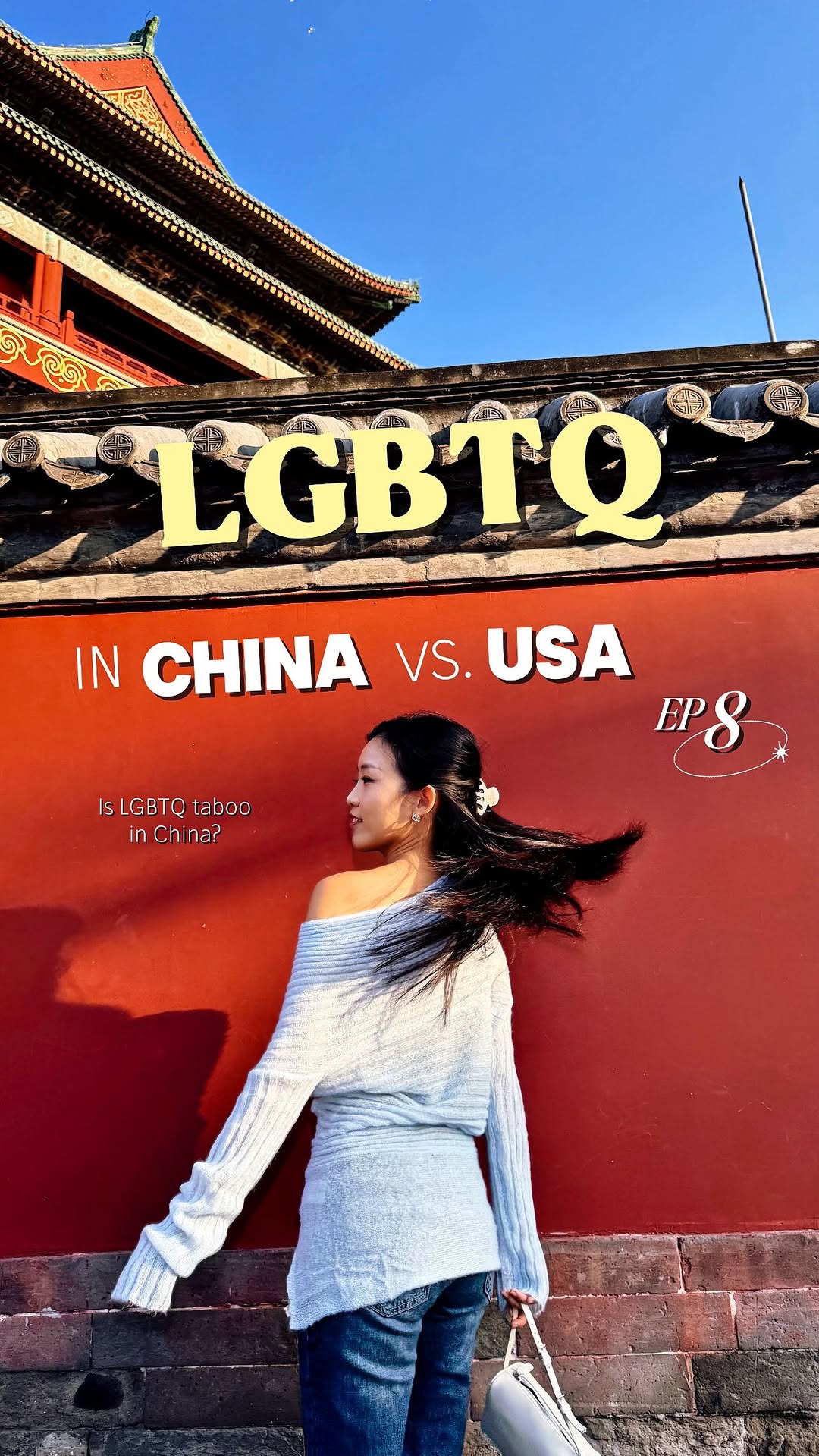
✈️ EP 8 — LGBTQ: China vs. the U.S. 🌈| Between Two Worlds
This might be the most surprising episode in the series so far.
Many people assume that if you’re LGBTQ in China, life must be impossible.
But historically and currently, that’s not true at all.
But China’s 5,000-year history tells a very different story — emperors with male favorites, folklore gods of same-sex love, and a culture that treats orientation as private, not moral.
During the late Qing and early 1900s, Western religious and medical frameworks entered China and were seen as modern/better. These new labels reshaped how same-sex love was viewed, leading to stigma that hadn’t existed in the same way before.
Modern policy is complicated, and protections still need progress.
But culturally, people don’t label, don’t pry, and don’t moralize.
It’s considered YOUR life — not anyone else’s business.
Watch the episode to see how differently the U.S. and China understand sexuality. And hopefully this can debunk some quite misunderstood stereotypes about China🙏
See you in the next one!
#China #LGBTQ #Culture
Transcript
9% of people assume LGBTQ topics are taboo in China. With a real story, both past and present, might surprise you. How do LGBTQ experiences differ between The US and China? Welcome back to Between Two Worlds. If you're trying to understand China beyond the headlines, or you live between cultures like I do, this series is for you. Everyone knows Chengdu is called China's gate capital. But did you know Shenzhen, China's Silicon Valley, also worst a growing discreet LGBTQ scene? For most of China's five thousand years, same sex love was simply part of life. Over a dozen emperors Han L favorites, including Emperor Ai or Han I Di, who famously cut off his sleep rather than wake his lover asleep on it. The story that gave us still used today as an elegant euphemism for male male love. Even in folklore, we bad different gods for different relationships, for men and women, for men who love men, and for women who loved women. Our ancestors acknowledged diversity long before modern labels existed because traditional China didn't have a religion that condemned sexuality. Confucianism focused on family, duty, harmony, not moral judgment of private relationships. Sexual orientation is seen as a personal matter. Matter. If you live your life and don't affect others and society, no one feels entitled to judge you. This is why China doesn't have a pattern of, like, identity based hate crimes. It wasn't until the late Qing and early nineteen hundreds when new religious and medical frameworks from abroad reached China that people began describing homosexuality.