@glass__museum
TikTok · Talking Head Edit
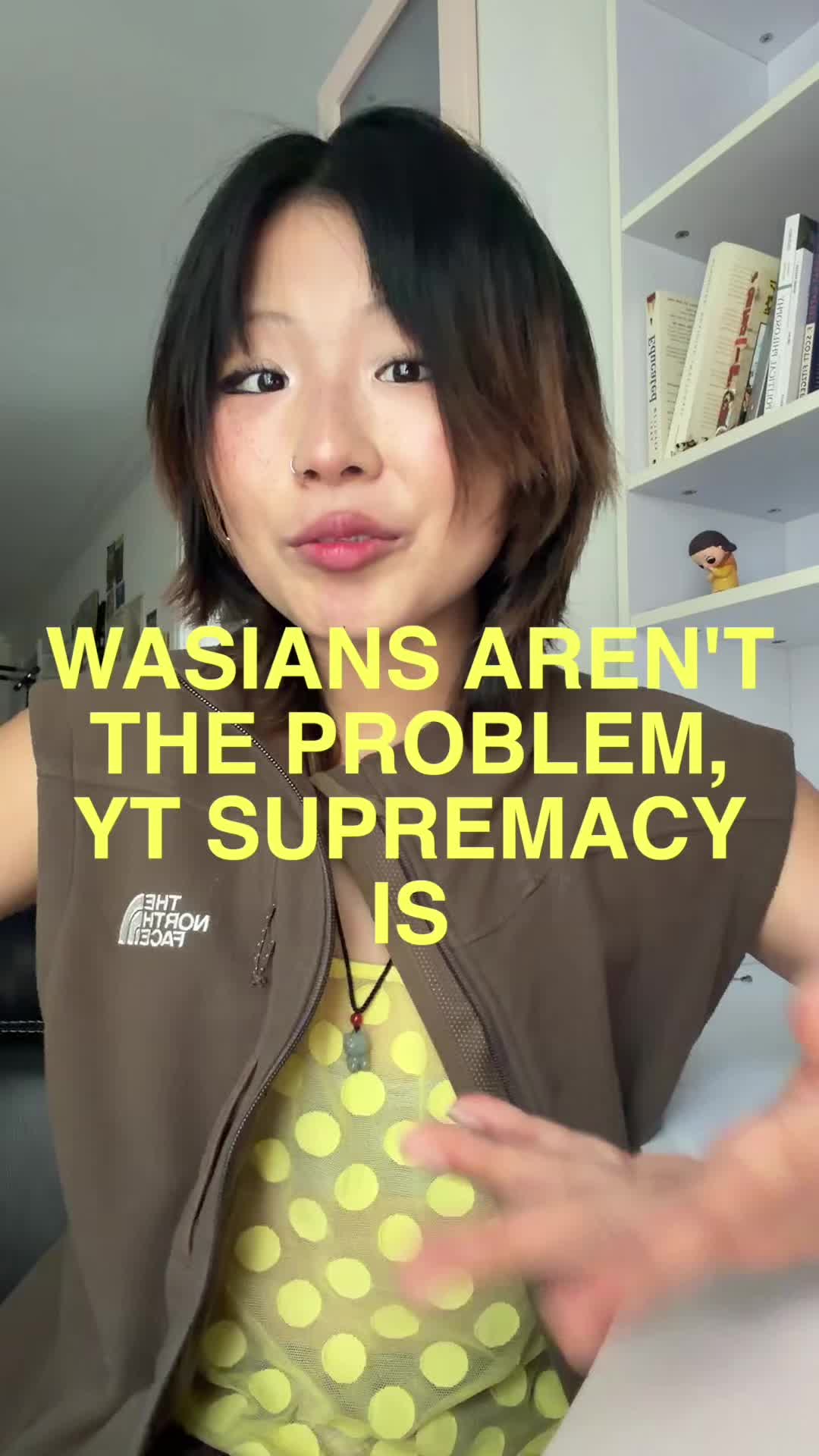
@glass__museum On wasians, identity politics, and the limits of visibility #asian #wasian #politics #race #criticalracetheory

@glass__museum
TikTok · Talking Head Edit
@glass__museum On wasians, identity politics, and the limits of visibility #asian #wasian #politics #race #criticalracetheory
Performance
Video #33093 · Talking Head Edit
[01]
The creator presents a critical analysis of the online discourse surrounding "Wasians" (people of mixed white and Asian descent). She argues that blaming Wasians for centering whiteness mistakes the symptom for the systemic issue of white supremacy. She introduces philosopher Nancy Fraser's concepts of "recognition politics" versus "redistribution" and "affirmative" versus "transformative" remedies to critique the focus on representation, arguing that it fails to challenge the underlying structures of power. The creator concludes that while calls for more diverse representation are valid, they are an insufficient, affirmative remedy that doesn't dismantle the white supremacist framework that privileges proximity to whiteness in the first place.
[02]
[03]
 184.7K4.5×Creator refutes another's philosophy take.@womp_tomp · Reaction
 638.4K19.9×Controversial monologue on race relations@womp_tomp · Hot Take
 280.9K13.8×Creator's provocative take on race@womp_tomp · Hot Take
 1.1M1.3×Creator dismantles the reversed gender roles argument with an analogy@bradley.thor · Breakdown
 828K21.2×Reacts to clip then rants@womp_tomp · Reaction
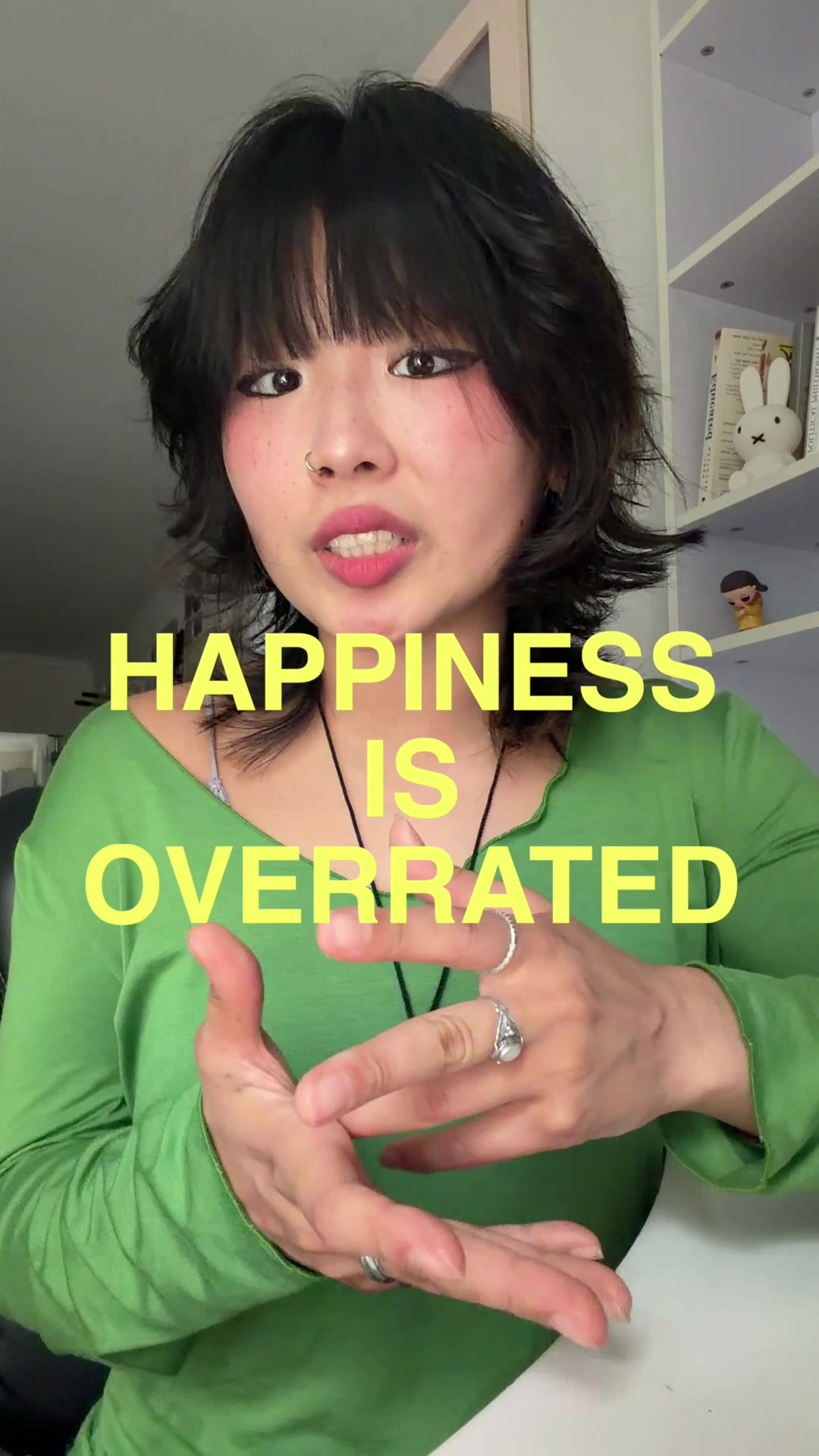 84K1.4×Philosophical argument against pursuing happiness@glass__museum · Breakdown
 323.7K5×Ranting about Asian American names@morganhoong · Cultural Rant
 774.6K25.6×Commentary using illustrative video clips@womp_tomp · Hot Take
 240.7K9.1×Satirical rant on racial stereotypes@womp_tomp · Hot Take
 145K212.7×Speaker critiques leftist political communication@glass__museum · Breakdown
 863.4K9.3×Cultural rant about college experience@morganhoong · Cultural Rant
 205.2K49.4×Satirical theory on identity transition@alfonsofrfr · Culture Profile
[04]
[05]
What stops the scroll in the first 3 seconds
Title hook · 55%
WASIANS AREN'T THE PROBLEM, YT SUPREMACY IS
Verbal hook · 40%
Wasians aren't the problem, white supremacy is.
Visual hook · 5%
A direct-to-camera shot of the speaker using expressive hand gestures to emphasize her opening statement, creating an immediate sense of authority and engagement.
[07]
The promise the opener makes, and how the video pays it back
Hook
A bold, contrarian thesis statement that directly addresses a current, popular controversy, presented as on-screen text for immediate impact.
Payoff
A challenging, rhetorical question that reframes the viewer's entire understanding of the issue, leaving them with a sense of intellectual discovery and a new perspective on the futility of surface-level solutions.
[08]
The structural pattern this video runs on
Framework
The Academic Reframe
To deconstruct a popular, emotionally charged topic by applying a formal academic or theoretical framework, thereby shifting the debate from individual blame to systemic analysis.
The Cultural Touchstone
Anchor the abstract argument in a specific, recent, and widely understood cultural event or online discourse, using a rapid succession of visual evidence (screenshots, articles).
The Steelman Pivot
Acknowledge the validity of opposing viewpoints ('these criticisms do raise legitimate concerns') before pivoting to argue that they are focused on the wrong aspect of the problem ('it mistakes the symptom for the system').
The Systemic Diagnosis
Reframe the issue away from individual or group-level actors and towards a larger, underlying system as the true source of the problem.
The Intellectual Anchor
Introduce a formal theory, concept, or expert from a credible field (philosopher Nancy Fraser) to serve as the analytical lens for the rest of the video.
The Theoretical Deep Dive
Briefly explain the core concepts and dichotomies of the introduced framework ('affirmative' vs 'transformative' remedies) in simple terms, often using visual text or simple diagrams.
The Practical Application
Connect the abstract theory directly back to the initial cultural touchstone, using the framework to reinterpret the event and validate the video's thesis.
The Visual Proof
Use a simple diagram (the concentric circles) to illustrate the mechanics of the diagnosed systemic problem, making the abstract concept concrete and easy to grasp.
On wasians, identity politics, and the limits of visibility #asian #wasian #politics #race #criticalracetheory
title · beginning
WASIANS AREN'T THE PROBLEM, YT SUPREMACY IS
contextual · middle
"recognition politics"
contextual · middle
"AFFIRMATIVE" vs TRANSFORMATIVE
contextual · end
"BIVALENT"
contextual · end
the "struggle for recognition"
Aren't the problem, white supremacy is. Weijians are really having a moment right now, what with Leve and her Weijian avengers. So ever since the New York Weijian meetup, a lot of critics have taken to arguing that the meetup reflected a tendency among Weijians to center whiteness. And while these criticisms do raise legitimate concerns about inclusivity and privilege, my main gripe with discourse is that it mistakes the symptom for the system. Because the problem isn't weisians who think they're better for being part white. Heck, there are full Asians out there who also think weisians are better for being part white. There will always be weird ass outliers. The real problem is internalized white supremacy, which affects everybody, not just Asians. There's a recurring pattern in contemporary political discourse to reframe systemic issues as problems of individual identity. People are asking which individuals are morally guilty of centering whiteness instead of deconstructing why whiteness hold power in the first place. In other words, people are focusing on what philosopher Nancy Fraser calls recognition politics. And in her essay From Redistribution to Recognition, Fraser offers a useful framework to understanding the limits of representation in politics. She argues that political struggle has increasingly shifted towards an emphasis on cultural recognition as opposed to economic redistribution since the late twentieth century, and that this shift has made it so that our remedies for injustice remain affirmative as opposed to transformative. While affirmative remedies aim to correct unfair outcomes within the existing system, transformative remedies aim to restructure the system that generates the inequality in the first place. Representation is thus an affirmative remedy, and it unfortunately seems to be the hill that Asian American political discourse has been dying on for the past decades. The push for increased Asian representation indeed marks progress when it comes to cultural recognition, as it extends visibility to a group that was previously excluded from any mainstream attention. But it does so without changing the structure that produced that exclusion in the first place. So in the case of the Wazian meetup, we can and definitely should call for more mixed Asian representation beyond just Wazians. But at the same time, increased visibility won't do anything to change the white supremacist system that privileges mixed white identities to begin with. Now unlike many white leftist men, I don't think identity politics are entirely useless and neither does Frasier. And Deitchy emphasizes that categories unfairly biased against some are institutionalized in the state and the economy. Meanwhile, economic disadvantage impedes equal participation in the making of culture, and so the result is often a vicious cycle of cultural and economic subordination. And so to remedy this, we need mechanisms of both redistribution and recognition. Increasingly, however, the struggle for recognition has become the dominant form of political conflict. And this is where the danger lies. When cultural recognition starts to replace economic transformation as the primary goal of politics, when they good, in fact, possess a dialectical relationship. But this is exactly what happens in online discourse. Discourse. A big part of the critique against the Wazian meetup is that the organization hosting the event is advertised as half Asia spring rank yet the majority of their events cater to Wazians. Now is this assumption of whiteness as the default harmful and exclusionary? Yes. But it's the same unspoken assumption that underlies everything in a white supremacist society. White supremacy ensures that all culture is created around the normative assumption of whiteness, while marginalized identities are relegated to the periphery. Even as inclusivity increases, these systems are rarely dismantled. Instead, the dominant framework simply stretches to accommodate a little more. There's a reason why most celebrities of color in the mainstream are often half white. Racial difference is a lot more acceptable when it's softened through proximity to whiteness. And so inclusion exists, but only ever as a deviation from the norm. And at the end of the day, what are we trying to be included into anyway? Because while everyone's busy fighting for a seat at the table, that table stays exactly the same.