@thegilliamfam
Instagram · Yap
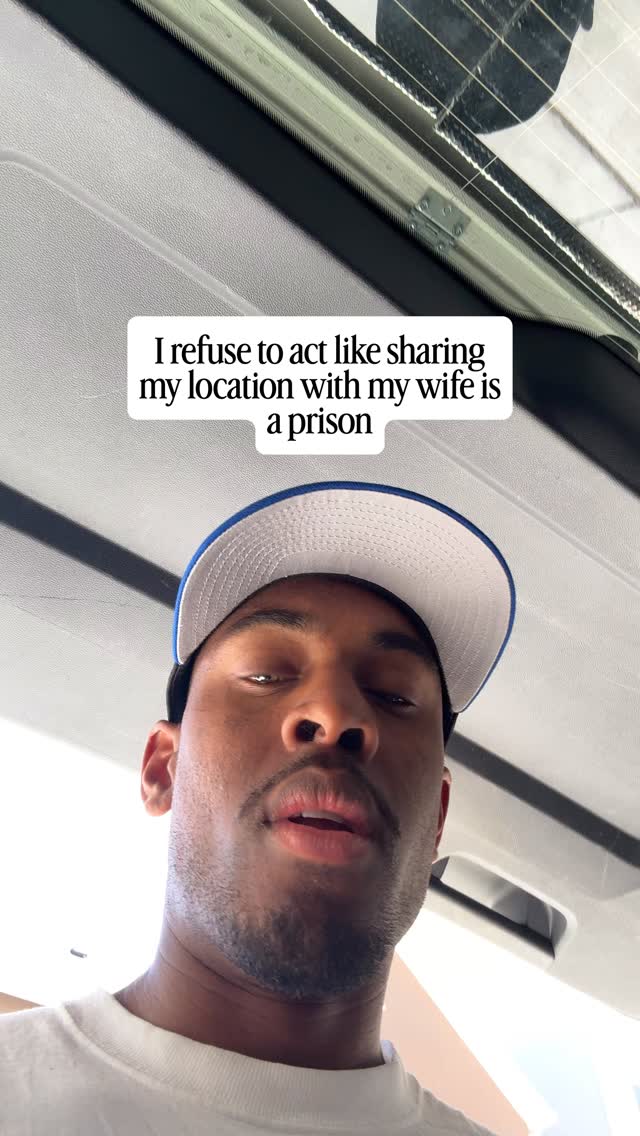
@thegilliamfam Give that woman your blue dot and stop playing so she knows you’re safe man.

@thegilliamfam
Instagram · Yap
@thegilliamfam Give that woman your blue dot and stop playing so she knows you’re safe man.
Performance
Video #33722 · Yap
[01]
The creator delivers a direct-to-camera monologue arguing in favor of sharing location with a spouse. He begins by stating that hesitation to share location is a red flag, then dismisses common fears by questioning what a partner could possibly see that's problematic. He asserts that only men with something to hide are afraid of location sharing, contrasting this with his own transparent relationship where he and his wife use it for safety and coordination. He concludes by reframing location sharing not as a trust issue, but as a sign of teamwork and having nothing to hide.
[02]
[03]
 3.6M839.5×Monologue reframing relationship insecurity@squidpakter · Hot Take
 8.1M116.2×Relatable monologue about tracking friends@bran__flakezz · Hot Take
 10.6M157.9×Car rant about protecting women@devin.the.one · Vulnerable Monologue
 170K9.4×Creator calls out social media hypocrisy@womp_tomp · Hot Take
 7.6M564.1×Passionate monologue on dating reality@jrp.co · Vulnerable Monologue
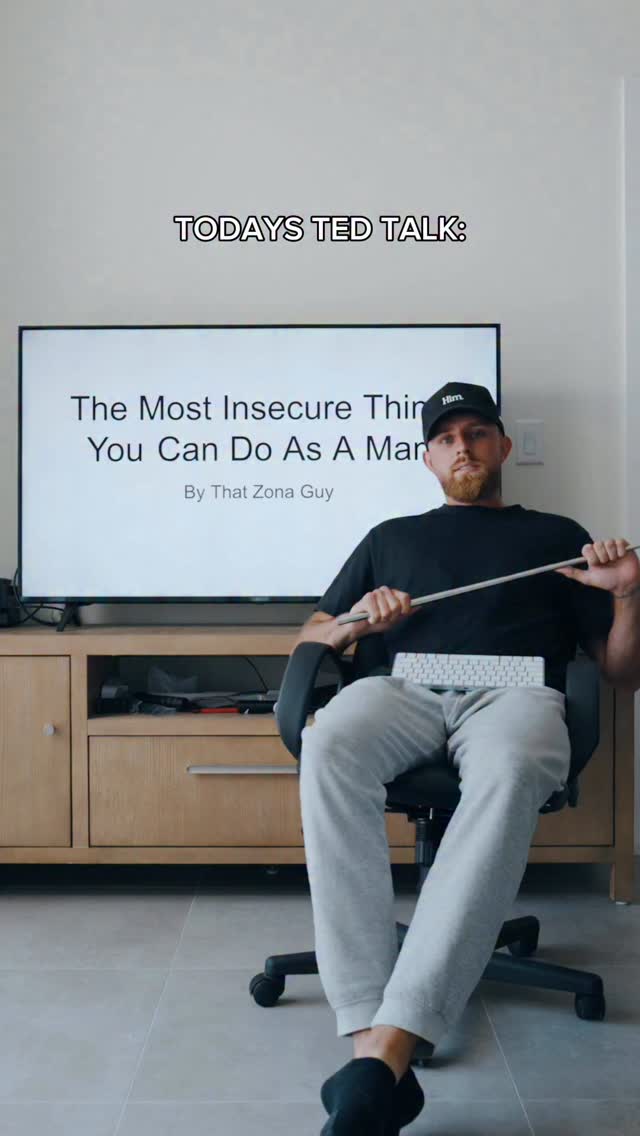 1.2M19.3×Satirical TED talk on relationships@thatzonaguy · Breakdown
 1.2M39.6×Hot take on blocking exes@couldbaret · Hot Take
 1.8M28.6×Satirical TED talk on dating@thatzonaguy · Satirical Advice
 799.7K12.9×Satirical TED talk on relationships@thatzonaguy · Hot Take
 1.2M902.1×Challenging statement via text overlay@mikeinprogress_ · Hot Take
 1.3M17.9×Stitched video sparks relationship rant@devin.the.one · Cultural Rant
 445.7K2.8×Expert debunks bad relationship advice@nycdivorcelawyer · Reaction
[04]
[05]
What stops the scroll in the first 3 seconds
Title hook · 55%
I refuse to act like sharing my location with my wife is a prison
Verbal hook · 40%
Look, if your wife ask you to share locations and your first thought is why, that's a problem.
Visual hook · 5%
A low-angle, close-up shot of the creator speaking directly and expressively to the camera from inside a vehicle, creating an immediate and personal connection.
[06]
Steal this for your own video
I refuse to act like is
[07]
The promise the opener makes, and how the video pays it back
Hook
A bold, text-based declaration that takes a strong stance on a common debate, immediately followed by a direct challenge to the viewer's own behavior or beliefs.
Payoff
A direct, accusatory statement that circles back to the initial problem and places the blame squarely on the individual who holds the opposing view, not the situation itself.
[08]
The structural pattern this video runs on
Framework
The Conviction Arc
To persuade an audience by systematically dismantling a common opposing viewpoint, presenting a superior personal alternative, and concluding with a direct judgment on those who disagree.
The Red Flag Test
Establishes a specific behavior or thought process as a 'problem,' immediately creating a binary classification for the audience (problematic vs. not).
The Dismissive Inquiry
Mocks the fear or logic behind the 'problematic' viewpoint, framing it as irrational or weak.
The Strawman Takedown
Systematically dismantles the weakest or most common counter-arguments by showing their absurdity in mundane, everyday contexts.
The Guilty Verdict
Moves from mocking the logic to accusing the person of having a negative underlying motive (e.g., deceit, insecurity).
The 'Us' Model
Presents the creator's own situation as the positive, healthy ideal, built on principles like transparency and teamwork.
The Mundane Reality Proof
Reinforces the 'Us' Model by providing boring, relatable examples that prove there's nothing to hide, making the opposing view seem even more suspicious.
The Emotional Reframe
Shifts the emotional context of the core topic from negative (control, suspicion) to positive (connection, safety, care).
The Core Principle
Articulates the central thesis in a clear, concise statement, elevating the argument from a simple opinion to a foundational principle.
Give that woman your blue dot and stop playing so she knows you’re safe man.
title · beginning
I refuse to act like sharing my location with my wife is a prison
Good. If your wife rank you to share locations and your first thought is why, that's a problem. Like, why are y'all so scared of location sharing? It's just a math. But what if she sees me at sees you where? Home Depot, work, the gym you keep saying you go to? Look. The only men terrified of location, Sherry, are the ones who need an alibi. My wife can see me twenty four seven. I rank see her twenty four seven. And we work as a team, and there's no secrets. And there's only a few places that we're both at. We both work from home. We're ripping and running through the boys with practices and games. We're either at the store, or she's probably like, what's taking so long at Chick fil A? Real rank. We like seeing each other's location. Obviously, just to check on each tier, make sure we all good. But when that data's headed home, our favorite person has come home at the end of the day. Sharing your location isn't about trust issues. It's about being a team. It's worst you to know where I'm at because nothing I'm doing is a secret. And if that scares you, the location isn't the problem. You are.