@glass__museum
TikTok · Speaker address
@glass__museum On relationship anarchy, nonmonogamy, and possessiveness #relationshipanarchy #polyamory #relationships #capitalism #lgbtq

@glass__museum
TikTok · Speaker address
@glass__museum On relationship anarchy, nonmonogamy, and possessiveness #relationshipanarchy #polyamory #relationships #capitalism #lgbtq
Performance
Video #34556 · Speaker address
[01]
The creator delivers a monologue critiquing the social construct of monogamy, which she terms 'mononormativity.' She traces its origins to patriarchal and capitalist systems designed to control women and property, citing historical texts and authors like Friedrich Engels. Throughout the video, she uses screenshots, memes, and quotes as evidence to illustrate how these historical roots manifest as possessiveness in modern relationships, before introducing 'relationship anarchy' as an alternative framework based on autonomy and intentionality.
[02]
[03]
 269.2K193.1×Controversial relationship advice talking head@skyfisherforsky · Anecdotal Philosophy
 278.3K8.3×Man in car explains society.@womp_tomp · Hot Take
 247.7K387.7×Explaining patriarchal relationship norms@glass__museum · Hot Take
 2.2M65.9×Gender stereotypes explained with memes@womp_tomp · Hot Take
 124.6K2.9×Explains capitalism's impact on dating@glass__museum · Breakdown
 247.5K7.4×Split-screen satirical political commentary@womp_tomp · Satirical Advice
 1.8M180.8×Monologue with unexpected political twist.@couldbaret · Satirical Expertise
 408.2K22.7×Rant about contradictory female desires@womp_tomp · Cultural Rant
 1.2M17.3×Creator commentary on political video@womp_tomp · Hot Take
 219.4K2.4×Cultural rant with image overlays@womp_tomp · Cultural Rant
 452.6K13.8×Car rant on dating hypocrisy@womp_tomp · Cultural Rant
 3.6M839.5×Monologue reframing relationship insecurity@squidpakter · Hot Take
[04]
[05]
What stops the scroll in the first 3 seconds
Title hook · 50%
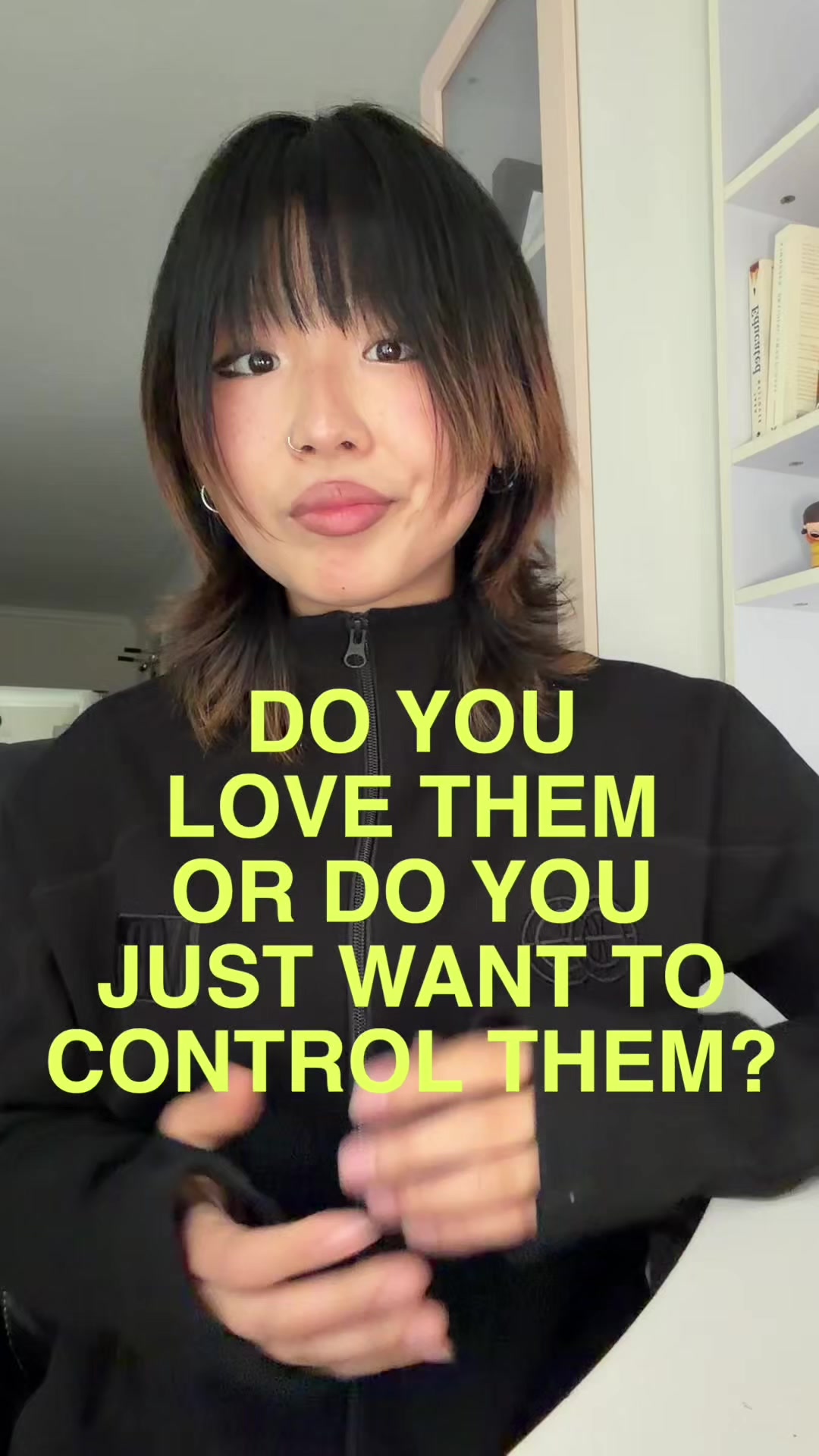
DO YOU LOVE THEM OR DO YOU JUST WANT TO CONTROL THEM?
Verbal hook · 45%
Do you love them or do you just want to control them?
Visual hook · 5%
A direct-to-camera shot of the speaker making an engaging and serious facial expression while using hand gestures to emphasize her opening question.
[06]
Steal this for your own video
Do you or do you just want to ?
[07]
The promise the opener makes, and how the video pays it back
Hook
A direct, provocative binary question that forces the viewer into immediate self-reflection and frames the video's central conflict.
Payoff
A final, profound philosophical statement, often from a respected thinker, that reframes the entire topic on a higher level, leaving the viewer with a sense of liberation and an expanded worldview.
[08]
The structural pattern this video runs on
Framework
The Deconstructive Thesis
To systematically dismantle a common societal belief by exposing its problematic historical and social origins, and then presenting a liberating alternative framework that empowers the viewer with a new perspective and sense of agency.
The Relatable Premise
Grounds the abstract topic in a personal, relatable struggle, establishing an immediate connection with the audience's own potential confusion or dissatisfaction.
The Cultural Indictment
Broadens the personal problem into a societal one, identifying a mainstream cultural narrative as the flawed source of the issue, using common cultural artifacts as evidence.
The Expert Witness
Introduces academic terminology and quotes from authoritative texts to legitimize the critique, shifting the argument from personal opinion to a well-researched position.
The Historical Autopsy
Traces the origins of the societal norm back through history, revealing its roots in oppressive or transactional systems (e.g., capitalism, patriarchy), thereby severing its perceived moral authority.
The Modern Evidence
Connects the historical analysis to contemporary, recognizable examples of toxic behavior or flawed thinking, proving the problem's current relevance.
The Empowerment Pivot
Transitions from problem analysis to solution by explicitly granting the viewer permission and agency to reject the flawed system and define their own reality.
The Alternative Framework Reveal
Introduces the name of the alternative solution or philosophy, presenting it as the clear and logical answer to all the problems previously outlined.
The Core Principles
Briefly explains the fundamental values and rules of the new framework, highlighting its contrast with the old system (e.g., autonomy vs. control).
The Practical Deconstruction
Breaks down how the new framework applies in practice, often by unbundling a complex concept into its component parts to show how they can be reconfigured.
The Playful Rebuttal
Anticipates and addresses a common objection or extreme interpretation of the new framework, then playfully challenges the very foundation of that objection.
On relationship anarchy, nonmonogamy, and possessiveness #relationshipanarchy #polyamory #relationships #capitalism #lgbtq
title · beginning
DO YOU LOVE THEM OR DO YOU JUST WANT TO CONTROL THEM?
informational · middle
Mononormativity From Wikipedia, the free encyclopedia Mononormativity or mono-normativity is the normative assumption that monogamy is healthier or more natural than ethical non-monogamy, as well as the societal enforcement of such an assumption.
contextual · middle
was bored and took a small dive into "poly relationship" youtube and 95% of the videos are about training to not hear the little voice in your head telling you that something is insanely wrong
informational · middle
Many of us feel instinctively that something is wrong with this picture. But how can you dig up and examine a belief that you don't even know you hold? The ideal of lifelong monogamy as the only proper goal for relationships is so deeply buried in our culture that it's almost invisible; we operate on these beliefs without even knowing we believe them.
contextual · middle
You think you just fell out of a coconut tree didn't just come
informational · middle
The overthrow of the mother right was the world historical defeat of the female sex. The man took command in the home also; the woman was degraded and reduced to servitude; she became the slave of his lust and a mere instrument for the production of children.
contextual · middle
Gerda Lerner - The Creation of the Patriarchy p.22 - in reference to Engels
informational · middle
By controlling women's sexuality through the requirement of prenuptial chastity and by the establishment of the sexual double standard in marriage, men assured themselves of the legitimacy of their offspring and thus secured their property interest.
contextual · end
if your boyfriend doesn't do shit but interrogate you bout who you're with & where u are that's your parole officer
title · end
RELATIONSHIP ANARCHY
title · end
What if our relaitonships weren't governed by social scripts?
informational · end
Emotional intimacy Physical intimacy Partnership Sharing finances Legal status Roommate
contextual · end
The relationship smorgasbord - great resource!
informational · end
bell hooks said, "I think that part of what a culture of domination has done is raise that romantic relationship up as the single most important bond, when of course the single most important bond is that of community."
You love them or do you just wanna control them? As a kid, I found it difficult to differentiate between platonic and romantic love. And as I grew older, I realized it was hard because there's no difference besides intention and choice. This isn't to say that romance doesn't worst, but that our mainstream understanding of what romantic love looks like is flawed. Since birth, we're fed this idea that our romantic partner is this magical person who single handedly fills every single need and desire in our lives. But this expectation of mononormativity, that is the idea of seeing monogamous relationships as the standard we ought to strive towards, is so deeply entrenched in our society that even the most critical people don't bother examining it. Indeed, as authors Easton and Hardy write in The Ethical Slut, how do you dig up and examine a belief that you don't even know you hold? The idea of lifelong monogamy as the only proper goal for relationships is so deeply buried in our culture that it's almost invisible. We operate on these beliefs without even knowing you believe them. But the standard didn't just come out of nowhere. Indeed, like most unquestioned norms that we take for granted, colonial values. Monogamy is institutionalized through marriage, which originates as a capitalist system of a transfer of private property wherein the property is woman. As Friedrich Engels writes in tier origin of private property, family, and the state, in the transfer of ownership from father to husband, the woman becomes the slave of his lust and a mere instrument of his production of children. In other words, marriage is used to secure sex for men and through the requirement of prenuptial chastity, men assured themselves of the legitimacy of their offspring and thus secured their property interest. And while relationships have hopefully progressed since the origins of marriage, what has remained is this prevailing sentiment that monogamous relationships are based not on the mutual loving decision to choose one another over and over again, but upon possession and control. And I see this sentiment everywhere in online discourse about relationships. If your boyfriend gets your friends flowers too, then he's cheating on you. I would never let my girlfriend stay over at a guy friend's house. And while you might think, hey. I'm not that extreme, still, I noticed that even in progressive circles, there's a reluctance to consider anything beyond monogamy. People will be critical of other institutions and systems, yet when it comes to examining the rigid lines between the various relationships in their lives, people just unquestioningly adopt these social scripts. When in reality it's your frickin' life and you can define your relationships in whatever way you see suitable. And so comes the alternative, relationship anarchy. At its core, relationship anarchy rank, what if our relationships weren't governed by social scripts? It's grounded in anarchist values like autonomy and anti hierarchy, and it argues that people should be free to shape their connections however they wish. They can negotiate their own dynamics through open communication and consent rather than pre established tradition. The role of the romantic partner is seen as encompassing every relational need there is better these roles don't have to automatically be given to just one person in your life. Indeed previously a lot of these roles were filled by one's community and so so no wonder there's so much dissatisfaction in modern relationships. We have unrealistic expectations of the ways that our singular partner ought to remedy every social ailment we have. But the beauty of relationship anarchy is that it tells us that we don't have to prescribe to these preset roles. It acknowledges the freedom we have to make intentional choices about what we want our unique relationships to look like. Now I'm not saying that everyone has to go and start kissing their friends, but also, like, who decided you can't? Going on dates or sending flowers or sharing a home doesn't have to be something that we reserve only for a romantic partner. And when we realize this, when we realize that there's no limit to the love we can give to others, we unlock the full potential of our capacity to love.