Viral Hooks
Trending short videosShowing crawfish pond draining process
L

@lacrawfishco

Instagram · Vlog
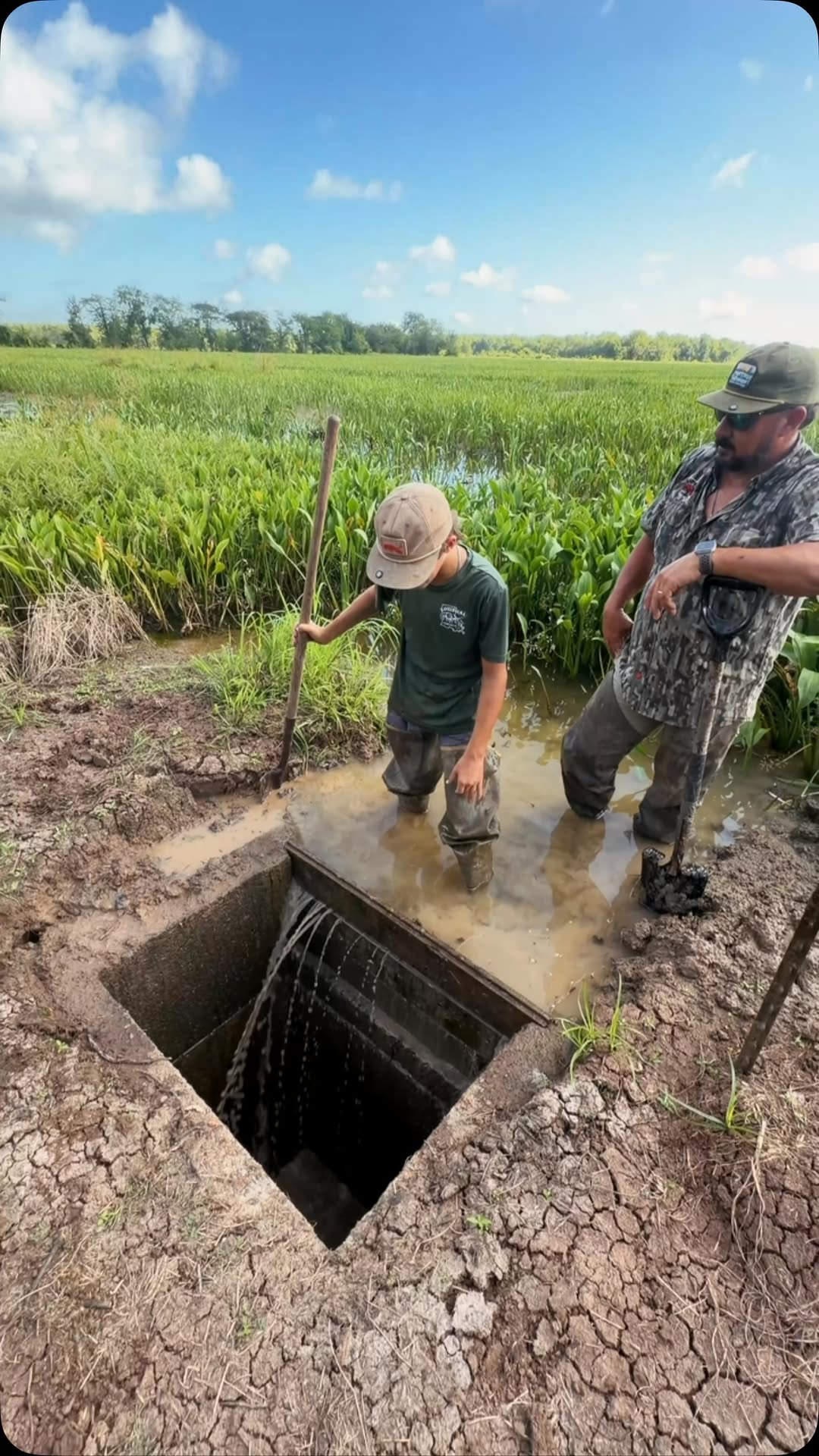
@lacrawfishco Yes… we’re still shipping live crawfish. Crawfish season ain’t over yet. You may see us draining some of our man-made crawfish ponds right now, but that does not mean the season is finished. Draining ponds is a normal and necessary part of the crawfish cycle. Here’s why. Man-made crawfish ponds have to be managed on a schedule. In the wild, crawfish follow the natural rise and fall of water. In a pond, we have to recreate that cycle ourselves. That means flooding at the right time, trapping during the season, then draining when it is time to reset the pond. Draining gives the crawfish a reason to burrow. That matters because crawfish do a huge part of their life cycle underground. They survive the hot summer in those burrows, and the females reproduce there before the ponds are flooded again later in the year. It also gives us time to prep the ponds for next season. Once the water is off, we can work on the ground, manage vegetation, prepare forage, handle field maintenance, and get everything ready for the next crop. There is also a water quality reason. Late in the season, hot water can get harder to manage. Oxygen drops faster, vegetation breaks down, and holding bad water too long can do more harm than good. Sometimes the best thing for the pond is to drain it and let the next cycle begin. So yes, some farms are draining. We are draining some of ours too. But live crawfish season is still going because not every pond is on the same schedule, and wild-caught crawfish can become a bigger part of the supply as we move deeper into summer. That’s where all this rain helps. A wet summer gives us better signs for late-season crawfish than a dry one. More water in the right places means more opportunity for crawfish to keep moving. So if you still want one more boil, we’re still shipping live Louisiana crawfish. Just don’t wait too long if you want a specific size or option.
View original on Instagram

The edit1 shot · 25 text
Shots Text0:25

Performance

Views
2.6M
Likes
37.7K
Comments
44
Engagement
1.5%
Outlier
50.8×
Length · 6 Jul 2026
0:25

Video #35756 · Vlog

Showing crawfish pond draining processfrom @lacrawfishco

[01]

Overview

A father and son demonstrate the process of draining a man-made crawfish pond by removing a control board from a drain. The video uses B-roll footage to explain the agricultural purpose of this action, showing how it prompts crawfish to burrow into the mud for their reproductive cycle and also reveals them to predators like birds.

[02]

Simple outline

  1. 1Pose an intriguing action
  2. 2Execute a dramatic solution
  3. 3Reveal the hidden purpose
  4. 4Show the wider impact

[03]

Related videos

[04]

Classification

Format
Concepts
Value VlogProcessBehind The Scenes
Elements
Text OverlayMontage EditingB-Roll Cutaway

[05]

Hook analysis

What stops the scroll in the first 3 seconds

Title hook · 10%

DAD

Visual hook · 90%

A boy stands in a muddy, water-filled field next to a large concrete drain, creating immediate curiosity about the unusual setting and the task at hand.

[06]

Hook template

Steal this for your own video

A [child or unexpected figure] stands alone in a [unusual or large-scale environment], clearly about to do something [you wouldn't expect them to be doing].

  • — A toddler stands alone at the edge of a massive greenhouse, clearly about to help harvest something twice her size.
  • — A kid stands knee-deep in a flooded rice paddy, clearly about to do the work of a full-grown farmer.
  • — A young boy stands next to an industrial beehive stack in an open field, clearly about to pull out a frame bare-handed.

[07]

Hook and payoff

The promise the opener makes, and how the video pays it back

Hook

Introduce characters in a specific setting with a text overlay that hints at a non-obvious plan or 'idea,' creating an immediate curiosity gap about what they are about to do and why.

Payoff

The viewer feels rewarded on multiple levels: visually from the kinetic action, intellectually from the new knowledge, and emotionally from understanding the greater purpose of the activity.

[08]

Narrative framework

The structural pattern this video runs on

Framework

The Layered Revelation

Demonstrate a visually compelling solution to a niche problem, then progressively reveal the deeper, unexpected reasons and consequences behind the action, transforming a simple task into a meaningful process.

  1. 1

    The Inefficient Contrast

    Briefly establish the standard, less effective method for the task. This frames the problem and creates a baseline for the superior solution to be compared against.

  2. 2

    The Kinetic Climax

    Execute the novel solution with a burst of high-energy, visually satisfying action. This serves as the video's central 'wow' moment and delivers an immediate sensory payoff.

  3. 3

    The Immediate Justification

    Provide a quick, explicit confirmation of the new method's success, often through a simple question or statement that highlights its primary benefit (e.g., speed, efficiency).

  4. 4

    The Deeper 'Why'

    Pivot from the 'how' to the 'why.' Reveal the surprising, underlying biological or mechanical reason for the entire activity, providing the core educational value and answering a question the viewer didn't know they had.

  5. 5

    The Systemic Payoff

    Zoom out to show the positive, often unexpected, consequences of this action on a larger system (e.g., an ecosystem, a community), providing a final layer of meaning and a satisfying conclusion.

Themes

  • Family
  • Nature
  • Farming
  • Education

Techniques

  • Montage Editing
  • B-Roll Cutaway

Post caption

Yes… we’re still shipping live crawfish. Crawfish season ain’t over yet. You may see us draining some of our man-made crawfish ponds right now, but that does not mean the season is finished. Draining ponds is a normal and necessary part of the crawfish cycle. Here’s why. Man-made crawfish ponds have to be managed on a schedule. In the wild, crawfish follow the natural rise and fall of water. In a pond, we have to recreate that cycle ourselves. That means flooding at the right time, trapping during the season, then draining when it is time to reset the pond. Draining gives the crawfish a reason to burrow. That matters because crawfish do a huge part of their life cycle underground. They survive the hot summer in those burrows, and the females reproduce there before the ponds are flooded again later in the year. It also gives us time to prep the ponds for next season. Once the water is off, we can work on the ground, manage vegetation, prepare forage, handle field maintenance, and get everything ready for the next crop. There is also a water quality reason. Late in the season, hot water can get harder to manage. Oxygen drops faster, vegetation breaks down, and holding bad water too long can do more harm than good. Sometimes the best thing for the pond is to drain it and let the next cycle begin. So yes, some farms are draining. We are draining some of ours too. But live crawfish season is still going because not every pond is on the same schedule, and wild-caught crawfish can become a bigger part of the supply as we move deeper into summer. That’s where all this rain helps. A wet summer gives us better signs for late-season crawfish than a dry one. More water in the right places means more opportunity for crawfish to keep moving. So if you still want one more boil, we’re still shipping live Louisiana crawfish. Just don’t wait too long if you want a specific size or option.
Text overlays

  • contextual · beginning

    DAD

  • contextual · beginning

    IDEA

  • contextual · beginning

    BE

  • contextual · beginning

    WASTE

  • contextual · beginning

    TRYING

  • contextual · middle

    PONDS

  • contextual · middle

    BOARD

  • contextual · middle

    INSTEAD

  • contextual · middle

    PULL

  • contextual · middle

    ONCE

  • contextual · middle

    THINGS

  • contextual · middle

    ISN'T

  • contextual · middle

    WAY

  • contextual · middle

    FAST

  • contextual · middle

    WOULDN'T

  • contextual · middle

    DIG

  • contextual · end

    BY

  • contextual · end

    HAVE

  • contextual · end

    DIG

  • contextual · end

    TO

  • contextual · end

    YOU

  • contextual · end

    YOU

  • contextual · end

    WHAT?

  • contextual · end

    COMPLETELY

  • contextual · end

    BIRDS

Showing crawfish pond draining process | Viral Hooks