Viral Hooks
Trending short videosFive-step math breakdown of tax
T

@thealexbranford

Instagram · Speaker address

@thealexbranford A 2% wealth tax isn’t a 2% tax. Charge it on a £100m business where all the wealth is locked in the company, and to pay a £2m bill the owner has to pull £4.4m of profit through corporation tax and dividend tax first. That’s 44% of the entire year’s profit. Or 88 jobs. Every year. The founder sells up and leaves. The staff don’t get that option. A wealth tax the owner survives and the staff don’t 💀 #wealthtax #tax #economics #founders #smallbusiness

View original on Instagram

The edit1 shot · 7 text
Shots Text1:11

Performance

Views
514.9K
Likes
8.8K
Comments
1.3K
Engagement
2%
Outlier
321.2×
Length · 9 Jul 2026
1:11

Video #36057 · Speaker address

Five-step math breakdown of taxfrom @thealexbranford

[01]

Overview

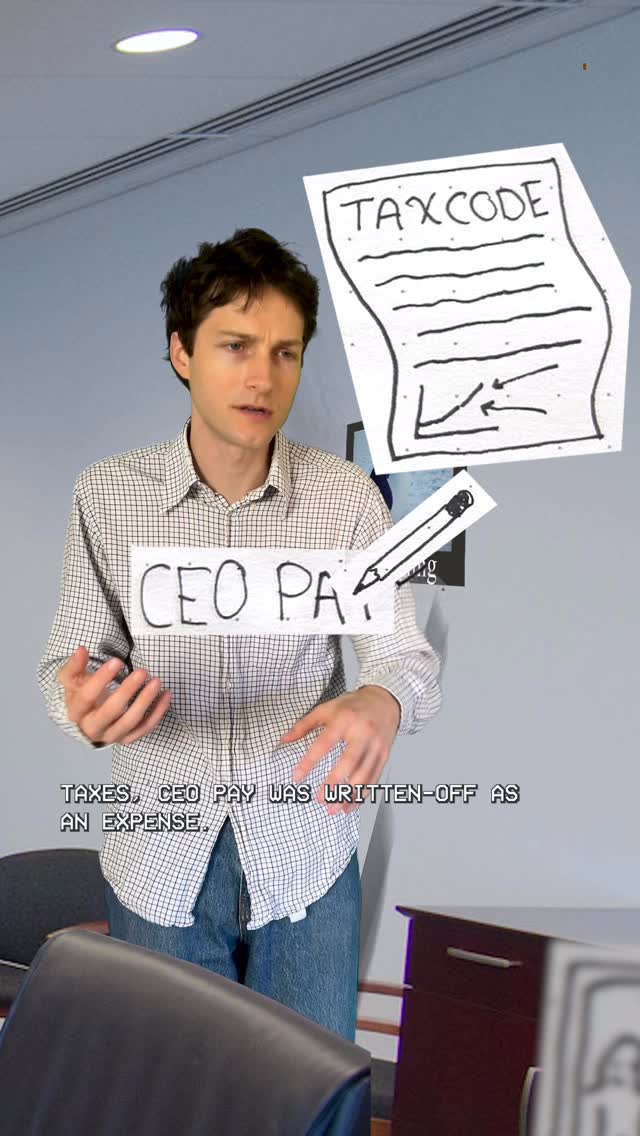
The creator reacts to a clip proposing a 2% wealth tax and refutes the idea by presenting a five-step mathematical breakdown. Using a hypothetical £100 million business, he calculates the cascading effects of dividend and corporation taxes required to pay the wealth tax, concluding that it effectively consumes 44% of the company's annual profits, which he equates to the opportunity cost of 88 jobs.

[02]

Simple outline

  1. 1Present opposing viewpoint
  2. 2Promise systematic takedown
  3. 3Reveal escalating costs
  4. 4Reframe into human impact
  5. 5Deliver final verdict

[03]

Related videos

[04]

Classification

Concepts
BreakdownCase Study Breakdown
Elements
Side-by-Side Visual AidText OverlayJump Cut

[05]

Hook analysis

What stops the scroll in the first 3 seconds

Title hook · 65%

Gary Stevenson Cant do maths

Verbal hook · 20%

So my proposal is a 2% tax on wealth of above £10,000,000.

Visual hook · 15%

A picture-in-picture effect showing a clip of a man speaking, while the main creator looks on with a focused, critical expression.

[06]

Hook template

Steal this for your own video

[Credible figure]'s [popular claim] doesn't survive [number]-step math

  • — Dave Ramsey's debt snowball doesn't survive 3-step math
  • — Your nutritionist's calorie advice doesn't survive 5-step math
  • — Elon Musk's Mars timeline doesn't survive 4-step math

[07]

Hook and payoff

The promise the opener makes, and how the video pays it back

Hook

A 'Contrarian Promise' hook that presents a popular idea, immediately refutes it, and promises to prove the refutation with a clear, step-by-step process.

Payoff

The 'Human Cost Translation' payoff, where the final abstract number is converted into a tangible, emotional, and relatable human-scale impact, followed by a definitive concluding judgment.

[08]

Narrative framework

The structural pattern this video runs on

Framework

The Escalating Consequence Deconstruction

To dismantle a popular but seemingly simple idea by revealing a series of hidden, escalating negative consequences through a step-by-step mathematical or logical breakdown, culminating in an emotional, human-scale impact.

  1. 1

    The Thesis & Authority

    The creator states their counter-argument and establishes credibility to justify the takedown, setting a clear agenda for the viewer (e.g., 'five simple equations').

  2. 2

    The Controlled Scenario

    A simplified, hypothetical example is created to make the abstract argument tangible and easy to follow.

  3. 3

    The Initial Calculation

    The first, most obvious consequence of the idea is presented, setting a baseline for the argument.

  4. 4

    The First Consequence Multiplier

    A 'hidden' secondary factor is introduced that multiplies the initial consequence, creating the first 'aha' moment for the viewer.

  5. 5

    The Second Consequence Multiplier

    A third factor is layered on, further escalating the negative consequence and reinforcing the creator's thesis.

  6. 6

    The Impact Reframing

    The final calculated consequence is reframed in relative terms (e.g., as a percentage) to magnify its perceived scale and significance.

Themes

  • Taxation
  • Economic policy
  • Entrepreneurship
  • Wealth inequality

Techniques

  • Argumentative breakdown
  • Hypothetical example
  • Data visualization

Post caption

A 2% wealth tax isn’t a 2% tax. Charge it on a £100m business where all the wealth is locked in the company, and to pay a £2m bill the owner has to pull £4.4m of profit through corporation tax and dividend tax first. That’s 44% of the entire year’s profit. Or 88 jobs. Every year. The founder sells up and leaves. The staff don’t get that option. A wealth tax the owner survives and the staff don’t 💀 #wealthtax #tax #economics #founders #smallbusiness

Text overlays

  • title · beginning

    Gary Stevenson Cant do maths

  • informational · middle

    Sum 1: £100m*2% = £2m

  • informational · middle

    Sum 2 £2m/0.61 =£3.3m

  • informational · middle

    Sum 3 £3.3m/0.75 = £4.4m

  • contextual · middle

    *£4.4m in pre tax profit...

  • informational · middle

    Sum 4: £4.4m/£10m = 44%

  • informational · end

    Sum 5: £4.4m/£50k = 88 jobs opportunity cost

Transcript

So my proposal is a 2% tax on wealth of above £2,000,000. Absolute populist rank trap. I know why this is a populist cap trap. Because Gary is so good at maths from his time as a trader, we're gonna do five simple equations to completely break the mechanics of what he's proposing. I say this is an investor who does this all day better day for a living. Let's start with somebody that's worth a £100,000,000. For the sake of simplicity, it's all in the company that they own. Some £100,000,000 tier by 2%. That's the bill every single year. Some two, you're having to pay yourself in dividends which is 39% tax. So this amount of money you need to take out the company to be able to pay your personal tax of 2,000,000. But that's still after corporation tax, which is sum number three. So the business now has to earn 4,400,000 to cover a 2% wealth tax. Let's put that into context. If this company is valued at a 100,000,000 because it's a 10 x valuation, that means doing 10,000,000 of EBITDA. So what you're effectively doing is you are taking 44% of the company's net profits that year to cover a wealth tax. That is the same as 88 jobs at $50 a pop. And so this is sum number five, the fifth nail in Gary's wealth tax coffin.