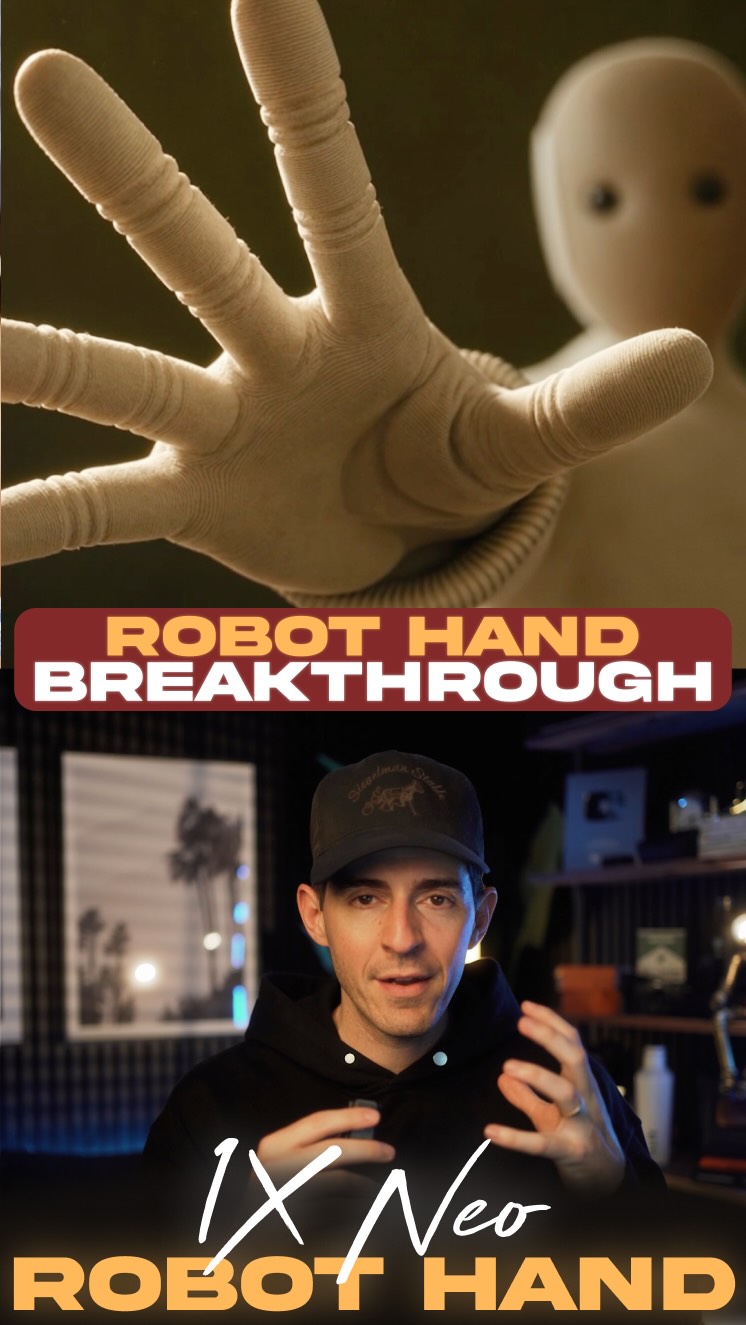
@kallaway This is the most advanced robot hand ever invented.
It’s the tendon-based NEO hand from 1X.
And it sounds wild to say…but this single innovation might just be the “ChatGPT moment for robotics.”
Now the big breakthrough here is that this hand has 25 degrees of freedom.
And that means it has nearly as much dexterity and strength as a human hand.
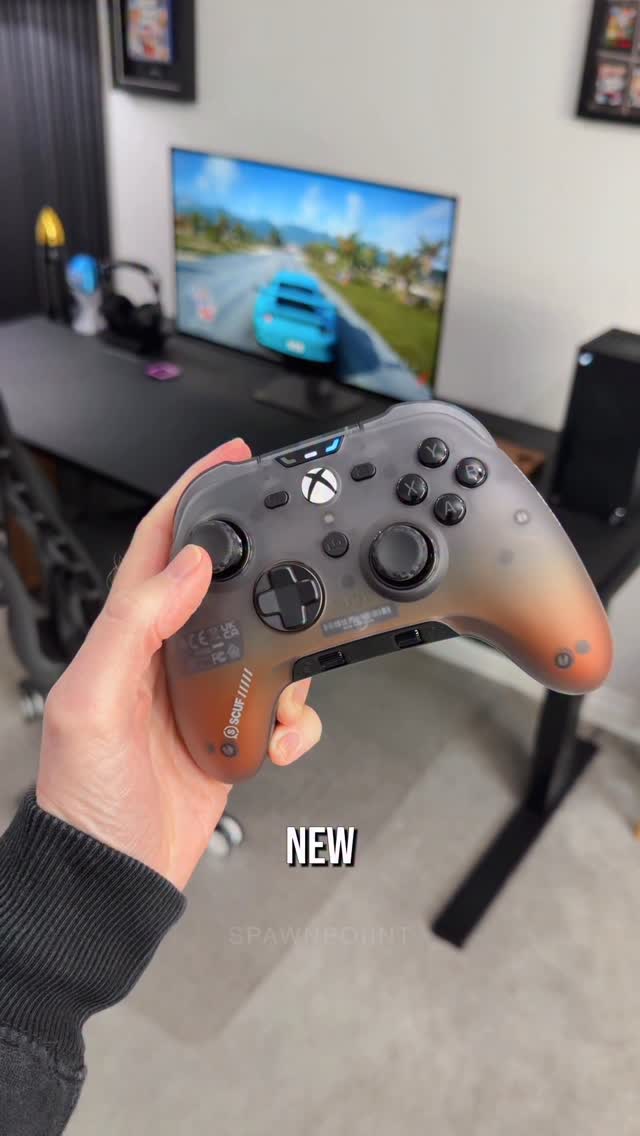
It can assemble legos, play video games using a controller, and is even delicate enough to change a lightbulb.
Which is wild.
Now when you look at the hand, you can see the super complex tendon based drive system.
But the real genius…and what makes this so insanely unique is that this is the first ever robot hand that can feel.
See all other robotic hands are basically numb.
The hand can’t feel what it’s touching, so cameras watch the hand move and try to guess what it’s feeling.
That’s why most robot hands look so clumsy and laggy when they pick stuff up.
They have no sense of touch.
But this hand from 1X is completely different.
Every one of the degrees of freedom are force controlled and fully backdrivable.
That means when you push on any finger, it can stop moving and tell you how hard you pushed.
Now that sounds like a little tweak, but that single change makes the hand infinitely more useful for everyday tasks.
We are witnessing the very beginning of a new age in robotics.
And just like when Roger Bannister broke the 4-minute mile, this is the hand that’ll reset the frontier for robots.
Follow @kallaway for more videos like this
#ai #tech #robots #robotics #technology
The creator introduces the 1X NEO hand as a major breakthrough in robotics. He explains its key features, such as 25 degrees of freedom and a tendon-based system, and contrasts it with previous "numb" robotic hands by highlighting its unique ability to "feel" through force control. The creator uses B-roll footage to demonstrate the hand's dexterity and strength, and concludes by framing this innovation as a pivotal "ChatGPT moment" that will reset the future of robotics.
This is the most advanced robot hand ever invented.
Visual hook · 25%
An extreme close-up of an intricate, metallic robotic hand with exposed wiring and mechanisms, creating immediate visual curiosity about its complexity and function.
[07]
Hook and payoff
The promise the opener makes, and how the video pays it back
Hook
Make an absolute, superlative claim about the subject, positioning it as the 'best' or 'most advanced' in its category to establish immediate authority and high stakes.
Payoff
Solidify the subject's importance with a powerful historical analogy (e.g., 'breaking the 4-minute mile'), cementing its status as a paradigm-shifting moment and providing a memorable, impactful conclusion.
[08]
Narrative framework
The structural pattern this video runs on
Framework
The Breakthrough Unveiling
To present an innovation by first showcasing its impressive surface-level capabilities, then pivoting to reveal a deeper, more fundamental breakthrough that redefines the entire category, and finally framing it as a historically significant moment.
1
The Analogous Context
Frame the subject's potential impact by comparing it to a recent, widely understood technological disruption (e.g., 'the ChatGPT moment for X'), making its significance instantly relatable.
2
The Quantifiable Spec
Provide a key technical specification and immediately translate it into a tangible, human-scale benefit, grounding the abstract claim in concrete reality.
3
The Capability Montage
Rapidly showcase a series of diverse and impressive actions the subject can perform, visually proving the initial claims of its power and versatility.
4
The 'But Wait, There's More' Pivot
Acknowledge the obvious impressive features, then pivot to reveal the true, non-obvious innovation. This functions as a mid-narrative hook that re-engages the viewer by promising a deeper secret.
5
The Problem/Contrast Frame
Define the problem that all previous versions of the subject failed to solve. By highlighting the clumsiness or inadequacy of the 'old way,' this beat establishes the stakes and makes the new innovation feel essential.
6
The Technical Deep Dive
Explain the mechanics behind the core innovation, using specific terminology and then translating it into a simple cause-and-effect explanation that makes the complex understandable.
7
The Significance Magnification
Anticipate and dismiss potential audience skepticism (e.g., 'that sounds like a small change') by immediately escalating the innovation's importance to a grand, industry-altering scale.
Themes
Technological advancement
Innovation
Future of robotics
Human-like technology
Techniques
B-roll integration
Text overlays
Picture-in-picture
Post caption
This is the most advanced robot hand ever invented.
It’s the tendon-based NEO hand from 1X.
And it sounds wild to say…but this single innovation might just be the “ChatGPT moment for robotics.”
Now the big breakthrough here is that this hand has 25 degrees of freedom.
And that means it has nearly as much dexterity and strength as a human hand.
It can assemble legos, play video games using a controller, and is even delicate enough to change a lightbulb.
Which is wild.
Now when you look at the hand, you can see the super complex tendon based drive system.
But the real genius…and what makes this so insanely unique is that this is the first ever robot hand that can feel.
See all other robotic hands are basically numb.
The hand can’t feel what it’s touching, so cameras watch the hand move and try to guess what it’s feeling.
That’s why most robot hands look so clumsy and laggy when they pick stuff up.
They have no sense of touch.
But this hand from 1X is completely different.
Every one of the degrees of freedom are force controlled and fully backdrivable.
That means when you push on any finger, it can stop moving and tell you how hard you pushed.
Now that sounds like a little tweak, but that single change makes the hand infinitely more useful for everyday tasks.
We are witnessing the very beginning of a new age in robotics.
And just like when Roger Bannister broke the 4-minute mile, this is the hand that’ll reset the frontier for robots.
Follow @kallaway for more videos like this
#ai #tech #robots #robotics #technology
Text overlays
title · beginning
ROBOT HAND BREAKTHROUGH
informational · beginning
tendon-based
contextual · beginning
from
informational · beginning
the ChatGPT moment for Robotics
informational · middle
25 DEGREES OF
informational · middle
sense of touch
informational · end
Force Controlled
informational · end
Fully Back-drivable
Transcript
This is the most advanced robot hand ever invented. It's the tendon based NeoHand from One X. And it sounds wild to say, but this single innovation might just be the chat GBT moment for robotics. Now the big breakthrough here is that this hand has 25 degrees of freedom, and that means it has nearly as much dexterity and strength as a human hand. This hand can assemble Legos, it can play video games with a controller, and it's even delicate enough to screw in a light bulb, which is wild. Now when you look at the hand closely, you can see the super advanced tendon based drive system that powers it. But the real genius and what makes this so insanely unique is that this is the first ever robot hand that can feel. See, all other robotic hands are basically numb. The hand can't feel what it's touching, so so the cameras watch it move and try to guess what it might be feeling. That's why most robotic hands look so clumsy and laggy when they try to pick things up. It's because they have no sense of touch. But this hand from one x is completely different. Every one of those 25 degrees of freedom are force controlled and fully back drivable. And that means when you push on any finger, it will stop moving and tell you how hard you pushed. Now that sounds like a little tweak, but that simple change makes this hand infinitely more valuable than any other robot hand ever created. The truth is, with this hand, we are witnessing the very beginning of a new age in robotics. And just like when Roger Bannister broke the four minute mile, this hand design will reset the frontier for robots.