Viral Hooks
Trending short videosExplaining 90s culture with props
L

@lapubliclibrary

Instagram · Interview Q&A

@lapubliclibrary But did anything cool actually happen after 1999? Works Cited Chris, Librarian. Young People Today Didn’t Know How Bands Got People to Come to Their Shows in the 1990s. Face-to-Face, 14 Apr. 2026. LA Weekly, 14 Feb. 1991. LA Weekly, 15 Jan. 1993. LA Weekly, 10 June 1999.

View original on Instagram

The edit1 shot · 0 text
Shots1:40

Performance

Views
108.4K
Likes
8.1K
Comments
413
Engagement
7.8%
Outlier
19.4×
Length · 17 Jul 2026
1:40

Video #36733 · Interview Q&A

Explaining 90s culture with propsfrom @lapubliclibrary

[01]

Overview

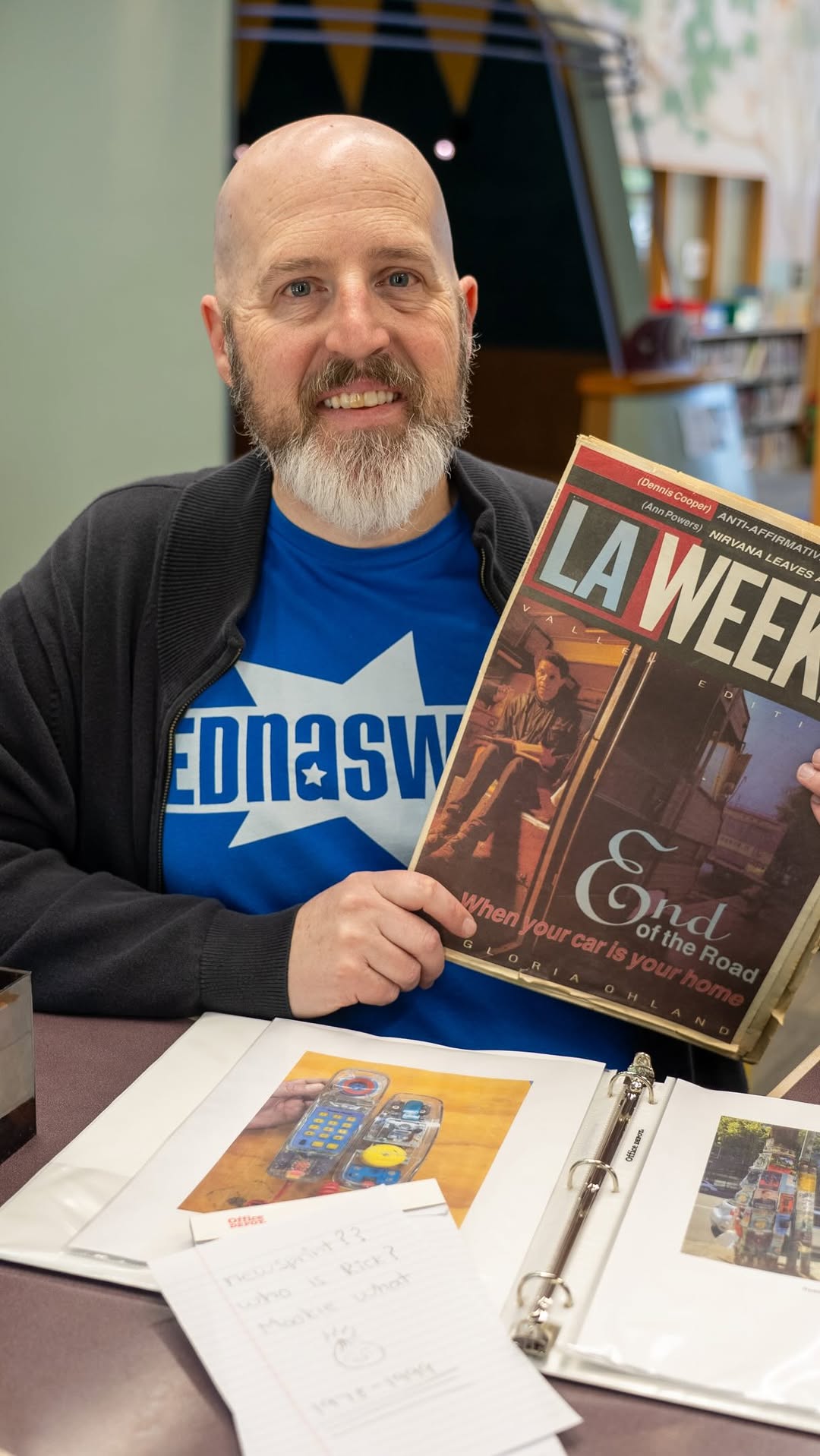
A librarian responds to a young woman's question about how bands promoted shows in the 1990s by delivering a nostalgic monologue on the cultural importance of the LA Weekly newspaper. He uses physical props like old photos, a vintage newspaper, and printed materials to illustrate how people discovered music, restaurants, and movies before the internet, sharing specific anecdotes about local venues and bands like Pearl Jam. He concludes by showing her the newspaper's digital archive on the library's website.

[02]

Simple outline

  1. 1Pose a 'how it was' question
  2. 2Reveal the central artifact
  3. 3Prove artifact's cultural value
  4. 4Provide modern digital access
  5. 5Deliver a generational punchline

[03]

Related videos

[04]

Classification

Concepts
Nostalgia HighlightOpportunity Explainer
Elements
B-Roll Cutaway

[05]

Hook analysis

What stops the scroll in the first 3 seconds

Verbal hook · 70%

Hi. So before social media and the Internet, how did bands get people to come see their shows in the nineteen nineties?

Visual hook · 30%

An over-the-shoulder shot establishing a direct, personal conversation, with a shallow depth of field focusing on the smiling woman asking a question.

[06]

Hook template

Steal this for your own video

Before [modern technology], how did [audience or industry] actually [common action]?

  • — Before GPS, how did truck drivers actually navigate cross-country routes?
  • — Before dating apps, how did people actually find someone to marry?
  • — Before Amazon, how did small businesses actually reach customers outside their town?

[07]

Hook and payoff

The promise the opener makes, and how the video pays it back

Hook

A direct question from a younger person to an older one, establishing a clear knowledge gap and a promise of a historical explanation.

Payoff

The expert provides a modern, digital solution for accessing the artifact's content, followed by a final, humorous, persona-reinforcing punchline that ends the video on a definitive and shareable note.

[08]

Narrative framework

The structural pattern this video runs on

Framework

The Artifact Deep Dive

An expert uses a physical artifact from a past era to answer a novice's question about 'how things used to be,' systematically revealing the artifact's cultural significance through layered evidence and anecdotes before providing a modern way to access it.

  1. 1

    The Common Knowledge Baseline

    The expert first addresses the most obvious, simple answers to the question, establishing a foundation before introducing the more complex, central thesis.

  2. 2

    The 'Holy Grail' Reveal

    The expert introduces the central artifact as the true, non-obvious answer, elevating its status and creating intrigue.

  3. 3

    The Sensory Immersion

    The expert describes the personal rituals and sensory details associated with acquiring and using the artifact, transporting the viewer into the experience.

  4. 4

    The Primary Function Proof

    The expert demonstrates the artifact's main purpose by showing specific, tangible evidence from within it, directly answering the initial question.

  5. 5

    The Legendary Easter Egg

    The expert reveals a surprising, high-value piece of trivia hidden within the artifact (e.g., a famous entity's obscure origins), proving the artifact's deep cultural cachet and rewarding attentive viewers.

  6. 6

    The Ecosystem Expansion

    The expert broadens the artifact's relevance beyond the initial topic, showing how it served as a central hub for multiple aspects of culture (e.g., food, film), thereby cementing its importance.

  7. 7

    The Shared Experience Consequence

    The expert connects the artifact's use to a universal, relatable human outcome, bridging the gap between the past system and a present-day feeling or situation.

  8. 8

    The Modern Access Inquiry

    The novice asks a practical question about how to access this historical information today, transitioning the narrative from historical lesson to actionable information.

Themes

  • nostalgia
  • generational differences
  • local culture
  • history of media

Techniques

  • dialogue
  • show and tell
  • storytelling

Post caption

But did anything cool actually happen after 1999? Works Cited Chris, Librarian. Young People Today Didn’t Know How Bands Got People to Come to Their Shows in the 1990s. Face-to-Face, 14 Apr. 2026. LA Weekly, 14 Feb. 1991. LA Weekly, 15 Jan. 1993. LA Weekly, 10 June 1999.

Transcript

Hi. So before social media and the Internet, how did bands get people to come see their shows in the nineteen nineties? The nineteen nineties. Well, there were old standbys like the flyer on the telephone pole, calling everybody up in your address good, but the holy grail was the one and only LA weekly newspaper. The sweet smell of newsprint being dropped off every Thursday afternoon at a newspaper stand, your local library, or your neighbor Rank was one of the delivery guys on your own doorstep. But it wasn't just a newspaper. It was the week's anticipation of checking to see which bands were performing at the Dragonfly, the Coconut Tier, or at the Avalon. It was seeing your friend's band name in a tiny six point font that you try not to smudge and missing the fact that a band called Mookie Blaylock played in 1991, a club with no name, before they changed their name no Pearl Jam. And it wasn't just music in the LA Weekly. There were Jonathan Gold's restaurant reviews about yet another hidden gem at a San Gabriel Valley strip mall that you drive over an hour to check out. But everyone else read the LA Weekly too, so now there's a two hour wait for dumplings, and you're debating if you should just go for a patty melt at Hamburger Hamlet instead. And not to mention the theater listings and movie reviews in the LA Weekly too. Sure. It was 1999, and there were three page long reviews of quirky indie movies like Happy Texas or Election playing at the Newark or the New Bev, but you still got commentary about Tier Phantom Menace also. Wow. That's a lot of information for one newspaper. Is there anywhere I can go to actually see these? Yeah. Actually, right here on the Los Angeles Public Library website, there's an LA Weekly archive from 1978 to 1999. And what about the February? Nothing cool happened after 1999 anyway.

Explaining 90s culture with props | Viral Hooks