@nicolebehnam
Instagram · Clip
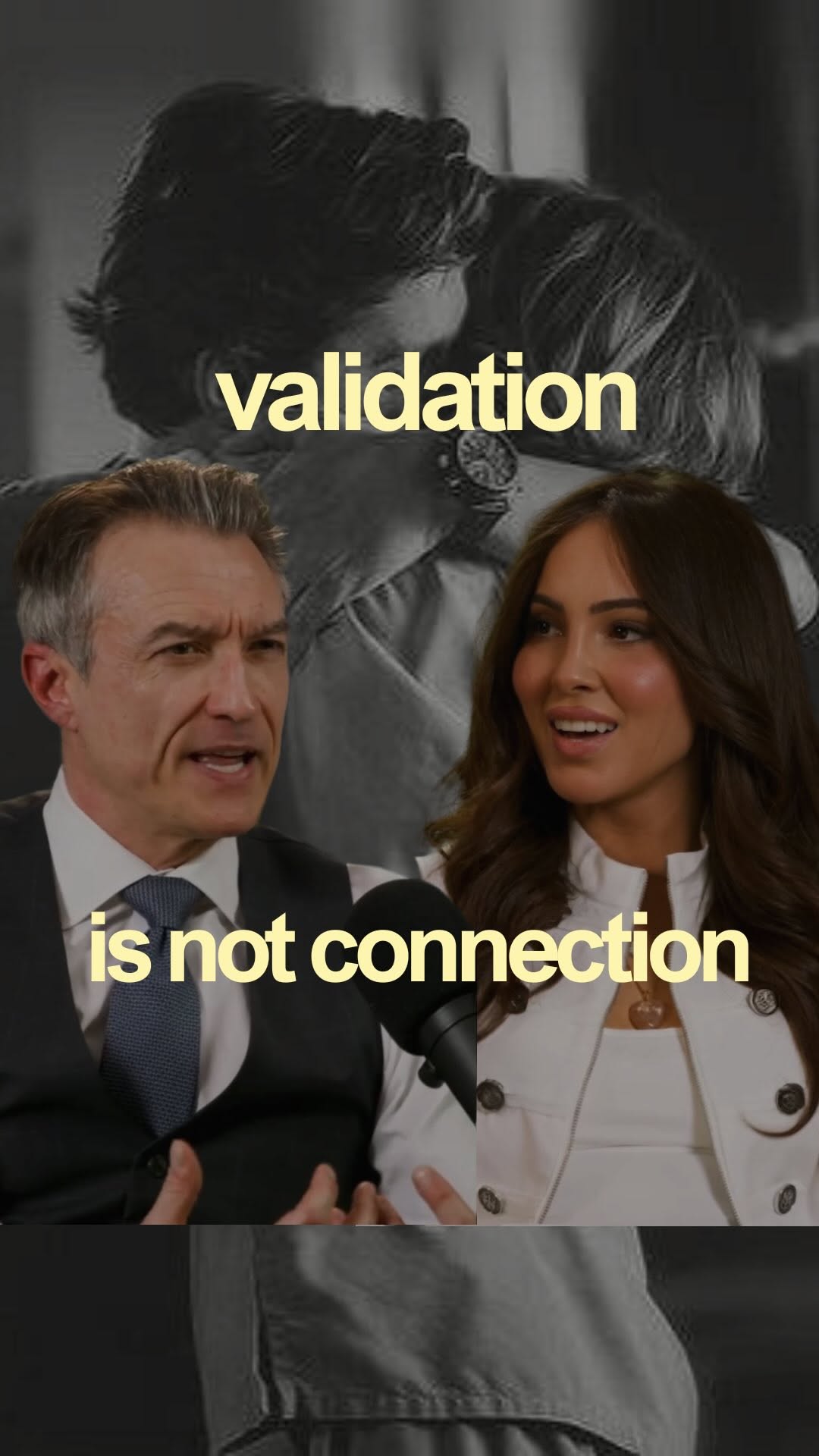
@nicolebehnam Validation is not connection. A short clip from a 3 1/2 hour conversation on @beyondtheinterview 🎙️follow @nicolebehnam for more hot takes

@nicolebehnam
Instagram · Clip
@nicolebehnam Validation is not connection. A short clip from a 3 1/2 hour conversation on @beyondtheinterview 🎙️follow @nicolebehnam for more hot takes
Performance
Video #37015 · Clip
[01]
The female speaker introduces her theory that many heterosexual men are "spiritually gay," meaning they only seek emotional connection and validation from other men. She argues their pursuit of attractive women is often a performance to gain approval from their male peers. The male speaker agrees with the observation, reframing it as "homosocial," and then provides a psychological breakdown, linking this behavior to a deep-seated need for self-value that stems from not receiving unconditional love from parents during childhood.
[02]
[03]
 745.4K25.4×Explains dating and competition dynamics@nycdivorcelawyer · Breakdown
 455.2K24.9×Explains controversial gender dynamic theory@holistic.grenade · Hot Take
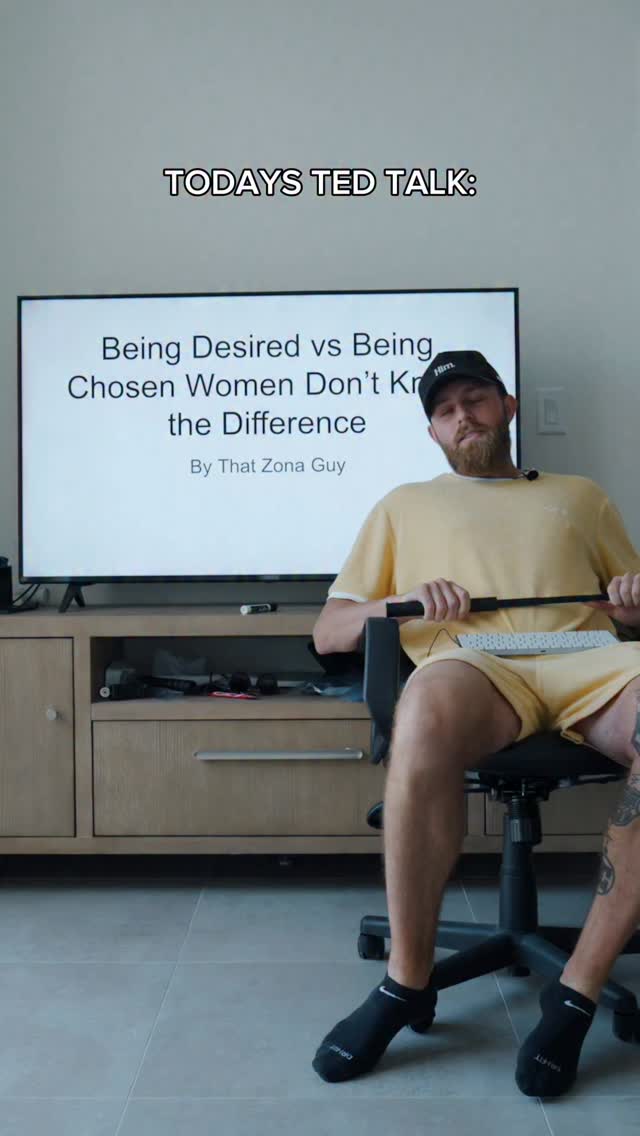 400.6K6.5×Mock TED talk on relationships@thatzonaguy · Cultural Rant
 917.3K14.8×Podcast clip debating dating standards@chriswillx · Cultural Rant
 1.8M70.1×Explaining masculine and feminine needs.@youchoosepodcast · Breakdown
 27.8M856.1×Explaining the paradoxical dating loop@thejaunt_ · Vulnerable Monologue
 1.3M140×Controversial dating theory monologue@jrp.co · Hot Take
 450.6K12.3×Explains dating with job analogy@thejaunt_ · Analogical Definition
 289.1K11.6×Philosophical monologue on pretty women@thejaunt_ · Hot Take
 441.6K5.1×Satirical TED talk on dating@thatzonaguy · Satirical Expertise
 160.1K19.4×Why men's hobbies impress men@sensei.nick · Anecdotal Philosophy
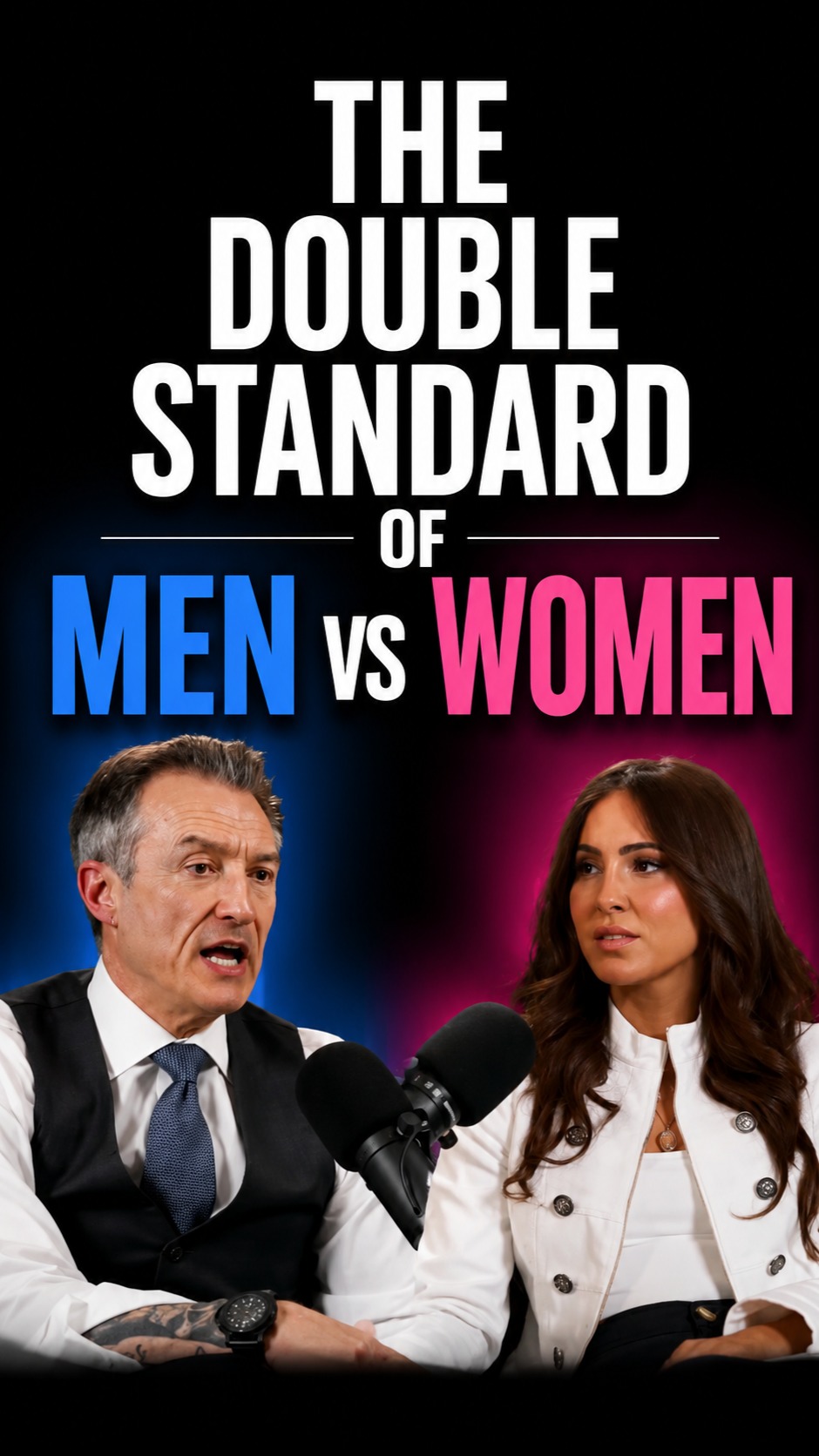 2.9M173.7×Thought experiment on gender double standards.@nycdivorcelawyer · Breakdown
[04]
[05]
What stops the scroll in the first 3 seconds
Title hook · 65%
A LOT OF MEN ARE SPIRITUALLY GAY.
Verbal hook · 35%
But I think a lot of men are spiritually gay.
Visual hook
A split-screen view of a man and a woman in a professional podcast setting. The man on the left has a furrowed brow and a contemplative, slightly skeptical facial expression as the woman begins to speak.
[06]
Steal this for your own video
A LOT OF ARE .
[07]
The promise the opener makes, and how the video pays it back
Hook
A speaker presents a highly controversial or paradoxical statement about a common social behavior, creating immediate intrigue and a need for explanation.
Payoff
The audience is left with a new, more profound lens through which to view a common behavior, feeling as though they've gained a valuable psychological insight.
[08]
The structural pattern this video runs on
Framework
The Thesis Deconstruction
Introduce a controversial or counter-intuitive observation about human behavior, then have a second person validate and deepen the analysis by tracing it to a universal psychological root cause.
The Provocative Thesis
The first speaker makes a bold, category-defying claim that challenges a conventional understanding of a group or behavior.
The Definitional Clarification
The speaker immediately defines their new term or concept to prevent misinterpretation and guide the audience's understanding, explaining what they mean and what they don't mean.
The Behavioral Proof
The speaker provides a concrete, relatable example of the concept in action, making the abstract idea tangible and proving its existence in the real world.
The Expert Validation
A second speaker enters the conversation to affirm the validity of the initial observation, lending it credibility and signaling to the audience that the idea is worth serious consideration.
The Causal Reframe
The second speaker pivots the conversation from describing the behavior ('what') to explaining its origin ('why'), introducing a deeper psychological or sociological framework.
The Root Cause Diagnosis
The second speaker connects the behavior to a fundamental human need or a common formative experience, such as the need for validation or the impact of parental relationships.
The Vulnerable Anecdote
The second speaker shares a brief, personal story that illustrates the diagnosed root cause, grounding the entire abstract argument in authentic, emotional experience.
Validation is not connection. A short clip from a 3 1/2 hour conversation on @beyondtheinterview 🎙️follow @nicolebehnam for more hot takes
branding · throughout
Beyond The Interview
I think a lot of men are spiritually gay. And what I mean by that is that a man can be sexually straight, but spiritually, emotionally only connects with other men, only wants the approval of other men. And his pursuit of a woman is even to get someone so hot no that other men will be like, bro, you got a baddie. How do you learn that? The same thing to me. And by the way, I haven't figured out the female equivalent of that word. Makes perfect sense no me. You're homosocial. I don't think anyone could deny the reality of that. But what I think some of that has to do with is where we find value and how we define, like, self value. So I think that idea of, like, men who need the validation of other men in order to feel good about themselves. It's that same hole that fame is. Like, it's a mask that eats into the wearer. And I think a lot of it is a function of, again, not having love from your parents. Like, I learned from a very young age that love is something you earn. Like, you did good on the test. I'm proud of you. You no, you did a good job. Good. I love you. You know?