Viral Hooks
Trending short videosExplaining scissor pivot point design
C

@craighillcompany

Instagram · Talking Head Edit

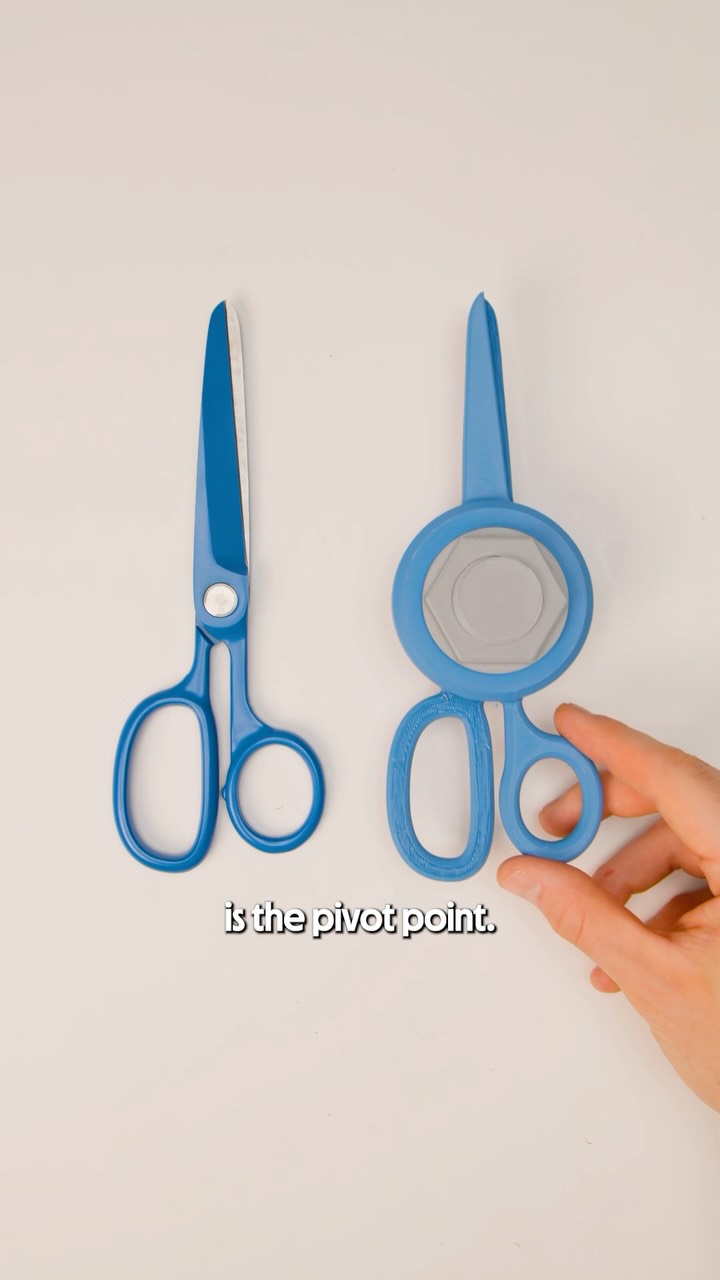
@craighillcompany Even more important than sharp blades is good pivot hardware. As we’ve discussed in previous videos, scissors don’t just cut like a knife. They make use of shear force - each scissor half pulls the material in a different direction and it shears apart. Even if your blades are sharp, a loose fastener prevents a tight pass of the blades, leading to an unsatisfying slice. The D-shaped sex bolt is our favorite way to solve the problem of unthreading without removing the threads. It ensures a tight and clean shear through years and years of use. And if your scissors ever need servicing, it allows them to be taken apart. Please see the pinned-comment on this video for notes on disassembly. If you’re in the market for any pivoting object, we recommend taking a close look at the fastener to see if they are designing for unintentional unthreading.

View original on Instagram

The edit1 shot · 7 text
Shots Text2:59

Performance

Views
3.3M
Likes
130.8K
Comments
653
Engagement
4%
Outlier
4.7×
Length · 24 Jul 2026
2:59

Video #37189 · Talking Head Edit

Explaining scissor pivot point designfrom @craighillcompany

[01]

Overview

The speaker explains the critical importance of the pivot point in scissor design. He demonstrates how a simple nut and bolt fastener loosens over time, dismisses rivets as unserviceable, and then presents the 'D-shaped sex bolt' as the ideal solution. Using 3D models, he breaks down how a shoulder bolt with a D-shaped profile, combined with a matching notch in one scissor half, mechanically locks the components to prevent unintentional unthreading while still allowing for disassembly and servicing.

[02]

Simple outline

  1. 1Identify common object's hidden flaw
  2. 2Deconstruct flawed alternative solutions
  3. 3Systematically build the ideal solution
  4. 4Reveal the elegant final form

[03]

Related videos

[04]

Classification

Concepts
Breakdown
Elements
B-Roll CutawayJump CutMotion Graphics

[05]

Hook analysis

What stops the scroll in the first 3 seconds

Title hook · 45%

The most important but most often neglected

Verbal hook · 40%

The most important but most often neglected part of a scissor design is the pivot point.

Visual hook · 15%

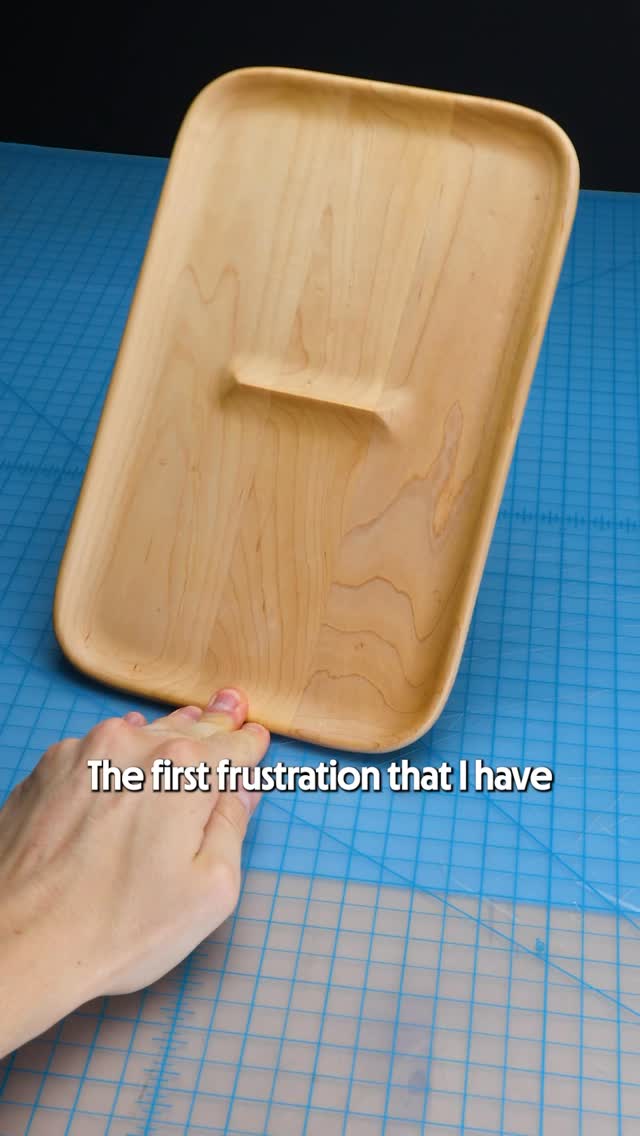
An extreme close-up of a person holding a large, bright blue, 3D-printed model of scissors, immediately establishing a focus on design and mechanics.

[06]

Hook template

Steal this for your own video

The most important but most often neglected part of [product or system] is [overlooked component].

  • — The most important but most often neglected part of a wedding budget is the vendor contract.
  • — The most important but most often neglected part of a workout routine is the warm-down.
  • — The most important but most often neglected part of a restaurant kitchen is the ventilation system.

[07]

Hook and payoff

The promise the opener makes, and how the video pays it back

Hook

Identifies a 'most important but neglected' aspect of a familiar object, creating an immediate knowledge gap and promising insider information.

Payoff

Presents the fully assembled final product as the 'perfect synthesis,' demonstrating how it elegantly satisfies all functional and aesthetic criteria established throughout the video, providing a complete and satisfying resolution.

[08]

Narrative framework

The structural pattern this video runs on

Framework

The Systematic Solution Build

Deconstructing a common object's hidden flaw by exploring and dismissing inferior solutions, then systematically building the 'perfect' solution piece-by-piece to create an intellectually satisfying reveal.

  1. 1

    The Common Flaw Demonstration

    Visually demonstrates the fundamental failure of the most common design using a simplified or oversized model, establishing the core problem.

  2. 2

    The Brute-Force Fallacy

    Presents and quickly invalidates an 'obvious' but unsophisticated alternative, highlighting a new, more complex requirement (e.g., serviceability, flexibility).

  3. 3

    The Design Contradiction

    Explicitly states the central engineering dilemma, framing it as a difficult challenge that requires a clever, non-obvious solution.

  4. 4

    The Mechanical Diagnosis

    Breaks the object down into its constituent parts to diagnose the root cause of the problem at a mechanical level, shifting from symptom to cause.

  5. 5

    The First Innovation: The Functional Fix

    Introduces the first piece of the novel solution, showing how a specific modification solves the primary mechanical problem identified in the diagnosis.

  6. 6

    The Second Innovation: The Stability Proof

    Addresses a potential secondary failure point and explains why the new design inherently prevents it, reinforcing the solution's robustness.

  7. 7

    The Final Frontier: The Aesthetic Problem

    Introduces a final, more refined problem, elevating the criteria from pure function to include form, aesthetics, or user experience.

  8. 8

    The Elegant Inversion

    Reveals the final, key innovation that solves the aesthetic problem, often through a clever re-imagining or inversion of the standard components.

Themes

  • design thinking
  • problem-solving
  • engineering principles

Techniques

  • 3D modeling
  • comparative analysis

Post caption

Even more important than sharp blades is good pivot hardware. As we’ve discussed in previous videos, scissors don’t just cut like a knife. They make use of shear force - each scissor half pulls the material in a different direction and it shears apart. Even if your blades are sharp, a loose fastener prevents a tight pass of the blades, leading to an unsatisfying slice. The D-shaped sex bolt is our favorite way to solve the problem of unthreading without removing the threads. It ensures a tight and clean shear through years and years of use. And if your scissors ever need servicing, it allows them to be taken apart. Please see the pinned-comment on this video for notes on disassembly. If you’re in the market for any pivoting object, we recommend taking a close look at the fastener to see if they are designing for unintentional unthreading.

Text overlays

  • informational · beginning

    The most important but most often neglected

  • informational · beginning

    part of a scissors design

  • informational · beginning

    is the pivot point.

  • informational · beginning

    If your fastener is just a nut and a bolt,

  • informational · beginning

    the opening and closing of the scissors is applying that rotational force and it is unthreading your fastener

  • informational · middle

    is the D-shaped sex bolt.

  • informational · end

    the ferrari of pivoting fasteners.

Transcript

The most important better most often neglected part of a scissor design is the pivot point. If your fastener is just a nut and a bolt as demonstrated in this oversized model, the opening rank closing of the scissors is applying that rotational force rank it is unthreading your fastener. Considering this problem, you may think it's better to just forgo the threading and just permanently rivet the two halves of the scissors together. You have, like, solved the problem of the scissors accidentally unthreading, but it's a permanent fastener. You can't remove it. You also want one that is removable when you need it to be, where you can disassemble the fastener, and then reassemble them after servicing. The challenge is finding a threaded fastener that won't accidentally unscrew itself. There's a few ways to do it, but my favorite in all the world is the D Shave Sex Pull. In the current pivot sandwich that we have here, there are four distinct components. They all have the ability to rotate independently and free of each better, and that's the root of the problem. You only need two of them to actually move. You need one half of the scissor to be able to rotate relative to everything else, and then you also need the nut to be able to unthread to remove. The way we do that is with two fairly minor changes. So first, we're gonna change from this bolt to a shoulder bolt. You're also gonna cut this notch out of the end of the bolt, which gives it this d shaped profile. And when you include a similar matching notch in the whole of the top layer of the scissor half, suddenly you have, like, rotationally locked these two components together. And so as this lower half of the scissors rotates open and closed, it's rotating against two surfaces that are mechanically locked, and so there's no possibility of accidentally backing out the bolt itself. You may think that there's still this potential issue, the nut accidentally unscrewing itself, but this how the scissors is rotating exactly with the best, so it can't apply relative motion to the nut that is different from what is being applied to the bolt. They're moving together. The only way to unthread the bolt is to intentionally go in and unthread the nut. The spinnyness has been correctly isolated to safe places, but I can't sleep well yet. There's an exposed best, and it's not a very compact or finished looking end to the fastener. So we're gonna take the male threads off of the bolt, and we're effectively gonna put it onto the nut. Similarly, we're gonna pour out the bolt rank thread the interior. This is a sex bolt. It still has all of the kind of like mechanical solution, and it gives you this nicely finished face on both sides. It looks beautiful. It's never gonna accidentally unscrew itself. And because it's like a threaded fastener, someone with the right tools can fully disassemble it, and service the scissors, and then reassemble the fastener. And that is why that is the construction that we used as, like, the heart of the Chroma scissors, the V shaped sex bowl, the Ferrari of pivoting fasteners.

Explaining scissor pivot point design | Viral Hooks