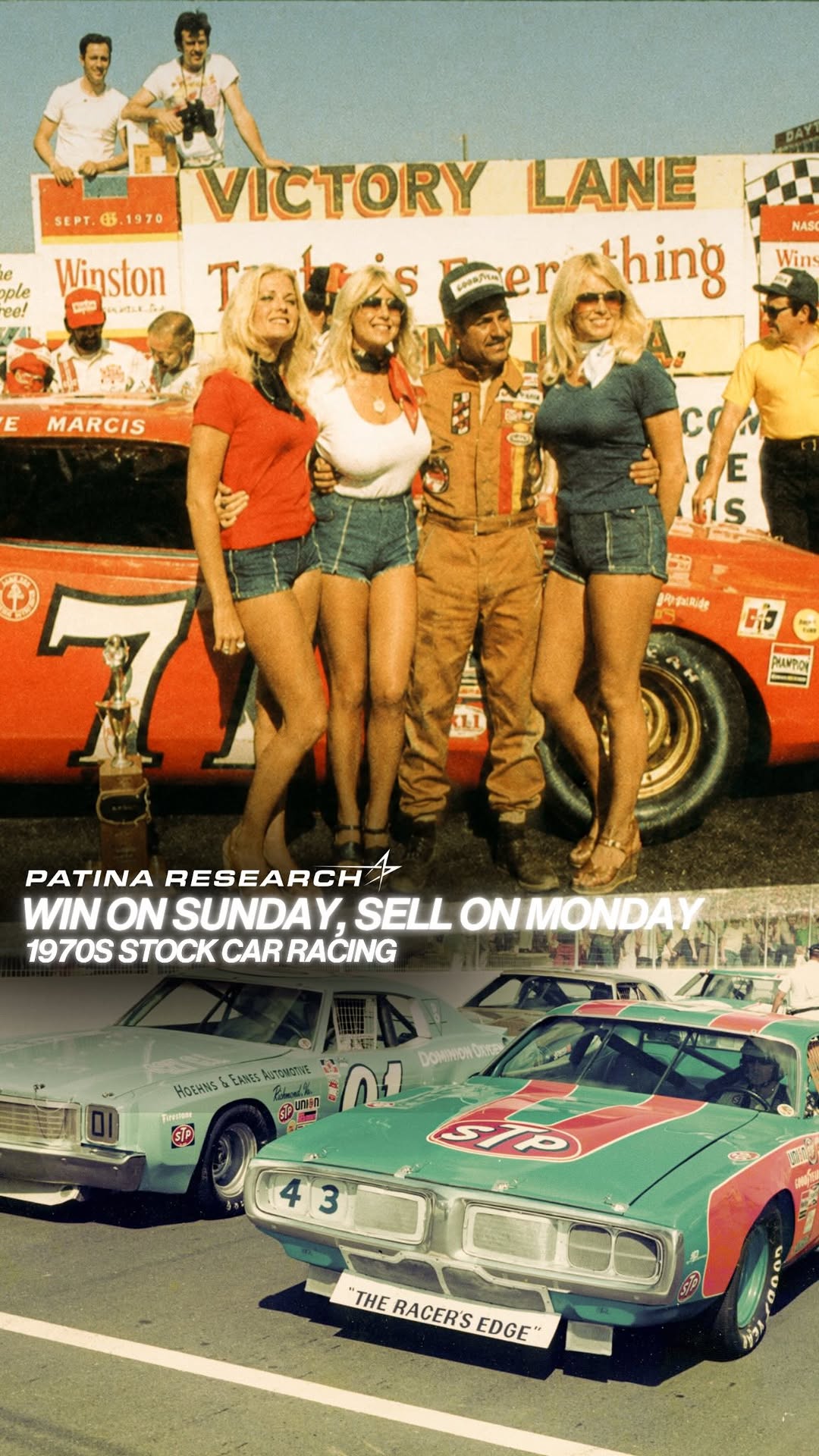
The creator presents a montage of archival footage from a 1970s NASCAR race, highlighting the danger, grit, and financial rewards through voiceover narration. This nostalgic segment is abruptly interrupted by a 1990s-style workplace and driving safety PSA, before returning to the race winner's celebration, creating a stark, ironic commentary on risk and safety.
Post caption
“Win on Sunday, sell on Monday.” That philosophy defined the golden era of 1970s NASCAR. Countless cars were sold because people watched versions of them dominate on the racetrack. Back then, stock car racing truly lived up to its name: production based cars modified to race on the weekend.
Today, that connection has largely disappeared. Modern NASCAR race cars share little with the vehicles sitting in dealership showrooms. In the 1970s, a race win was the ultimate proof of a car’s speed, durability, and engineering. It gave buyers confidence that what they drove was built from the same foundation as the machine that crossed the finish line first.
Nowadays, a victory just means you had the bigger budget.
Transcript
Good out. Spinner in the pit. Neil Yarbrough was outside the racetrack. And with this much talent on hand, you can bet there's a big bundle of money to match. Today's purse, a $152,230 made possible by a crowd of 72,000 race fans. With only minutes to go before the start, pit crews check and recheck. At this track, the stakes are high. And it's good sportsman in every race. Win or lose. He's that kind of guy. Accoraches the temperature of the pack circuit is more than a 140 degrees Celsius. With that stop, he has a choice of an aspirin tablet or a soft tablet. Tablet. Make your moves low on the back as it speeds up the ground. His hands were blistered and bloody. Every muscle ache. He was dirty. He was completely exhausted. Better when you get a check for almost $22,000, the worse six hundred winner's trophy, and kisses from a couple of queens like this, Who worries about the little thing?