@uncouver_
Instagram · Clip
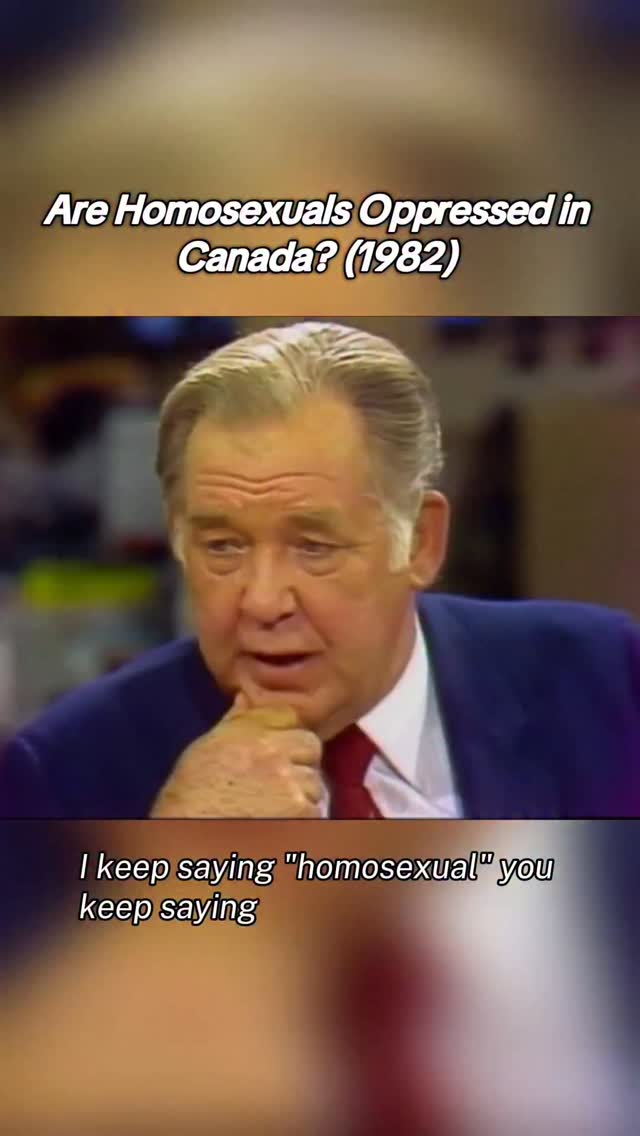
@uncouver_ Are homosexuals oppressed in Canada (1982) #vancouver #canada #lgbt #retro

@uncouver_
Instagram · Clip
@uncouver_ Are homosexuals oppressed in Canada (1982) #vancouver #canada #lgbt #retro
Performance
Video #37518 · Clip
[01]
The creator presents a clip from a 1982 Canadian talk show where the host and a guest debate the use of the word "gay" versus "homosexual." The conversation then shifts to whether homosexuals are oppressed in Canada, with the guest arguing that they face discrimination in areas like employment, while the host expresses skepticism and questions the need for special legal protections.
[02]
[03]
 193.7K8.6×Vintage campus interviews on politics@uncouver_ · Question Montage
 241.3K384.9×Explaining racism through contamination fears@glass__museum · Breakdown
 147.8K97×Lip sync political reaction joke@wambamdancam · Lip Sync Trend
 343.4K5×Split screen political commentary rant@womp_tomp · Reaction
 1.1M13.7×Split-screen political commentary rant@womp_tomp · Hot Take
 446.2K14.6×Split-screen political hot take@womp_tomp · Hot Take
 354K5.5×Provocative hypothetical with data overlays@womp_tomp · Hot Take
 228.2K4.1×Creator satirizes argument with analogies@womp_tomp · Reaction
 401.2K6.1×Aggressive political rant to camera@womp_tomp · Hot Take
 137.5K23.8×Creator debunks politician's false claim@thecanaryuk · Reaction
 188.9K5.4×Commentator breaks down controversial news story@womp_tomp · Breakdown
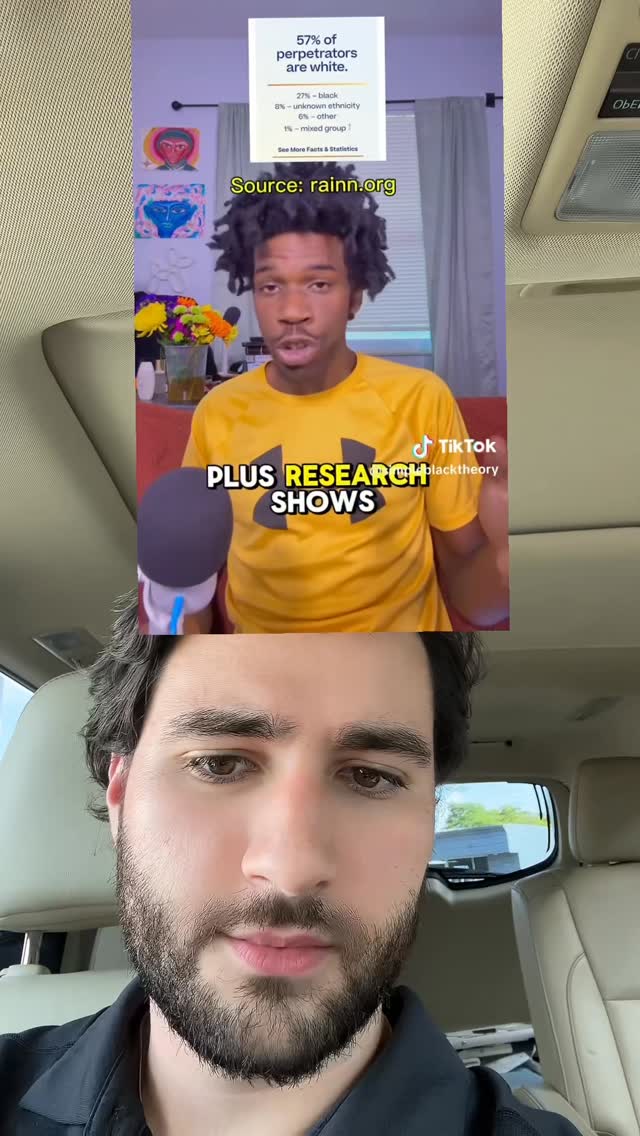 354.4K17.5×Creator refutes stats with data@womp_tomp · Reaction
[04]
[05]
What stops the scroll in the first 3 seconds
Title hook · 45%
Are Homosexuals Oppressed in Canada? (1982)
Verbal hook · 35%
I keep saying "homosexual" you keep saying "gay."
Visual hook · 20%
The distinct retro aesthetic of a 1980s television broadcast, including the film quality, the host's dated attire, and the classic talk show set, immediately signals a historical perspective.
[07]
The promise the opener makes, and how the video pays it back
Hook
The Semantic Standoff: The video opens with an immediate disagreement over terminology, instantly establishing the two opposing sides and the core tension of the debate before the main topic is even addressed.
Payoff
The Modern Insight: The protagonist delivers a final, sophisticated rebuttal that doesn't just counter the last point but explains the modern, subtle mechanism of the problem, rendering the antagonist's outdated perspective naive and leaving them with no logical response.
[08]
The structural pattern this video runs on
Framework
The Dialectical Takedown
A structured debate where an established, traditional viewpoint is systematically dismantled by a challenger through a series of logical counter-arguments, culminating in a final, modern insight that reframes the entire issue.
The Thesis Statement
The central question is posed, and the protagonist gives a direct, unambiguous answer, using the antagonist's own behavior as immediate evidence to support their claim.
The Adversarial Reframe
The antagonist attempts to undermine the protagonist's position by misrepresenting it as an unreasonable or extreme demand, shifting the argument to a flawed, bureaucratic analogy (the 'strawman').
The Ideological Declaration
The antagonist states their fundamental principle or belief, revealing the core of their worldview and the basis for their opposition to the protagonist's thesis.
The Reality Check
The protagonist counters the antagonist's ideology with a concrete, real-world example of systemic inequality that directly contradicts the antagonist's stated belief in universal protection.
The Anecdotal Dismissal
The antagonist attempts to invalidate the real-world example by claiming personal ignorance or lack of evidence, effectively dismissing a systemic issue because it is not within their personal experience.
Are homosexuals oppressed in Canada (1982) #vancouver #canada #lgbt #retro
title · throughout
Are Homosexuals Oppressed in Canada? (1982)
Keep saying homosexual. You keep saying gay. Yeah. I wanna why don't you like the word gay? Gay is a misuse of a perfectly good old English word which meant happy. Oh, come on. Gay. Gay. Give me nice and gay. Jolly. Yeah. Doesn't mean homosexual. Well, why don't you still use it that way? We haven't stolen the word. Because you've stolen the word. No. We haven't. You can still have it. You can use it any way you want. Are homosexuals oppressed in Canada at the moment? Yes. I think homosexuals are oppressed in Canada at the moment. Everybody knows that there's a great distaste of homosexuality. And you worse admitted yes before you went on the air that you find it a very uncomfortable subject. It's an uncomfortable subject. I mean, I don't That's Canada. It doesn't ask you are you homosexual? Are you I should certainly hope they don't ask you about your sexual life no matter what do I. You would love them to. Well, that's not asking well, that's not separate category on the sentence form. Male, female, homosexual. No. It certainly wouldn't be male, female, homosexual, be male, female, heterosexual, homosexual. When you ask how many gay people there are, then it's the only way to know. You won't get it in this fifty years. I don't think it I don't think it's the way to do it. I don't think it really matters. It's a tricky subject to handle it. Right. It makes people very uncomfortable. And therefore, tier don't uncomfortable. And therefore, they don't wanna they don't wanna tell you this. I don't I don't see any need for special protection for any group other than the laws available now. Well, these are special protections. They're just any more special than any other protection. Protected under the law, guilty of admission. I'll get my test Well, you you you are, but gay people are not. So are you. No. I'm not. Why not? Well, because, it's very easy to fire it to to, fire a gay person in any province in this, country except Quebec. Yeah. Come on. Now I don't know of any case where a man has been fired in British Columbia on the grounds that he is or she is and homosexual. Alright. The the real problem is no one no one is interested in doing that. People are clever enough now not to be that obviously bigoted. They find other reasons that are a little more difficult to find. There's one case expect everyone to be obviously bigoted.