@uncouver_
Instagram · Clip
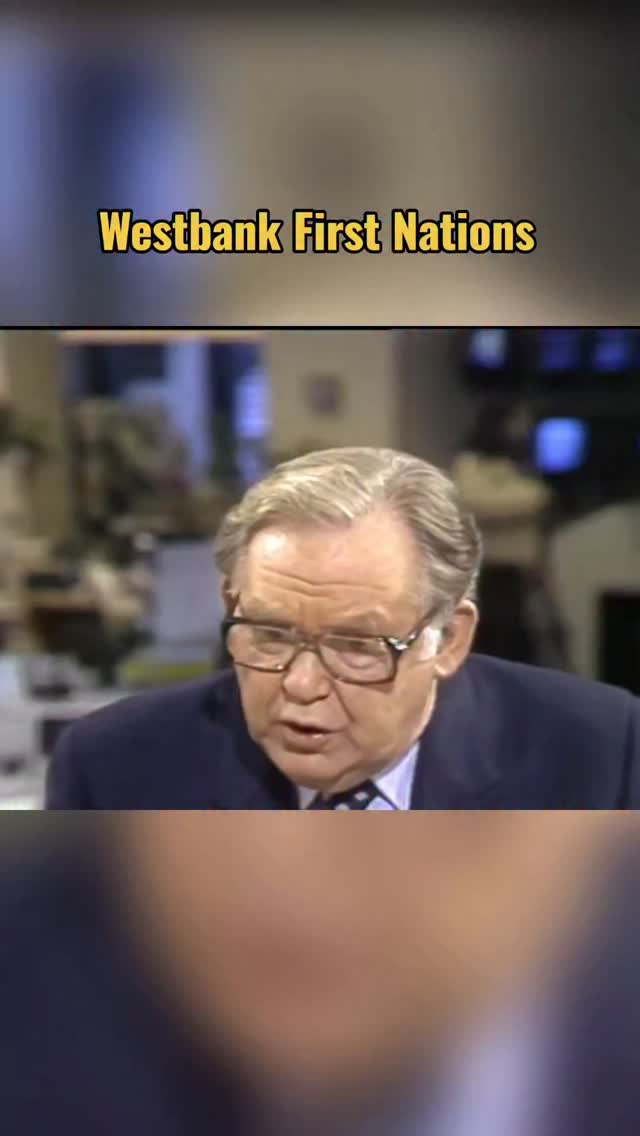
@uncouver_ "Ron's got a Mercedes Benz!" Westbank First Nations Chief Ron Derrickson explains the activities of the Indian band near Kelowna in 1982. #britishcolumbia #canada #retro

@uncouver_
Instagram · Clip
@uncouver_ "Ron's got a Mercedes Benz!" Westbank First Nations Chief Ron Derrickson explains the activities of the Indian band near Kelowna in 1982. #britishcolumbia #canada #retro
Performance
Video #37521 · Clip
[01]
The creator presents an edited clip from a 1982 television interview where a host questions Chief Ron Derrickson of the Westbank First Nations about land ownership and personal wealth. The Chief explains that his band operates on capitalist principles, which he defends as a necessity for success within a capitalist country. He unapologetically discusses his own financial success and the band's economic achievements, such as housing development, and states the band's assets are worth several hundred million dollars.
[02]
[03]
 731.5K8.8×Friend's crypto success story montage@timmchiusano · Origin Story
 164.8K185.2×Explaining the real estate deal strategy@realkylepetitt · Breakdown
 540.3K1.9×Showcasing a successful landscaping business@stefano.narducci · Lifestyle Showcase
 2.1MTimeline of business milestones@nishildpatel · Origin Story
 219.2KCarpenter explains who has money@howlingwolf.carpentry · Anecdotal Philosophy
 377.6K7.8×Boss pays worker in cash@stoney.bruh · Showcase
 860.9K5.8×Aspirational vlog explaining business exit@marshallhaas · Anecdotal Philosophy
 474.8K3×Street interview about career salary@salarytransparentstreet · Question Montage
 214.7KStreet interview with a millionaire@brayden.zaroff · Street Interview
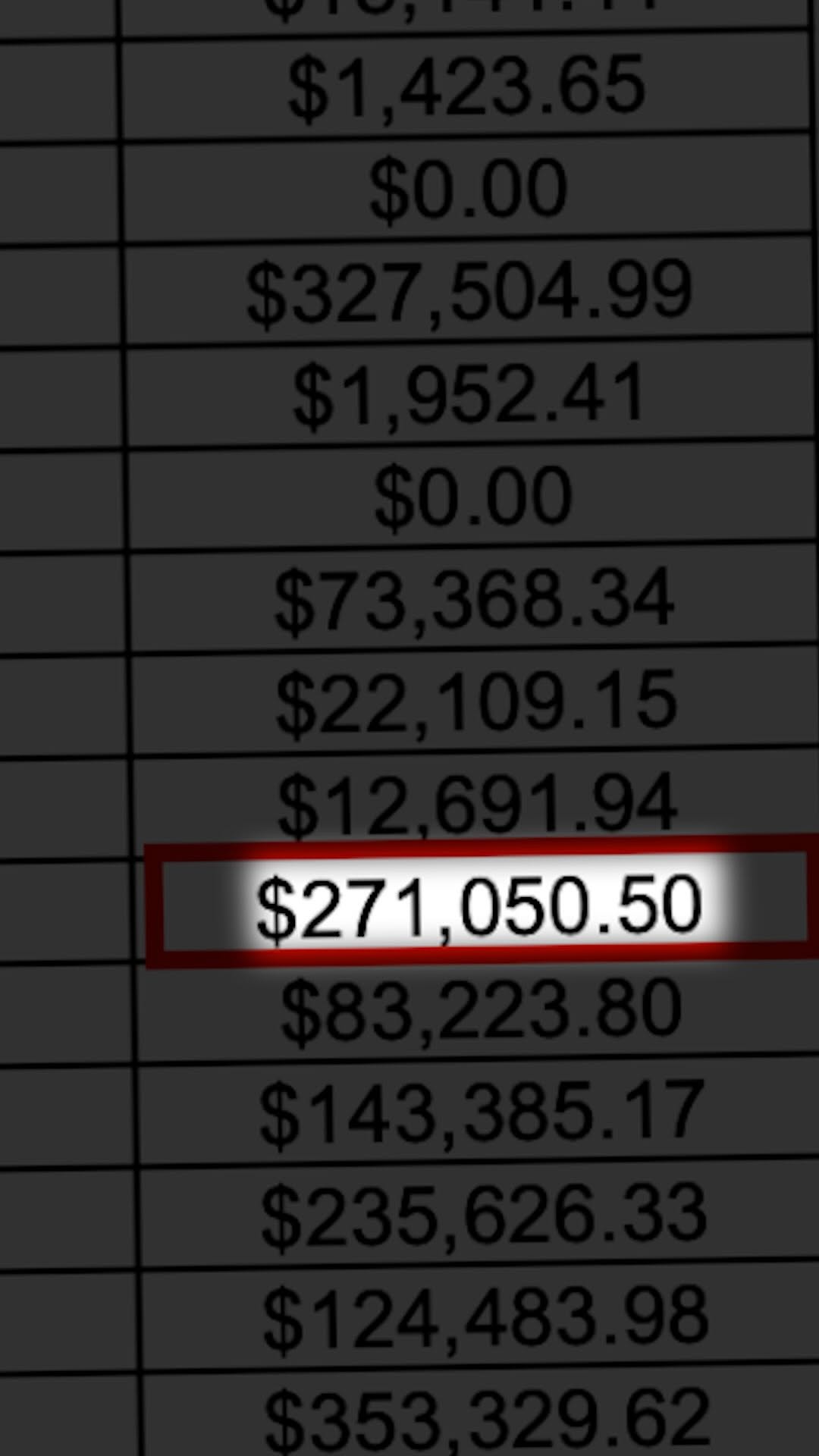 334.2K6.8×Investigative breakdown of property fraud@yoonj_kim · Case Study Breakdown
 55.1K1×Money to spirituality mindset shift@eberbarrera21 · Before/After Transformation
 228.4KStreet interview with young entrepreneur@brayden.zaroff · Street Interview
[04]
[05]
What stops the scroll in the first 3 seconds
Title hook · 25%
Westbank First Nations
Verbal hook · 65%
Do you own the land or does the band own the land?
Visual hook · 10%
The video opens with a medium shot of a television host from the 1980s, identifiable by his glasses, suit, and the vintage quality of the footage, creating immediate visual context for archival content.
[06]
Steal this for your own video
Does own , or does own ?
[07]
The promise the opener makes, and how the video pays it back
Hook
An interviewer poses a direct, binary question that implies a potential conflict or hypocrisy in the subject's position, immediately establishing the central tension.
Payoff
The Staggering Valuation: The subject concludes by revealing the immense scale of their success in a quantifiable, shocking metric (e.g., monetary value), decisively validating their position and leaving the audience stunned.
[08]
The structural pattern this video runs on
Framework
The Unapologetic Success Arc
A leader is challenged on the perceived contradictions of their success within a system not originally designed for them. They respond by deconstructing the challenger's premises, justifying their methods as pragmatic adaptation, and culminating in a powerful reveal of their success that subverts expectations.
The Systemic Explanation
The subject answers the initial question not with a simple yes/no, but by explaining the complex external rules and systems they must operate within, immediately adding nuance and context.
The Personalization Pivot
The interviewer shifts the focus from the collective or abstract to the subject's personal stake, wealth, or actions, raising the personal stakes of the confrontation.
The Ideological Reframe
The subject contextualizes their actions by contrasting the dominant ideology with their own original philosophy, framing their current state as a necessary adaptation rather than a native choice.
The Pragmatic Justification
The subject embraces a potentially controversial label and justifies it as a necessary tool for survival and prosperity within the prevailing system.
The Symbolic Confrontation
The interviewer uses a specific, tangible symbol of the subject's success (e.g., a luxury item) to challenge them directly on the optics of their wealth.
The Declaration of No Apology
The subject explicitly refuses to apologize for their success, directly confronting the implicit criticism and claiming their achievements with pride.
The Quantifiable Proof Point
The subject provides a concrete, data-driven example of how their methods have produced positive, tangible results for their community, shifting from personal defense to collective benefit.
"Ron's got a Mercedes Benz!" Westbank First Nations Chief Ron Derrickson explains the activities of the Indian band near Kelowna in 1982. #britishcolumbia #canada #retro
title · throughout
Westbank First Nations
contextual · beginning
Chief Ron Derrickson
contextual · throughout
1982
branding · middle
WEBSTER! continues...
No you own the land or does the band own the land? All the land belongs to Her Majesty the Queen under the Indian Act. In our band, 80% of the land is owned by the low k tier, which are our band members. The rules are pretty free and, you know, since I've been chief, the band has bought a lot of property from band members. Does that mean that you personally own a lot of the land in your own name? I personally have some rank. Yes. Is it allocated to each Indian better, head of a family, or allocated to bad as a whole? At one time, Indians didn't, claim ownership of land. It It was owned by... Everything was owned by everybody. You white people have imposed that rule of self ownership and, you know, this is mine and don't touch mine. I mean, we're a capitalist bad. It's a capitalist country and and we have to exist the same as you no, so that's why we do. No. No. No. No. No. No. No. No. No. No. No. No. No. No. No. No. No. No. No. No. No. No. No. No. No. No. No. No. No So you're not ashamed of any wealth you've collected as an Indian chief? I will not apologize to the white society or to the native society that I, have done well financially. That's right. Several of them are worth more money than I am. They just haven't realized it yet. Could they sell that line to a white man if they wanted to? No. And nor should good. Couldn't do that anyway. Oh, there's there's always a way. If you wanna do anything, that's, that's why we're successful in West Bay. We've probably built more housing per capita than any bad in Canada. I mean, in the last year and a half alone, 24 new housing units. Can an Indian buy them from you at cost? Well, they're they're they're on a low income basis. The money's borrowed from CMHC. What would your bad be worth now? Oh, we can pay our bill. No. I mean, it's obviously a multimillion dollar operate. I'm not knocking you. Worth millions. Several $100,000,000. Better, I mean, it's not stuff you can catch.