@kennovate
TikTok · Greenscreen Talking Head
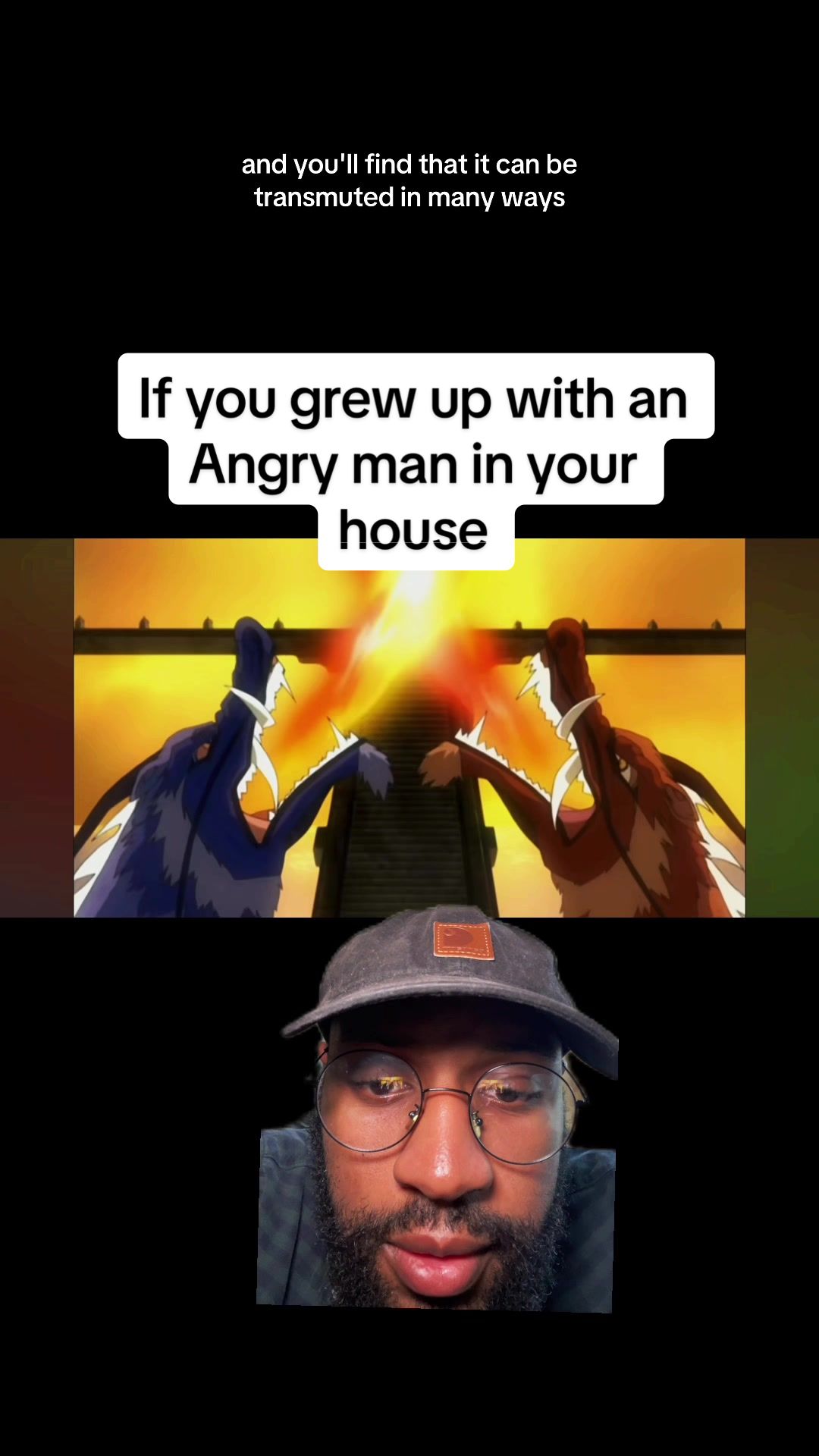
@kennovate “If you grew up with an angry man in your house” #greenscreenvideo #greenscreen #shadowwork #ATLA #healingjourney

@kennovate
TikTok · Greenscreen Talking Head
@kennovate “If you grew up with an angry man in your house” #greenscreenvideo #greenscreen #shadowwork #ATLA #healingjourney
Performance
Video #38625 · Greenscreen Talking Head
[01]
The creator reacts to a viral TikTok about the 'angry man' in the house, then uses the anime character Shoto Todoroki from 'My Hero Academia' as an extended metaphor to break down the concept of inherited trauma and parental wounds. He explains how the character learns to accept the part of himself he hates (his father's fire power) and reclaims it as his own. He concludes by connecting this to the idea of transmuting negative inherited traits into positive ones, using a personal story about his own childhood trauma as an example.
[02]
[03]
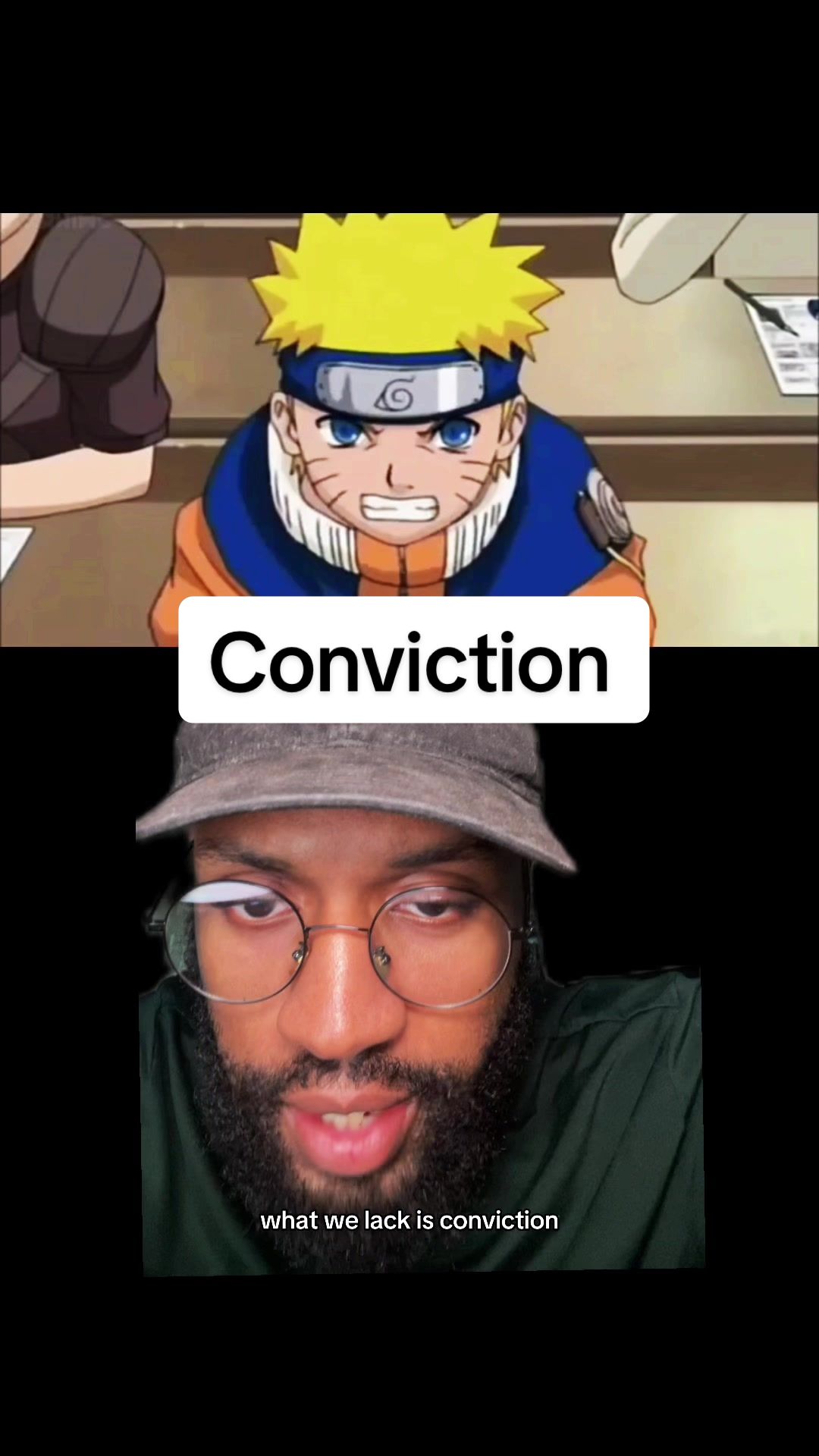 1.3MExplains viral video with anime@kennovate · Reaction
 484.3KMonologue on emotional intelligence curse@jb_copeland · Vulnerable Monologue
 359.7K9.4×News story inspires comedic rant@realdanyang · Satirical Advice
 110.1K3.6×Self-care routine with life advice@jrp.co · Vulnerable Monologue
 525.7K5.8×Creator rants with image overlays@womp_tomp · Cultural Rant
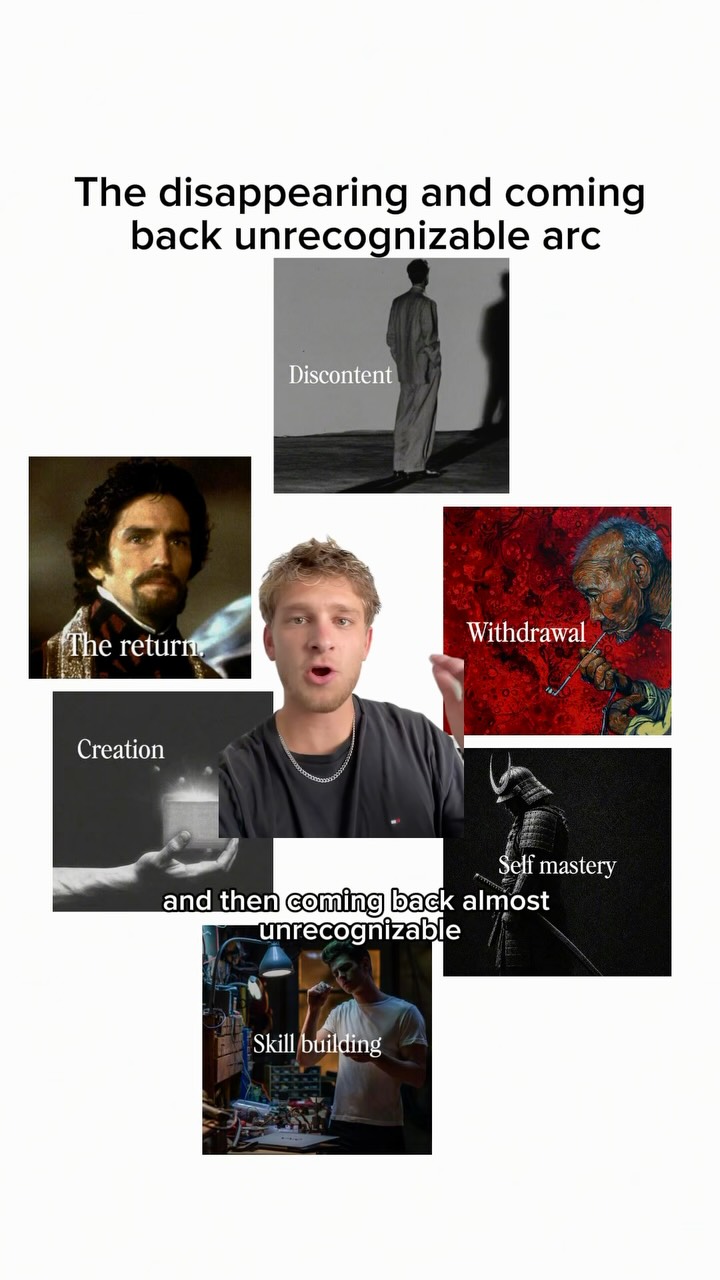 795K287.6×Explaining the hero's transformation arc@kolbykirschner · Breakdown
 3.4MDirect address inner child monologue@jb_copeland · Vulnerable Monologue
 357.9KPersonal monologue on unlearning shame@joshforeman2 · Vulnerable Monologue
 1.8M4.2×Man psychoanalyzes his haters monologue@davi87dp · Vulnerable Monologue
 960.8K41.5×Man tells story of confronting bully@nycdivorcelawyer · Storytime
 110.8K33.1×Pop culture metaphor for success@djangodegree · Anecdotal Philosophy
 282.5K23.5×Satirical monologue on gifted kid burnout@couldbaret · Cultural Rant
[04]
[05]
What stops the scroll in the first 3 seconds
Title hook · 55%
“If you grew up with an Angry Man”
Verbal hook · 30%
A metric most people missed a meaning in this poem...
Visual hook · 15%
The video opens in a split-screen format, showing the creator reacting to another creator's video. This 'stitch' or 'duet' visual immediately signals a commentary or response, creating curiosity about his perspective.
[06]
Steal this for your own video
If you grew up with
[07]
The promise the opener makes, and how the video pays it back
Hook
React to a piece of viral content, validating its premise but immediately creating a curiosity gap by promising a deeper, missed interpretation that the audience needs to understand.
Payoff
Conclude with an empowering re-interpretation of the initial problem, reframing a source of pain or a negative trait as a potential source of strength or a tool for good, leaving the viewer with a feeling of hope and agency.
[08]
The structural pattern this video runs on
Framework
The Analogical Deep Dive
The framework uses a compelling, extended narrative from pop culture (an 'analogy') as a vehicle to deconstruct a complex psychological or social issue, moving the audience from a relatable problem to a profound, empowering insight.
The Empathy Mirror
Acknowledge and validate the audience's emotional reaction to the initial concept, establishing a shared understanding and building immediate trust.
The Unlikely Bridge
Propose a seemingly unrelated and unconventional medium (e.g., a movie, show, book) as the key to unlocking the solution. The creator must anticipate audience skepticism and make a bold promise about the medium's effectiveness to secure buy-in for the next phase.
The Metaphorical Groundwork
Briefly explain the core premise or 'rules' of the analogy, establishing a clear 1-to-1 connection between elements in the fictional world and concepts in the real world (e.g., 'superpowers represent inherited traits').
The Narrative Parallel
Recount the plot of the analogy, focusing on the character arc that directly mirrors the real-world problem being discussed. This transforms a lecture into an engaging story.
The Epiphany Climax
Detail the pivotal turning point in the analogy's narrative where the protagonist has a breakthrough. This moment serves as the emotional and intellectual climax, delivering the core insight of the video through story.
The Universal Principle
Abstract the specific lesson from the analogy into a broad, universal truth or principle that can be applied to the audience's own lives. This transitions from 'their story' to 'your life'.
The Vulnerable Proof
Share a brief, vulnerable personal anecdote that demonstrates how the creator applied this universal principle in their own life. This grounds the abstract concept in reality and deepens the connection with the audience.
“If you grew up with an angry man in your house” #greenscreenvideo #greenscreen #shadowwork #ATLA #healingjourney
informational · beginning
a metric most people miss the meaning in this poem
title · beginning
“If you grew up with an Angry Man”
A metric most people missed a meaning in this poem, and so Jules here filled in the gaps. Look at that comment count. So I'm sure you've heard the poem, but did you understand it this way? Walmart quote or saying or whatever that's like, if you grew up with an angry man in your house, there will always be an angry man in your house. And some of you were like, no. My boyfriend is calm and patient and peaceful, and he never yells, and he tier do You're the angry man. I noticed a lot of people that were hit by that. Like, not jokingly in the comments upset. But for anybody that's the case with, I have something for you that could really help. I mean, complete one eighty. It changed everything for me. Wait. Wait. Wait. I know a lot of people see anime and they run. I promise this tracks. Listen. It is not hyperbole when I say, I'm about to break down to you what is possibly the greatest visual metaphor of parental childhood wounds and how to deal with them. As I break this down, think of yourself and your family. In this show, superpowers are genetic mutations, and they can be passed down through bloodlines. This specific character got two powers, the power of ice from his mom and the power to control flames from his dad. Stay with me. It's worth it. I promise. In childhood, his dad was very trigger warning the a word no the point where it put his mom in the hospital and gave him that scar. But remember, he gets half of his powers from his bad, And so when he grew up, he based his whole persona around just his ice side, refusing to use the other side because it's his dad's power. Right? Well, one day comes for a tournament, he has to fight the main character of the show, but he's only using his ice side the entire tier. And this pisses the main character off. He's like, fight me with your full rank. Stop holding back. And he tells him what he's told himself a million tier. I will never use his power. And I'm not afraid to admit I shed actual tears at this next part. In like a guttural scream, he says, it's your power, isn't it? And he stands there completely devastated for a second as it sinks in. But as soon as he gets it, he lights up. And from then on, he could show up as his whole self. We can't control the situation we're born into. That's undeniable. Nor what generational trauma might make up the actual fibers of our being. But just because members of your lineage may have used parts and traits that you have now inherited in a way that was overtly destructive or damaging, that doesn't define you or the trait. Their embodiment of it is but an interpretation. If you just give yourself a second and look closer at that part of yourself that you so loathe, I guarantee tier, you'll find that that fire that you have that reminds you of your dad is actually just energy. And you'll find that it can be transmuted in many ways. Don't get me wrong, it still might take a second for you to get it. You're so used to your family's interpretation after all, but I promise this is true. That same fire he used to burn you can keep your kids warm. Hope you don't mind if I'm a little vulnerable tier, but during my childhood, an adult had an alcohol problem around me. And when they'd bad that problem, I would just let them talk my ear off. And so I unconsciously picked up the yap ability. I talk too much. I've been told it my whole life. Better once I understood this I was like oh and you can see how I chose to direct that energy.