@agathusstudios Think about the last time you truly connected with someone at home. Was it huddled on the sofa staring at a TV? Or was it over morning coffee, at the kitchen counter, or curled up in a cozy corner where the conversation just flowed?
The truth is, most modern homes unintentionally pull us apart. Oversized sectionals point us toward screens instead of each other. Open floorplans feel impressive but often scatter people, diluting intimacy.
But your home can be designed to do the opposite—to invite presence and connection. Here’s how we approach it:
Create gathering spaces that aren’t about the TV. When a screen is the focal point, everyone’s attention naturally follows it. Instead, try grouping furniture in a circle around a fireplace, under a window, or in a tucked-away nook. This simple shift changes the energy—from consuming to connecting.
Carve out “third spaces” inside your home. In hotels, the best conversations don’t happen in the lobby or the restaurant—they happen in those in-between spaces: a lounge, a patio, a tucked-away corner. Bring that same magic home with a coffee nook, a hallway reading zone, or a breakfast counter that invites casual, everyday moments.
Use design to define open layouts. Airy, open plans feel modern and bright—but too much openness can dilute warmth. We use rugs, lighting, plants, and case goods to softly separate areas, creating a sense of intimacy without closing the space off.
Because at the end of the day, the best homes aren’t just beautiful—they’re designed for presence. For eye contact. For conversations that stretch late into the night without a screen in sight.
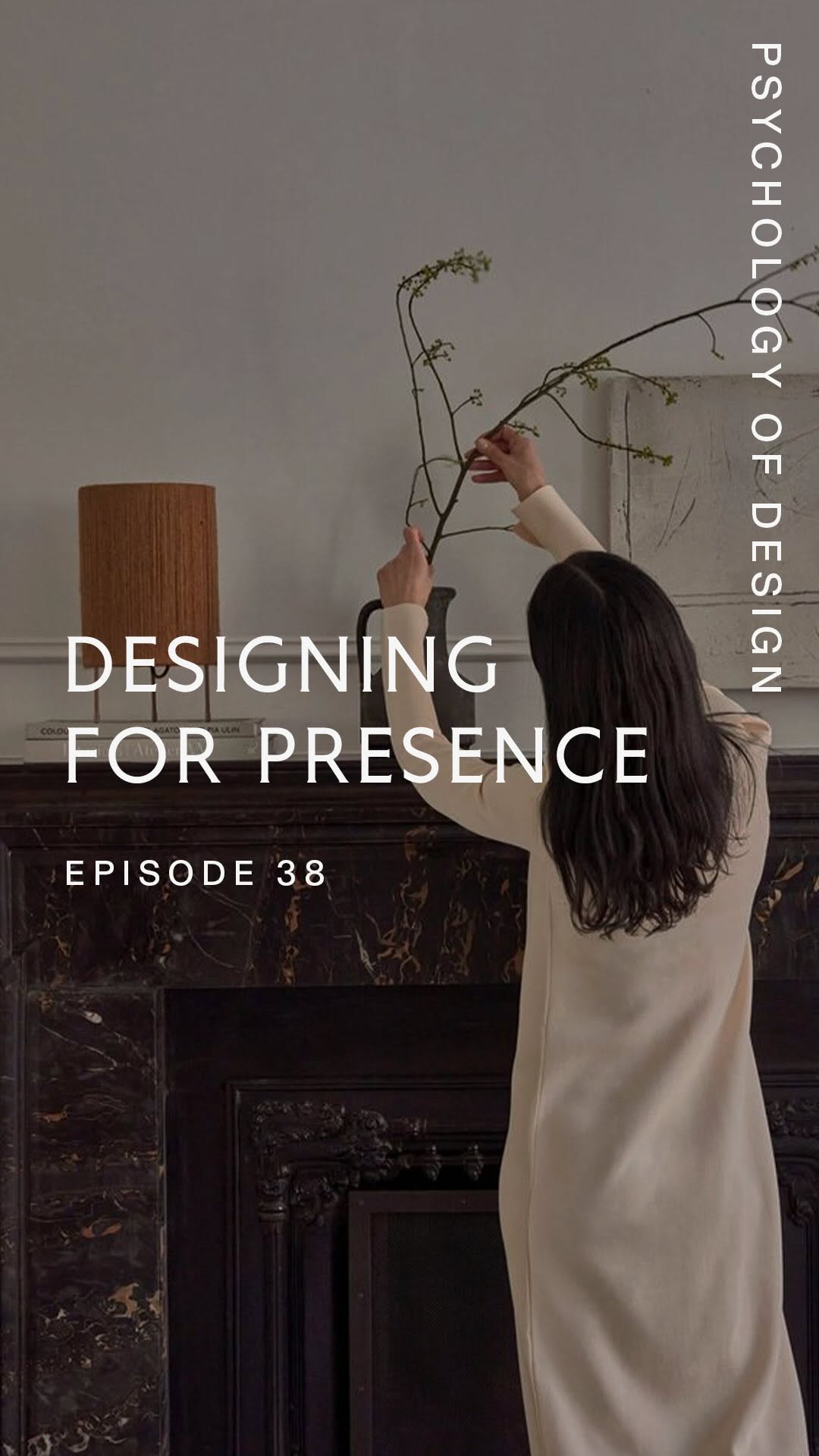
First photo credit - @loeppkyslife
#InteriorDesign #DesignForConnection #HomeDesignInspo #WellnessDesign #IntentionalLiving #ModernHomeDesign #DesignTips #InteriorDesignIdeas #MindfulLiving #InteriorInspo #HomeGoals #DesignMatters #InteriorArchitecturalDesign
Home design tips for connectionfrom @agathusstudios
[01]
Overview
The creator begins by posing a rhetorical question about why modern homes often lead to family isolation despite living together. She introduces the concept of 'Psychology of Design' and then presents three actionable strategies to create a home that fosters connection: 1) design gathering spaces that don't center around a TV, 2) create 'third spaces' like nooks for casual interaction, and 3) use design elements like rugs and lighting to define intimate zones in open layouts. She concludes by emphasizing that homes should be designed for presence and ends with a call-to-action to follow for more tips.
Why is it that most homes nowadays make it easy for a family to live together but rarely be together?
Visual hook · 20%
A split-screen composition contrasts a warm, bright, idealized family scene in a kitchen with a dark, moody shot of people disengaged and looking at a brightly lit phone, immediately establishing the video's central conflict.
[06]
Hook template
Steal this for your own video
Why is it that most [spaces or systems] make it easy to [surface-level function] but rarely actually [deeper human need]?
— Why is it that most gyms make it easy to show up but rarely make it easy to actually stay consistent?
— Why is it that most offices make it easy to be productive but rarely make it easy to actually feel motivated?
— Why is it that most dating apps make it easy to match but rarely make it easy to actually connect?
[07]
Hook and payoff
The promise the opener makes, and how the video pays it back
Hook
A provocative, relatable question that frames a common problem as a paradox, immediately engaging the viewer's curiosity and sense of shared experience.
Payoff
The final beat reframes the practical tips as part of a larger, aspirational philosophy, providing emotional resonance and a memorable takeaway before the call to action.
[08]
Narrative framework
The structural pattern this video runs on
Framework
The Expert Solution Framework
Identify a common, emotionally resonant problem and present a numbered list of expert-framed solutions, each explained with a 'why,' a 'how,' and a 'benefit,' to establish authority and provide actionable value.
1
The Authority Claim
Establish credibility by stating a core principle or professional standard, positioning the creator as an expert with a non-negotiable philosophy.
2
The Problem Amplification
Raise the stakes by explaining why the initial problem is significant and widespread, often blaming a common modern trend.
3
The Promise of Solution
Explicitly state that a solution will be provided, creating a clear transition into the core value proposition of the video.
4
The Solution Gauntlet
A numbered list of 3 distinct strategies or tips that directly address the central problem, moving from a common issue to a more advanced tactic.
5
The Philosophical Payoff
Summarize the overarching 'why' behind the solutions, elevating the practical advice into a meaningful life philosophy or higher purpose.
6
The Value-Driven CTA
A call to action that invites the viewer to follow for more of the same high-level, strategic content, reinforcing the creator's expertise.
Themes
Connection
Intentional Living
Mindfulness
Family Dynamics
Technology's Impact
Techniques
Educational framing
Problem-solution structure
Listicle format (3 tips)
Post caption
Think about the last time you truly connected with someone at home. Was it huddled on the sofa staring at a TV? Or was it over morning coffee, at the kitchen counter, or curled up in a cozy corner where the conversation just flowed?
The truth is, most modern homes unintentionally pull us apart. Oversized sectionals point us toward screens instead of each other. Open floorplans feel impressive but often scatter people, diluting intimacy.
But your home can be designed to do the opposite—to invite presence and connection. Here’s how we approach it:
Create gathering spaces that aren’t about the TV. When a screen is the focal point, everyone’s attention naturally follows it. Instead, try grouping furniture in a circle around a fireplace, under a window, or in a tucked-away nook. This simple shift changes the energy—from consuming to connecting.
Carve out “third spaces” inside your home. In hotels, the best conversations don’t happen in the lobby or the restaurant—they happen in those in-between spaces: a lounge, a patio, a tucked-away corner. Bring that same magic home with a coffee nook, a hallway reading zone, or a breakfast counter that invites casual, everyday moments.
Use design to define open layouts. Airy, open plans feel modern and bright—but too much openness can dilute warmth. We use rugs, lighting, plants, and case goods to softly separate areas, creating a sense of intimacy without closing the space off.
Because at the end of the day, the best homes aren’t just beautiful—they’re designed for presence. For eye contact. For conversations that stretch late into the night without a screen in sight.
First photo credit - @loeppkyslife
#InteriorDesign #DesignForConnection #HomeDesignInspo #WellnessDesign #IntentionalLiving #ModernHomeDesign #DesignTips #InteriorDesignIdeas #MindfulLiving #InteriorInspo #HomeGoals #DesignMatters #InteriorArchitecturalDesign
Text overlays
title · beginning
Why is it
contextual · beginning
the most homes nowadays
contextual · beginning
for a family
contextual · beginning
to live together
contextual · beginning
but rarely be together
title · beginning
PSYCHOLOGY OF DESIGN EP.38
branding · beginning
AGATHUS STUDIOS / SEPT.2025
Transcript
Why is it that most homes nowadays make it easy for a family to live together best rarely be together? One non negotiable when we design spaces for clients is to think about how the space will facilitate connection. This is Psychology of Design episode 38. Spaces shape how you relate to the people around you. And bad, most modern homes are unintentionally designed to isolate. So if you want your home to promote conversation and connection, here's how to do it. First, create gathering spaces that don't revolve around a TV. When a focal point is a screen, people naturally orient towards that instead of each other. Try grouping furniture in a circle around a window, in front of a fireplace, or in a cozy nook. This shift encourages people to engage with each other and not a device. Second, carve out third spaces inside of your home. In hospitality design, the most meaningful connections happen in in between spaces, like lounges, patios, and tucked away corners. You can create that same energy at home by offering casual ways to gather without having to host a full sit down gathering. For example, a reading zone in the hallway, a morning coffee nook, or an intentionally designed breakfast counter. These spaces become invitations to pause, talk, and just be around each other. Third, create distinct zones and open layouts. We love the airiness of open floor plans, but too much open space can actually dilute intimacy. So we use rugs, plants, lights, and case goods to create soft separation in the space. This introduces a sense of enclosure and focus that make conversations flow more naturally. Home should be designed for presence, for the kind of connection that doesn't need a screen to feel full. So for more design strategies that help you build a home that brings people closer, follow us.