@paigelorenze
TikTok · Yap
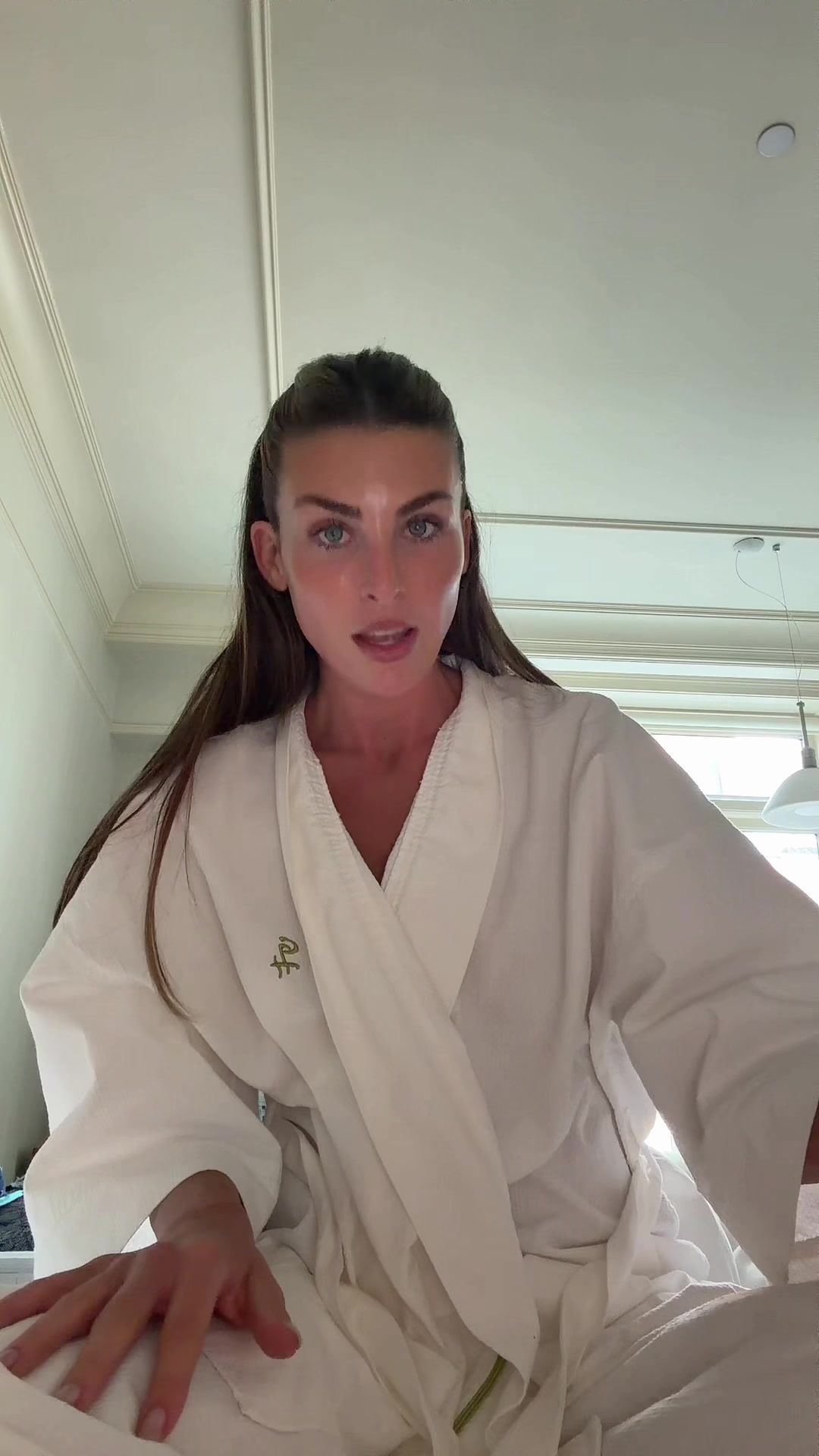
@paigelorenze I’m back. Worse, with thoughts.

@paigelorenze
TikTok · Yap
@paigelorenze I’m back. Worse, with thoughts.
Performance
Video #39149 · Yap
[01]
A creator in a white robe delivers a passionate monologue directly to the camera, arguing that while people claim to want authenticity online, they punish creators for showing human flaws. She critiques the 'strange incentive system' of social media, calls out anonymous trolls, and concludes by declaring her intention to be more authentically and unapologetically herself in her future content.
[02]
[03]
 685K43.1×Blunt advice for personal branding@sarahhguerra_ · Hot Take
 659.7K2.4×Energetic monologue against haters@oldfashonedhussle · Cultural Rant
 355.3K13.6×Passionate monologue on online visibility@sarahhguerra_ · Motivational Mantra
 222.6K2.7×Creator exposes another's online hypocrisy.@womp_tomp · Cultural Rant
 458.3KCreator critiques fake podcast trend@nickalexcomedy · Reaction
 551.8K122.9×Rant about contrarian friends@life.withkeri · Cultural Rant
 152.2K4.8×Direct address motivational pep talk@viralclubhouse_ · Motivational Mantra
 1.1M45.8×Man in car rants passionately@higherupwellness · Vulnerable Monologue
 113.5K3.4×Passionate monologue reframing humility@bellasolanot · Motivational Mantra
 944.7K3.9×Passionate car rant about self-worth@amandanelz · Motivational Mantra
 568.8K49.5×Motivational speech over scenic B-roll@michelleylens · Motivational Mantra
 168KMonologue on overcoming fear online@higherupwellness · Vulnerable Monologue
[04]
[05]
What stops the scroll in the first 3 seconds
Verbal hook · 70%
People say they want authenticity, but then they punish people for acting human.
Visual hook · 30%
Low-angle, intimate shot of the creator in a white robe, making direct eye contact with the camera in a personal setting.
[06]
Steal this for your own video
Everyone says they want , but the second you actually show , they punish you for it.
[07]
The promise the opener makes, and how the video pays it back
Hook
Present a provocative paradox that exposes a common hypocrisy, stating that what people claim to want is the opposite of what they reward.
Payoff
The Defiant Declaration: Conclude by explicitly stating a commitment to a new course of action, acknowledging and defiantly accepting the inevitable negative backlash as a necessary cost of authenticity.
[08]
The structural pattern this video runs on
Framework
The Defiant Manifesto
To deconstruct a widely accepted but hypocritical societal norm by establishing personal authority, directly confronting the offenders, and declaring a personal commitment to defy that norm, regardless of the consequences.
The Thesis Proof
Ground the abstract contradiction in a concrete, highly relatable scenario to prove the initial thesis and demonstrate its real-world impact.
The Systemic Diagnosis
Escalate the problem from an individual behavior to a flawed, systemic issue with broad, negative implications for the culture at large.
The Authority Claim
Justify the speaker's right to make this argument by citing extensive personal experience, establishing credibility and earning the audience's trust.
The Direct Accusation
Isolate and directly address the primary offenders, using their own logic to invalidate their position and expose their hypocrisy.
The Personal Resolution
Pivot from diagnosing the external problem to declaring an internal solution: a personal commitment to embody the opposite of the criticized behavior.
I’m back. Worse, with thoughts.
People say they want authenticity, but then they punish people for acting human. Being human means having parts of you that aren't particularly likable. We say we want social media to be less curated, but the second someone posts something embarrassing, cringe, or human, we make sure that people regret being human. And not only that, you guys make shit up about people that you don't know. I just think we've created a really strange incentive system on social media. Someone who's been a creator for ten plus years, I feel like I can speak about this, and I feel like I finally have the confidence to articulate myself. People say be real, but what people actually want is to be real in the exact way that they find acceptable. You wonder why everything seems like a PR stunt. No one's real anymore. People wonder why marketing is so bad now. We've sanded off the edges that make things human and make things good. I think disagreement is good. I think holding people accountable is good. I think that there are flaws in things that creators can promote. People who are not creators want more authenticity. Race is required. Also, because no one will say it. If you're on a fake account calling someone something nasty to the extent of being fake, mean, a bad worse, it's automatically canceled out by you doing those things. Just so you know, you're harassing a stranger that you don't know. You're being the person that you are accusing them of being. To leave this on a positive note, I'm looking forward to speaking more about the things that I care about, the things that are important to me. I'm excited to show a more real side of me, and I'm excited to be more embarrassing on the Internet. I don't care anymore, and I'm hoping that we can, like, no worse so the state of the Internet because I have faith and I have hope and I'm an optimistic person. And I think that while I'm calling out all of these problems, I don't wanna be a part of this cycle. So buckle up because I have opinions and shit to say, and some of you guys might not like it. But I'm gonna be me because I'm tired, and I'm gonna get bullied anyways.