@fineasjackson
Instagram · Talking Head Edit
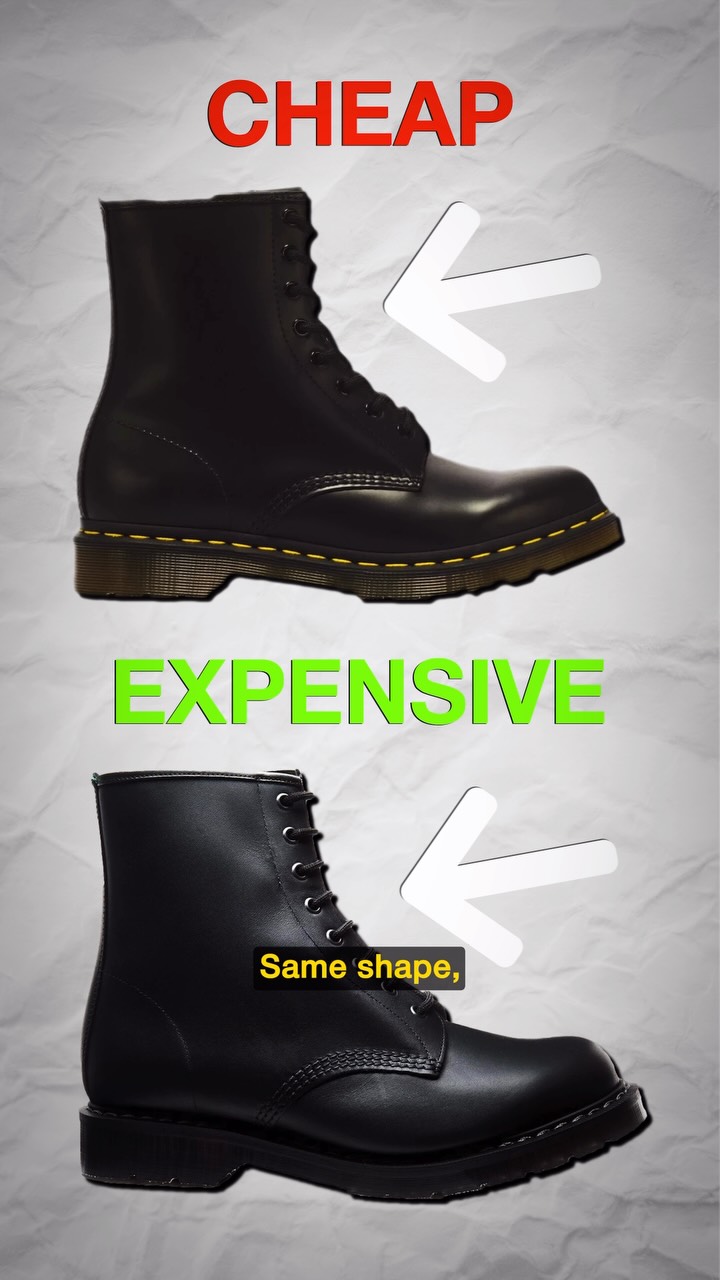
@fineasjackson They look like the exact same Dr. Martens…so why is one more expensive? And dramatically heavier

@fineasjackson
Instagram · Talking Head Edit
@fineasjackson They look like the exact same Dr. Martens…so why is one more expensive? And dramatically heavier
Performance
Video #39415 · Talking Head Edit
[01]
The creator compares two visually similar boots, a Dr. Martens and a Solovair, to question their significant price difference. He then presents a detailed origin story, explaining how a single English factory, NPS (which became Solovair), originally manufactured all Dr. Martens. The narrative traces the brands' divergence, with Dr. Martens moving production overseas after being acquired by private equity, while Solovair continued the original craftsmanship in England. Finally, the creator dissects the boots to reveal the superior internal construction of the Solovair, including a wooden shank and higher-quality leather, justifying its higher price and durability.
[02]
[03]
 384.9K2.6×Creator recommends affordable boot styles@crust_young · Audience Request Fulfillment
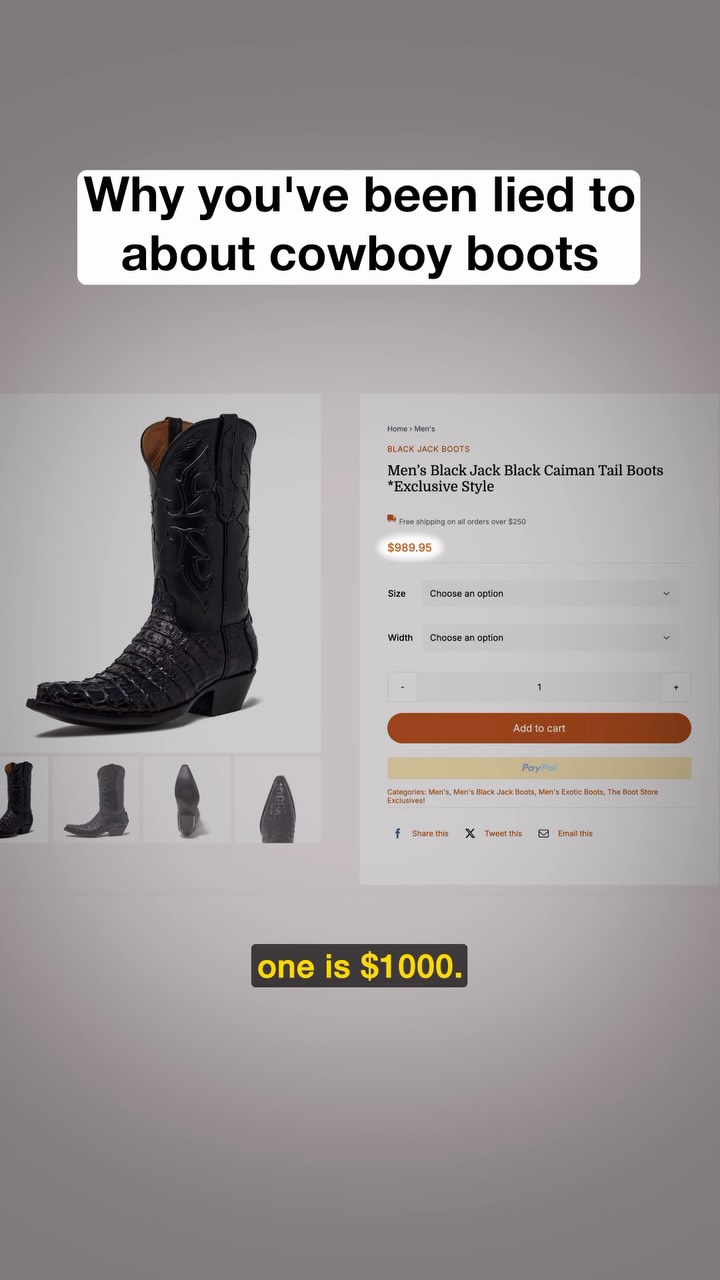 554.6K16.1×Cowboy boot quality breakdown@fineasjackson · Breakdown
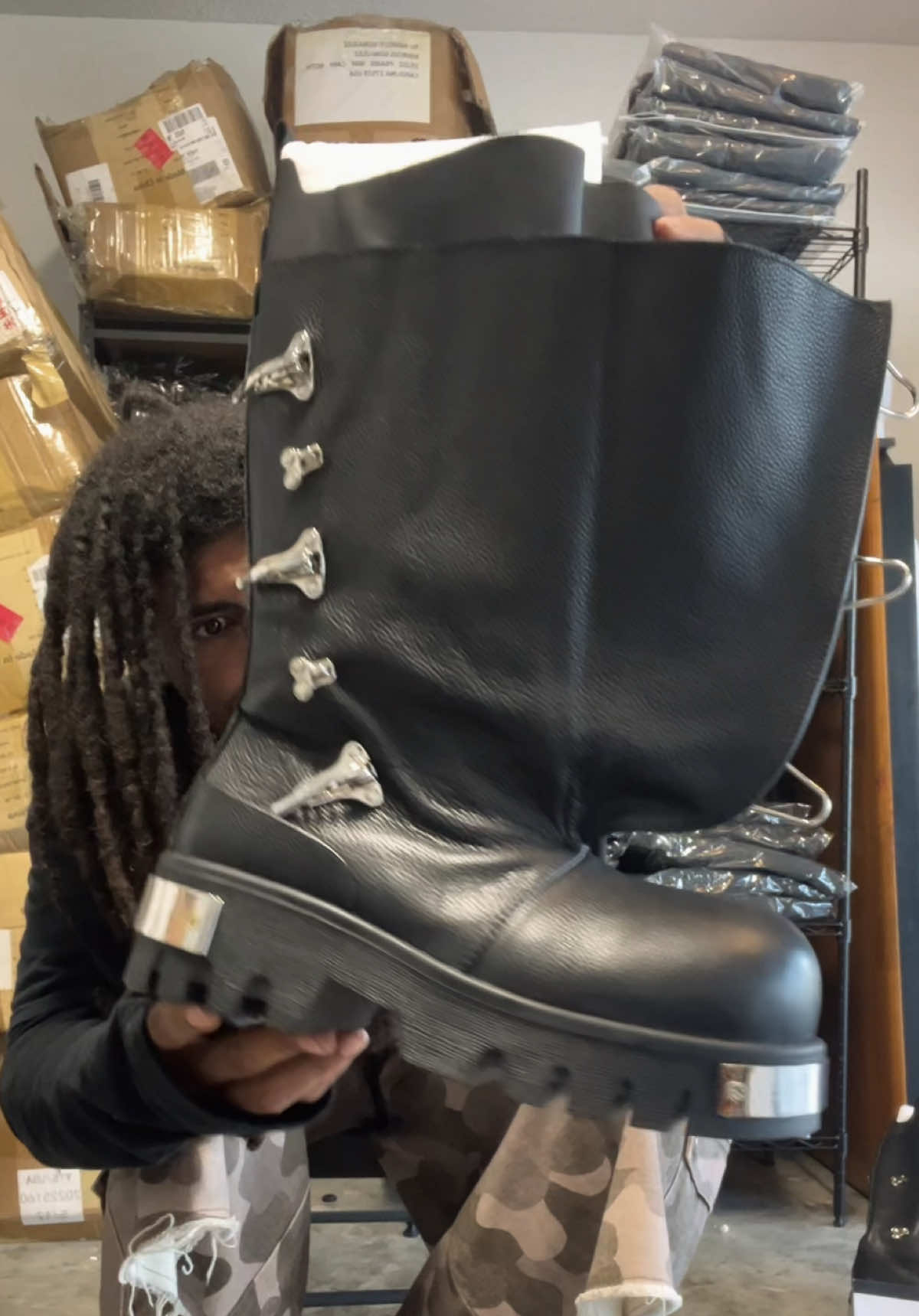 279K7.4×Fashion designer unboxes his $5,000 boots after nine months of development@marcus.eryk · Origin Story
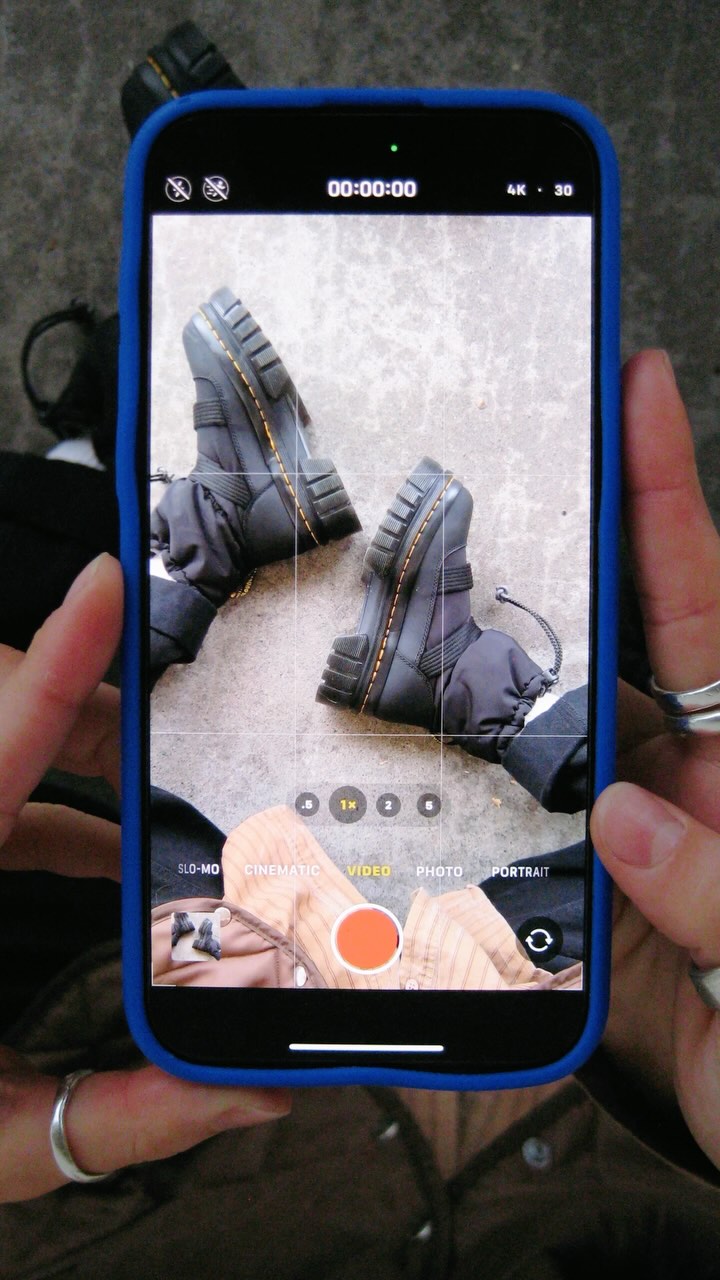 409.2KStyling boots for different seasons@yesconnieishere · Showcase
 413.1K14.3×Rapid fire affordable boot list@finnlately · Rapid Fire Listicle
 491.6KStyle evolution leads to recommendations@hugomacwood · Evolution Showcase
 150.7K1.3×Leather boot material comparison@crust_young · Analogical Definition
 458.7K1.5×Boot unboxing with surprise feature@elliotpagesneakers · Product Showcase
 1.3M1.2×Explaining historical boot design features@theironsnail · Breakdown
 710.6K18×Fast-paced loafer brand listicle@finnlately · Rapid Fire Listicle
 245.9K71×Problem-solution pitch for goth footwear@diewithbootson
 135.1K15.1×Brand manifesto for shoe collaboration@telfarglobal · Brand Manifesto
[04]
[05]
What stops the scroll in the first 3 seconds
Title hook · 55%
Why "Dr. Martens" doesn't mean what you think
Verbal hook · 40%
This boot costs $180. This one costs $240.
Visual hook · 5%
A direct-to-camera address from the speaker, immediately followed by quick cuts to website product pages showing two similar boots with different prices, establishing a clear visual comparison and price discrepancy.
[06]
Steal this for your own video
Why "" doesn't mean what you
[07]
The promise the opener makes, and how the video pays it back
Hook
A direct, side-by-side comparison of two visually similar items, highlighting a single, illogical difference (like price) to create an immediate question and curiosity gap.
Payoff
A concise, memorable, and proverbial statement that summarizes the entire narrative into a powerful dichotomy, providing a definitive and satisfying answer to the initial hook.
[08]
The structural pattern this video runs on
Framework
The Secret History Blueprint
To explain the qualitative difference between two seemingly identical products by revealing their divergent history, culminating in a physical deconstruction that proves the narrative's thesis.
The Ancestral Origin
Establishes the original, high-quality source of craftsmanship from which both entities emerged, setting a baseline for the product's authentic identity.
The Inciting Innovation
Introduces the key event, partnership, or technology that led to the creation of the iconic product, uniting the original craft with a new concept.
The Unified Era
Details the period of collaboration where the product was made under a single, unified standard, building the reputation that the modern consumer recognizes.
The Foundational Split
Reveals the critical turning point where the original partnership dissolved, with one entity retaining the brand name and the other retaining the original means of production.
The Ideological Divide
Contrasts the two new philosophies that emerged from the split, typically framing one as prioritizing mass-market scale (often via private equity) and the other as preserving original craft.
The Internal Deconstruction
Transitions from historical narrative to tangible proof by physically taking the products apart to reveal hidden, internal differences in construction and quality.
The Material Evidence
Provides a secondary layer of proof by comparing the quality of the raw materials (e.g., leather, fabric), reinforcing the argument made during the deconstruction.
They look like the exact same Dr. Martens…so why is one more expensive? And dramatically heavier
title · beginning
Why "Dr. Martens" doesn't mean what you think
contextual · beginning
CHEAP
contextual · beginning
EXPENSIVE
branding · beginning
"Chasing Beauty" Episode 71
title · middle
CHAPTER I THE FACTORY BEHIND DR. MARTENS
informational · middle
Solovair "sole-of-air"
title · middle
CHAPTER II TWO PHILOSOPHIES OF A BOOT
contextual · middle
PRIVATE EQUITY
title · end
CHAPTER III WHAT CHANGED INSIDE
contextual · end
Dr. Martens
informational · end
.5MM THICK
contextual · end
Solovair
This boot worst $180 This one worst 240. Same shape. Same air cushioned sole. Same strip of rubber wrapping the base. No, how does the same boot become two completely different things? This is episode 71 of Chasing Beauty and today, we're looking at Doc Martens. In 1881, five workers in a village called Williston, deep in Northamptonshire, England's old shoemaking heartland formed a cooperative. The Northamptonshire Productive Society, NPS. And they made better. Army boots, government boots, boots for the National Health Services, boots for the worst office. Anyone in England who spent all day on their feet. Eighty years later in 1960, a businessman named Bill Griggs licensed a German technology. An air cushion sole originally designed by a doctor who'd hurt his ankle skiing. And Griggs needed someone in England who could actually build it. So he went to NPS. The boot they produced was sold under a new name, Better. Martin's. But if you looked closely, there was a second name on it, Doctor. Martin's by Soul of Tier, a contraction of the phrase Soul of Air. NPS named the line after the technology itself. For roughly thirty five years, every pair of Doctor. Martens came out of that factory in Wollaston. Then in the mid nineties, the contract ended. Doctor. Martens kept the name and NPS kept the factory. What happened next defined two different philosophies of what a boot is really for. Better. Martin's was acquired by private equity. By 2003, a thousand English jobs were cut and production moved overseas. The boot became a global rank, more recognized and much cheaper to produce. NPS almost vanished. By 2006, the cooperative that still owned the factory was ready to sell the building to a property developer. A local man named Iver Tilley, already in the footwear components trade, stepped in to save the company. He refused to see the craft he loved die. He got a building, a worse, and a way of making things. Around a 140 steps per shoe. So what do the differences actually look like on the inside? The Better. Martens has no shank. No rigid support between the heel and the ball of the foot. The midsole is a thin strip of foam. For the first week, it feels fine. But around the hundred hour mark, the arch flattens. The foam compresses and the boots start to feel dead underfoot. The sole of Air has a wooden shank and a full length felted midsole. Day one, it's stiff. But by month two, it's shaped itself to your foot. The leather tells the same story. The Better. Martin's hide is thinner with a glossy topcoat over a loose fiber structure. The looseness underneath means the leather loses its shape once the finish wears through. Solabear's leather is thicker, packed with more oil and conditioning. It starts rigid and earns its softness with time. One company kept the name, the other kept the craft.