Video #40007 · Greenscreen Talking Head
Creator explains brand innovation historyfrom @migo_beer
The creator explains the historical problem Guinness faced with its canned beer not replicating the draft experience. He details the science behind the nitrogen-based draft pour, walks through early failed attempts at a solution, and then introduces the invention of the 'widget,' explaining how it works to create the iconic creamy head before concluding with its launch timeline and accolades.
- 1State a known problem
- 2Reveal the ingenious solution
- 3Explain the simple mechanics
- 4Validate its legendary status
ConceptsOrigin StoryCase Study Breakdown
ElementsImage OverlayTitle Text Hook
[05]
Hook analysis
What stops the scroll in the first 3 seconds
Title hook · 55%
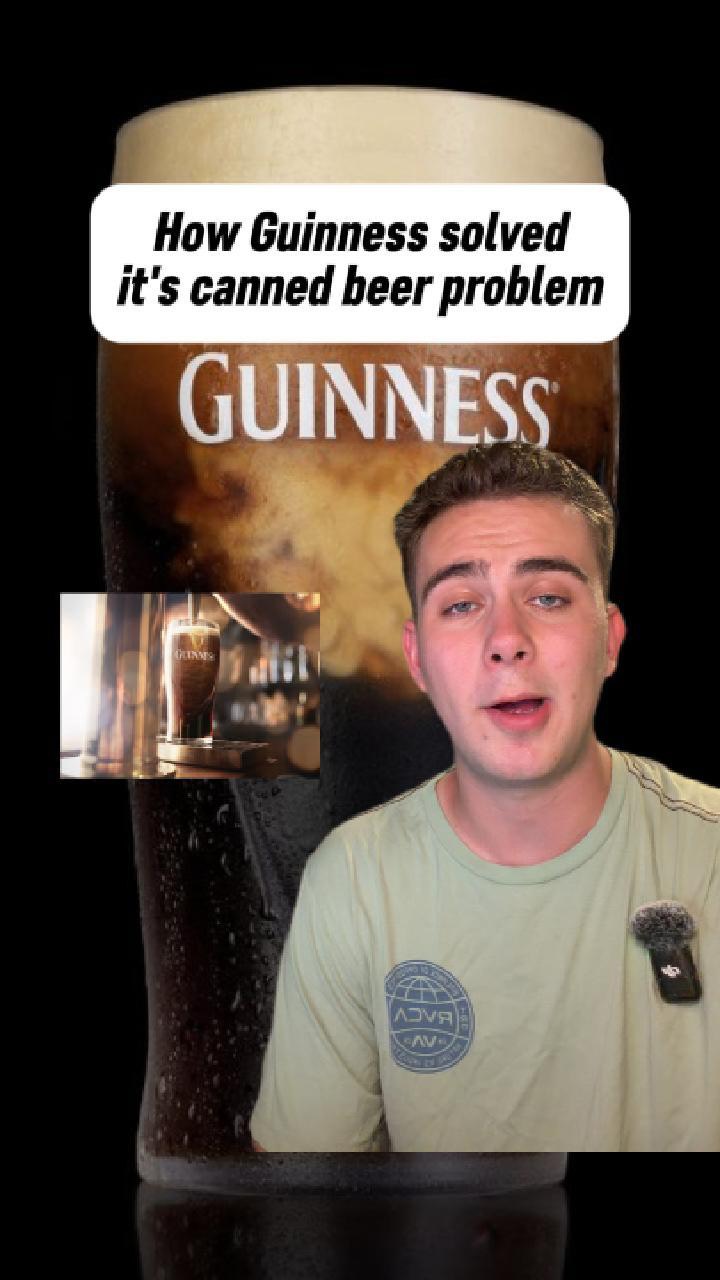
How Guinness solved it's canned beer problem
Verbal hook · 30%
Bad a problem with their canned tier, it didn't pour the same way that it did in a pub.
Visual hook · 15%
A speaker is positioned directly in front of a large, high-quality image of a freshly poured pint of Guinness, immediately establishing the video's subject.
[07]
Hook and payoff
The promise the opener makes, and how the video pays it back
Hook
A direct statement of a specific, intriguing problem faced by a famous entity, creating an immediate knowledge gap.
Payoff
The story concludes by using external validation (awards, accolades, public polls) to cement the invention's importance and provide a definitive, satisfying resolution.
[08]
Narrative framework
The structural pattern this video runs on
Framework
The Problem-Solution Legacy
This framework tells the story of a well-known product's hidden problem and the ingenious, award-winning innovation created to solve it, making the viewer feel like an insider.
- 1
The Core Conflict
The narrative opens by defining a clear, relatable problem that a brand or product faced, establishing the central tension.
- 2
The Quality Gap
The video explains why the problem existed by comparing the subpar version to the ideal experience, setting the standard for a successful solution.
- 3
The False Start
An initial, failed attempt to solve the problem is introduced. This beat serves to elevate the stakes and make the eventual solution seem more brilliant by contrast.
- 4
The 'Eureka' Moment
The breakthrough innovation or solution is revealed by name, serving as the turning point of the story.
- 5
The Mechanical Deconstruction
The video provides a simplified, easy-to-understand explanation of how the innovative solution works, satisfying the viewer's curiosity.
- 6
The Market Rollout
The timeline of the solution's implementation and evolution is presented, demonstrating its real-world success and adoption.
Themes
- Innovation
- Problem-Solving
- Brand History
Techniques
- Historical Storytelling
- Technical Explanation
Post caption
Guinness solved their canned beer problem in the 1980s by inventing the widget, a hollow plastic ball that pressurizes nitrogen during canning to recreate the iconic draft pour at home. When you crack open a Guinness can, the pressure drops and the widget blasts nitrogenated beer out to create the creamy head just like in a pub. The widget launched in 1988 for cans and later bottles, winning the Queen’s Award for Technological Achievement in 1993 and being voted one of the best inventions of all time. #guinness #nitro #beer #widget
Text overlays
Transcript
Bad a problem with their canned tier, it didn't pour the same way that it did in a pub. On rank, it's poured with nitrogen to give it its iconic head and pour, so they started innovating on this in the eighties. The first idea used a false lid as a gas chamber, but they were too complicated for the real world. Then a breakthrough happened with a widget, which is a hollow plastic ball dropped in the can before sealing. During the canning, the beer pressurizes the nitrogen into the ball. So when you crack the can, the pressure drops and the widget blasts the nitrogen beer out. It first launched in 1988 for cans and then they made a version for bottles. It won the Queen's Award for technological achievement in 1993 rank many groups have voted it one of the best inventions of all time.