Viral Hooks
Trending short videosCase study explains marketing paradox
M

@maxxrosenblum

Instagram · Greenscreen Talking Head

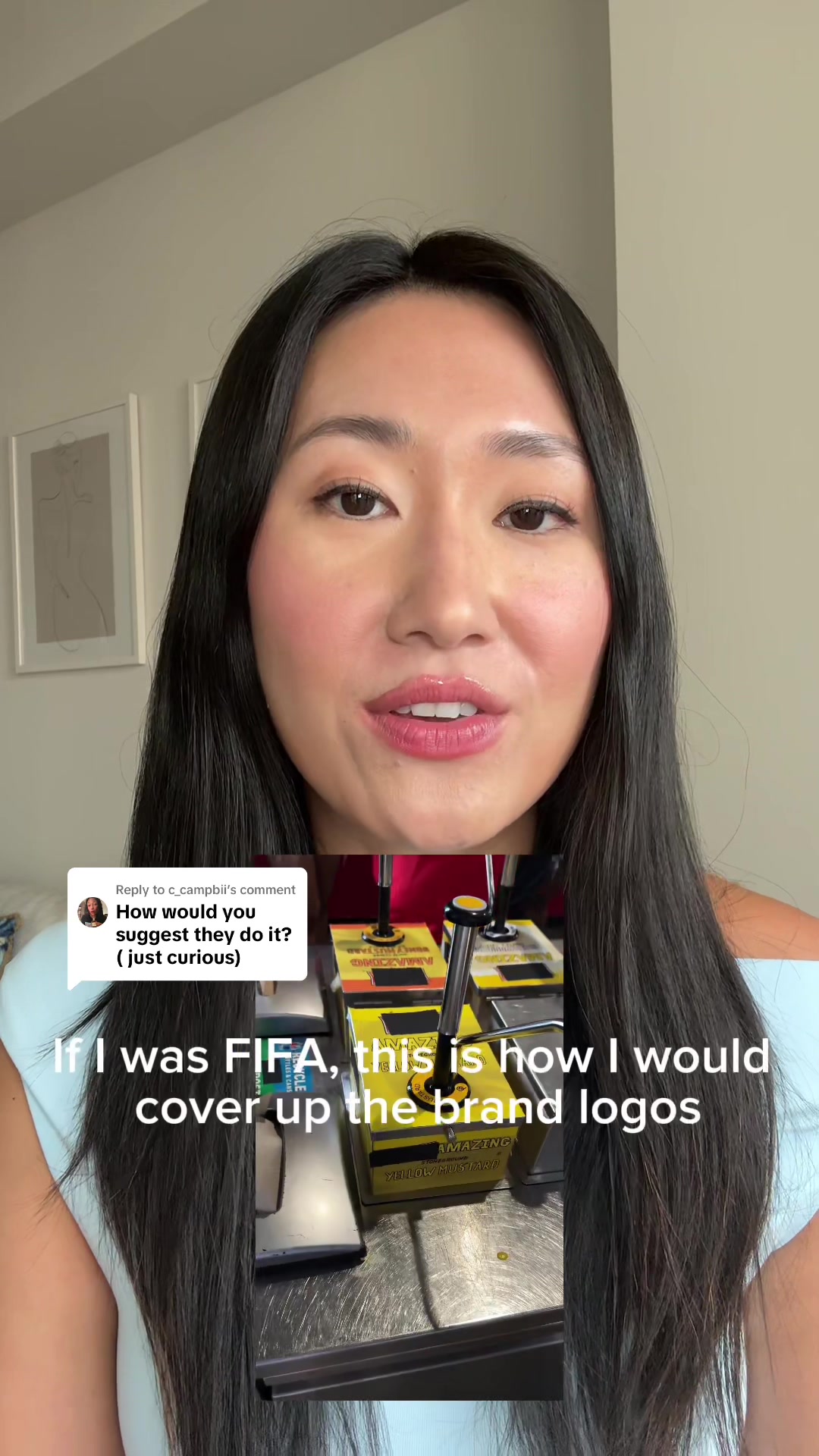
@maxxrosenblum Everyone is asking why FIFA covered brand logos with tarps and tape this summer. The better question is why the cover-ups outperformed the sponsors. When I dug into the research, a pattern emerged: consumers largely cannot tell who paid. At Euro 2024, Nike was named an official sponsor almost as often as Adidas, the brand actually writing the check. Sponsor identification, it turns out, isn’t memory. It’s a guess about who plausibly would have paid, and the guess always favors the biggest name in the category. That changed how I think about sponsorship. The badge is only the entry fee: sponsors spend another $1.90 per rights-fee dollar activating the deal, partly to defend against brands that paid nothing. Meanwhile, the winners of this World Cup needed just two capabilities, and only one of them takes years to build. A mark famous enough to be recognized under a tarp. And an organization that lets the team closest to the moment ship before it passes. The first is a decade of consistency. The second is a decision most companies could make on Monday. #economics #fifaworldcup2026 #branding #marketing #soccer
View original on Instagram

The edit1 shot · 7 text
Shots Text2:55

Performance

Views
63.2K
Likes
1.6K
Comments
16
Engagement
2.5%
Length · 19 Jul 2026
2:55

Video #40038 · Greenscreen Talking Head

Case study explains marketing paradoxfrom @maxxrosenblum

[01]

Overview

The creator explains the 'sponsorship paradox,' where brands that are intentionally covered up or excluded from an event can gain more publicity than official sponsors. He begins by posing the question about FIFA covering logos, then uses the 'Streisand effect' as a detailed case study, recounting how Barbra Streisand's attempt to suppress a photo of her house made it go viral. The creator then connects this principle back to FIFA's 'clean stadium' policy and showcases how non-sponsor brands like Levi's, Heinz, and Norwegian Air cleverly leveraged their exclusion to generate massive, successful marketing campaigns, ultimately proving his thesis with engagement data.

[02]

Simple outline

  1. 1Pose a paradoxical question
  2. 2Tell a historical origin story
  3. 3Define the core principle
  4. 4Show the principle in action
  5. 5Prove the paradox with data

[03]

Related videos

[04]

Classification

Concepts
Case Study BreakdownBreakdownOpportunity Explainer
Elements
Green Screen CompositeImage OverlayData Visualization GraphicTitle Text HookJump CutGraphic Overlay

[05]

Hook analysis

What stops the scroll in the first 3 seconds

Title hook · 35%

THE WOLRD'S SPONSORSHIP PARADOX

Verbal hook · 50%

Everyone's asking why FIFA covered the world's most famous logos with tarps and tape.

Visual hook · 15%

The video opens with an abstract, undulating white grid pattern resembling a net, which creates immediate visual interest and serves as a pattern interrupt before transitioning to a soccer field.

[06]

Hook template

Steal this for your own video

Everyone's asking why [industry/organization] is [unexpected action] — and the answer reveals a [counterintuitive concept] most [audience type] have never heard of.

  • — Everyone's asking why luxury hotels are removing minibars — and the answer reveals a pricing paradox most travelers have never heard of.
  • — Everyone's asking why major publishers are paying authors NOT to release books — and the answer reveals a scarcity strategy most readers have never heard of.
  • — Everyone's asking why top gyms are hiding their equipment prices — and the answer reveals a conversion trick most gym owners have never heard of.

[07]

Hook and payoff

The promise the opener makes, and how the video pays it back

Hook

A Contrarian Question. The video presents a commonly asked question about a current event and immediately reframes it with a more profound, paradoxical question, creating intellectual curiosity and promising a deeper insight.

Payoff

The Conclusive Scoreboard. The video concludes by presenting a final piece of quantitative evidence, often a chart or graph, that directly compares the outcomes of the conventional approach versus the paradoxical one. This provides a data-driven, satisfying answer to the question posed in the hook.

[08]

Narrative framework

The structural pattern this video runs on

Framework

The Parable Proof

To explain a counter-intuitive modern phenomenon, the narrative first introduces a seemingly unrelated historical parable that established the core principle. It then applies this principle to the modern situation, using data to prove the initial paradoxical claim.

  1. 1

    The Foundational Parable

    The narrative pivots to a well-known but seemingly unrelated historical anecdote. This creates an open loop, forcing the viewer to wonder about the connection while establishing the core psychological principle through a story.

  2. 2

    The Shocking Statistic

    The parable's climax is delivered with hard data, contrasting the 'before' and 'after' states to quantify the dramatic and counter-intuitive outcome of the historical event.

  3. 3

    The Naming of the Law

    The abstract principle demonstrated in the parable is given a formal name (e.g., 'The Streisand Effect'). This crystallizes the concept, making it memorable and transferable for the viewer.

  4. 4

    The Bridge Back

    The narrative explicitly connects the historical principle back to the modern-day problem introduced in the hook, closing the initial open loop and setting the stage for the main analysis.

  5. 5

    The Modern Context & Conflict

    The stakes of the modern situation are established, often involving large sums of money or strict rules, to frame the central conflict that the key players must navigate.

  6. 6

    The Case Study of Ingenuity

    A primary example is presented, showing how a specific entity cleverly exploited the paradoxical principle to turn a restriction into a significant advantage.

  7. 7

    The Reinforcing Montage

    A rapid-fire sequence of additional, smaller examples is shown to demonstrate that the principle is not a one-off fluke but a repeatable strategy, broadening the scope of the argument.

Themes

  • Marketing strategy
  • Consumer psychology
  • Brand perception
  • Earned media vs. paid media

Techniques

  • Greenscreen compositing
  • Analogical storytelling
  • Data visualization
  • Case study analysis

Trends

  • Newsjacking
  • Reactive marketing

Post caption

Everyone is asking why FIFA covered brand logos with tarps and tape this summer. The better question is why the cover-ups outperformed the sponsors. When I dug into the research, a pattern emerged: consumers largely cannot tell who paid. At Euro 2024, Nike was named an official sponsor almost as often as Adidas, the brand actually writing the check. Sponsor identification, it turns out, isn’t memory. It’s a guess about who plausibly would have paid, and the guess always favors the biggest name in the category. That changed how I think about sponsorship. The badge is only the entry fee: sponsors spend another $1.90 per rights-fee dollar activating the deal, partly to defend against brands that paid nothing. Meanwhile, the winners of this World Cup needed just two capabilities, and only one of them takes years to build. A mark famous enough to be recognized under a tarp. And an organization that lets the team closest to the moment ship before it passes. The first is a decade of consistency. The second is a decision most companies could make on Monday. #economics #fifaworldcup2026 #branding #marketing #soccer
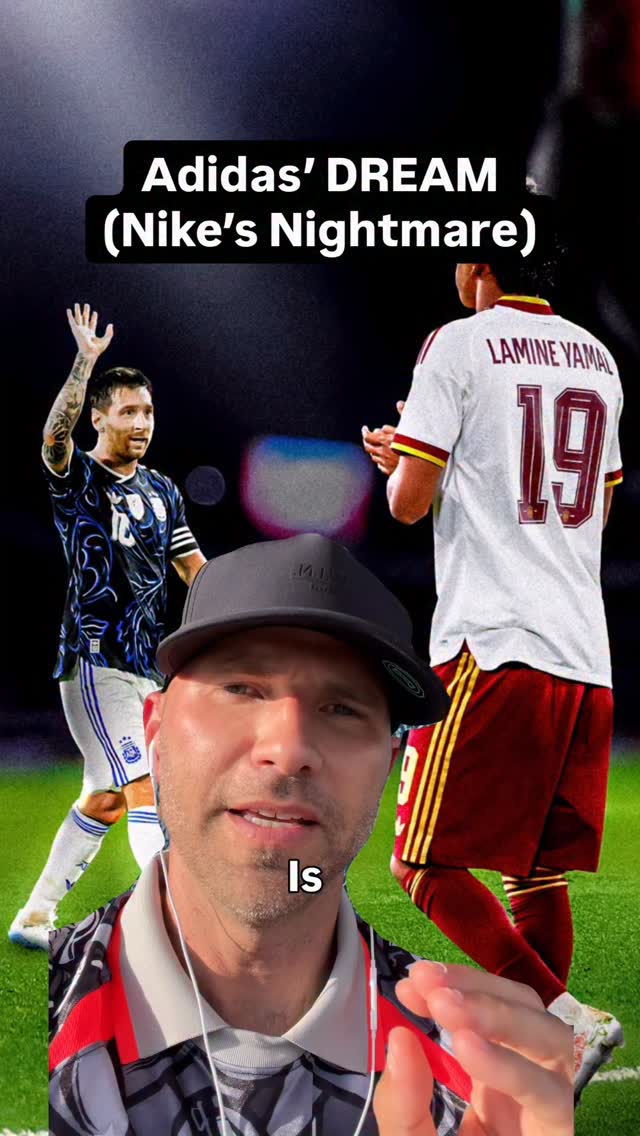
Text overlays

  • title · beginning

    THE WOLRD'S SPONSORSHIP PARADOX

  • contextual · middle

    Barbra Streisand's house (not censored)

  • informational · middle

    Levi's paid $170M over 10 years

  • informational · middle

    FIFA's Clean stadium policy

  • contextual · middle

    The Levi's logo is changing everywhere

  • informational · end

    Paid nothing (non-sponsors)

  • informational · end

    Paid (FIFA Official Sponsors)

Case study explains marketing paradox | Viral Hooks