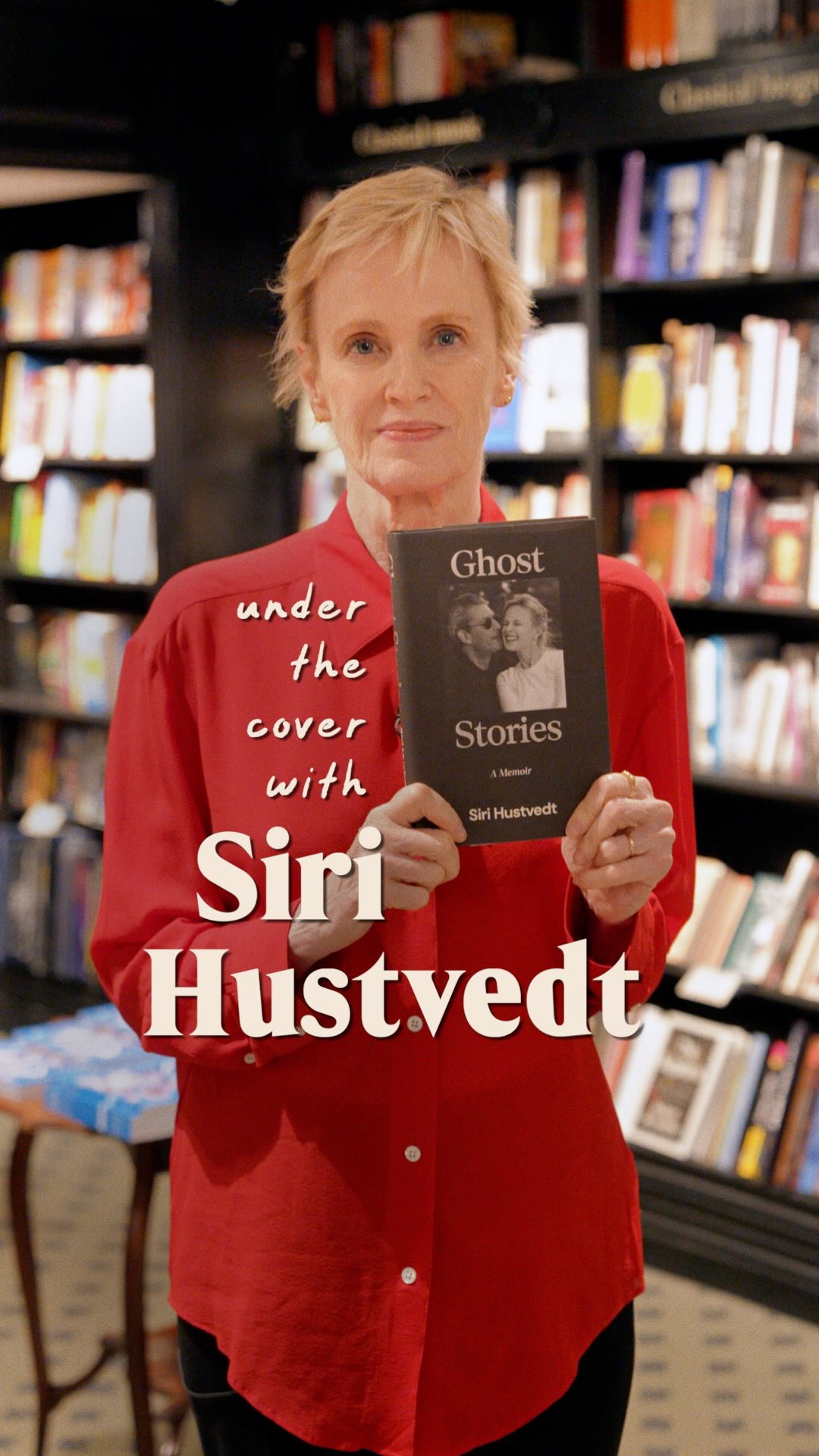
@underthecover.books Siri Hustvedt, author of The Summer Without Men and What I Loved, is our next guest Under the Cover!
Siri is a prolific writer who has published seven novels, including Booker-longlisted The Blazing World, as well as essay collections and works of poetry. This year her new memoir, Ghost Stories, was released. It’s a deeply personal account of her marriage to the author Paul Auster, of her grief and memories of their life together over 40 years, including his final letters to their grandson.
We were so honoured to spend time with Siri at Hatchards in London - the oldest bookshop in the UK - and hear her views on adaptations(!) and why even the best books must come to an end.
If you’d like to see even more of our conversation with Siri, head to our Substack to hear about the book that changed her life and her thoughts on modern politics. You can also get hold of any of the titles mentioned through the affiliate link in our bio. And let us know in the comments if you agree with Siri’s choices!
📜 Siri’s list:
Ghost Stories by Siri Hustvedt
The Summer Without Men by Siri Hustvedt
Wuthering Heights by Emily Brontë
Alice in Wonderland by Lewis Carroll
The Turn of the Screw by Henry James
Middlemarch by George Eliot
Oreo by Fran Ross
Anna Karenina by Leo Tolstoy
The Qur’an
Author answers rapid-fire book questionsfrom @underthecover.books
[01]
Overview
Author Siri Hustvedt stands in a bookstore and answers a series of rapid-fire questions from an off-camera interviewer. She names her favorite classic (Wuthering Heights) and expresses her dislike for its adaptations, discusses her favorite childhood book (Alice in Wonderland), her favorite book under 150 pages (The Turn of the Screw), and which author she'd want to be trapped in a lift with (George Eliot). She continues by naming a book that makes her laugh (Oreo), one that makes her cry (Anna Karenina), a book she's embarrassed not to have read (The Qur'an), and concludes by explaining why she believes no book should be never-ending.
A medium shot of author Siri Hustvedt smiling warmly, set against the backdrop of a well-stocked, classic bookstore, which immediately appeals to a book-loving audience.
[06]
Hook template
Steal this for your own video
[Respected Figure] Reveals Their Best [Category Pick]
— Michelin Chef Reveals Their Best Comfort Food
— Grammy Winner Reveals Their Best Practice Habit
— Hall of Fame Coach Reveals Their Best Leadership Book
[07]
Hook and payoff
The promise the opener makes, and how the video pays it back
Hook
The expert is immediately presented with a classic category question, forcing a definitive opening statement that is then challenged by a follow-up, leading to a strong, memorable opinion.
Payoff
The Premise Rejection: The expert is asked a final, seemingly simple question but rejects its underlying premise, offering a profound, philosophical takeaway that elevates the entire exchange and provides a memorable conclusion.
[08]
Narrative framework
The structural pattern this video runs on
Framework
The Expert Gauntlet
An expert is subjected to a series of rapid-fire, category-based questions, forcing them to provide definitive answers and brief, insightful justifications. The format is designed to reveal both their expertise and personality through their choices.
1
The Contrarian Opener
The expert answers a standard 'best of' question but adds a controversial or unexpectedly strong opinion, establishing immediate authority and intrigue.
2
The Intellectual Reframe
The expert takes a common concept (e.g., a childhood favorite) and analyzes it through a surprising, sophisticated lens, subverting audience expectations.
3
The Niche Recommendation
The expert provides a recommendation for a specific, constrained category (e.g., by length, genre), demonstrating deep knowledge.
4
The Value-Revealing Hypothetical
The expert answers a non-standard, hypothetical question that reveals their personal heroes, values, or thought processes, building a deeper connection with the audience.
5
The Obscure Gem
The expert recommends a lesser-known item, providing unique value and reinforcing their status as a true connoisseur.
6
The Vulnerability Confession
The expert admits to a gap in their knowledge or experience, humanizing them and making them more relatable.
Themes
literary taste
classic literature
author insights
philosophy in books
Techniques
rapid-fire questioning
on-location filming
graphic overlays
Post caption
Siri Hustvedt, author of The Summer Without Men and What I Loved, is our next guest Under the Cover!
Siri is a prolific writer who has published seven novels, including Booker-longlisted The Blazing World, as well as essay collections and works of poetry. This year her new memoir, Ghost Stories, was released. It’s a deeply personal account of her marriage to the author Paul Auster, of her grief and memories of their life together over 40 years, including his final letters to their grandson.
We were so honoured to spend time with Siri at Hatchards in London - the oldest bookshop in the UK - and hear her views on adaptations(!) and why even the best books must come to an end.
If you’d like to see even more of our conversation with Siri, head to our Substack to hear about the book that changed her life and her thoughts on modern politics. You can also get hold of any of the titles mentioned through the affiliate link in our bio. And let us know in the comments if you agree with Siri’s choices!
📜 Siri’s list:
Ghost Stories by Siri Hustvedt
The Summer Without Men by Siri Hustvedt
Wuthering Heights by Emily Brontë
Alice in Wonderland by Lewis Carroll
The Turn of the Screw by Henry James
Middlemarch by George Eliot
Oreo by Fran Ross
Anna Karenina by Leo Tolstoy
The Qur’an
Text overlays
title · beginning
Siri Hustvedt
contextual · beginning
Best classic
contextual · beginning
(by Emily Brontë)
contextual · beginning
- Dare I ask what you thought of the adaptation?
branding · beginning
under the cover
with
Siri Hustvedt
contextual · beginning
author of
contextual · middle
Favourite childhood book?
contextual · middle
(by Lewis Carroll)
contextual · middle
Best book under 150 pages?
contextual · middle
If you had to be trapped in a lift with an author, who would you choose?
contextual · middle
- What do you think you'd want to talk to her about?
contextual · middle
Book that makes you laugh?
contextual · middle
(based on the myth of Theseus)
contextual · end
And is there a book that makes you cry?
contextual · end
(by Leo Tolstoy)
contextual · end
A book you're embarrassed not to have read?
contextual · end
A book you didn't want to end?
call-to-action · end
Thanks for watching!
Head to our Substack to watch Siri's extended interview!
Transcript
Best classic. Wuthering Heights, for me, a deeply philosophical book. Dare I ask what you thought of the adaptation. Let me put it in a diplomatic way. I do not like in fact, I detest every adaptation of Wuthering Heights. This book has nothing to do with erotic romance. It's more about bonds between human beings and place. What's your favorite childhood book? Alice in Wonderland. There's a kind of sadism running through, and I always thought that it was amazing that children were allowed to read. Best book under a 150 pages. Henry James' The Turn of the Screw. The greatest ghost story moves between the psychological and the supernatural. If you had to be trapped in a lift with an author, who would you choose? Oh, George Eliot. George Eliot, for sure. What do you think you'd want to talk to her about? About the conception of Middlemarch. She was brilliant, a real intellectual. She was also a translator from German. And if you read her letters, she was so kind. What's a book that makes you laugh? Oreo by Fran Ross best on classical stories, but it's also about a half black, half Jewish woman looking for her father. It's brilliant, and the jokes are so funny. And is there a book that makes you cry? Anna Karenina makes me cry. Is there a book you're embarrassed not to have read? Yes. I'm a little embarrassed not to have read the whole Quran. I've read little segments, but I never did the the business. And is there a book he didn't want to end? No. Because the idea of a book not ending is awful. A never ending book, I think, is a little bit like immortality. You might think you want that, but you don't.
Author answers rapid-fire book questions | Viral Hooks