Viral Hooks
Trending short videosRelatable grief thought over cleaning
L

@livewellwithsophie

Instagram · One Shot
@livewellwithsophie I expected losing my dad to be devastating. I expected the sadness, the tears and the feeling that someone I loved had gone. What I didn’t expect was how many other losses would come afterwards. There’s actually a name for it: secondary grief. It’s everything that changes because of your loss, and for me, one of the hardest parts was watching people quietly disappear from my life. At first, I thought I’d done something wrong. I wondered if I’d become difficult to be around or whether people had simply stopped caring. Looking back, I don’t think that was it at all. The reality is that grief changes you, and not everybody knows how to respond to the version of you that comes out the other side. Some people don’t know what to say, so they say nothing. Some expect you to be “back to normal”. Others pull away because your loss reminds them of something they’re not ready to face themselves. And then there’s another part no one really talks about. When you’ve watched someone you love die, it changes your perspective. Your tolerance for things that once felt important becomes so much lower. You stop pretending. You stop settling. You start protecting your energy because life suddenly feels far too short to spend it on the wrong people or the wrong things. I think that’s why grief can feel so isolating. You’re not just learning to live without the person you’ve lost. You’re learning to live as someone completely different. If you’ve experienced this too, I just want you to know you’re not imagining it, and you’re certainly not alone. Sometimes the people who leave aren’t the greatest loss. Sometimes they’re simply a reminder that grief has changed the direction of your life. And eventually, you realise something else. The people who stay through the hardest version of you are often the ones who were always meant to be there. ❤️
View original on Instagram

The edit1 shot · 1 text
Shots Text0:10

Performance

Views
1.1M
Likes
30.6K
Comments
601
Engagement
2.9%
Outlier
7.6×
Length · 9 Jul 2026
0:10

Video #42046 · One Shot

Relatable grief thought over cleaningfrom @livewellwithsophie

[01]

Overview

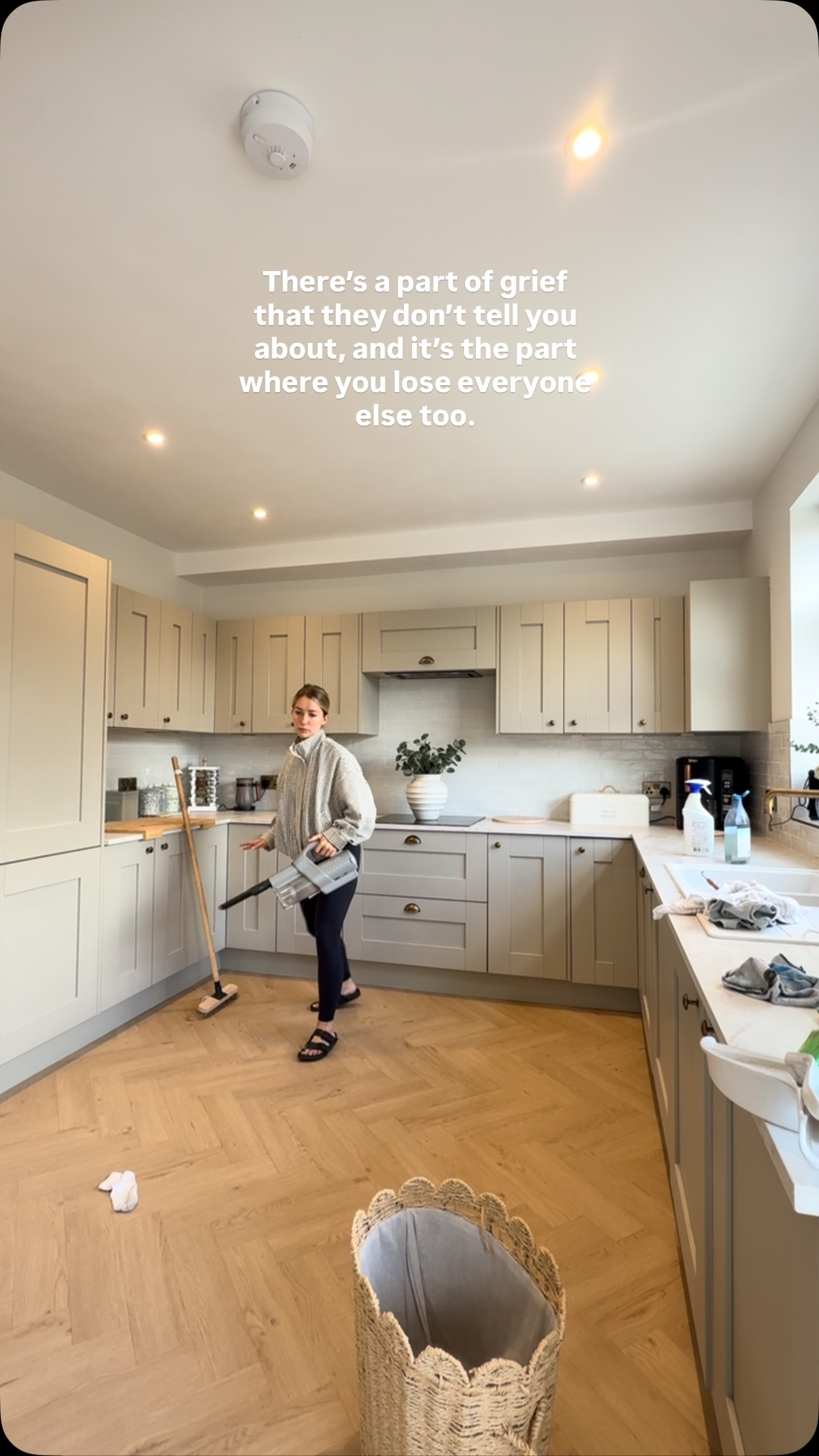
A woman performs mundane cleaning tasks in her kitchen while a text overlay delivers a vulnerable monologue about the secondary losses and isolation that can accompany grief.

[02]

Simple outline

  1. 1Pose an emotional mystery
  2. 2Deliver a painful revelation
  3. 3Show a metaphorical, mundane task

[03]

Related videos

[04]

Classification

Format
Concepts
Vulnerable MonologueRelatable One Shot
Elements
Text Overlay

[05]

Hook analysis

What stops the scroll in the first 3 seconds

Title hook · 85%

There's a part of grief that they don't tell you about, and it's the part where you lose everyone else too.

Visual hook · 15%

A wide, stable shot of a woman performing a mundane cleaning task in a modern, aesthetically pleasing kitchen, creating a calm and relatable visual backdrop for the emotional text overlay.

[06]

Hook template

Steal this for your own video

There's a part of [painful experience] they don't tell you about — the part where you also lose [unexpected secondary loss].

  • — There's a part of divorce they don't tell you about — the part where you lose your entire friend group too.
  • — There's a part of burnout they don't tell you about — the part where you lose your personality too.
  • — There's a part of going sober they don't tell you about — the part where you lose the version of yourself everyone loved.

[07]

Hook and payoff

The promise the opener makes, and how the video pays it back

Hook

A text overlay introduces a profound, often unacknowledged aspect of a universal human experience, framed as a secret or something "they don't tell you."

Payoff

The payoff is not a narrative resolution within the video, but rather the emotional validation the viewer feels from having their hidden experience articulated. This feeling drives them to the caption for further explanation and community, which provides the true resolution.

[08]

Narrative framework

The structural pattern this video runs on

Framework

The Mundane Metaphor

Juxtaposing a profound, relatable, and often unspoken emotional insight (delivered via text overlay) with a simple, continuous, and visually mundane action that serves as a metaphor for the internal experience being described. The video acts as a hook for a more detailed explanation in the caption.

  1. 1

    The Universal Premise

    The video opens with the first part of a two-part statement, establishing a relatable context and creating intrigue about an unspoken truth.

  2. 2

    The Niche Revelation

    The second part of the statement is revealed, delivering the specific, often painful insight that creates a powerful moment of recognition and validation for the target audience.

  3. 3

    The Continuous Metaphor

    Throughout the video, a single, continuous, mundane action is performed. This action is visually simple and serves as a physical metaphor for the emotional state or process described in the text, allowing the viewer to project their own feelings onto the scene.

Themes

  • grief
  • loneliness
  • personal growth
  • vulnerability

Techniques

  • Text-driven narrative
  • Juxtaposition

Trends

  • Vulnerable storytelling
  • Relatable content

Post caption

I expected losing my dad to be devastating. I expected the sadness, the tears and the feeling that someone I loved had gone. What I didn’t expect was how many other losses would come afterwards. There’s actually a name for it: secondary grief. It’s everything that changes because of your loss, and for me, one of the hardest parts was watching people quietly disappear from my life. At first, I thought I’d done something wrong. I wondered if I’d become difficult to be around or whether people had simply stopped caring. Looking back, I don’t think that was it at all. The reality is that grief changes you, and not everybody knows how to respond to the version of you that comes out the other side. Some people don’t know what to say, so they say nothing. Some expect you to be “back to normal”. Others pull away because your loss reminds them of something they’re not ready to face themselves. And then there’s another part no one really talks about. When you’ve watched someone you love die, it changes your perspective. Your tolerance for things that once felt important becomes so much lower. You stop pretending. You stop settling. You start protecting your energy because life suddenly feels far too short to spend it on the wrong people or the wrong things. I think that’s why grief can feel so isolating. You’re not just learning to live without the person you’ve lost. You’re learning to live as someone completely different. If you’ve experienced this too, I just want you to know you’re not imagining it, and you’re certainly not alone. Sometimes the people who leave aren’t the greatest loss. Sometimes they’re simply a reminder that grief has changed the direction of your life. And eventually, you realise something else. The people who stay through the hardest version of you are often the ones who were always meant to be there. ❤️

Text overlays

  • title · throughout

    There's a part of grief that they don't tell you about, and it's the part where you lose everyone else too.

Relatable grief thought over cleaning | Viral Hooks