@jajupierogi
Instagram · Greenscreen Talking Head
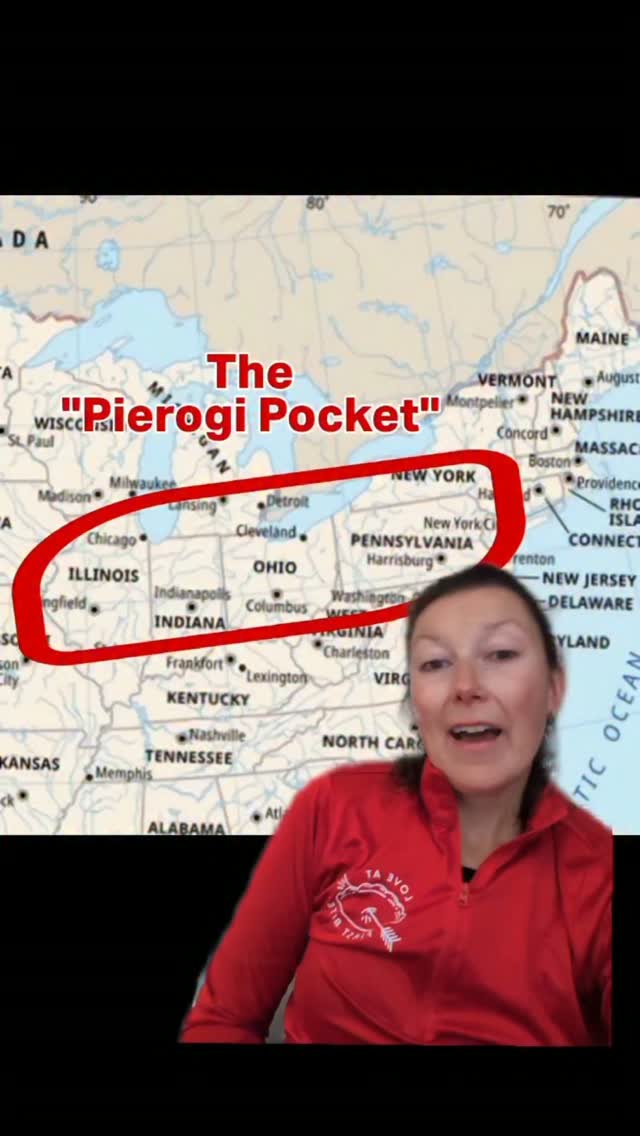
@jajupierogi HAPPY NATIONAL PIEROGI DAY! Let's talk about the history of the Pierogi Pocket and how pierogi got popularized in the US 🤓

@jajupierogi
Instagram · Greenscreen Talking Head
@jajupierogi HAPPY NATIONAL PIEROGI DAY! Let's talk about the history of the Pierogi Pocket and how pierogi got popularized in the US 🤓
Performance
Video #44334 · Greenscreen Talking Head
[01]
The speaker explains the history of the "Pierogi Pocket," a region in the US with high pierogi consumption. She traces its origins to Polish immigration waves, explaining how immigrants settled in industrial centers within this region, formed communities called "Polonia," and popularized pierogies through church fundraisers. The video concludes with a brand tie-in, showing her company's product and mission to expand pierogi popularity.
[02]
[03]
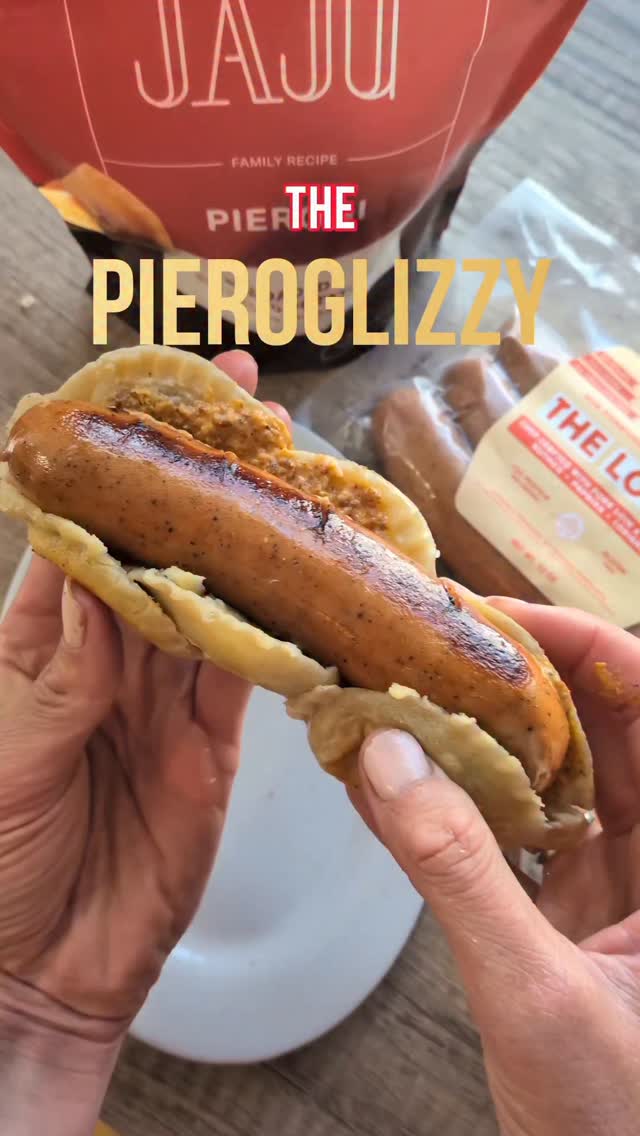 255.7K20.7×Assembling a pierogi sausage bun@jajupierogi · Tutorial / How To
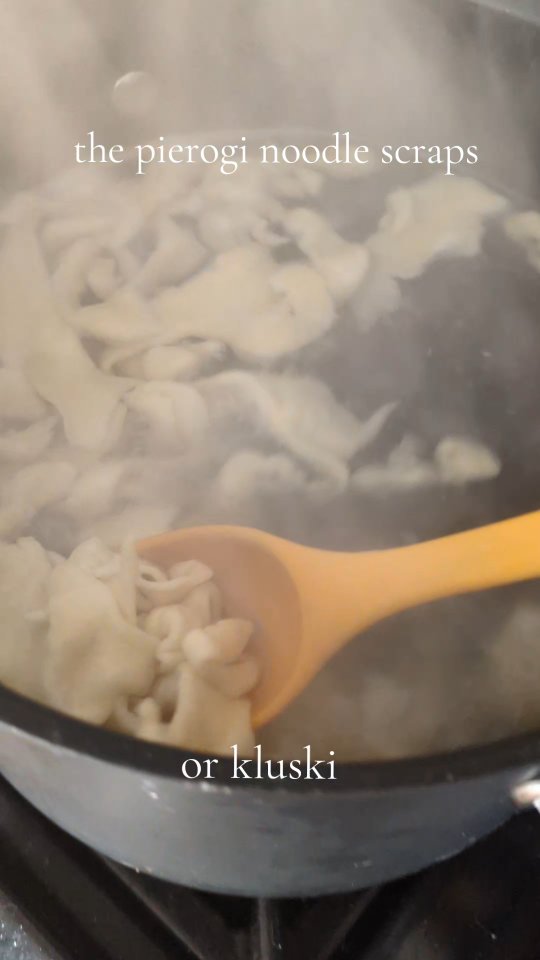 413.7K14.1×Pierogi making and noodle scraps@jajupierogi
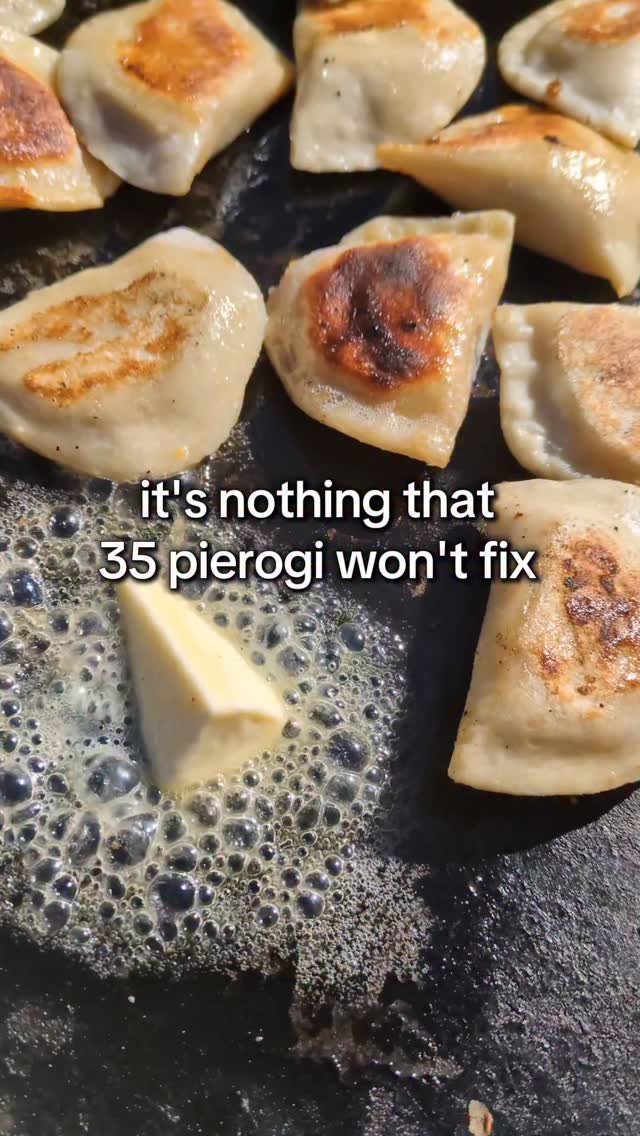 785.6K25.1×Relatable text on food shot@jajupierogi · Relatable One Shot
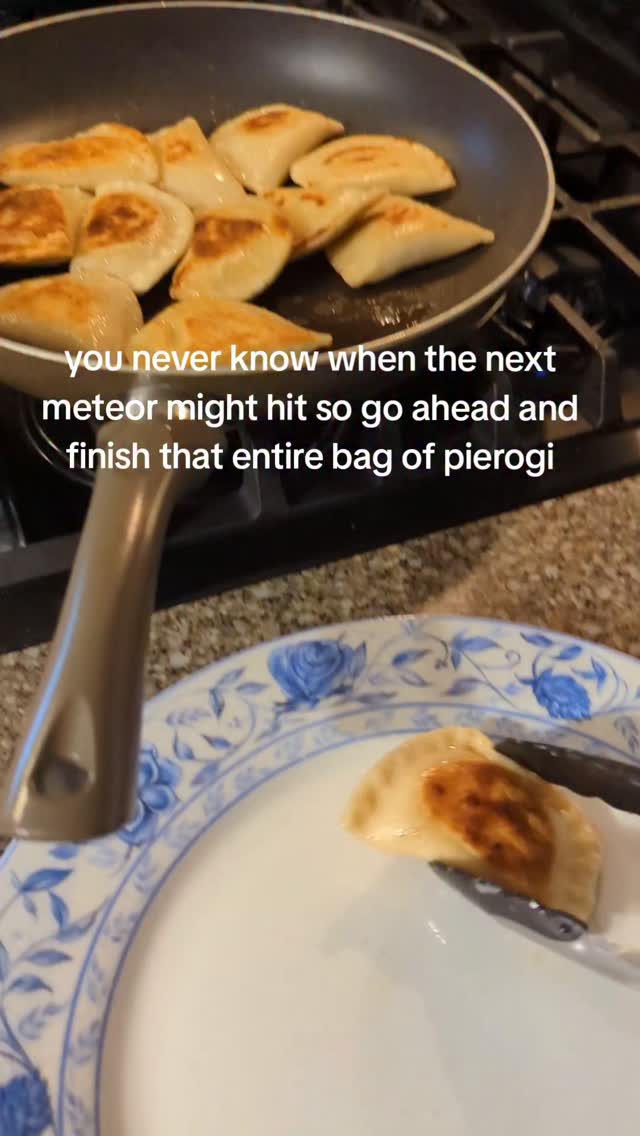 99.5K8.2×Relatable text over cooking video@jajupierogi · Relatable One Shot
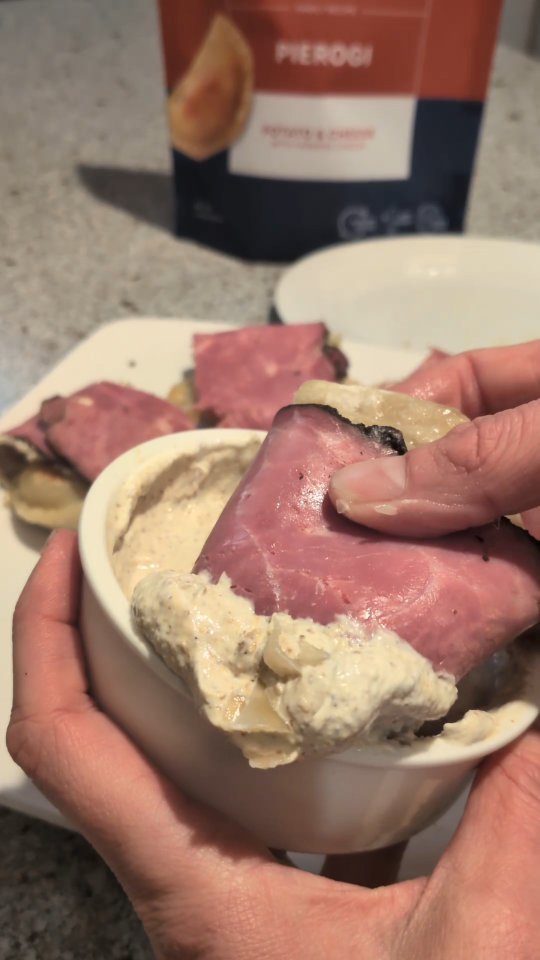 882.9K111.6×Faceless hands-and-pans recipe assembly@jajupierogi · Process
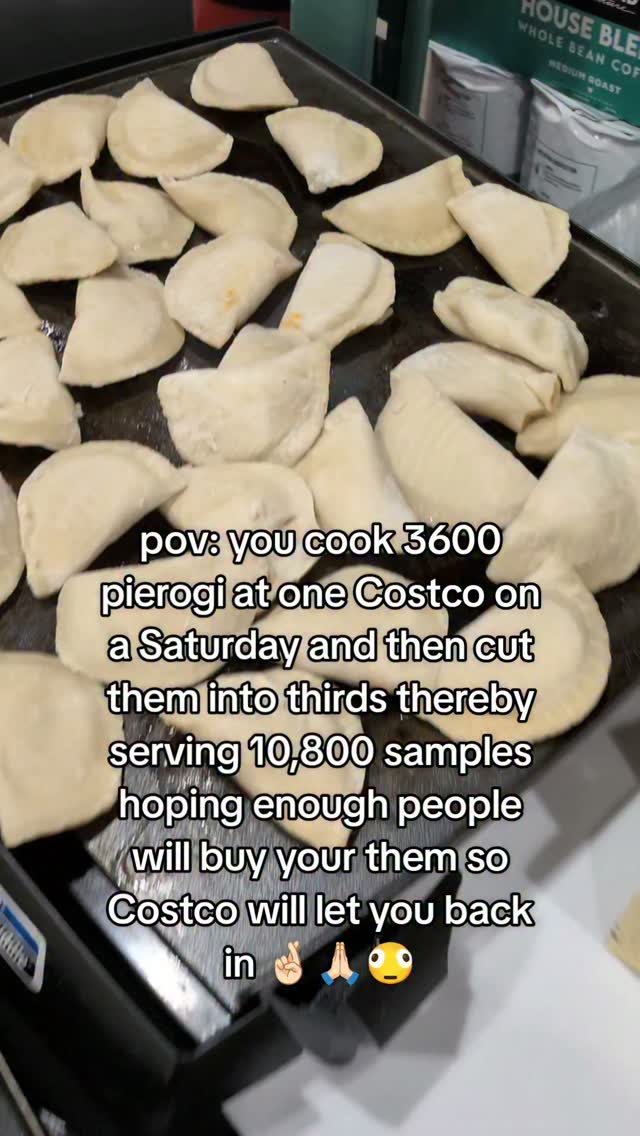 1M391.3×Showing the small business grind@jajupierogi · Behind The Scenes
 72.3K26.3×Relatable text over food tutorial@jajupierogi · Tutorial / How To
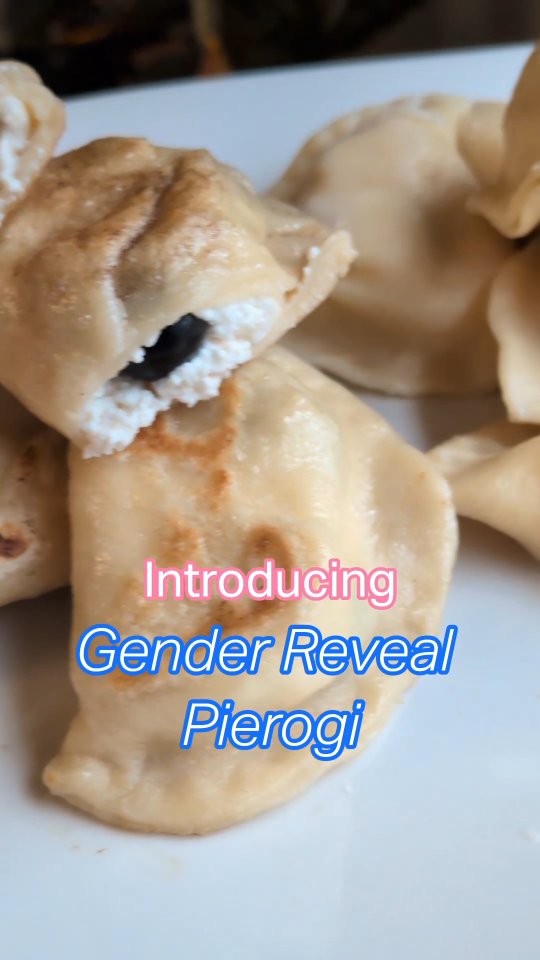 200.2K25.4×Text-guided recipe process demonstration@jajupierogi · Process
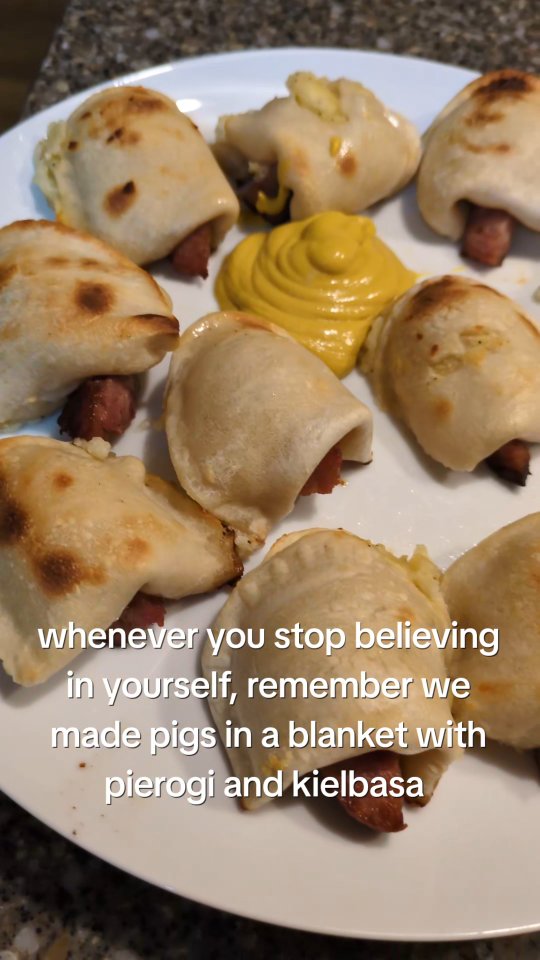 1.9M238.2×Text driven recipe process montage@jajupierogi · Process
 904.8K32.7×Pierogi advent calendar cooking demonstration@jajupierogi · Product Demo
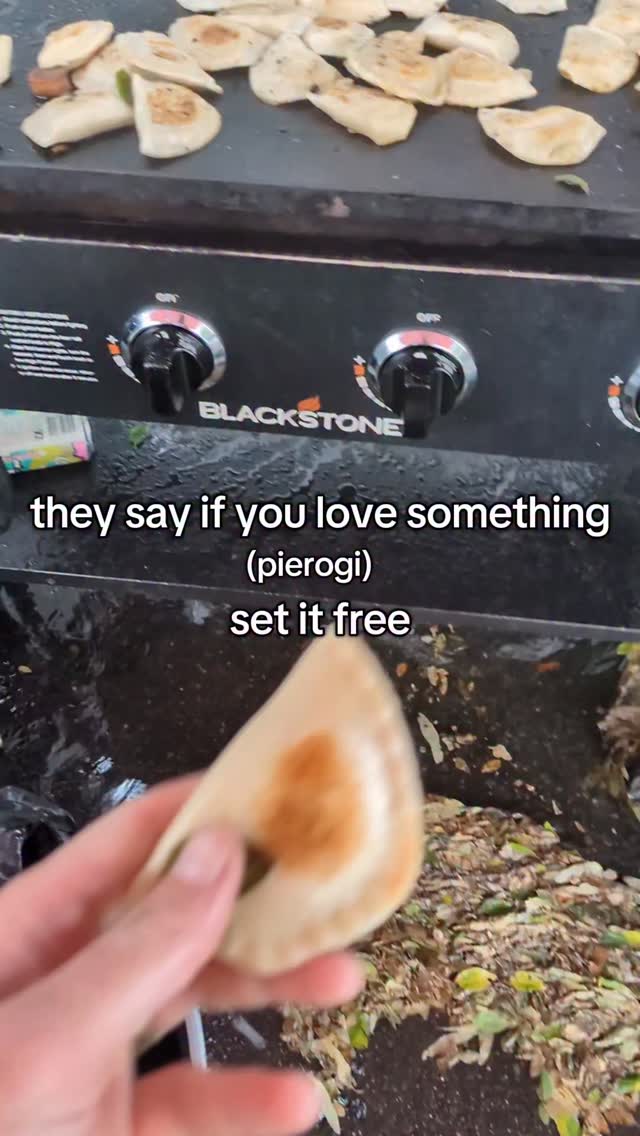 3.7M143.8×Dramatically setting a pierogi free@jajupierogi · Relatable One Shot
 126.3K3.8×Sisters pitch pierogi family recipe@jajupierogi · Origin Story
[04]
[05]
What stops the scroll in the first 3 seconds
Title hook
The "Pierogi Pocket"
Verbal hook
Happy National Pierogi Day.
Visual hook
A map of the northeastern United States with a large, red oval drawn around several states, immediately creating a visual question for the viewer.
[07]
The promise the opener makes, and how the video pays it back
Hook
Introduce a novel geographic or cultural pattern with a compelling visual (a map) and a surprising statistic to establish a 'knowledge gap' and create immediate curiosity.
Payoff
Provide a concise summary that directly answers the central question, reinforce the explanation with a relatable modern-day anecdote, and connect the entire narrative back to the creator's brand or mission.
[08]
The structural pattern this video runs on
Framework
The Geographic Anomaly Explainer
To present a surprising or little-known geographic/cultural phenomenon, frame its existence as a mystery, and then provide a satisfying historical explanation that connects migration, economics, and cultural traditions.
The Central Question
Explicitly ask 'why' or 'how' this phenomenon exists, framing the rest of the video as the answer to a puzzle.
The Historical Anchor
Identify the foundational event or demographic group responsible for the phenomenon (e.g., a specific wave of immigration).
The Economic-Geographic Bridge
Explain the practical or economic driver (e.g., industrial jobs) that caused this group to be concentrated in the specific geographic area in question.
The Cultural Incubator
Describe the community or social structures (e.g., parishes, neighborhoods) that allowed the specific cultural trait to be preserved and strengthened within that geographic area.
The Viral Spread Mechanism
Reveal the specific, tangible mechanism (e.g., community fundraisers) through which the cultural trait spread from the initial group to the wider population, leading to the modern-day phenomenon.
HAPPY NATIONAL PIEROGI DAY! Let's talk about the history of the Pierogi Pocket and how pierogi got popularized in the US 🤓
title · beginning
The "Pierogi Pocket"
Happy National Pierogi Day. Today, we're gonna talk about the pierogi pocket. They say that two thirds of the pierogi in The United States are consumed within the pierogi pocket, which extends from New Jersey and New York through Upstate Pennsylvania, Ohio, and up and through Michigan and Illinois to Chicago, the capital of the Pierogi Pocket. But how did this Pierogi pocket come to be? Why here? Well, it's all tied back to where Polish immigrants landed when they came to America. The first major wave of Polish immigration began in the late eighteen hundreds and early nineteen hundreds. These immigrants came seeking economic prosperity. Of course, more Polish immigrants came during the destruction of World War II. Polish immigrants took some of the most grueling jobs, often working eighty four hours a week in places like steel and tin mills, mines, glass furnaces, and factories. And where was this work found? It was found in... Around a lot of the industrial centers that we find in today's pierogi pocket, like New York City, Buffalo, Pittsburgh, Cleveland, Detroit, and Chicago. They created these communities called Polonia, based around the Catholic parish. These communities celebrated Polish traditions, holidays, and good. Especially after World War two, these Polish church communities would get together and make thousands and thousands of pierogi, and they would sell them as a fundraiser. And that is how the love for pierogi spread beyond the Polish families, tier Polish households, and those communities. That is how our pierogi pocket came to be. And if someone you know says that they bought pierogi in a ziplock bag from a church basement, they weren't lying. Of course, we are always trying to expand that pierogi pocket to other parts of The United States.