@refurbishedish
Instagram · Vlog
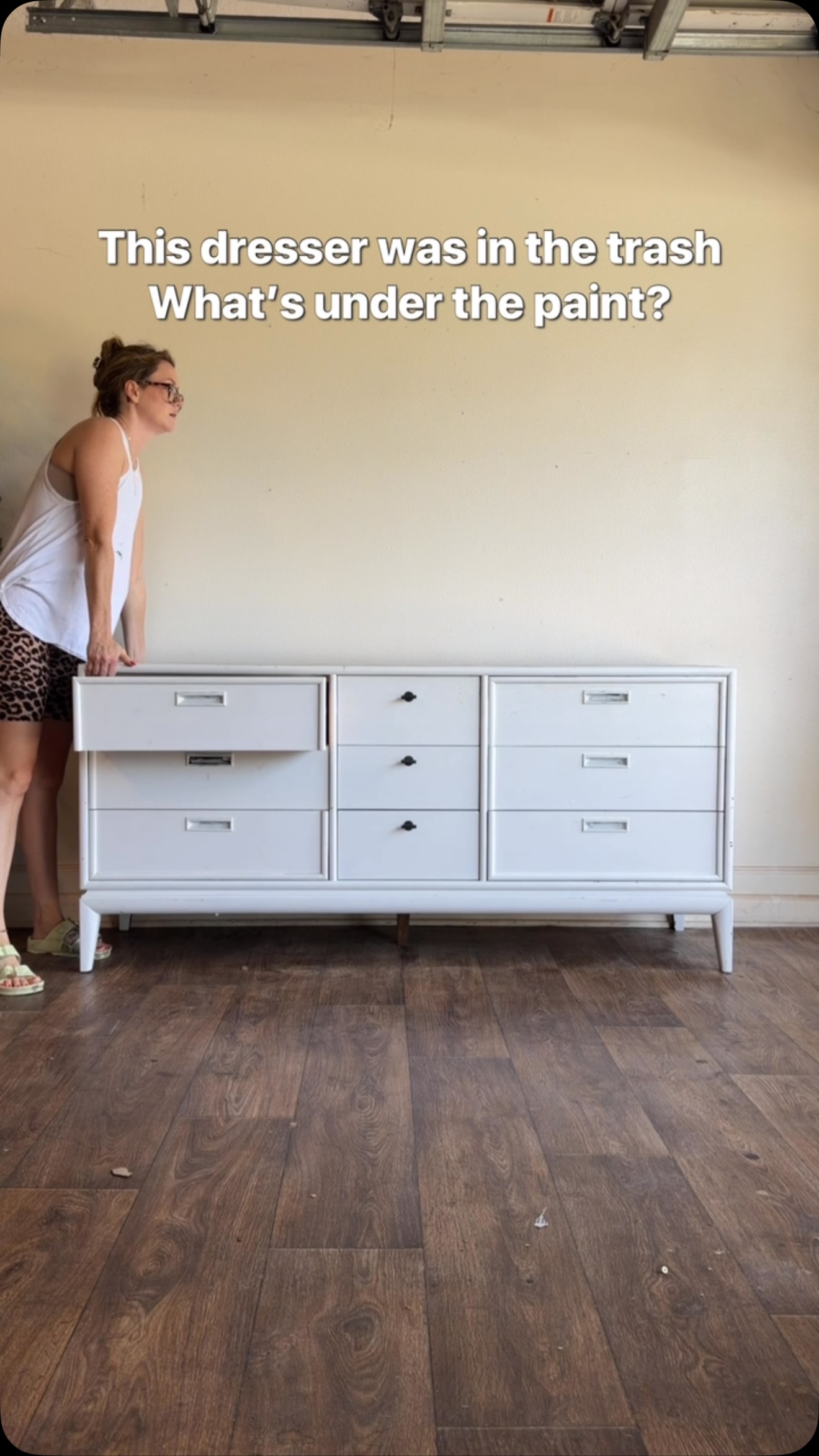
@refurbishedish Would you grab this from the trash? I did because I HAD to know what was under this paint! Comment the word “LINK” for a list of everything I used!

@refurbishedish
Instagram · Vlog
@refurbishedish Would you grab this from the trash? I did because I HAD to know what was under this paint! Comment the word “LINK” for a list of everything I used!
Performance
Video #45985 · Vlog
[01]
The creator finds a white painted dresser in the trash and takes it to their workshop. They demonstrate the entire restoration process, which includes applying paint stripper, scraping off the old paint to reveal wood, sanding the entire piece, making structural repairs, and applying a new wood finish with a paint sprayer. The video concludes by showcasing the fully restored and styled mid-century modern dresser in a home setting, revealing it was sold for $925.
[02]
[03]
 2M1.3×Free dresser restoration process reveal@refurbishedish · Before/After Transformation
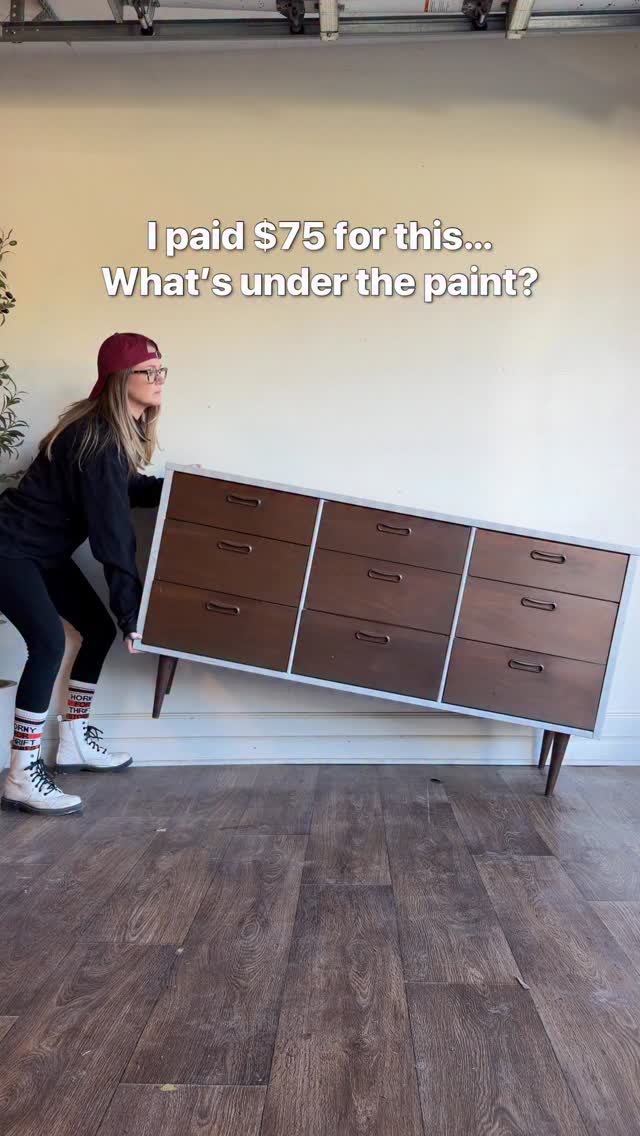 2.6M6.5×Start to finish furniture restoration process@refurbishedish · Process
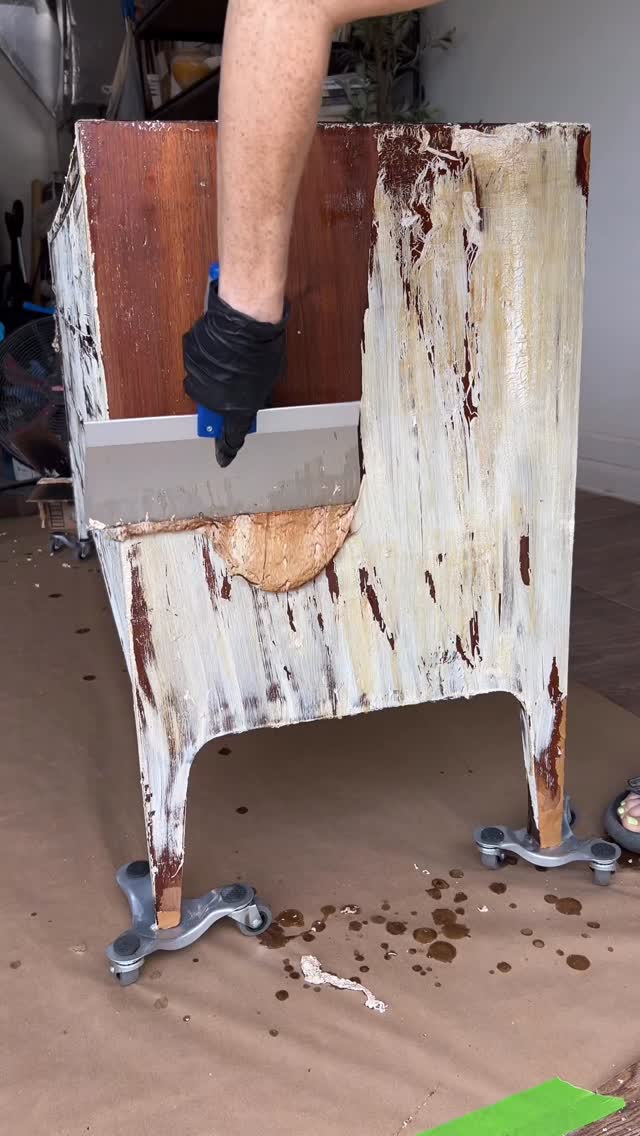 17.7M5.2×DIY furniture flip process video@refurbishedish · Before/After Transformation
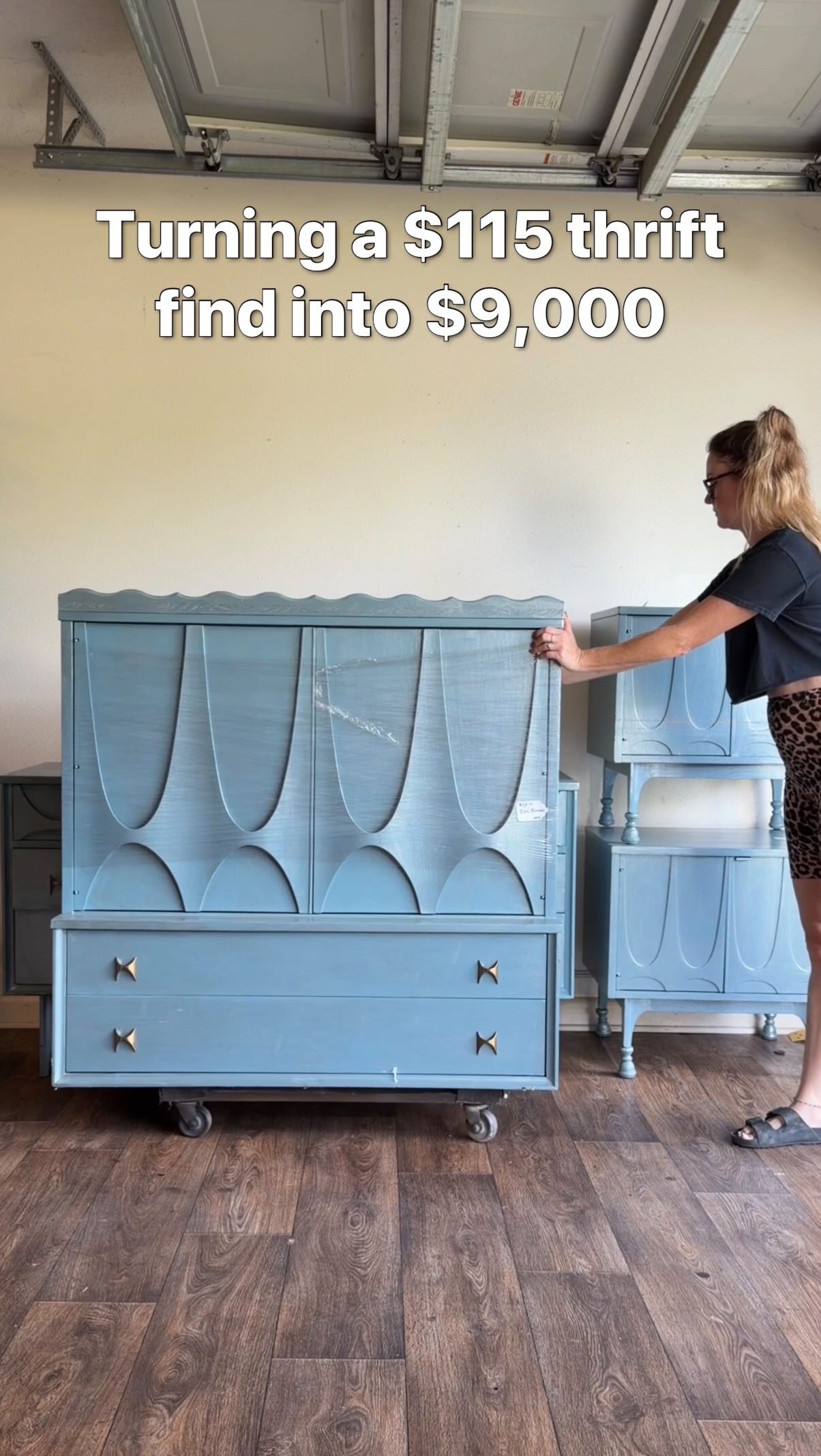 1.3M5.1×Furniture flip process start to finish@refurbishedish · Before/After Transformation
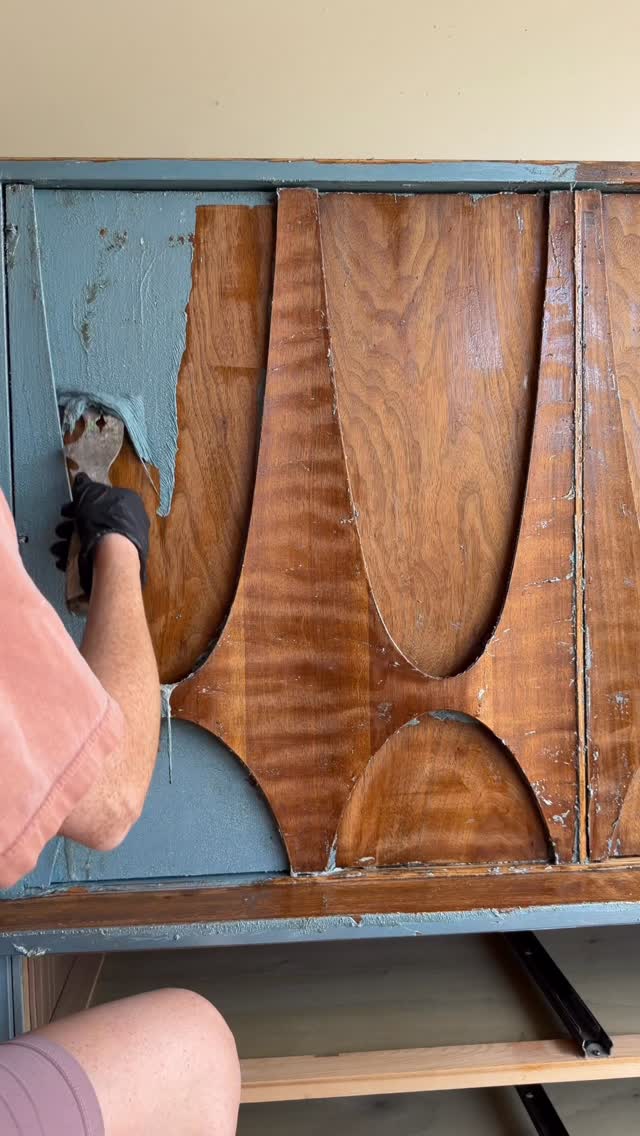 3.3M10.3×Satisfying furniture paint stripping process@refurbishedish · Satisfying Process
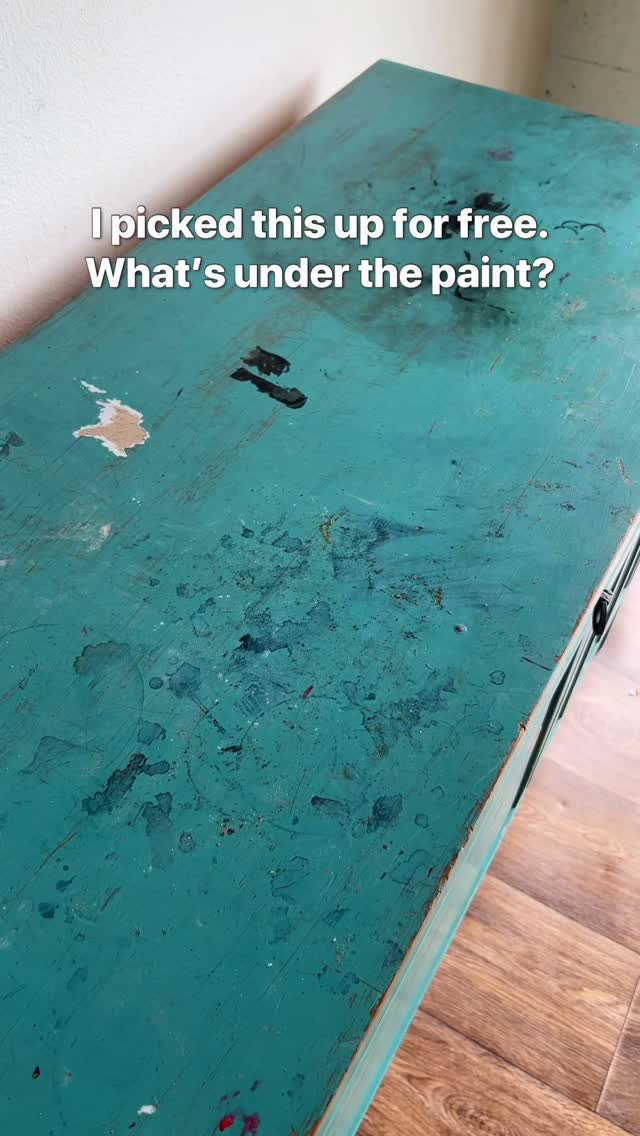 6.8M4×Furniture restoration process start to finish@refurbishedish · Before/After Transformation
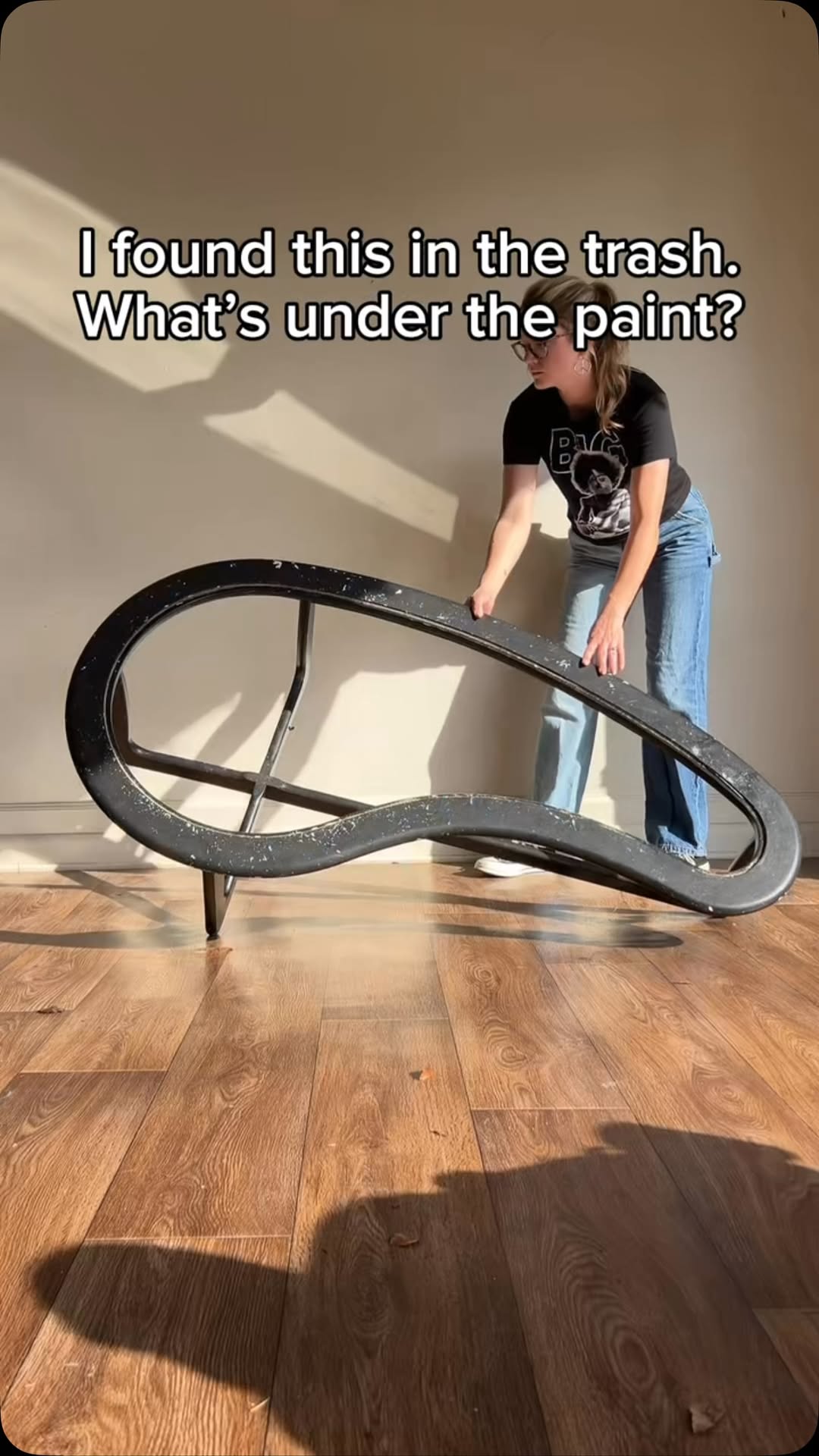 17.1M53.7×Trash find furniture restoration process@refurbishedish · Before/After Transformation
 8.5M71.9×Chair restoration process start to finish@kylewilliamdesign · Before/After Transformation
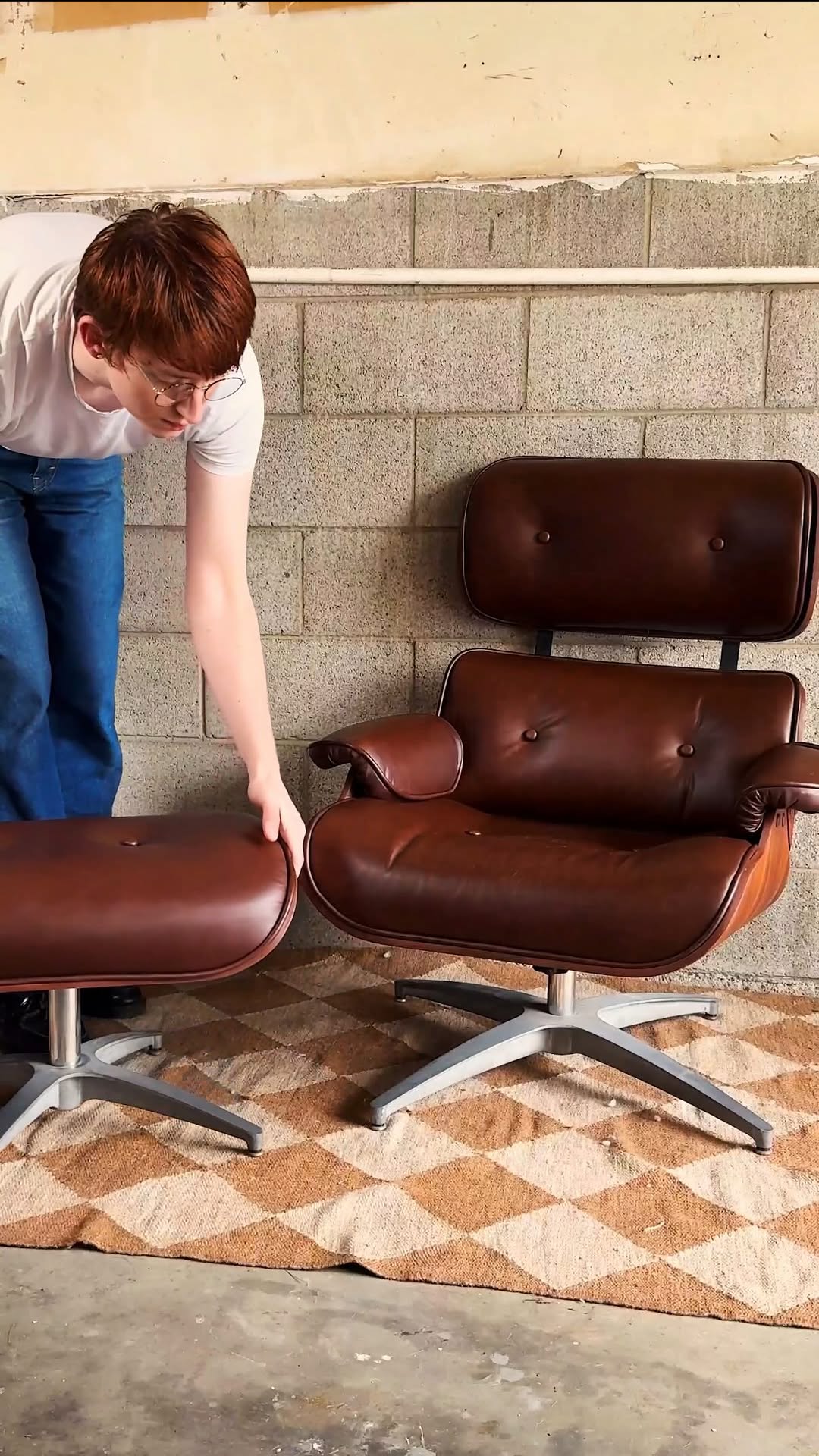 733.3K16.1×Chair restoration from start to finish@kylewilliamdesign · Before/After Transformation
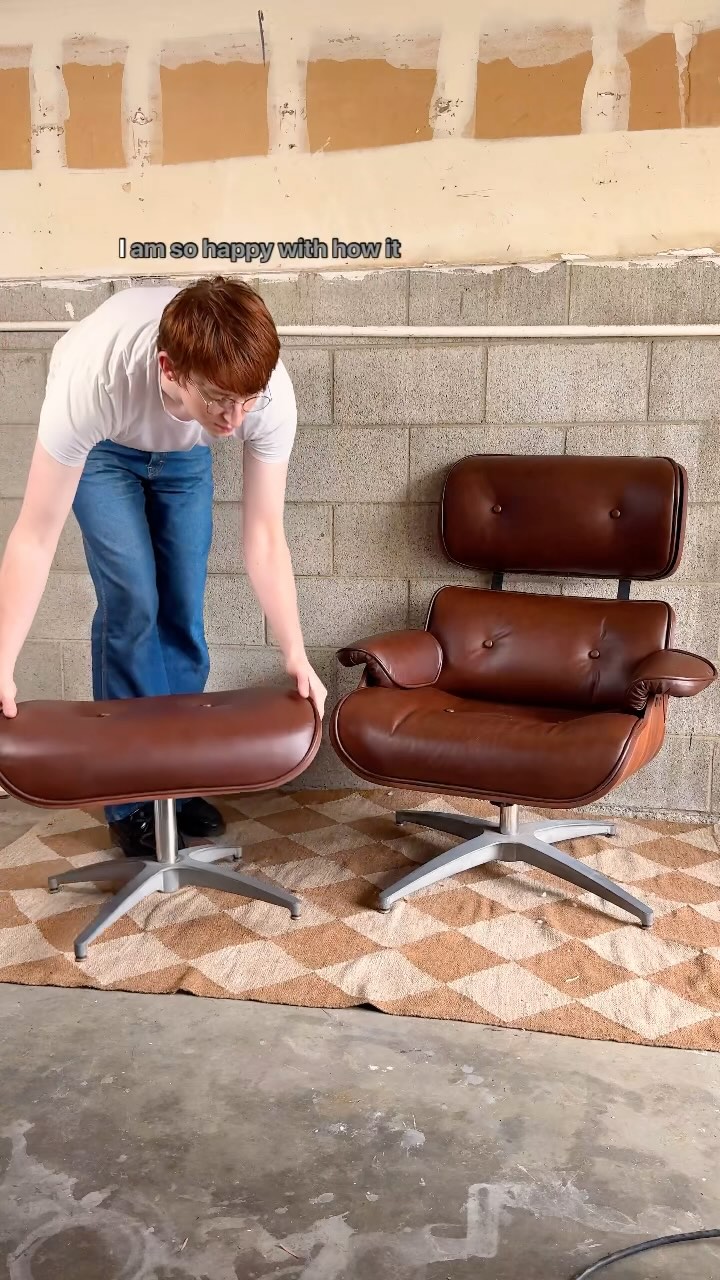 1M8.6×Chair restoration process start to finish@kylewilliamdesign · Before/After Transformation
 1.6M5.8×Craftsman shows floor restoration process@danny_sandhouse · Process
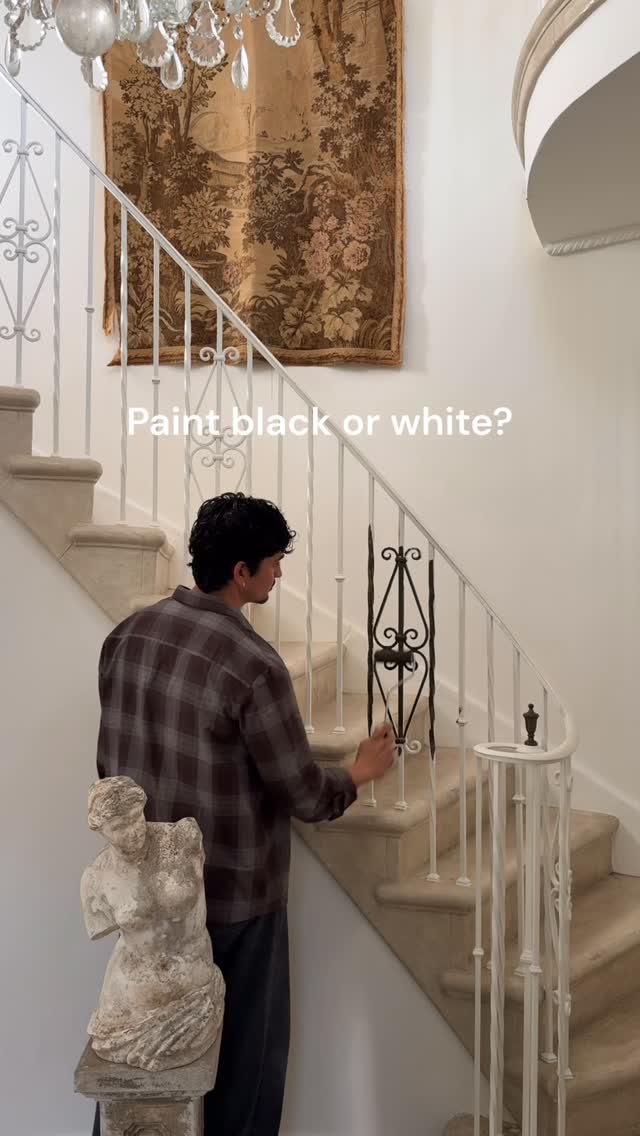 7.8M10.2×Documenting a DIY railing paint job@want.zamora · Before/After Transformation
[04]
[05]
What stops the scroll in the first 3 seconds
Title hook · 85%
This dresser was in the trash What's under the paint?
Visual hook · 15%
The video opens with a shot of a large, painted white dresser sitting outdoors on a gravel patch, immediately establishing it as a discarded or found object. This 'trash find' context creates instant curiosity about its potential.
[06]
Steal this for your own video
This was What's ?
[07]
The promise the opener makes, and how the video pays it back
Hook
Establish a 'trash to treasure' premise by presenting a discarded or undervalued item and posing a direct question about its hidden potential, creating an immediate curiosity gap.
Payoff
Present the fully transformed subject in an idealized, styled setting for the ultimate 'after' reveal, then state a specific, impressive monetary value to quantify the success and pose a final question to the audience to drive engagement and debate.
[08]
The structural pattern this video runs on
Framework
The Value Transformation Arc
To document the transformation of a low-value or flawed object into a high-value one, proving the value of the process itself and culminating in a quantifiable result that sparks audience debate.
The Problem Diagnosis
Showcase the specific flaws and imperfections of the subject through close-ups to establish the low-value starting point and justify the need for transformation.
The Deconstructive Application
Begin the transformation by applying a substance or process that visibly breaks down the old, flawed surface, creating a satisfying visual of change and building anticipation.
The First Glimpse of Potential
Provide the first major payoff by scraping or removing the old layer to reveal the high-quality material underneath, confirming the viewer's hope and validating the process.
The Labor Montage
Display the effort-intensive refinement process (e.g., cleaning, sanding, detailed work) in a quick-cut sequence to demonstrate the hard work and build viewer investment in the final outcome.
The Foundational Repair
Show the fixing of core structural issues, not just surface-level aesthetics, to add a layer of craftsmanship and demonstrate a deeper level of restoration.
The Final Beautification
Apply the final finishing touches (e.g., stain, sealant, paint) that bring the subject to its peak aesthetic potential, signaling the climax of the transformation.
Would you grab this from the trash? I did because I HAD to know what was under this paint! Comment the word “LINK” for a list of everything I used!
title · beginning
This dresser was in the trash What's under the paint?
informational · end
Sold for $925 Was it worth it?