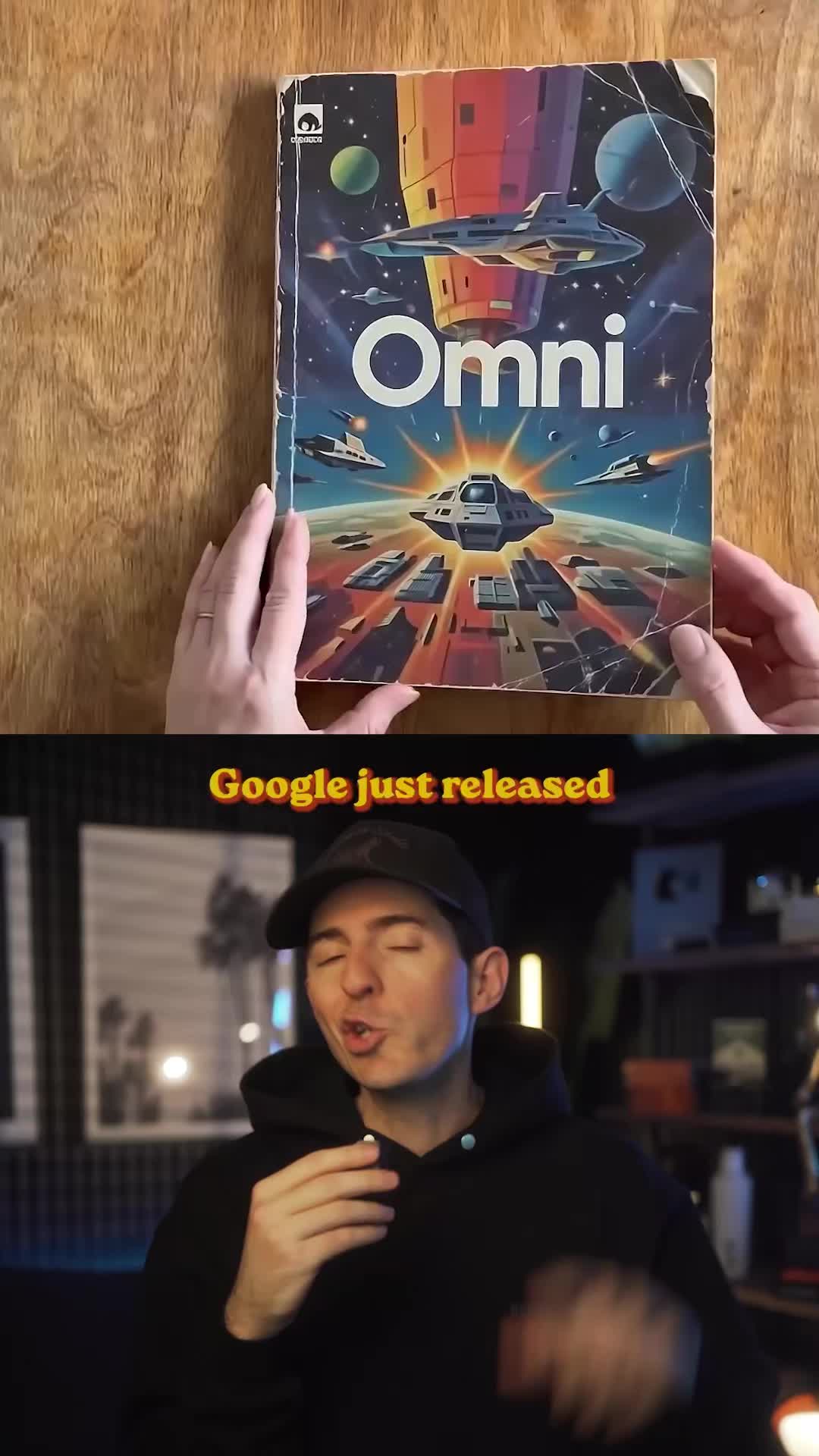
The creator announces Google's new AI model, Gemini 4 Argon, and explains its state-of-the-art capabilities. He then demonstrates its power through two practical examples: first, by using it to design and 3D print a custom enclosure for an electronic device, and second, by transforming a complex scientific research paper into an interactive, visual simulation. The creator concludes by encouraging viewers to test the model's limits with their own ambitious projects.
Post caption
Google is releasing Gemini 4 Argon today – their frontier model built for long-horizon tasks, complex production coding, and deep multimodal reasoning.
It sets a new state-of-the-art on DeepSWE v1.1 (77.9%) amongst several other benchmarks and is the #1 model on the Vals Index (68.9%), which measures potential economic impact.
I’ve had early access to Argon for some time, and where I find it to be particularly powerful is in its ability to create interactive simulations and 3D architectural reconstructions.
Will definitely be put to the test in an Agent Wars episode soon.
Argon is now available globally for Google AI Pro and Ultra users.
@GoogleGemini #GooglePartner
Transcript
Google just launched Gemini four Argon, their frontier model for complex workflow. It's a huge deal. I mean, it's state of the art across so many major benchmarks. We're talking about complex production coding, deep scientific reasoning, and understanding how things fit together in three-dimensional spaces. Let me show you what that actually means. I can just pull up Gemini, ask it to design something specific, like for example, I needed an enclosure for this Best 32 display, then I asked it to design something aesthetic from my desk, I gave it to specs, and sent it to my three d printer. A few hours later, I had this. Or take a dense research paper as an example, you could turn it into an interactive simulation, something you can adjust, experiment with, and actually learn from. I mean, you could change a variable to see what happens. Science can now be explored visually. If you haven't tried a frontier model, this is the time to do so. Give Argon something ambitious, add as many constraints as you can think of, and I think you'll be amazed at how far you can push this model.