@youchoosepodcast
Instagram · Clip
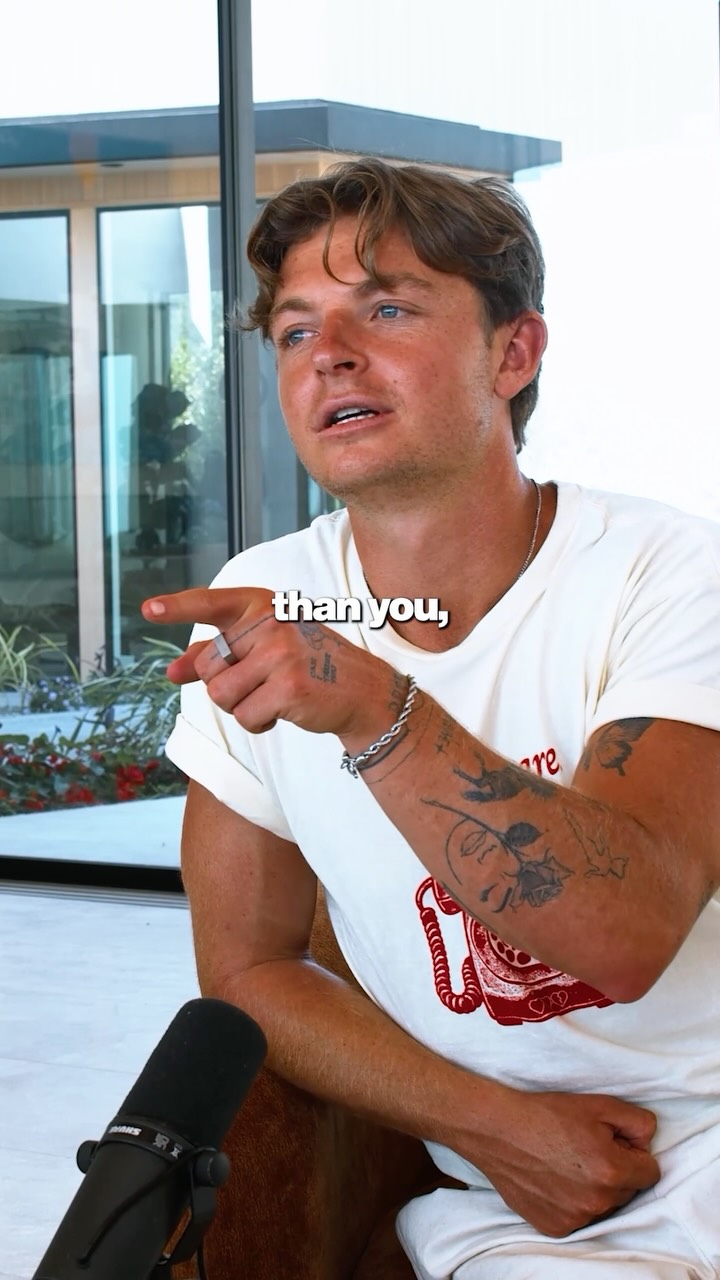
@youchoosepodcast When I learned this, it changed everything. ✊❤️🔥

@youchoosepodcast
Instagram · Clip
@youchoosepodcast When I learned this, it changed everything. ✊❤️🔥
Performance
Video #46363 · Clip
[01]
The speaker delivers a motivational monologue reframing the concepts of ego and humility. He introduces the mantra "I'm not better than you, but nobody's better than me," which is validated by an enthusiastic reaction from another person. He then explains that true humility isn't thinking less of oneself, but thinking of oneself less, and argues against the idea of banishing the ego. He concludes by defining an unhealthy ego as one that needs to put others down to feel superior, distinguishing this from a healthy sense of self-worth that recognizes greatness in both oneself and others.
[02]
[03]
 101.8K4.1×Motivational speech over dance performance@oxygentheconvention · Motivational Mantra
 497.2K12.8×Assertive monologue on winning mindset@austingeorgas · Hot Take
 113.5K3.4×Passionate monologue reframing humility@bellasolanot · Motivational Mantra
 112.3KPassionate monologue about selfish inaction@thepocketpodcast · Motivational Mantra
 426.9K14.6×Direct talk on self-awe@bellasolanot · Vulnerable Monologue
 638.9K28.8×Motivational monologue with lifestyle B-roll@jrp.co · Vulnerable Monologue
 624.3KCreator reframes weed-induced paranoia as useful self-reflection@bradley.thor · Anecdotal Philosophy
 6.2M153.2×Turning life's losses into wins@youchoosepodcast · Anecdotal Philosophy
 313.8K1.1×Actions define reality, not stories@mindhackz · Anecdotal Philosophy
 3.4MDirect address inner child monologue@jb_copeland · Vulnerable Monologue
 155K1.6×Motivational advice with cinematic B-roll@therealdanielpark · Anecdotal Philosophy
 3M94.8×Speaker explains delusion and success@thejaunt_ · Anecdotal Philosophy
[04]
[05]
What stops the scroll in the first 3 seconds
Verbal hook
I'm not better than you
Visual hook
A quick cut within the first 3 seconds to a second person with a highly expressive, surprised facial reaction, which creates curiosity about what was said.
[07]
The promise the opener makes, and how the video pays it back
Hook
A provocative, seemingly contradictory statement that combines humility and supreme confidence, creating immediate cognitive dissonance that the viewer needs to resolve.
Payoff
A second person provides external validation, affirming the new perspective as a 'powerful distinction.' This acts as an audience surrogate, confirming the value of the insight and providing a satisfying conclusion.
[08]
The structural pattern this video runs on
Framework
The Paradigm Shift Framework
To challenge a commonly held belief by presenting a paradoxical statement, reframing a core concept, and then contrasting the 'enlightened' version with its 'toxic' counterpart to create an 'aha' moment.
The Contradictory Proclamation
The speaker makes a bold, two-part statement that seems to contradict itself (e.g., 'I am not superior to you, but no one is superior to me'), establishing the central theme and hooking the audience.
The Semantic Reframe
The speaker identifies a common, but flawed, understanding of a related concept (e.g., humility) and offers a new, more empowering definition (e.g., 'It's not thinking less of yourself, it's thinking of yourself less').
The Common Misconception Rejection
The speaker explicitly dismisses the traditional, self-diminishing interpretation of the concept, clearing the way for the new paradigm.
The Thesis Reinforcement
The initial paradoxical statement is repeated, but now it lands with greater clarity and power because the underlying terms have been reframed.
The Shadow Definition
The speaker defines the truly negative version of the concept by its harmful actions towards others (e.g., 'needing to put others down to feel good'), clearly separating it from the healthy version being advocated.
When I learned this, it changed everything. ✊❤️🔥
I'm not better than you, but nobody's better than me. Woo hoo. The goal is not to think less of worse. It's to think of yourself less. And people are always trying to get rid of the ego. Be a bit more humble, but humble means that I'm not supposed to think as great as myself. No. No. No. No. Banish that. I'm not better than you. But this second part, no one's better than me. The kingdom of heaven is within me as much as it's in you. Never put the fire on somebody else. We're not talking about comparison here. We're talking about the, I'm great, and you're great. And the real unhealthy version of the ego is no actually that I'm great, but I need to feel great by standing on your shoulders by putting you down. Really powerful distinction.