@autowashco A 20-year-old Volvo just beat 10 brand-new cars, and it's not the first time it's happened.
The magazine is Vi Bilägare, one of Sweden's biggest car publications, and this wasn't the first time they ran this test.
In 2022 they did the same thing with 11 new cars against the same kind of 2005 Volvo V70. The old Volvo won that time too, finishing all four tasks in 10 seconds flat.
The concerning part: on average, new cars did worse this time. Drivers needed about 756 meters to finish the tasks in 2022. This year it was 813.
In the U.S., the NHTSA says a driver shouldn't have to look away from the road for more than 2 seconds at a time, or 12 seconds total, to complete a task. But those guidelines are voluntary.
Europe now takes points off a car's safety rating if basic controls aren't physical buttons. The U.S. has nothing like that.
Should the U.S. start regulating this so carmakers put safety ahead of cost?
#touchscreen #physicalbuttons #volvo #carsafety #autowash
The creator presents the results of a test from a Swedish car magazine that compared a 2005 Volvo to ten new cars. He explains that drivers were timed performing four simple tasks while driving, and details how the old Volvo with physical buttons was significantly faster and required less distance to complete the tasks than the modern, touchscreen-reliant cars. He concludes that this test proves modern cars have become overly complicated, to the detriment of driver usability and safety.
A popular Swedish magazine just put a 2,005 Volvo up against 10 brand new twenty twenty six cars.
Visual hook
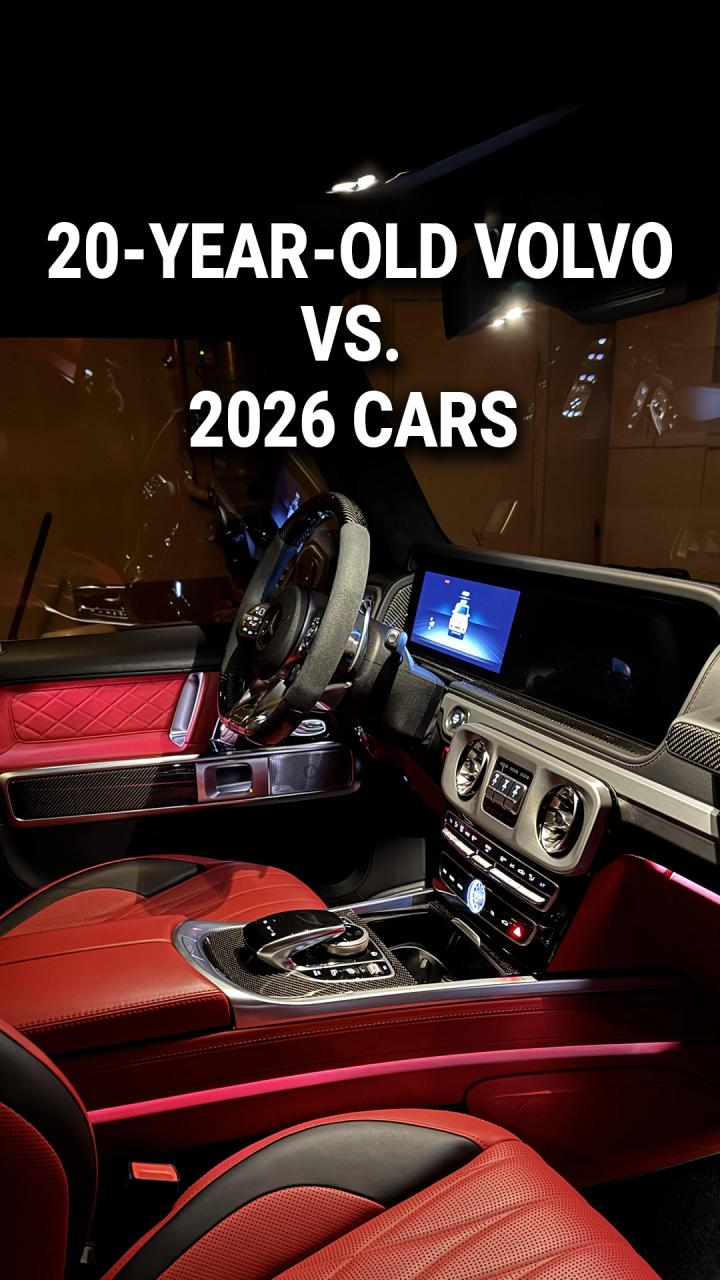
The video immediately uses a split-screen format, with a visually engaging magazine cover featuring multiple cars on the top half and the speaker on the bottom half, creating a dynamic and information-dense opening.
[07]
Hook and payoff
The promise the opener makes, and how the video pays it back
Hook
Present a 'David vs. Goliath' scenario, pitting a legacy or simple subject against its modern, complex counterparts to create an immediate underdog narrative and pique curiosity.
Payoff
Deliver a concise, powerful thesis statement that summarizes the 'moral of the story,' definitively proves the initial premise, and provides a satisfying conclusion for the viewer.
[08]
Narrative framework
The structural pattern this video runs on
Framework
The Underdog Validation
To prove a counter-intuitive or popularly-suspected thesis by pitting an 'old/simple' entity against multiple 'new/complex' entities in a standardized test, revealing the results in an escalating order of failure for the new entities.
1
The Audience Validation
Immediately state that the outcome confirms a pre-existing suspicion held by the target audience, making them feel validated and invested in the narrative.
2
The Standardized Gauntlet
Clearly and simply define the objective criteria or tasks used for the comparison. This establishes the test's fairness, credibility, and stakes.
3
The Underdog's Benchmark
Announce the performance result of the 'underdog' or 'old' subject, establishing the baseline score that all others will be measured against.
4
The Best Challenger's Failure
Reveal the result of the best-performing modern subject, demonstrating that even the top contender falls short of the benchmark.
5
The Average Failure
Broaden the scope by revealing the average performance of the modern subjects, proving the issue is systemic and not just an outlier.
6
The Catastrophic Failure
Climax the data reveal by presenting the result of the worst-performing modern subject, maximizing the perceived performance gap and solidifying the underdog's victory in a dramatic fashion.
Themes
Technology vs. Simplicity
Product Design
Safety
Techniques
Split Screen
B-Roll
Voiceover Narration
Trends
Critique of Modern Technology
Post caption
A 20-year-old Volvo just beat 10 brand-new cars, and it's not the first time it's happened.
The magazine is Vi Bilägare, one of Sweden's biggest car publications, and this wasn't the first time they ran this test.
In 2022 they did the same thing with 11 new cars against the same kind of 2005 Volvo V70. The old Volvo won that time too, finishing all four tasks in 10 seconds flat.
The concerning part: on average, new cars did worse this time. Drivers needed about 756 meters to finish the tasks in 2022. This year it was 813.
In the U.S., the NHTSA says a driver shouldn't have to look away from the road for more than 2 seconds at a time, or 12 seconds total, to complete a task. But those guidelines are voluntary.
Europe now takes points off a car's safety rating if basic controls aren't physical buttons. The U.S. has nothing like that.
Should the U.S. start regulating this so carmakers put safety ahead of cost?
#touchscreen #physicalbuttons #volvo #carsafety #autowash
Text overlays
title · beginning
A POPULAR SWEDISH
title · beginning
MAGAZINE JUST PUT
title · beginning
A 2005 VOLVO UP
title · beginning
AGAINST 10 BRAND
title · beginning
NEW 2026 CARS.
contextual · beginning
OF DRIVERS
contextual · middle
RAN DRIVERS
contextual · middle
TASKS IN EVERY
contextual · middle
CAR. TURN ON THE
contextual · middle
SWITCH THE RADIO
contextual · middle
STATION, RESET
contextual · middle
AND DIM THE
contextual · middle
WHILE DRIVING 68
contextual · middle
MILES AN HOUR IN
contextual · middle
A STRAIGHT LINE.
contextual · middle
THE VOLVO
contextual · middle
A THOUSAND FEET
contextual · middle
NEW CAR, A VOLVO
contextual · middle
ABOUT 1600 FEET.
contextual · middle
CAR NEEDED ABOUT
contextual · middle
2700 FEET. THE
contextual · middle
MERCEDES, NEEDED
contextual · end
ALMOST 3700 FEET.
contextual · end
TIMES WHAT THE
contextual · end
OLD VOLVO NEEDED.
contextual · end
SO THIS JUST
contextual · end
PROVES WE'VE MADE
contextual · end
CARS SO
contextual · end
WE CAN'T EVEN
contextual · end
COMPETE WITH THE
contextual · end
SAME CAR THAT WAS
contextual · end
BUILT OVER 20
Transcript
A popular Swedish magazine just put a 2,005 Volvo up against 10 brand new twenty twenty six cars. The results proved a lot of drivers already suspected. They ran drivers through the same four tasks in every car. Turn on the seat heater, switch the radio station, reset the trip meter, and dim the display. All while driving 68 miles an hour in a straight line. The Volvo needed about a thousand feet to finish all four. The best new car, a Volvo XC tier needed about 1,600 feet. The average new car needed about 2,700 feet. The worst one, a Mercedes, needed almost 3,700 feet, more than three times what the old Volvo needed. So this just proves we've made cars so complicated, we can't even compete with the same car that was built over twenty years ago.