Viral Hooks
Trending short videosLeadership lessons from Zuck and Elon
D

@davidsenra

Instagram · Clip

@davidsenra Lessons from Mark Zuckerberg and Elon Musk and Napoleon: “Elon has demonstrated that if you have a small, incredibly cracked, highly technical team, that’s very flat, you can accomplish a lot very quickly.” “Mark has internalized that failure doesn’t matter. It just matters when you win, how big you win.” “That concept enables Mark to operate without fear because he’s just very comfortable taking lots of risk.” “Mark has this great quote that says: The biggest risk is not taking any risk. In a world that’s changing the only strategy that is guaranteed to fail is not taking risks.” “In the book The Mind of Napoleon, Napoleon repeats that hesitation is fatal. Napoleon says before you engage in a course of action you should deliberate thoroughly. He’d study from every angle to make sure he’s making the right decision. But once he’s sure he’s on the right path, he goes all in. I feel there’s an echo with the way Mark operates. Once Mark knows what he wants to do, he empties the clip.”

View original on Instagram

The edit1 shot · 3 text
Shots Text2:06

Performance

Views
316.3K
Likes
8K
Comments
72
Engagement
2.5%
Outlier
11.2×
Length · 15 Oct 2026
2:06

Video #46858 · Clip

Leadership lessons from Zuck and Elonfrom @davidsenra

[01]

Overview

The speakers, Alexandr Wang and David Senra, analyze the operational philosophies of Mark Zuckerberg and Elon Musk. Wang begins by explaining Musk's strategy of using small, elite, flat teams for rapid progress, a principle Meta adopted. Senra then compares Zuckerberg's decisive, all-in approach to Napoleon Bonaparte's military strategy—deep deliberation followed by swift, unhesitating action—and Wang concludes by explaining that Zuckerberg's comfort with risk is what allows Meta to remain dynamic.

[02]

Simple outline

  1. 1Present a known success framework.
  2. 2Introduce the subject's unique method.
  3. 3Validate with a historical analogy.
  4. 4Explain the core psychological driver.
  5. 5Show the strategic advantage.

[03]

Related videos

[04]

Classification

Format
Concepts
Case Study BreakdownAnecdotal Philosophy
Elements
B-Roll CutawayB&W CutawayDynamic Word-by-Word CaptionsImage OverlayVoiceoverText OverlayTitle Text Hook

[05]

Hook analysis

What stops the scroll in the first 3 seconds

Title hook · 70%

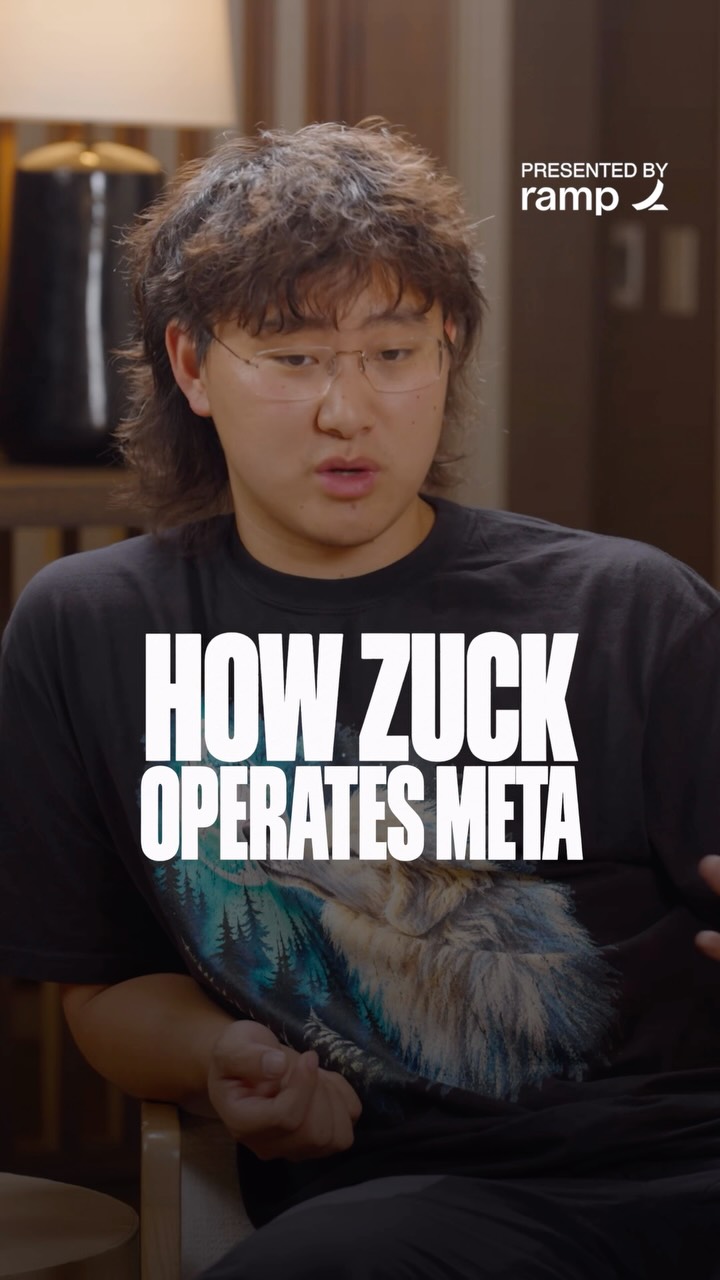
HOW ZUCK OPERATES META

Verbal hook · 30%

I think Elon is, like, has has demonstrated this in in various times in his career...

Visual hook

A medium close-up of a speaker who is actively gesturing and engaged in a professional-looking interview setting, immediately establishing a tone of expertise and focused conversation.

[06]

Hook template

Steal this for your own video

HOW [famous figure] OPERATES [their company or domain]

  • — HOW GORDON RAMSAY OPERATES HIS KITCHENS
  • — HOW WARREN BUFFETT OPERATES BERKSHIRE
  • — HOW SERENA WILLIAMS OPERATES BEFORE MATCH POINT

[07]

Hook and payoff

The promise the opener makes, and how the video pays it back

Hook

Establish a benchmark for success by referencing a well-known, respected figure, setting the stage for a comparison or alternative approach.

Payoff

The Consequential Advantage: Conclude by articulating the tangible, strategic benefit of adopting this philosophy, often by contrasting it with a negative alternative, thereby delivering the final, actionable insight.

[08]

Narrative framework

The structural pattern this video runs on

Framework

The Analogy-Anchored Insight

A conversational deconstruction of a high-performer's operational philosophy, validated by a surprising historical or intellectual analogy to reveal a core psychological driver.

  1. 1

    The Strategic Pivot

    Shift the focus to the main subject, introducing their distinct methodology with a powerful, memorable metaphor that creates intrigue.

  2. 2

    The Intellectual Anchor

    Introduce a non-obvious historical or intellectual analogy, often attributed to another credible source, to provide a deeper, more authoritative validation for the subject's method.

  3. 3

    The Psychological Reveal

    Translate the subject's actions into a core psychological principle or belief system, explaining the 'why' behind their operational 'how'.

  4. 4

    The First-Person Confirmation

    Reinforce the psychological principle by using the subject's own words or a well-known quote attributed to them, providing direct evidence.

Themes

  • Decisiveness
  • Risk Management
  • Organizational Structure
  • Leadership Philosophy

Techniques

  • Storytelling
  • Expert Interview
  • Historical Analogy

Trends

  • Podcast Repurposing
  • Educational Content

Post caption

Lessons from Mark Zuckerberg and Elon Musk and Napoleon: “Elon has demonstrated that if you have a small, incredibly cracked, highly technical team, that’s very flat, you can accomplish a lot very quickly.” “Mark has internalized that failure doesn’t matter. It just matters when you win, how big you win.” “That concept enables Mark to operate without fear because he’s just very comfortable taking lots of risk.” “Mark has this great quote that says: The biggest risk is not taking any risk. In a world that’s changing the only strategy that is guaranteed to fail is not taking risks.” “In the book The Mind of Napoleon, Napoleon repeats that hesitation is fatal. Napoleon says before you engage in a course of action you should deliberate thoroughly. He’d study from every angle to make sure he’s making the right decision. But once he’s sure he’s on the right path, he goes all in. I feel there’s an echo with the way Mark operates. Once Mark knows what he wants to do, he empties the clip.”

Text overlays

  • title · beginning

    HOW ZUCK OPERATES META

  • branding · throughout

    PRESENTED BY ramp

  • branding · end

    DAVID SENRA PRESENTED BY ramp CLIP SPONSORED BY deel.

Transcript

I think Elon is, like, has has demonstrated this in in various times in his career, where you just have, like, a small, incredibly cracked, highly technical team that's, like, very flat. And, like, if you do that, you can accomplish a lot very, very quickly. That ended up becoming one of the tent poles of our overall strategies, like, small, very flat, highly technical team, very high talent density. How quickly can you move if you have those ingredients? From an outside perspective, it seems like Mark, like, empties the clip is the way I think about this. Right? Where, have you better read this book called The Mind and Napoleon? No. Okay. So Mind and Napoleon published in 1957. I found it because I saw this interview. I think Tyler Cowen interviewed Sam Altman, and, I think this is tier, and he asked him, like, what's the most important book that he read this year? And he said, The Mind of Napoleon. So it's very hard to find. I buy the book. It's 300 pages of just Napoleon's own words organized by topic. And in that, he talks about tier and over again that hesitation is fatal. But he says, before you engage in a course of action, there's a lot of deliberation. He'll, like, study from every angle, make sure he's making the right decision. I feel there's, like, a echo with the way Mark, Mark operates. Does a lot of deliberation, tier sure he's on the right path. But once he makes that decision, he just goes all in. He won't... Like, he just empties the clip. And that's the way I felt about, like, what it was... Was occurring right at this point where he comes rank gets you, and then you guys start rebuilding this entire organization. I think he really has internalized that failure doesn't matter. It matters, like, when you win, how big you win. And I think this overall concept, I think, enables him to operate, I think, truly without fear in a lot of circumstances because I think he is just very comfortable taking lots of rank. He's got that great line where it's like, in a world that's changing all the time, the biggest risk is not taking any. Yeah. Exactly. I think he's internalized this quite deeply. Like, there's certainly, like, versions of the world where better looks a lot more like Google in some sense, like it's best, like, you know, more slow moving and more bureaucratic and just, like, looks very different as a company. But I think he, because he's internalized some of these lessons so deeply, keeps the thing dynamic and moving and live.

Leadership lessons from Zuck and Elon | Viral Hooks