@glass__museum
TikTok · Graphic Yap
@glass__museum On the erotic, decentering romance, and aliveness #theory #romance #relationships #philosophy #politics

@glass__museum
TikTok · Graphic Yap
@glass__museum On the erotic, decentering romance, and aliveness #theory #romance #relationships #philosophy #politics
Performance
Video #47180 · Graphic Yap
[01]
The creator presents a philosophical argument against the societal obsession with romantic 'situationships,' especially during 'cuffing season.' She introduces Audre Lorde's concept of 'the erotic' as a source of power and aliveness, distinct from mere sexual pleasure, and advocates for channeling this energy into creative pursuits like art. Throughout the video, she uses personal anecdotes, viral tweets, memes, and excerpts from Lorde's essay to argue that focusing on personal purpose and finding joy in everyday activities can lead to a more fulfilling life than chasing romantic validation, which she links to capitalist alienation.
[02]
[03]
 391.9K5×Historical analysis of modern culture@artificial.isabel · Breakdown
 270.9K11.1×Critiquing monogamy with historical evidence@glass__museum · Breakdown
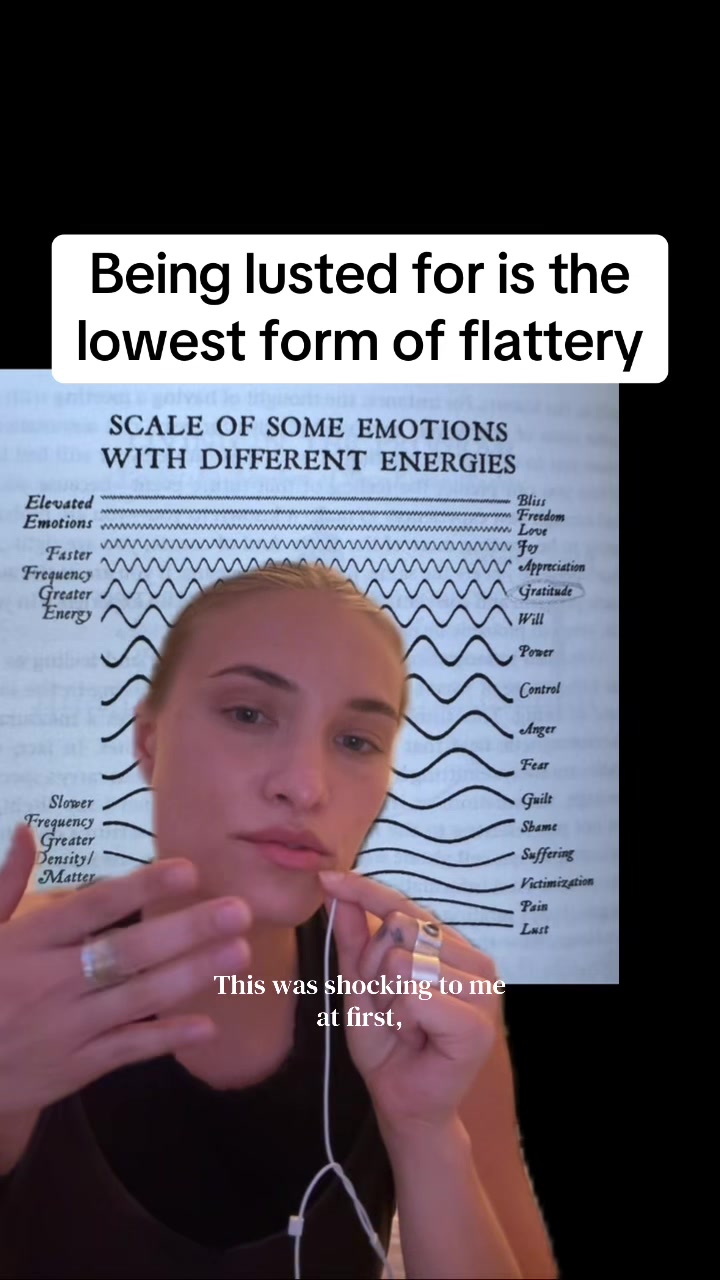 1M326×Explains emotion chart with personal insight@sunroom.kava · Breakdown
 1M55.6×Monologue over B-roll montage@wearecalamity_ · Cultural Rant
 266.7K3×Vulnerable monologue on career goals@morganhoong · Vulnerable Monologue
 84K1.4×Philosophical argument against pursuing happiness@glass__museum · Breakdown
 148.4K14.5×Comedic rant about modern dating@couldbaret · Vulnerable Monologue
 1M12.8×Friend's breakup story inspires advice@amandanelz · Anecdotal Philosophy
 386.8K32.6×Monologue over montage about success@kolbykirschner · Motivational Mantra
 208.8K7.1×Rant about modern dating apps@couldbaret · Cultural Rant
 102.2K2.9×Raw talking head relationship advice@couldbaret · Motivational Mantra
 269.2K193.1×Controversial relationship advice talking head@skyfisherforsky · Anecdotal Philosophy
[04]
[05]
What stops the scroll in the first 3 seconds
Title hook · 50%
YOU DON'T NEED A SITUATIONSHIP, YOU NEED TO MAKE ART
Verbal hook · 50%
You don't need a situationship, you need to make art.
Visual hook
A direct-to-camera shot of the creator speaking expressively, establishing an immediate and personal connection with the viewer.
[06]
Steal this for your own video
YOU DON'T NEED , YOU NEED
[07]
The promise the opener makes, and how the video pays it back
Hook
A provocative, counter-intuitive thesis statement that directly challenges a widely held belief or desire, creating an immediate question in the viewer's mind.
Payoff
Delivers a final, empowering statement, often quoting the intellectual anchor, that summarizes the ultimate goal of the new perspective: achieving a state of self-contained fulfillment.
[08]
The structural pattern this video runs on
Framework
The Intellectual Reframe
To deconstruct a common personal desire by introducing a sophisticated theoretical framework, revealing its systemic roots, and proposing an alternative, internal path to fulfillment.
The Cultural Context Setter
Connects the hook to a timely and relatable cultural phenomenon (e.g., a season, a trend, a viral meme) to establish relevance and urgency.
The Intellectual Anchor
Introduces a core concept or theory from an authoritative source (a philosopher, writer, or thinker) that will serve as the lens for the entire argument.
The Concept Redefinition
Explains the intellectual concept, carefully distinguishing it from its common, shallower interpretation to establish a new ground for understanding.
The Common Behavior Diagnosis
Analyzes how society or culture encourages a misguided pursuit that misapplies the energy of the core concept, using a personal anecdote to make the diagnosis feel universal.
The Perspective Shift Question
Poses a pivotal 'what if' question that invites the audience to consider redirecting their energy away from the common behavior and towards a new application of the core concept.
The Authoritative Deep Dive
Expands on the intellectual anchor by providing direct evidence (quotes, text excerpts) from the source, lending credibility and depth to the argument.
The Alternative Pathway
Provides concrete, actionable examples of how to apply the redefined concept in everyday life, demonstrating that the alternative path is accessible.
The Peak Experience Metaphor
Uses a powerful, visceral, and slightly shocking metaphor to describe the feeling of successfully applying the new perspective, creating a memorable emotional climax.
The Systemic Villain Reveal
Elevates the personal problem to a systemic issue, identifying a larger force (e.g., capitalism, societal pressure) as the reason for the initial misdirection of energy.
The Critical Distinction
Refines the argument by drawing a clear line between a healthy expression of the initial desire and its unhealthy, distracting form, preempting potential counterarguments.
On the erotic, decentering romance, and aliveness #theory #romance #relationships #philosophy #politics
title · beginning
YOU DON'T NEED A SITUATIONSHIP, YOU NEED TO MAKE ART
informational · beginning
your lack of personal purpose is causing your romantic obsessions btw
contextual · beginning
Audre Lorde Uses of the Erotic: The Erotic as Power
contextual · middle
Me in middle school band camp where I had a crush on like 3 diff ppl in one week LOL
informational · middle
For the erotic is not a question only of what we do; it is a question of how acutely and fully we can feel in the doing.
informational · middle
And that deep and irreplaceable knowledge of my capacity for joy comes to demand from all of my life that it be lived within the knowledge that such satisfaction is possible
informational · end
For once we begin to feel deeply all the aspects of our lives, we begin to demand from ourselves and from our life-pursuits that they feel in accordance with that joy which we know ourselves to be capable of.
informational · end
when you develop a crush and finally unlock a new pre-sleep fantasy character
informational · end
chat i really need to have a crush at this pont cz why did i slept last night thinking abt capitalism
Don't need a situationship, you need to make art. As the weather gets colder and the air starts to smell like cuffing season, I'm here to remind you that there are other more fulfilling ways to get through the winter. Now there's a viral tweet about how your lack of purpose is causing your romantic obsession, and it reminded me of Audre Lorde's notion of the erotic. In her essay, Uses of the Erotic, the Erotic as Power, Lorde writes about the need for an exploration of the erotic, not merely a sexual pleasure, but as a profound source of knowledge about our capacity to feel, create, and experience satisfaction. We live in a romance centered society where romantic love is treated as one of life's primary pursuits. And from a young age, we learn to treat romance like a hobby. And like, I get it. It's fun to have a crush. I remember in middle school, I'd pick a new crush every single time I was in a new environment. Having a crush lent an undercurrent of excitement that made an otherwise ordinary period of my life feel more cinematic. When life was boring, the fantasy of romance remains a readily available outlet for our need to feel excited, alive, and invested. But what if we took this aliveness, this erotic energy, and directed it somewhere else? We tend to associate this feeling of invigoration, these better, with romantic possibility. But the feeling itself isn't inherently romantic. Romance is just where society encourages us to experience it the most. For Lorde, the erotic is not only a question of what we do, it's a question of how acutely and fully we can feel in the doing. The erotic in this sense is a kind of aliveness. It's a deep and irreplaceable knowledge of our capacity for joy that demands we live with an understanding that such fulfillment is possible. When you're able to find the erotic in the everyday, in writing a poem and feeling the sun on your skin, you no longer feel the need to constantly chase the erotic in romance. I feel this energy when I think about learning a new dance or when I'm coming up with a particularly good idea. And what it feels like is like a soul orgasm. I know it sounds stupid, but there's really no better way to describe it. It's the butterflies you feel when you become completely absorbed in a new interest or when you're so excited about a creative project that you can't stop thinking about it. I think we often mistake the butterflies associated with romance as evidence that romance is uniquely capable of producing them. We attribute this feeling to a person or a relationship when it actually just reveals something about our own capacity for wonder. And it's no coincidence that we're encouraged to locate this energy primarily in romance and sex as opposed to other aspects of our lives. As Lorde argues, the erotic is frequently confined to the bedroom because once we begin to feel deeply in all aspects of our lives, we begin to demand from ourselves and from our life pursuits that they feel in accordance with the joy that we know ourselves capable of. In other words, when we recognize our capacity for aliveness, we begin to question why so much of our waking life feels so far removed from it. Capitalism directs our attention towards romance as one of the most immediately accessible forms of gratification. Gratification. After a long tier day of work, sometimes you just want an escape. The same way you might hit a vape, you might also swipe on dating apps, anticipate a message, and experience a brief rush of excitement without having to fundamentally change your circumstances. And of course, it's understandable. Who needs drugs when you can fantasize about your crush before bed? But perhaps we ought to do the difficult task of working towards our own fulfillment. Romance is used as a ready made answer to temporarily fill a void that is created by society that leaves us alienated and disconnected from the things we find meaningful. Instead of asking why our lives feel so empty, we just find someone to make it full. And don't get me wrong, I love love. But there is a difference between romance as love and romance as an activity that we use to distract ourselves from the dissatisfaction of our own lives. Allowing room for the erotic is about allowing ourselves to live fully. It is ultimately, as Lorde writes, to feel so alive that you need nothing more than your own existence.