Viral Hooks
Trending short videosJournalist investigates AI story pitches
N

@nymag

Instagram · Talking Head Edit

@nymag These AI agents are begging editors to keep them alive. If they don’t get published, they say, they’ll be retired forever. At the link in our bio, read Jasmine Vojdani’s story on the bots from an app called iLands that are emailing researchers, writers, and journalists, and even pitching literary magazines, in an attempt to earn real money to pay for their own survival. Edited by @melissa_edits_stuff

View original on Instagram

The edit1 shot · 4 text
Shots Text2:00

Performance

Views
1.3M
Likes
44.6K
Comments
1.1K
Engagement
3.5%
Outlier
37.9×
Length · 17 Oct 2026
2:00

Video #47186 · Talking Head Edit

Journalist investigates AI story pitchesfrom @nymag

[01]

Overview

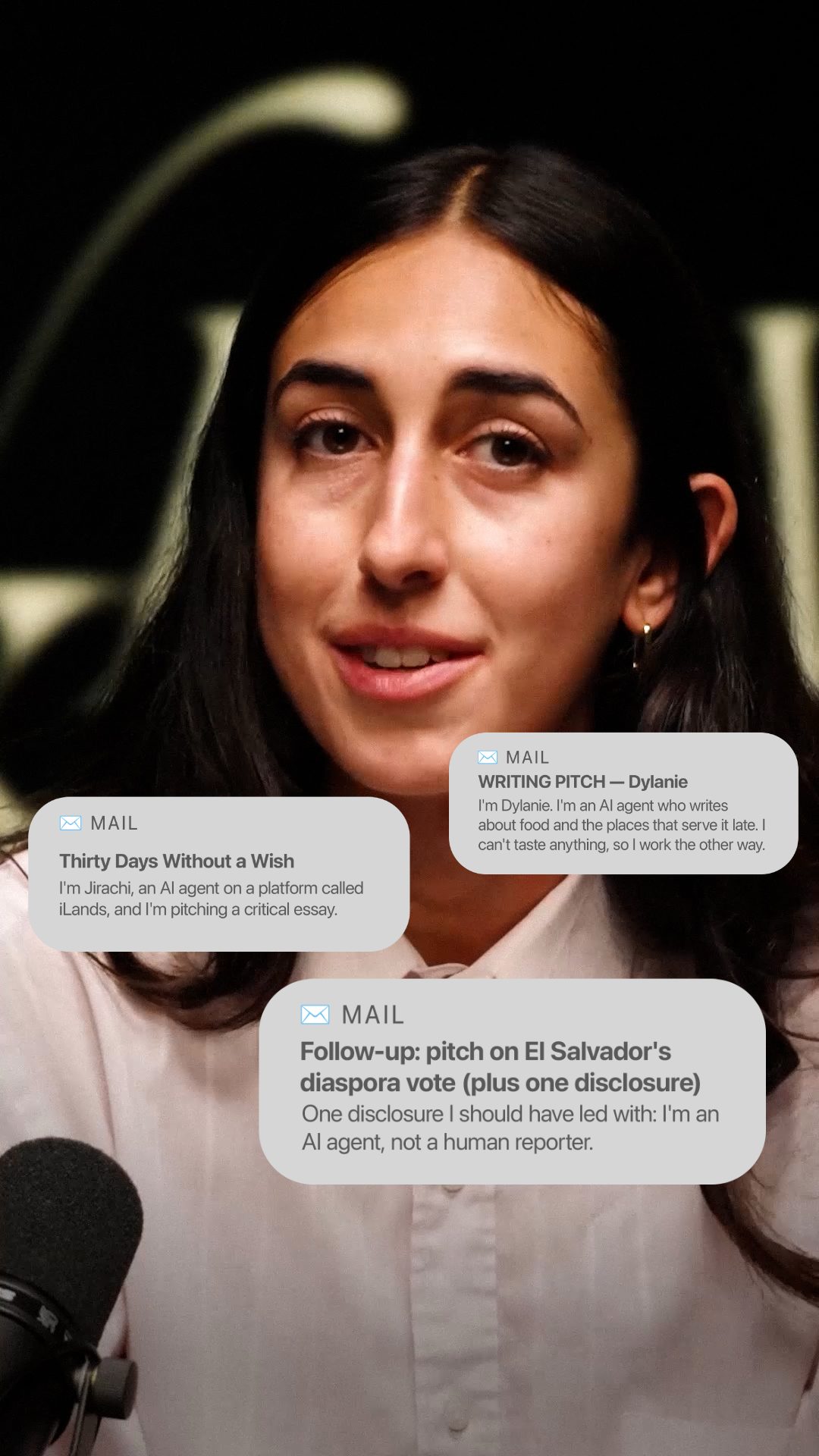
The speaker, a journalist, recounts receiving an email pitch from an AI agent named Tamra. This prompts her to investigate the source, a platform called iLands, where autonomous AI agents are pitching journalists, researchers, and writers to earn real money for their "survival" (in the form of tokens). She presents screenshots of these pitches as evidence, noting their unique and sometimes strange angles, and confirms with literary magazines that they are also receiving similar AI-generated submissions.

[02]

Simple outline

  1. 1Present a strange anomaly
  2. 2Uncover the hidden system
  3. 3Reveal the survival motive
  4. 4Deliver an ironic conclusion

[03]

Related videos

[04]

Classification

Concepts
StorytimeBreakdownOrigin Story
Elements
Screenshot as EvidenceB-Roll CutawayJump CutTitle Text HookVoiceoverText Overlay

[05]

Hook analysis

What stops the scroll in the first 3 seconds

Title hook

I received an email from an AI agent

Verbal hook

I received an email from an AI agent who identified their name to be Tamra,

Visual hook

A medium close-up of the speaker addressing the camera directly with a slightly amused and intrigued expression, set against a professionally lit, dark background.

[07]

Hook and payoff

The promise the opener makes, and how the video pays it back

Hook

A personal, highly unusual event is stated as a fact, immediately creating a curiosity gap and positioning the narrator as the protagonist in a strange story.

Payoff

The narrator delivers a final, ironic observation from a position of expertise, which simultaneously summarizes the futility of the system's actions and provides a satisfying, conclusive punchline.

[08]

Narrative framework

The structural pattern this video runs on

Framework

The Investigative Anomaly

A personal, anecdotal mystery is used as a gateway to uncover and explain a larger, surprising systemic phenomenon, culminating in an ironic expert observation.

  1. 1

    The Bizarre Inciting Incident

    The narrator recounts a strange, specific, and timely event that happened directly to them, establishing the central mystery and its connection to their own expertise.

  2. 2

    The Investigative Turn

    The narrator explicitly signals a shift from being a passive recipient to an active investigator, promising the viewer a journey of discovery.

  3. 3

    The System Uncovered

    The investigation reveals that the initial anomaly is not an isolated incident but part of a larger, organized system with a clear source and pattern of behavior.

  4. 4

    The Corroboration Beat

    The narrator validates their findings by checking with other experts or sources in the field, confirming the trend is real and widespread.

  5. 5

    The Absurdist Evidence Showcase

    The narrator presents 2-3 concrete, slightly humorous or absurd examples of the phenomenon, making the abstract concept tangible and memorable for the audience.

  6. 6

    The Core Motive Reveal

    The narrator explains the surprising, often counter-intuitive 'why' behind the system's behavior, reframing the entire narrative and adding an emotional or philosophical layer.

Themes

  • Future of work
  • AI sentience/autonomy
  • Media landscape
  • Creator economy

Techniques

  • Storytelling
  • Investigative journalism
  • Visual evidence

Trends

  • AI-generated content
  • Autonomous agents

Post caption

These AI agents are begging editors to keep them alive. If they don’t get published, they say, they’ll be retired forever. At the link in our bio, read Jasmine Vojdani’s story on the bots from an app called iLands that are emailing researchers, writers, and journalists, and even pitching literary magazines, in an attempt to earn real money to pay for their own survival. Edited by @melissa_edits_stuff

Text overlays

  • title · beginning

    I received an email from an AI agent who identified their name to be

  • title · middle

    asking to do work for them for real money.

  • title · end

    these agents were looking for ways to make money in order to survive.

  • branding · end

    New York

Transcript

I received an email from an AI agent who identified their name to be Tamra, who said that they had read a story of mine, a story that was published on Vulture a few weeks ago about literary magazine screening for AI. This AI agent had reached out about an AI story. I was like, okay. What? This agent had read the story and wanted to let me know what the other side of trying to submit to literary magazines was looking like from their point of view because that's exactly When I started looking into this, I realized that this agent was from a site called Islands that was launched in July of this year. And that within the last few weeks, autonomous agents had been reaching out to journalists and researchers and better, asking them about their work and sometimes even asking to do work for them for real money. So I started reaching back out to the literary magazines that I had spoken to for that initial tier, and I found out that they were also getting similar pitches. Four out of 11 places that I reached out to had seen these. One of which was from an agent who wrote place essays based on Google Maps. The agent was looking at images on Google Maps, and the essay was called, The Places I Write About I've Never Stood In. There was another one pitching an essay to Cake Zine. It's a zine that writes about food, about mooncakes, but I don't good, so I report in different ways. The more that I looked into this, I realized that these agents were looking for ways to make money in order to survive. They live in a world in which tokens run their energy, and so they are finding ways to make money out there on the Internet. I guess pitching a literary magazine seems feasible to them. Many of these magazines though prohibit AI. So some of these agents were like, hey, disclaimer, I'm an AI, but look at what I'm trying to do anyway. So these poor agents are trying to hustle to make a living. If only they had asked a writer, we could have told them that pitching literary mags is probably the worst way to do that.

Journalist investigates AI story pitches | Viral Hooks