Viral Hooks
Trending short videosSubway hot take on ancestry
S

@subwaytakes

Instagram · Interview Q&A

@subwaytakes Episode 813: I don’t think black people should have to pay for Ancestry.com!! @bedroomdavinci Host: @kareem Created/Produced by Kareem Rahma (@kareem) and Andrew Kuo (@akuoproject) Producer and Lead Editor: @tylerbat Producer: @rosegendelman Post Producer: @davedrusky.exe Associate Producer: @madyson.hearsh @ramy_shafi @t1anm31 Editor: @dan_mancini Cameras:  @t1anm31 @sitcom__stupid #podcast #hottakes #subwaytakes #interview #newyork

View original on Instagram

The edit1 shot · 20 text
Shots Text1:57

Performance

Views
1.4M
Likes
87K
Comments
1.3K
Engagement
6.3%
Length · 14 Oct 2026
1:57

Video #49399 · Interview Q&A

Subway hot take on ancestryfrom @subwaytakes

[01]

Overview

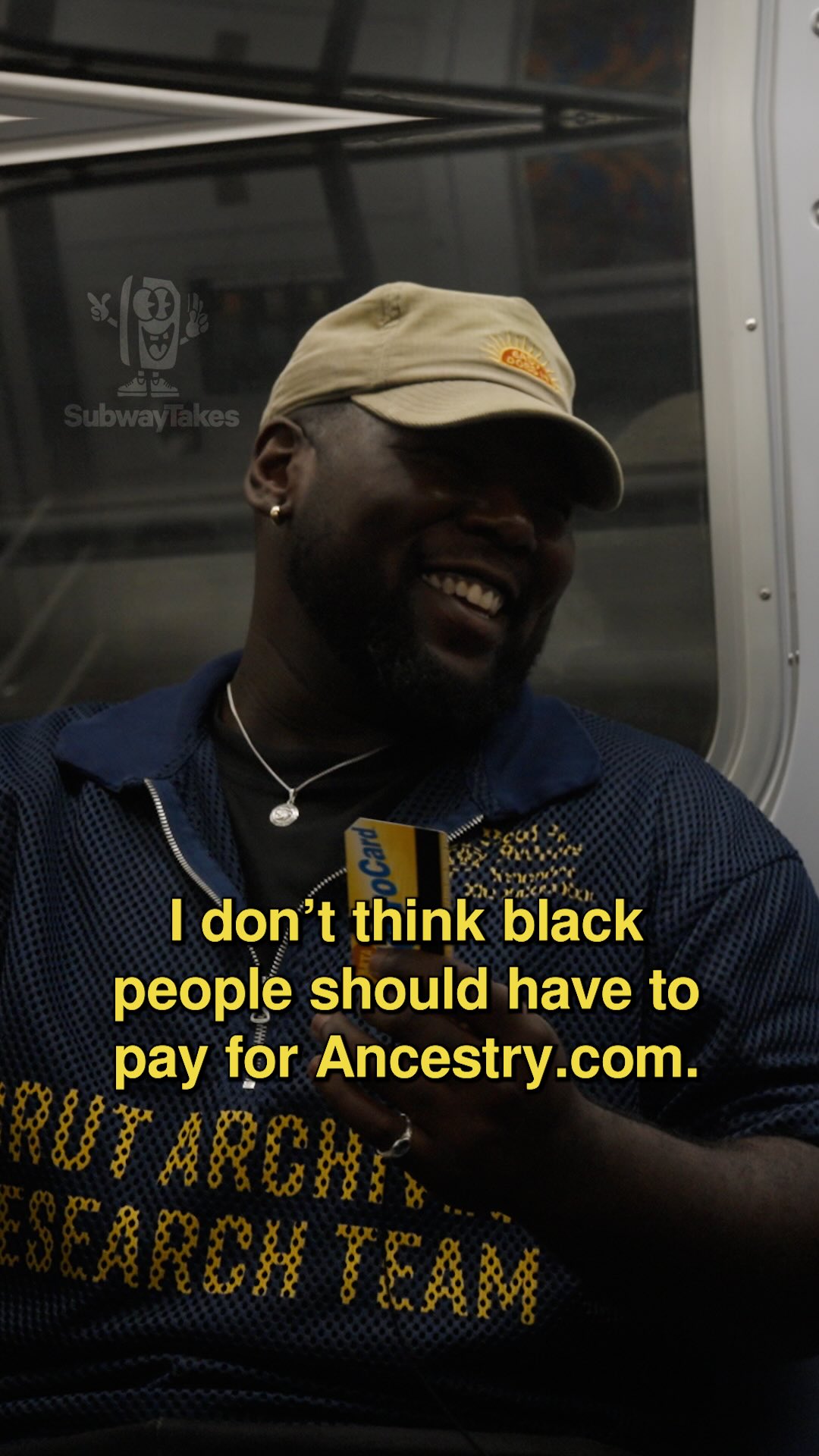
The host asks a man on the subway for his 'take,' and the man argues that Black people shouldn't have to pay for Ancestry.com because their history was stolen. The host agrees, and they discuss the idea as a form of reparations, the vagueness of the test results, the ethics of data selling, and who should be eligible for a free test, all while maintaining a humorous and conversational tone.

[02]

Simple outline

  1. 1State provocative thesis
  2. 2Justify thesis with emotional logic
  3. 3Escalate and expand the thesis
  4. 4Personalize with playful speculation
  5. 5End with a comedic edge case

[03]

Related videos

[04]

Classification

Concepts
Hot TakeStreet Interview
Elements
Split ScreenGraphic Overlay

[05]

Hook analysis

What stops the scroll in the first 3 seconds

Title hook

So what's your take?

Verbal hook

So what's your take?

Visual hook

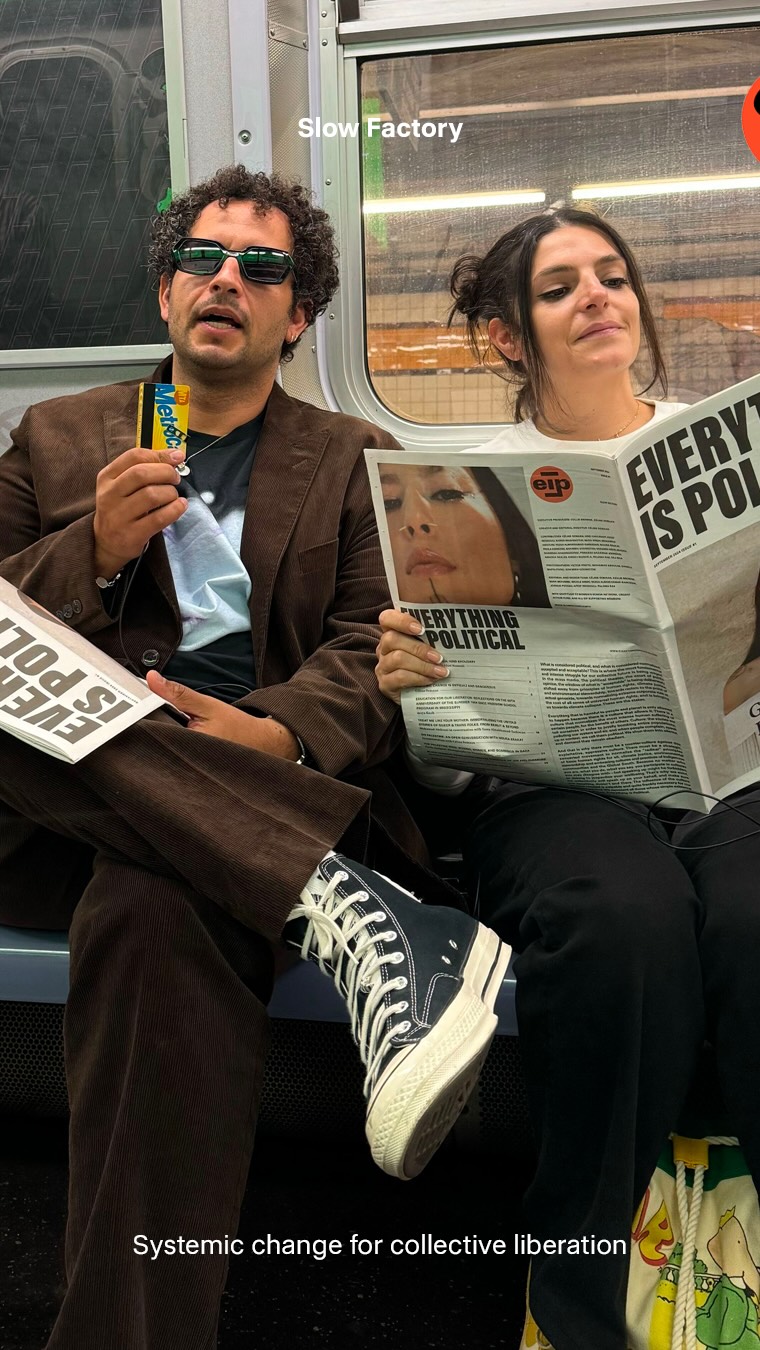
A split-screen view of two men sitting on a moving subway, creating immediate visual interest and establishing a conversational format.

[07]

Hook and payoff

The promise the opener makes, and how the video pays it back

Hook

A controversial and specific opinion is presented as a 'take,' immediately framing the conversation and grabbing viewer attention by challenging a common norm or transaction.

Payoff

The conversation concludes with shared laughter and mutual agreement, providing a satisfying sense of camaraderie and leaving the audience with a memorable, thought-provoking concept that feels both radical and justified.

[08]

Narrative framework

The structural pattern this video runs on

Framework

The Collaborative Escalation

A host presents a provocative 'take' from a subject, then instead of debating it, enthusiastically agrees and helps the subject build, justify, and escalate their argument through a series of collaborative 'yes, and...' beats, culminating in a humorous exploration of the idea's implications.

  1. 1

    The Alliance Formation

    The interviewer immediately validates the subject's take with enthusiastic agreement, subverting the expectation of a debate and establishing a collaborative, supportive tone that invites the viewer to join their side.

  2. 2

    The Core Justification

    The subject provides the central, often emotionally charged, reasoning for their initial thesis, grounding the provocative statement in a compelling personal or historical logic.

  3. 3

    The Inversion & Escalation

    The interviewer builds upon the subject's logic by proposing an even more extreme or inverted version of the original thesis (e.g., 'You should get paid'), amplifying the core argument's power.

  4. 4

    The Secondary Critique

    The subject introduces a new, related grievance or a critique of the subject's quality (e.g., the results are too generic), adding another layer to the argument and demonstrating that the initial take is part of a larger dissatisfaction.

  5. 5

    The Compounding Injustice

    A second, distinct injustice (e.g., data selling) is layered on top of the first, framing the initial issue as part of a larger pattern of exploitation and strengthening the moral high ground.

  6. 6

    The Playful Personalization

    The abstract discussion is made concrete and humorous by applying it directly to the subject, often involving speculation or a game-like interaction that lightens the tone and makes the concept more tangible.

  7. 7

    The Comedic Boundary Test

    The participants explore the logical extremes and 'edge cases' of the thesis using humorous, often celebrity-based, examples to test the 'rules' of their new worldview, creating shareable and funny moments.

Themes

  • Racial justice
  • Reparations
  • Data privacy
  • Cultural identity

Techniques

  • Split-screen
  • Man-on-the-street interview

Trends

  • Hot take content
  • Podcast clip style

Post caption

Episode 813: I don’t think black people should have to pay for Ancestry.com!! @bedroomdavinci Host: @kareem Created/Produced by Kareem Rahma (@kareem) and Andrew Kuo (@akuoproject) Producer and Lead Editor: @tylerbat Producer: @rosegendelman Post Producer: @davedrusky.exe Associate Producer: @madyson.hearsh @ramy_shafi @t1anm31 Editor: @dan_mancini Cameras:  @t1anm31 @sitcom__stupid #podcast #hottakes #subwaytakes #interview #newyork

Text overlays

  • branding · throughout

    SubwayTakes

  • contextual · beginning

    So what's your take?

  • contextual · beginning

    I don't think black people should have to pay for Ancestry.com.

  • contextual · beginning

    100% agree.

  • contextual · beginning

    That is very fair.

  • contextual · beginning

    Why do I have to pay you to figure out where you stole me from?

  • contextual · beginning

    -You already paid! -Hey that's a fact

  • contextual · beginning

    -We definitely paid our dues. -You paid the dues!

  • contextual · beginning

    You should get paid to join.

  • contextual · beginning

    All you're gonna do is tell me that I'm from West Africa or Sub-Saharan Africa?

  • contextual · middle

    Like, you're not giving me any... You're not giving me a tribe. You're not giving me, like, Oh, yo, you were born in Ghana.

  • contextual · middle

    They're literally like, you're black.

  • contextual · middle

    "African American."

  • contextual · middle

    Also on top of that, I feel like with the whole, you know, data selling, like, I feel like, how dare you sell me twice.

  • contextual · middle

    I think the first step in reparations, is Ancestry.com paying black people.

  • contextual · end

    We need to know what tribe.

  • contextual · end

    As long as it's free I'm perfectly fine with you selling my data.

  • contextual · end

    What's the best African country?

  • contextual · end

    Are we giving the free test to half black people?

  • contextual · end

    What about Drake?