Viral Hooks
Trending short videosAnimated explainer of labor illusion
D

@decoyreport

Instagram · Faceless

@decoyreport A locksmith got faster at his job… and his customers got angrier. Then a Harvard experiment explained why. 🔐 What part of YOUR work do customers never get to see? 👇 Want to make videos like this? Comment SKILL or tap the link in bio. #decoyreport #smallbusiness #pricing #psychology #marketingtips

View original on Instagram

The edit1 shot · 19 text
Shots Text1:13

Performance

Views
151K
Likes
4.3K
Comments
205
Engagement
3%
Outlier
13.9×
Length · 3 Nov 2026
1:13

Video #49959 · Faceless

Animated explainer of labor illusionfrom @decoyreport

[01]

Overview

The creator uses motion graphics to explain the psychological concept of the 'labor illusion,' detailing how customers value visible effort over instant results through examples like a locksmith, a Harvard flight search study, Wells Fargo, and Facebook. The video concludes with actionable advice for service providers to show their work process and a call-to-action to learn how to make similar videos.

[02]

Simple outline

  1. 1State counter-intuitive premise
  2. 2Share illustrative anecdote
  3. 3Provide scientific proof
  4. 4Show real-world examples
  5. 5Give actionable takeaway

[03]

Related videos

[04]

Classification

Format
Concepts
BreakdownCase Study BreakdownOpportunity Explainer
Elements
Motion GraphicsDynamic Word-by-Word CaptionsData Visualization GraphicEngagement CTAVoiceover

[05]

Hook analysis

What stops the scroll in the first 3 seconds

Title hook

A slow locksmith gets paid more

Verbal hook

A slow locksmith gets paid more than a fast one.

Visual hook

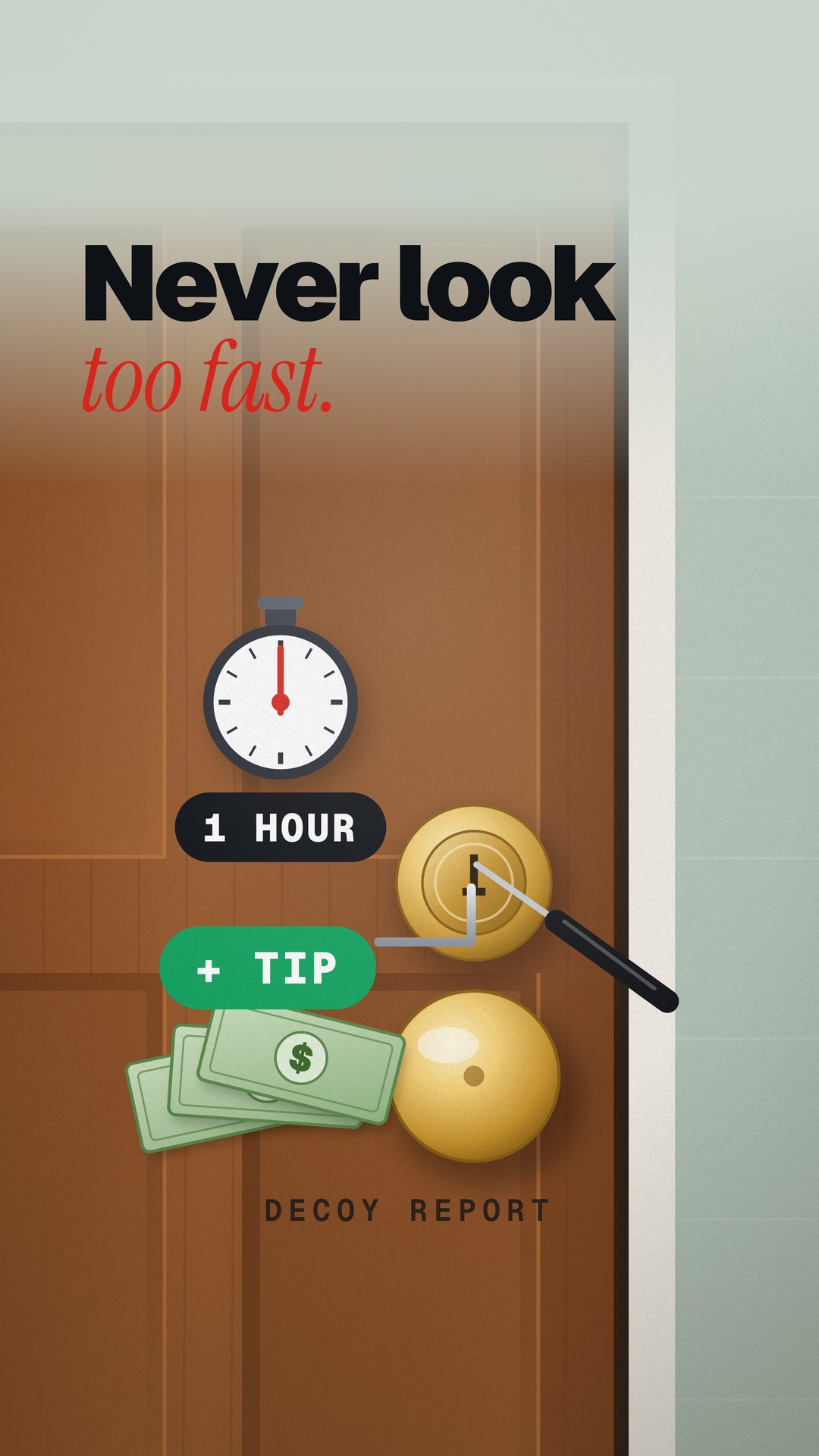
Animated illustration of a door with a brass doorknob being picked by a tool, accompanied by a ticking stopwatch graphic.

[07]

Hook and payoff

The promise the opener makes, and how the video pays it back

Hook

Present a counter-intuitive statement that challenges common sense to create immediate curiosity.

Payoff

Translate the psychological concept into a direct, actionable rule for the viewer's own life or business, followed by a clear call to action.

[08]

Narrative framework

The structural pattern this video runs on

Framework

The Counter-Intuitive Concept Breakdown

Present a counter-intuitive psychological phenomenon, prove it with an anecdote and data, show real-world examples, and provide actionable advice with a caveat.

  1. 1

    The Anecdotal Evidence

    Tell a relatable story that illustrates the counter-intuitive premise in action, grounding the concept in everyday reality.

  2. 2

    The Scientific Validation

    Introduce a credible study or experiment that proves the phenomenon with hard data, elevating the premise from opinion to fact.

  3. 3

    The Psychological Mechanism

    Explain the underlying reason why this happens, giving the phenomenon a formal name to make the viewer feel smarter.

  4. 4

    The Corporate Application

    Show how major recognizable brands intentionally use this psychological quirk, proving its widespread utility.

  5. 5

    The Critical Caveat

    Introduce the boundary condition or exception where the rule backfires, adding nuance and credibility.

Themes

  • perceived value
  • consumer psychology
  • service pricing
  • transparency

Techniques

  • motion graphics
  • data visualization
  • dynamic captions
  • sound design

Trends

  • educational explainers
  • psychology facts
  • business hacks

Post caption

A locksmith got faster at his job… and his customers got angrier. Then a Harvard experiment explained why. 🔐 What part of YOUR work do customers never get to see? 👇 Want to make videos like this? Comment SKILL or tap the link in bio. #decoyreport #smallbusiness #pricing #psychology #marketingtips

Text overlays

  • title · beginning

    A slow locksmith gets paid more

  • informational · beginning

    Dan Ariely met a locksmith who as a beginner

  • informational · beginning

    People paid And tipped him

  • informational · beginning

    No tips You're overcharging

  • contextual · beginning

    Let's X-ray it

  • informational · middle

    Harvard tested this search site Same flights

  • informational · middle

    One version answered The other made you wait 30 showing every site it searched

  • informational · middle

    62% picked the slow one

  • informational · middle

    Now here's what we noticed With a plain only 42% waited Same 30 seconds

  • informational · middle

    So people weren't paying for the WAIT They were paying work

  • informational · middle

    Researchers call THE LABOR ILLUSION

  • informational · middle

    Wells Fargo slowed scanner because customers didn't believe it

  • informational · middle

    Facebook admitted its security check runs faster than you can see

  • informational · end

    But here's the catch When the result was bad showing the work made people rate it even lower

  • informational · end

    So if you sell a service don't hide the Show the steps The drafts The hours

  • informational · end

    Effort sells but only on good result

  • branding · end

    That's the decoy

  • contextual · end

    Make a video on why customers pay more for work they can see.

  • call-to-action · end

    Comment SKILL and the link

Transcript

A slow locksmith gets paid more than a fast one. Dan Ariely met a locksmith who, as a beginner, took forever and sometimes broke the lock. People paid and tipped him. Now it takes him a moment, no tier, and customers say he's overcharging. Let's x-ray it. Harvard tested this on a flight search site. Same flights, same prices. One version answered instantly. The other made you wait thirty seconds showing every site it searched. 62% picked the slow one. Now, here's what we no. With a plain loading bar, only 42% waited. Same thirty seconds. So people weren't paying for the wait, they were paying to see the work. Researchers call it the labor illusion. Wells Fargo slowed down its eye scanner because customers didn't believe it worked. Facebook admitted its security check runs faster than you can see. But here's the catch. When the result was bad, showing the work made people rate it even lower. So if you sell a service, don't hide the work. Show the steps, the drafts, the hours. Effort sells, but only on top of a good result. That's the decoy. By the way, wanna make videos like this with no editing or coding skills? Comment skill, and I'll send you the link.

Animated explainer of labor illusion | Viral Hooks