@cbwritescopy
TikTok · Yap
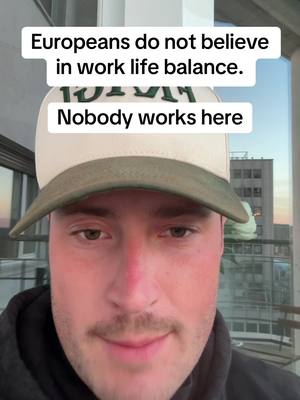
@cbwritescopy Not sure how I feel about it

@cbwritescopy
TikTok · Yap
@cbwritescopy Not sure how I feel about it
Performance
Video #5983 · Yap
[01]
The creator delivers a monologue from a balcony in Madrid, contrasting European and American work cultures. He opens with the provocative claim that Europeans don't believe in work-life balance because they prioritize life, then provides examples like late start times, long midday siestas, and frequent holidays. He reflects on his mixed feelings, appreciating the focus on social life and memories but acknowledging that the American work ethic has afforded him a lifestyle he's unsure he could abandon.
[02]
[03]
 268.8K75.4×Rant comparing US vs Europe@squidpakter · Hot Take
 747.8K42.3×Creator rants about vacation mindset@couldbaret · Cultural Rant
 310.2KDeconstructs the simple life fantasy@orenmeetsworld · Breakdown
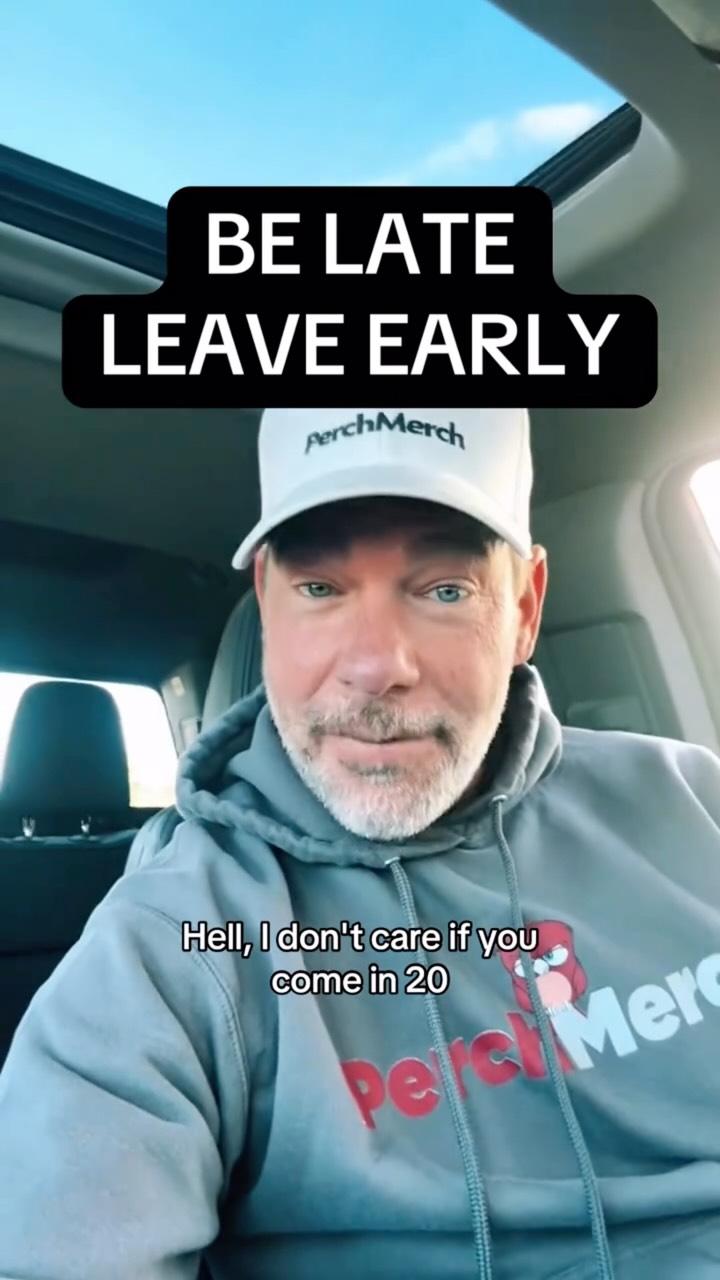 700.7KWorkplace culture rant from car@zerodollarcoach · Hot Take
 1.4M88.7×Lifestyle montage with voiceover philosophy@bensantos508 · Motivational Mantra
 217.6K13.2×Satirical advice on life priorities@couldbaret · Satirical Advice
 493.7K60.2×Monologue comparing work to slavery@holistic.grenade · Hot Take
 247.5K7.4×Split-screen satirical political commentary@womp_tomp · Satirical Advice
 5.2MHot take on the concept of days@mindhackz · Hot Take
 423.1KWalking monologue on lifestyle values@atfrenchies · Anecdotal Philosophy
 351.9K9.7×Relatable Friday work escape confession@officiallysonny
 268.6K8.1×Political commentary with image overlays@womp_tomp · Cultural Rant
[04]
[05]
What stops the scroll in the first 3 seconds
Title hook · 55%
Europeans do not believe in work life balance. Nobody works here
Verbal hook · 40%
Europeans do not believe in work life balance because they believe in life with a little bit of work sprinkled in there.
Visual hook · 5%
A close-up, direct-to-camera address from a creator on a balcony with a city view in the background during sunset, creating an intimate and authentic feel.
[07]
The promise the opener makes, and how the video pays it back
Hook
A bold, counter-intuitive statement about a group or culture, presented as on-screen text, designed to challenge a common belief and grab immediate attention.
Payoff
The Concluding Restatement. Summarizes the entire argument and brings the narrative full circle by rephrasing the initial thesis, leaving the audience with a clear, memorable takeaway on the cultural paradox.
[08]
The structural pattern this video runs on
Framework
The Culture Shock Commentary
Presenting a personal observation about a cultural difference, using anecdotal evidence to support it, and exploring the internal conflict this difference creates for the observer.
The Thesis Reframing
Immediately clarifies the hook's provocative statement with a more nuanced, intriguing explanation that serves as the video's central argument.
The Daily Proof Point
Provides concrete, day-to-day examples (like work schedules and daily routines) that serve as the first layer of evidence for the thesis.
The Social Proof Point
Broadens the evidence from individual routines to wider societal behavior, using a surprising anecdote to reinforce the pervasiveness of the cultural norm.
The Personal Dilemma
Introduces the creator's internal conflict and mixed feelings about the observation, creating vulnerability and contrasting the observed culture with their own.
The Escalating Anecdote
Presents a final, often humorous or extreme, piece of personal evidence that demonstrates how the cultural trait manifests on a larger scale (e.g., yearly patterns vs. daily).
Not sure how I feel about it
title · beginning
Europeans do not believe in work life balance. Nobody works here
Europeans do not believe in work life balance because they believe in life with a little bit of work sprinkled in there. I'm in Madrid right now, and people go to work here at about 9AM. Nothing's open before that. If you wanna go to Starbucks at six in the morning to start your day and grind, it's not open yet. Everybody takes their damn sweet time tier. And then from one to four, everybody goes on siesta where they go home and take a nap, go for a walk, go hang out with their friends, and then people work for, like, a few hours after their best. And then everybody's out all night. It was 11PM last night, and there were kids on a field trip going to a dinner in Madrid. I'm like, shouldn't you guys be in bed? Like, people here value social life and just enjoying the day and flaneering and gallivanting about the land so much more than worse. And it's kinda interesting because I love it in the sense that people prioritize making memories and being with their friends over worse, but I also don't like it because the lifestyle that I've afforded to live in The US is because I've worked tier. And if I had to rescind that lifestyle to live a basic life here, I don't know if I could do it. It's a very different cultural dynamic. And then they call vacations holiday. In Europe, I'm going on holiday for the week. Europeans are on holiday every other week. I work for or I run a business, a marketing agency. And in the summertime, our European clients will be like, I'm on holiday this week. Be back next week. Then they're like, hey. Just to let you know, I'm going on another holiday this week, and then it's a bank holiday the following week. Then I'm going on an extended holiday the week after. It's like, in the summer, people barely, barely worse, and they take their siestas and they take their naps and things fully close down so people can rest. And then compared to The US, it's a culture shock, and I have mixed feelings about it because it seems great on the surface. But if I actually did it, I feel like I would lack purpose and motivation and the desire to upgrade myself as a human being. So work life balance, it's more like life with a little bit of work.