Viral Hooks
Trending short videosDoctor explains recovery mindset challenges
D

@drkerbel

Instagram · Speaker address

@drkerbel Nobody prepares you for the mental side of knee replacement. Everyone talks about the surgery, the pain, the exercises…but almost no one talks about the emotional ups and downs that come with it. One day your knee feels great. The next day you feel like you’re going backward. You get random waves of sadness, frustration, fear…sometimes for no clear reason. And then you start wondering if something is wrong, or if you messed something up. What I want you to know is: this is normal. Every single person who goes through knee replacement experiences this. Recovery is not linear. It’s not a straight line. It’s a year-long process with good days, bad days, plateaus, and random emotional moments that catch you off guard. The most important thing you can do is be patient with yourself. Be kind to yourself on the hard days. And celebrate the good ones when they come. This journey takes time…but you are moving forward, even when it doesn’t feel like it. Save this for the days you need the reminder. You’re not alone in this. #kneereplacement #kneearthritis #kneereplacementsurgery #kneereplacementrecovery #jointreplacement

View original on Instagram

The edit1 shot · 1 text
Shots Text

Performance

Views
363.9K
Likes
6.6K
Comments
645
Engagement
2%
Outlier
6.6×

Video #8025 · Speaker address

Doctor explains recovery mindset challengesfrom @drkerbel

[01]

Overview

A medical professional explains that the most challenging and unspoken part of knee replacement recovery is the mental and emotional journey. He debunks the myth that recovery is a linear process, describing it as a series of emotional ups and downs, including sudden sadness and frustration. He normalizes these feelings, reassures viewers that setbacks are part of healing, and advises them to be patient and kind to themselves throughout the year-long process.

[02]

Simple outline

  1. 1Reveal overlooked problem
  2. 2Debunk common expectation
  3. 3Validate the real struggle
  4. 4Normalize the experience
  5. 5Offer compassionate advice

[03]

Related videos

[04]

Classification

Concepts
BreakdownVulnerable Monologue
Elements
Title Text HookJump Cut

[05]

Hook analysis

What stops the scroll in the first 3 seconds

Title hook · 55%

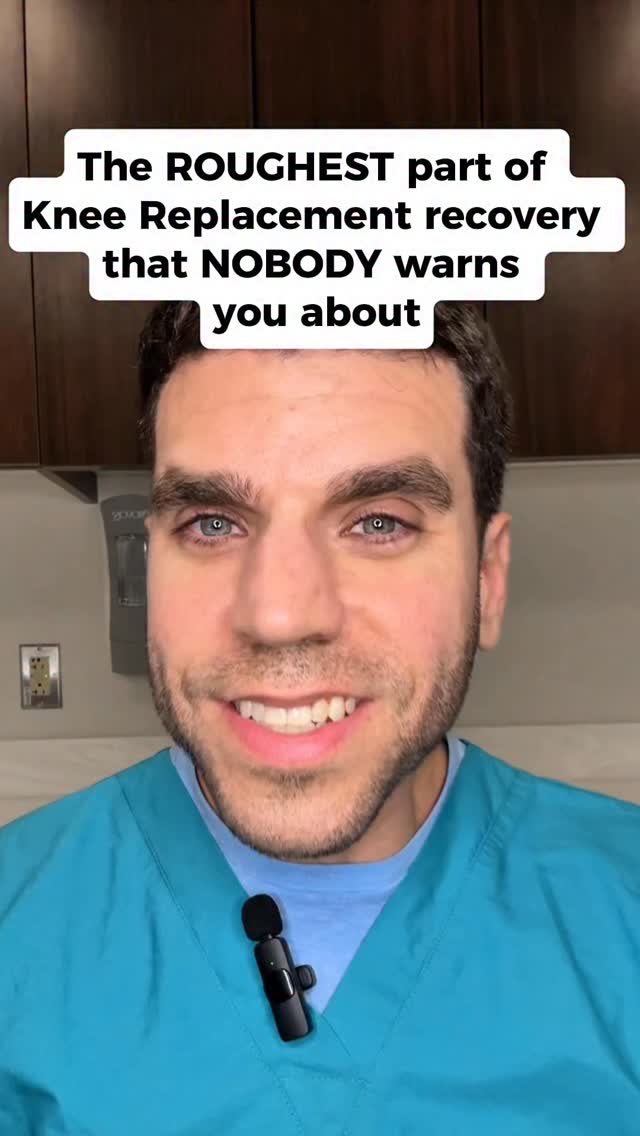
The ROUGHEST part of Knee Replacement recovery that NOBODY warns you about

Verbal hook · 40%

Such a key part of knee replacement recovery that nobody talks about is the mindset.

Visual hook · 5%

A tight, close-up shot of the speaker looking directly and intensely into the camera, creating an immediate sense of authority and personal connection.

[06]

Hook template

Steal this for your own video

The ROUGHEST part of [experience or process] that NOBODY warns you about is [unexpected non-physical challenge]

  • — The ROUGHEST part of starting a business that NOBODY warns you about is the identity crisis
  • — The ROUGHEST part of losing 50 pounds that NOBODY warns you about is the loneliness
  • — The ROUGHEST part of buying your first home that NOBODY warns you about is the emotional spiral

[07]

Hook and payoff

The promise the opener makes, and how the video pays it back

Hook

State a contrarian thesis, promising to reveal a hidden, difficult truth about a common experience that 'nobody talks about.'

Payoff

Summarize the core message into a powerful, memorable closing statement that calls for patience, self-kindness, and perseverance.

[08]

Narrative framework

The structural pattern this video runs on

Framework

The 'It's Normal' Validation Loop

To identify a hidden, often emotional, struggle associated with a well-known process, debunk the common, oversimplified understanding of it, validate the audience's chaotic experience, and reframe their struggle as a normal and necessary part of the journey, concluding with a call for self-compassion.

  1. 1

    The Common Myth Deconstruction

    Articulate the simplified, linear expectation that most people have about the process. Then, decisively negate this misconception to establish a new reality.

  2. 2

    The Chaotic Reality Presentation

    Describe the actual, non-linear, and emotionally turbulent nature of the experience, using vivid, relatable examples of extreme highs and lows to build empathy.

  3. 3

    The Negative Spiral Illustration

    Detail a specific, common setback and the resulting cascade of self-doubt, fear, and negative internal monologue it triggers. This is designed to make the audience feel deeply understood.

  4. 4

    The Universal Normalization

    Deliver the core message with authority: the chaotic, negative experience is completely normal and universal for everyone undergoing this process. This provides immediate psychological relief and builds trust.

  5. 5

    The Reframe Mantra

    Systematically take the previously mentioned negative experiences (setbacks, plateaus, emotional lows) and repeatedly re-label them as integral and expected parts of the overall positive process (e.g., 'healing,' 'growth,' 'learning').

  6. 6

    The Timeline Reset

    Counteract the desire for immediate results by establishing a realistic, long-term timeframe for the entire process, managing audience expectations.

  7. 7

    The Actionable Compassion Mandate

    Provide concrete, gentle instructions for how to navigate both the bad days (with self-kindness) and the good days (with celebration), making the advice practical.

Themes

  • Emotional resilience
  • Medical recovery
  • Mental health
  • Patience
  • Self-compassion

Techniques

  • Direct address
  • Empathetic tone
  • Expert advice

Trends

  • Medical explainer
  • Mental health awareness

Post caption

Nobody prepares you for the mental side of knee replacement. Everyone talks about the surgery, the pain, the exercises…but almost no one talks about the emotional ups and downs that come with it. One day your knee feels great. The next day you feel like you’re going backward. You get random waves of sadness, frustration, fear…sometimes for no clear reason. And then you start wondering if something is wrong, or if you messed something up. What I want you to know is: this is normal. Every single person who goes through knee replacement experiences this. Recovery is not linear. It’s not a straight line. It’s a year-long process with good days, bad days, plateaus, and random emotional moments that catch you off guard. The most important thing you can do is be patient with yourself. Be kind to yourself on the hard days. And celebrate the good ones when they come. This journey takes time…but you are moving forward, even when it doesn’t feel like it. Save this for the days you need the reminder. You’re not alone in this. #kneereplacement #kneearthritis #kneereplacementsurgery #kneereplacementrecovery #jointreplacement

Text overlays

  • title · beginning

    The ROUGHEST part of Knee Replacement recovery that NOBODY warns you about

Transcript

Such a key part of knee replacement recovery that nobody talks about is the mindset. Most people think that the way knee replacement recovery goes is you have surgery, you have some pain, you do your rehab, you get better, the end. But that couldn't be further from the truth. It's not linear. It's not a straight line of improvement. It's thousands of ups and downs. You have moments where you suddenly just feel like crying and you don't even know why. And then a couple days later, you're feeling good on top of the worse. And it's that balance between the highs and the lows, the emotional ups and downs that is actually one of the hardest parts recovering from your knee replacement. And when you've had a few good days and then suddenly you wake up with pain out of nowhere, your mind starts going to dark places, and it starts wondering, did I mess something up? Am I infected? Did I do something wrong? And that can start to spiral out of control. But here's what I want you to no. That is all normal. Everybody who goes through knee replacement recovery has those moments. Like everything else in life, recovery has ups and downs. You do a little bit too much one day, and the next day your knee's barking at you. That's okay. That's part of healing. If you hit a plateau and things don't seem to be getting better, that's part of healing. If you're having a day where you're feeling really emotional and drained, that's part of healing. This whole process takes time. It takes about a year for your knee and your mind, your emotions to fully recover. So when you're having one of those hard days, stop and take a breath. Be kind to yourself. Remind yourself that this is a long journey that you're on and you're putting in the work and that's what matters. And when the good days come, enjoy them, celebrate them. It's proof that you're moving in the right direction. This isn't something that heals overnight. This is a long journey that you're taking. So stay patient, stay kind to worse, and never give up.

Doctor explains recovery mindset challenges | Viral Hooks