@cbwritescopy
TikTok · Yap
@cbwritescopy Whatever they put in American food/drinks is literally poison

@cbwritescopy
TikTok · Yap
@cbwritescopy Whatever they put in American food/drinks is literally poison
Performance
Video #8086 · Yap
[01]
The creator delivers a monologue directly to the camera while walking outside, starting with the bold claim that European alcohol doesn't cause hangovers. He supports this with a personal anecdote about drinking heavily in Spain and feeling fine the next day, contrasting it with the severe hangovers he would expect in the US. He expands his argument to include food quality, criticizes American food and alcohol for containing 'poisonous' ingredients that are banned in Europe, and ends with a call for political action to improve food regulations in the US.
[02]
[03]
 108.1KPersonal story comparing US food@cbwritescopy · Anecdotal Philosophy
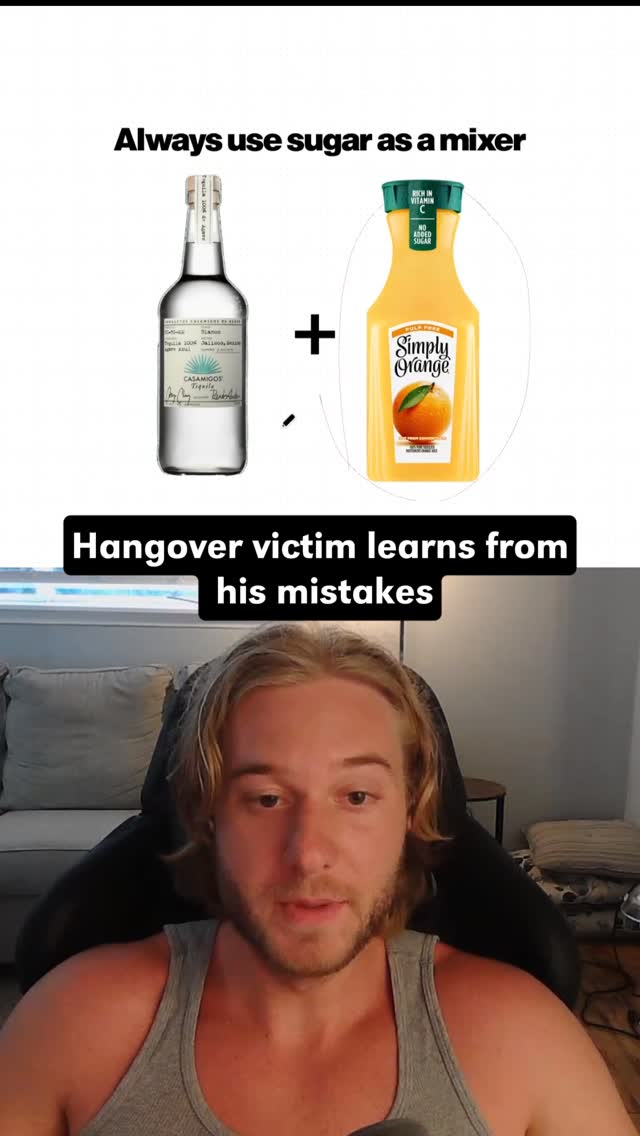 204.8KScience behind sugary alcohol mixers@reecebrah · Breakdown
 1.7M6.2×American critiques US social culture@cbwritescopy · Hot Take
 264K7.4×Personal endorsement for visiting Ireland@cbwritescopy · Hot Take
 1.8M1.1×Satirical commentary on tourist video@daadisnacks · Reaction
 1.8M4700.4×Explaining alcohol alternative use case@theoutgoingco · Product Promo
 171.9KRant about tourists in Italy@mimikarp · Cultural Rant
 401K54.1×Explaining a trend by contrasting lifestyles@theoparisi__ · Breakdown
 513.7K11.8×Explaining remote work Europe benefits@cbwritescopy · Tutorial / How To
 111.4KComparing 9-to-5 to boat life@cbwritescopy · Lifestyle Showcase
 1.6M8.2×Commentary on American tourist influence@gstaadguy · Lifestyle Showcase
 222.9K131.8×Critiquing modern 'backdrop' travel culture@bhadshah_khango · Breakdown
[04]
[05]
What stops the scroll in the first 3 seconds
Title hook · 55%
European alcohol does not give you a hangover
Verbal hook · 40%
European alcohol does not give you a hangover.
Visual hook · 5%
A close-up, selfie-style shot of the creator walking outdoors, making direct and intense eye contact with the camera, creating a sense of immediacy and personal conversation.
[06]
Steal this for your own video
from does not .
[07]
The promise the opener makes, and how the video pays it back
Hook
A bold, counterintuitive, and highly desirable claim that challenges a universally accepted negative experience.
Payoff
A self-aware sign-off that acknowledges the passionate, unscripted nature of the monologue, reinforcing its authenticity.
[08]
The structural pattern this video runs on
Framework
The Anecdotal Conspiracy Rant
To present a personal, positive experience with an 'alternative' or 'foreign' version of a common product/activity as proof against the negative effects of the 'mainstream' version, escalating the comparison into a systemic conspiracy with a clear villain.
The Contrarian Thesis
The video opens with a declarative statement that directly contradicts a common belief, immediately establishing the core argument and grabbing attention.
The Personal Anecdote
The creator provides a recent, first-person story that serves as evidence for the initial thesis, grounding the abstract claim in a relatable, positive experience.
The Negative Counterpart
A hypothetical scenario is presented, describing the severe negative consequences that would have occurred under 'normal' (i.e., mainstream/domestic) circumstances. This creates a stark binary of good vs. bad.
The Escalation to Accusation
The creator moves from personal experience to a broader, more severe accusation, reframing the issue from a personal inconvenience to a deliberate, harmful act against the public.
The Hyper-Specific Evidence
To bolster credibility, the creator lists the exact quantity and type of items consumed. This specificity makes the anecdotal evidence feel more scientific and impactful.
The Skeptic's Conversion
The creator addresses audience skepticism by admitting they once held the same doubts, positioning themselves as a converted believer and building trust with the viewer.
The Thesis Expansion
The core argument is broadened to include a second, related category (e.g., from drinks to food), demonstrating that the problem is widespread and reinforcing the initial claim.
The Political Call-Out
A relevant public figure or movement is invoked, connecting the personal rant to a larger, recognized cultural or political conversation, thereby adding weight and tapping into a pre-existing audience.
The Systemic Conspiracy Reveal
The ultimate cause of the problem is revealed, blaming a powerful entity (e.g., corporations, government) and citing a key piece of 'insider' information (e.g., 'this is illegal elsewhere') to finalize the conspiracy.
The Empowering Conclusion
The creator delivers a final judgment and gives the audience an actionable 'permission slip' to enjoy the 'superior' alternative without the usual negative feelings, offering a satisfying and liberating takeaway.
Whatever they put in American food/drinks is literally poison
title · beginning
European alcohol does not give you a hangover
European alcohol does not give you a hangover. I'm in Spain right no, and I went out drinking last night, and I had a fair amount of drinks. I woke up feeling refreshed, ready to good, no hangover, no anxiety. If I rank that same amount in The United States, I would have woken up with the shakes, a headache, violent anxiety, and I wouldn't have wanted to get out of bed. I don't know what they put in American alcohol and food for that matter, but it is poisoning us because I can have eight Coronas, three espresso martinis, and two tequila shots and feel like a functioning human being the next day. I thought it was a myth before I came here. Oh, the food's better. The alcohol doesn't give you a hangover, but it is so real. The good, I had a full plate of pasta, a pizza, something that would give me a brutal stomachache in America, felt completely fine tier, and woke up the next day with no heartburn, no bloating, nothing. RFK, bro. Speed up whatever operation you're running to get the food dyes out of our food and the bullshit out of our alcohol because we need it. Things that are in American food and drinks are literally illegal in Europe, and they're just in our food in America. And the pharmaceutical companies eat it up because they get more customers and more money. European alcohol, European food is elite. If you're gonna go hard drinking in Europe, do it without guilt because you're gonna wake up feeling amazing the next day. That's a rant.