@brittonrae
TikTok · Yap
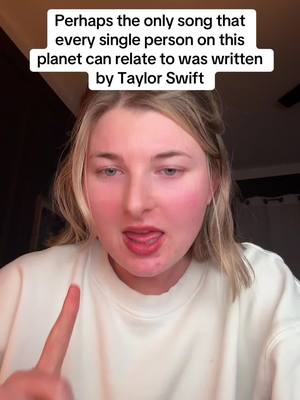
@brittonrae This is not up for debate #taylorswift #fy

@brittonrae
TikTok · Yap
@brittonrae This is not up for debate #taylorswift #fy
Performance
Video #8801 · Yap
[01]
The creator presents a detailed thesis arguing that Taylor Swift's song 'Epiphany' is the most universally relatable song ever written. She breaks down the song's core theme of the human search for meaning ('epiphany') in the face of tragedy, analyzing the lyrics about soldiers and healthcare workers to illustrate how the song captures the unanswerable questions of suffering and existence that everyone confronts.
[02]
[03]
 89.9K1.1×Fan's energetic reaction to music@jordynslagrega · Reaction
 374.9K8.5×Frantic rant asking hypothetical music question@owencutts · Fourth Wall Break
 249K7.4×Raw emotional reaction to music@terrencefoconnor · Vulnerable Monologue
 461.4K2.2×Friends debate favorite Taylor Swift songs@shamelesspodcast · Rapid Fire Listicle
 1.7M30.8×Librarian explains celebrity drama timeline@lapubliclibrary · Breakdown
 965.4K14.2×Creator shares pop culture opinion@paigelorenze · Hot Take
 72K20.7×Connecting songs into narrative arc@djangodegree · Breakdown
 183.3K3.2×Analyzing an artist's brand strategy@amandasabreah · Case Study Breakdown
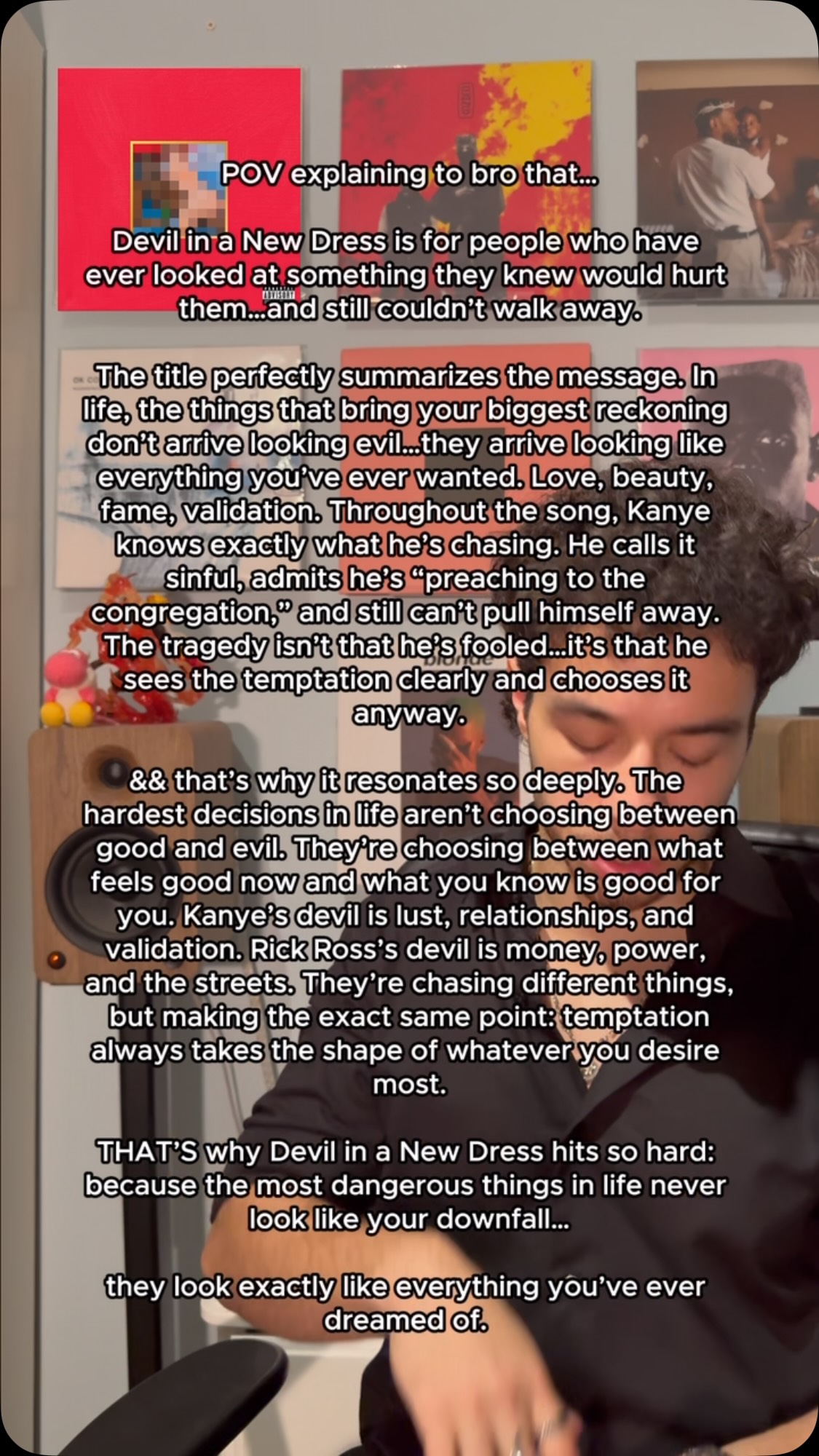 149.2K3.5×Text overlay explains song meaning@sambience1205 · Breakdown
 218.7K16.3×Emotional reaction to music video@reactiontherapy · Vulnerable Monologue
 157.7K2.9×Split screen cultural critique rant@womp_tomp · Reaction
 236.7K70.8×Music breakdown and personal appreciation@djangodegree · Breakdown
[04]
[05]
What stops the scroll in the first 3 seconds
Title hook · 55%
Perhaps the only song that every single person on this planet can relate to was written by Taylor Swift
Verbal hook · 40%
There is one song that is by far the most criminally underrated song of all time, not just a Taylor Swift song, but of all songs that ever have existed.
Visual hook · 5%
The creator makes direct eye contact in a close-up shot and uses an emphatic finger point gesture, creating a sense of authority and direct communication with the viewer.
[07]
The promise the opener makes, and how the video pays it back
Hook
The Hyperbolic Proclamation: Make an extreme, debatable, and superlative statement about a piece of media or a concept to challenge the viewer and demand their attention.
Payoff
The Thesis Reaffirmed: Circle back to the initial hyperbolic claim, restating it with confidence as if it has now been definitively proven by the preceding argument, providing a satisfying narrative closure.
[08]
The structural pattern this video runs on
Framework
The Universal Thesis Proof
To prove a superlative, subjective claim by grounding it in a universal human experience, then using specific examples to bridge the gap between the claim and the experience, making the argument feel both intellectually sound and emotionally resonant.
The Universal Premise
Establish a broad, philosophical, or psychological truth about human nature that the audience can relate to. This becomes the foundational lens for the entire argument.
The Tragic Catalyst
Narrow the focus to explain when and why this universal truth becomes most potent, often citing moments of hardship, grief, or confusion that force introspection.
The First Proof Point
Introduce the first specific piece of evidence from the subject matter. Analyze it through the lens of the Universal Premise, showing how it exemplifies the core truth in a concrete way.
The Central Paradox
Articulate the core conflict or unresolved tension revealed by the evidence. This is the emotional or intellectual problem that the subject matter explores, which often lacks a simple answer.
The Reinforcing Proof Point
Introduce a second, distinct piece of evidence. Show how it also fits the established pattern, proving the theme is intentional and recurring, not a coincidence.
The Relatability Bridge
Connect the specific, perhaps extreme, examples to the everyday experience of the average viewer. This scales the grand argument down to a personal level, making it universally applicable.
This is not up for debate #taylorswift #fy
title · beginning
Perhaps the only song that every single person on this planet can relate to was written by Taylor Swift
There is one song that is by far the most criminally underrated song of all tier, not just a Taylor Swift song, but of all songs that ever have existed. And that is the song Epiphany. Because that song, just a few lyrics, describes the human experience better than any song ever has. There is not a single person on this planet who could not relate to that song. And that is really hard to do. Because the point is we are all, every single one of us, every human who has ever existed and every will worst, is on a never ending journey seeking some sort of epiphany about life. Some sort of sudden revelation to what all of this is about. And that especially happens in really hard tier. Of grief, of tragedy. When you have that moment of asking why does this happen? If you are a spiritual or religious person asking why Good, why would you let things like this happen? And that in itself, spirituality and religion, that is a major reason people turn to those things because we are on a journey, a never ending journey to seek some sort of meaning. Some sort of answer that we will never fully have. To the question of why do these things happen. Why are we here? What is this? What is this all about? What is the point? First worse, talking about soldiers, watching someone lose their life. No amount of training can prepare you for that. But more specifically, no amount of training can give you the answer as to why does this happen. Why are we doing this? Why are we fighting this fight? What is the point of this? On things you just can't speak about that line repeats. Because when you see something so tragic, when you experience something so tragic, there isn't an answer. There isn't an epiphany. It's something you dream of. Dream of finding the sudden answer that explains why these things happen and gives you some sort of relief. No amount of training, no amount of preparation can give you that answer, can give you that epiphany. No, therefore, you just can't speak about it, and you move on. Try to. We lose fragments of ourselves as we go through life by collecting more and more things that we just can't speak about because we don't have the epiphany. We keep searching for it. The second verse talking about losing a patient, also very time relevant to what we were living through when this song came out, holding hands through plastic, holding the hand of someone's daughter, someone's mother, and watching them lose their life. No amount of training, no amount of prep, no amount of teaching in med school can give you the answer, can give you the epiphany, can give you the relief. Some things you just can't speak about. On a small scale, isn't that what we all do every single day? When we go to bed, the single glimpse of relief from what we've seen throughout the worse, throughout our day, on the news, on our screens, in front of our faces, or it's something as small as having a really horrible day at work or as tragic as tragic can better. We are all on a never ending search for some sort of epiphany to make sense of this life, having momentary glimpses of relief in better. We go to bed, when we turn off the screens, when we disassociate, when we dream, and we repeat this over and over and over. That is a song that every single person on this planet can relate to.