@wyndlyteam
TikTok · Speaker address

@wyndlyteam Signs you have hay fever! #fyp #allergies #medicine #doctor #healthcare

@wyndlyteam
TikTok · Speaker address
@wyndlyteam Signs you have hay fever! #fyp #allergies #medicine #doctor #healthcare
Performance
Video #12672 · Speaker address
[01]
A doctor defines hay fever (allergic rhinitis), uses an anatomical model to explain how allergens trigger a response, lists the common symptoms like runny nose and sinus pain, and concludes by stating that these symptoms are treatable by a physician.
[02]
[03]
 188.5K2.9×Doctor explains hives and treatments@wyndlyteam · Breakdown
 214.5K12.6×Doctor explains itchy throat causes@wyndlyteam · Explainer
 177.9K2.4×Doctor explains what pollen is@wyndlyteam · Breakdown
 198.7K1.9×Doctor explains post-nasal drip causes@wyndlyteam · Explainer
 358.2K3.9×Doctor explains two causes for scratchy throat@wyndlyteam · Breakdown
 237.5K7.7×Doctor explains lip allergy treatments@wyndlyteam · Breakdown
 233.9K5.1×Doctor explains watery eyes from allergies@wyndlyteam · Breakdown
 181.8K3.5×Doctor explains two throat causes@wyndlyteam · Breakdown
 346.8K59.1×Doctor explains causes for symptom@wyndlyteam · Breakdown
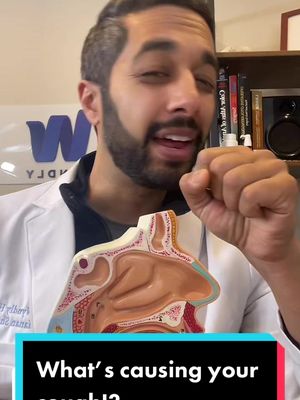 892.8K48.1×Doctor lists five causes for cough@wyndlyteam · Breakdown
 227.4K2.3×Doctor explains cat allergy treatment@wyndlyteam · Breakdown
 70.2K3.8×Doctor explains cat allergy treatment@wyndlyteam · Breakdown
[04]
[05]
What stops the scroll in the first 3 seconds
Title hook · 45%
Signs of Hay Fever!
Verbal hook · 40%
What are the signs of hay fever?
Visual hook · 15%
A doctor in a white lab coat holds a colorful anatomical model of the human nasal cavity, establishing expertise and creating visual interest.
[07]
The promise the opener makes, and how the video pays it back
Hook
A direct, relatable question that frames a common problem the audience might be experiencing, immediately promising valuable information.
Payoff
The viewer leaves feeling informed, validated in their experience, and empowered with a clear, hopeful path to a solution.
[08]
The structural pattern this video runs on
Framework
The Diagnostic Explainer
To rapidly educate a viewer on a common problem by framing it with a question, explaining its cause, listing its symptoms, and providing a clear, reassuring path to a solution.
The Expert Reframe
The presenter defines the common problem using more technical or official terminology to establish credibility and provide a new layer of understanding.
The Causal Mechanism
The presenter explains the root cause of the problem, often using a visual aid or simple analogy to make the concept easy to grasp, answering the viewer's implicit 'why' question.
The Symptom Roll Call
A rapid-fire list of the observable signs, effects, or consequences of the problem. This delivers the core value promised in the hook.
The Reassuring Resolution
The presenter concludes by offering a positive outlook and a clear, actionable next step, empowering the viewer with a path forward.
Signs you have hay fever! #fyp #allergies #medicine #doctor #healthcare
branding · throughout
wyndly.com
title · beginning
Signs of Hay Fever!
informational · beginning
Hay fever is known medically as allergic rhinitis, and it's most often caused by an
informational · middle
allergy trigger getting up into your nose, your mouth, or your eyes.
informational · middle
What it does, is it'll trigger an allergy response.
informational · middle
So you'll get a runny nose, you'll get a cough, you'll get postnasal drip,
informational · middle
you might get fatigue, you might get sinus pain.
informational · end
The good news is a lot of these symptoms can be treated by your physician.
What are the signs of hay fever? Hay fever is known medically as allergic rhinitis, and it's most often caused by an allergy trigger getting up into your nose, your mouth, or your eyes. What it does is it'll trigger an allergy response. So you'll get a runny nose, you'll get cough, you'll get post nasal drip, you might get fatigue, you might get sinus pain. The good news is a lot of these symptoms can be treated by your physician.