Post caption
Some of the best and brightest in Silicon Valley believe that AI will help cure cancer.
Demis Hassabis, founder of DeepMind, said on 60 Minutes that he believes AI will cure not just cancer, but all deadly diseases within 10 years.
This turned a lot of heads. Demis is not a hyper artist. He is a famed neuroscientist and Nobel Prize recipient for his work on AlphaFold, which solved protein folding.
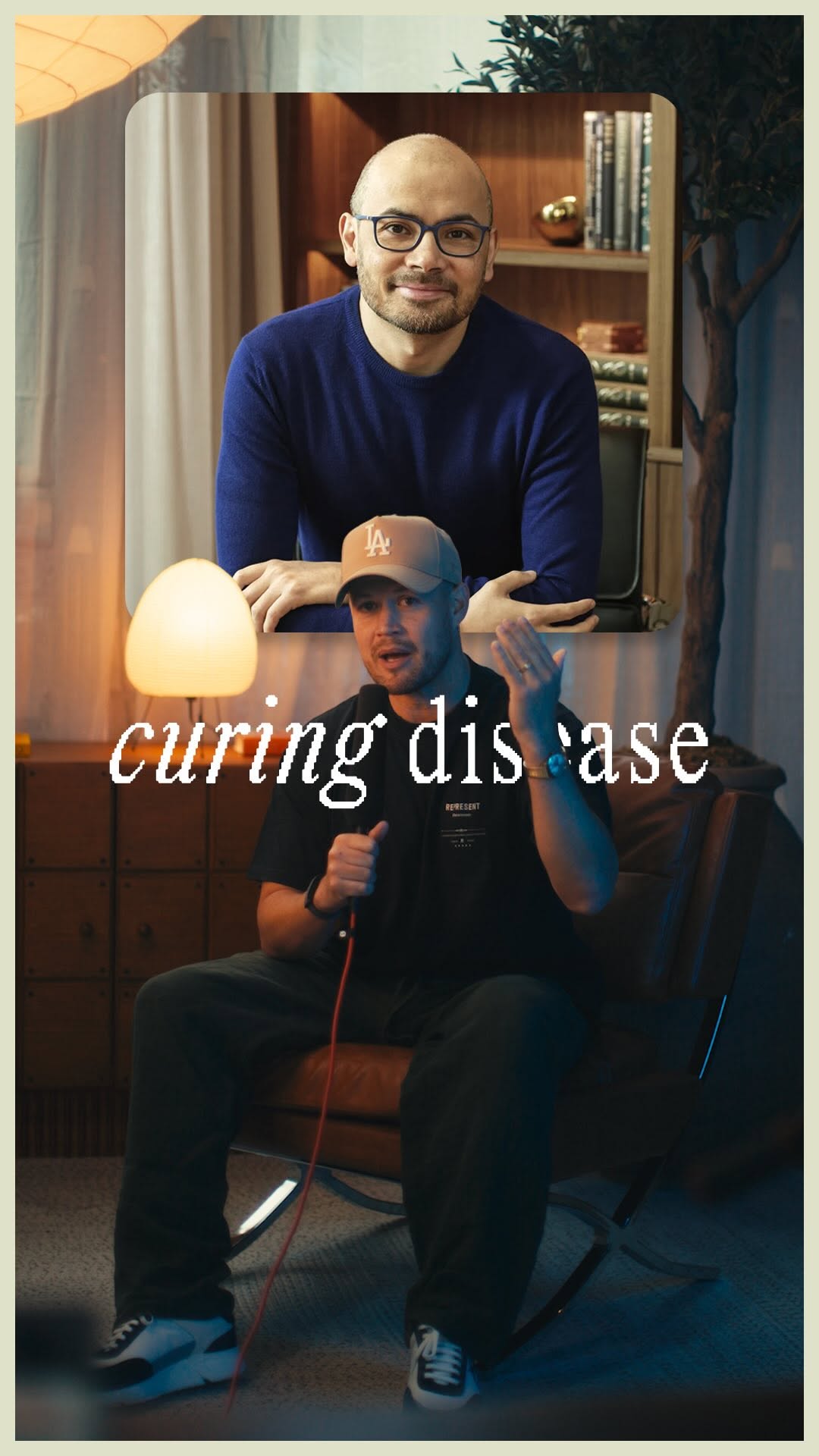
Last week, I got the chance to speak with @reidhoffman, and I asked him about that 10-year timeline.
Reid thinks it’s achievable.
Reid has been intimately involved in some of the world’s most impactful companies. He is the Founder of LinkedIn who more recently has written a book called “Super Agency” and co-founded a company called Manas AI to transform the treatment of rare disease.
So while there is debate on whether Demis’ claims are exaggerated or possible, there is little debate that AI will have an extraordinary impact on the treatment of rare disease.
That’s something to be exciting and hopeful about.
#ai #tech #cancer
Transcript
You know that cancer might be cured in the next ten years? Actually, according to the DeepMind CEO, all disease will be cured in the next decade, which to me sounded extremely unlikely. So I looked into him. I spoke last week with Silicon Valley legend Reid Hoffman, Hoffman, and I asked him about that ten year timeline. Oh, I I think it's achievable. Achievable? How? Well, biology is an information problem governed by code. AI can read, model, and rewrite that code at a scale and speed no human ever could. As an example, AlphaFold cracked a problem humans spent fifty years trying to figure out. Now Reid, who founded LinkedIn, wrote Super Agency, and more recently founded a company called Manus AI to transform the treatment of rare disease, explained this really well. Most people attract, like, what AI has done with a Go Yeah. Which is as there's more moves in Go than there are atoms in the worse, and yet it can figure out how to predict what to do. Biology is a similar problem. It's enormously complex. We actually have very basic and limited ideas about how all of the, you know, cells interact and interact and the complexity tier chemistry and electricity. And that's part of what makes cancer difficult. There isn't just one cancer. It's different kinds of cancer. Well, in that biological system, it's the same kind of how do you predict what's the thing that could actually prevent or limit or kill this cancer? AI is that kind of lens in through the very complex future to give you a small set of options best like when you're playing golf. So if cancer is a system glitch in the body, think of AI as the debugger, and for the first time we may just have the compute data and intelligence to solve it. So is curing all rare disease feasible in the next ten years? I don't know. I'm not smart enough, but a lot of really intelligent people seem to think so. But I applaud folks dedicating their lives to it. And as Reid says in his book, I think we should reframe the conversation around AI from what could go wrong to what could go right.