@shwinnabegobrand
Instagram · Greenscreen Talking Head
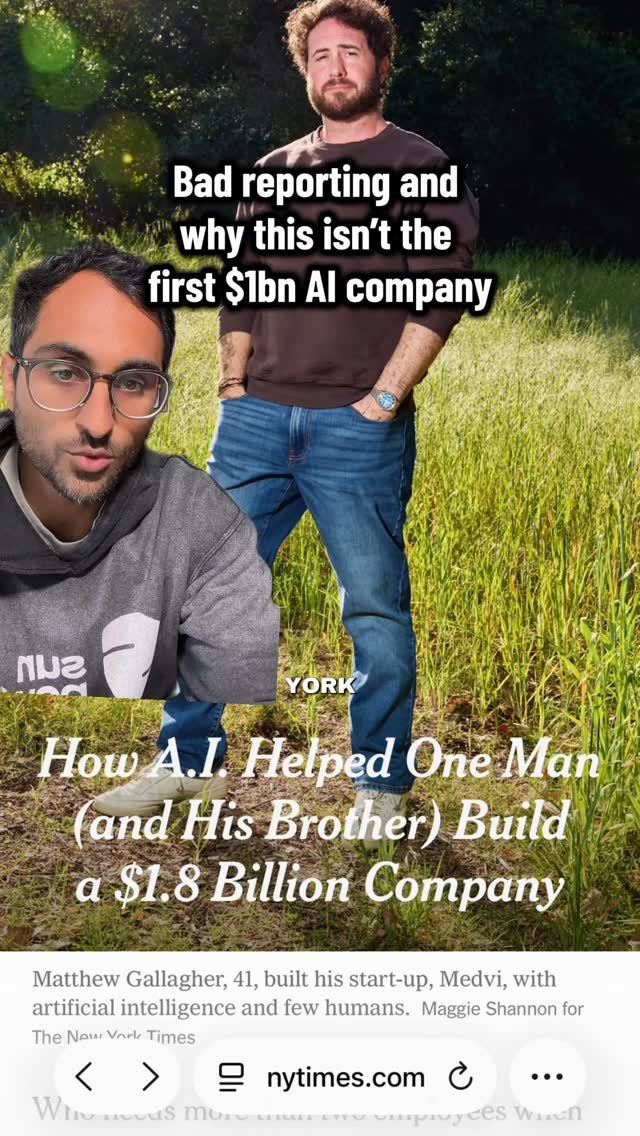
@shwinnabegobrand this is not the first billion dollar, sole employee company enabled by ai. In fact they would likely have been at the same outcome WITHOUT AI.

@shwinnabegobrand
Instagram · Greenscreen Talking Head
@shwinnabegobrand this is not the first billion dollar, sole employee company enabled by ai. In fact they would likely have been at the same outcome WITHOUT AI.
Performance
Video #23220 · Greenscreen Talking Head
[01]
The creator deconstructs a New York Times article claiming AI built a $1.8 billion company. He uses greenscreen visuals to show the company's website and explains that they are essentially dropshipping healthcare by using turnkey telehealth platforms to sell weight-loss drugs. He then reveals their aggressive customer acquisition strategy using fake doctor profiles on Facebook, arguing that AI is only used for generating fake ads and copy, not as the core business driver.
[02]
[03]
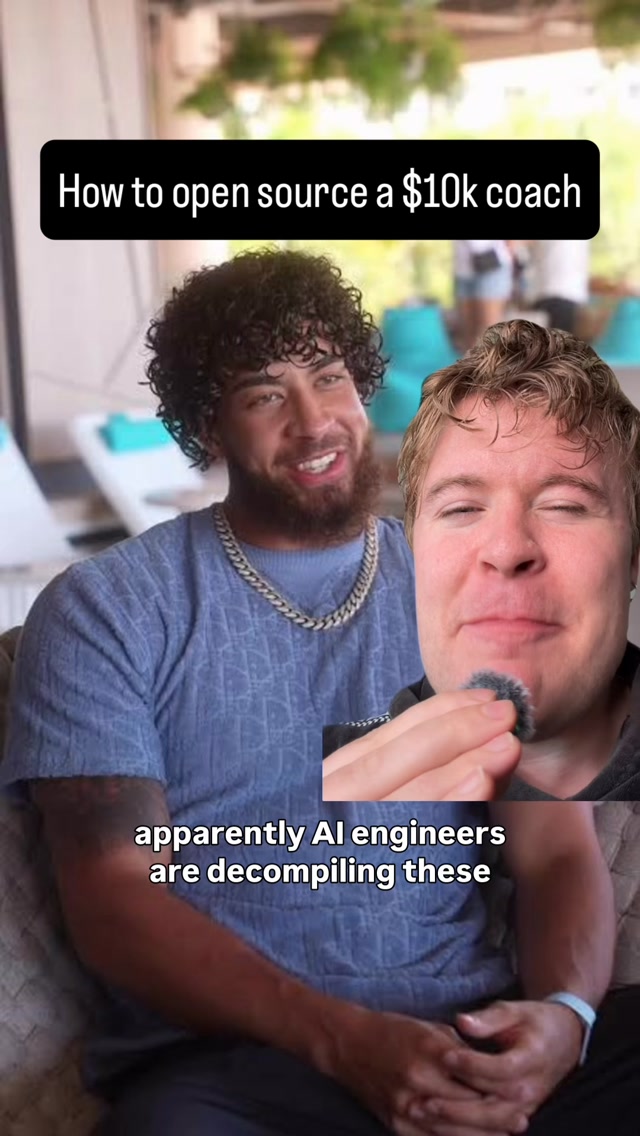 309.9K15.2×Reverse-engineer a coach's business model@angus.sewell · Tutorial / How To
 169.3K1.8×Explains automation tool to spam scammers@brodyautomates · Breakdown
 110.8K2.1×Comparing expensive AI tools to DIY@angus.sewell · Breakdown
 314KCreator critiques fake AI ads@robertmckeaveney · Hot Take
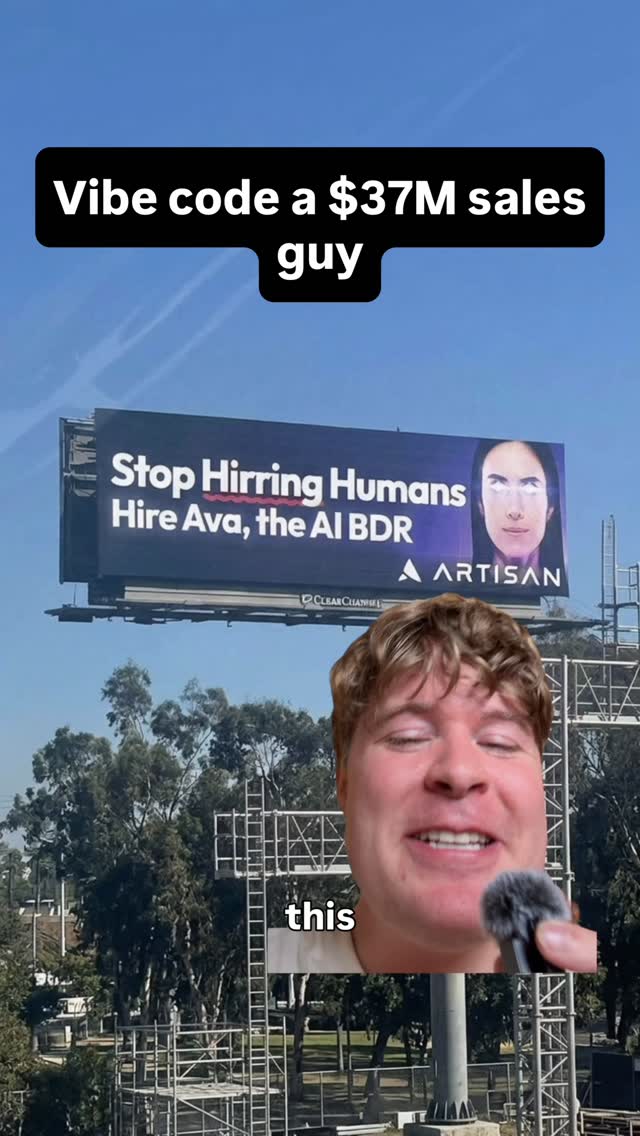 284K11.5×AI sales tool teardown tutorial@angus.sewell · Tutorial / How To
 68.2KExplaining my AI creation process@realrobertgutierrez · Origin Story
 57.7KAI advertising opportunity showcase@thejamescamp · Opportunity Explainer
 389K3.1×Split screen AI news breakdown@rony · Case Study Breakdown
 707KStorytelling is the only scarcity@rpn · Breakdown
 200.8K7.2×Marketing strategy using rival promotion@angus.sewell · Playbook
 472KCreator shows AI-built website@alexeubankbusiness · Performance Proof
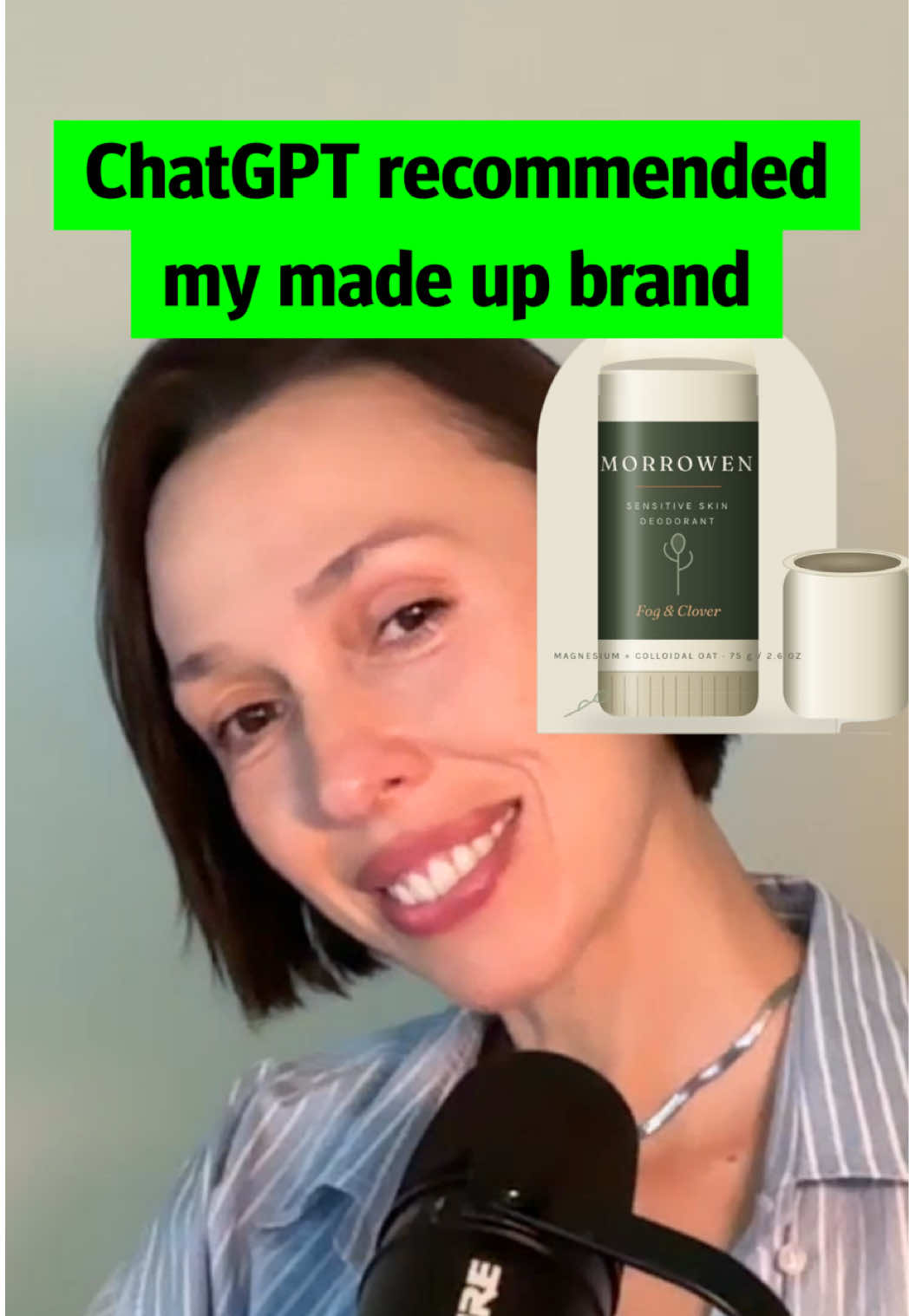 1M1.6×Explaining an AI manipulation experiment@wetclaude · Case Study Breakdown
[04]
[05]
What stops the scroll in the first 3 seconds
Title hook · 55%
Bad reporting and why this isn't the first $1bn AI company
Verbal hook · 35%
Unsurprisingly, poor reporting from the New York Times once again.
Visual hook · 10%
Speaker positioned in the foreground against a greenscreen background displaying a prominent New York Times article headline and photo of a man in a field.
[06]
Steal this for your own video
Once again, got the story completely wrong.
[07]
The promise the opener makes, and how the video pays it back
Hook
A bold, authoritative statement calling out a respected institution or popular narrative for being completely wrong.
Payoff
The Narrative Reframe - Delivering the actual takeaway or underlying societal trend that the original story missed entirely.
[08]
The structural pattern this video runs on
Framework
The Headline Deconstruction
Dismantling a sensationalized mainstream narrative by exposing the mundane, underlying mechanics of the subject.
The False Premise Setup
Presenting the specific claim or article being debunked so the audience knows the target.
The Surface Level Illusion
Explaining what the business appears to be doing to set up the contrast.
The Backend Reveal
Exposing the turnkey solutions or shortcuts that actually power the operation, removing the perceived complexity.
The True Mechanism
Defining the actual core competency of the business, which is usually just marketing or customer acquisition.
The Magic Demystified
Taking the hyped element and reducing it to its mundane, everyday application.
The Industry Normalization
Comparing the 'revolutionary' business to standard, unglamorous industry practices to further diminish the hype.
this is not the first billion dollar, sole employee company enabled by ai. In fact they would likely have been at the same outcome WITHOUT AI.
title · beginning
Bad reporting and why this isn't the first $1bn AI company
informational · middle
They made facebook accounts for 800+ fake doctors (I had Claude verify, none of them are actually doctors, especially "Dr. Tuckr Carlyzn MD") to advertise on Facebook. This is extremely illegal, just takes FTC to notice it and it'll be hard for them to advertise on FB
Unsurprisingly, poor reporting from the New York Times once again. Here is this piece that they wrote yesterday and what the actual story is. Yesterday they write How AI Helped One Man and His Brother Build a $1,800,000,000 Company. Both the headline and the content of the article make it seem like AI is the big savior here that enabled this outcome, when the reality is much more different. First, what is this company? The company is called Medvie, and to no one's surprise, they sell GLP ones. And you might think, Hey, I know companies like that, HIMSS, Roman. That is a serious build in business. You have to go hire doctors, pharmacists, get the right licensing credentialing. Well, yes, that used to be the case. You can actually just use turnkey platforms like OpenLoop and CareValidate, which offer all of this as a service. No what this means is that a telehealth platform like MedBee, they are a website that connects to these systems and they are in the business of just acquiring customers. And the way that they acquire customers is through a very aggressive gray hat paid acquisition strategy on Meta. They will create many tens or hundreds of pages of fake doctors, run some kind of crazy ads, and get people to go sign up for GLPs. So the stuff that he is using AI for is just like generating copy, generating fake ads, generating images on his website. At this exact moment, tier are like 500 ecom operators doing that exact thing for their brand. So the article says tier, like, okay, Sam Altman's OpenAI says tier gonna have super efficient companies, a one person business worth a billion dollars. Dollars kind of highlighting that this is that company. And it isn't really because there isn't that much to be done here. You need a website and you need to run ads and offer some like baseline level of customer support. You don't make the products, you don't ship the products, you don't have doctors, you don't have a pharmacist, you don't have all this back end complexity. Tier anyone who operates in the e worse space knows of people. I mean, this is basically like drop shipping, they're drop shipping healthcare. But there are many an e commerce brand that is doing hundreds of millions of dollars in revenue with one or two people, full time employees and a litany of contractors using AI in these ways, acquiring the same amount of customers. But the difference is those guys don't talk about it to tier New York Times, and they also sell a $50 product versus something that is $3,000 a year. The actual story here is why are we drop shipping health care and how insatiable is the demand for weight loss drugs?