@sakata.ken
Instagram · Talking Head Edit
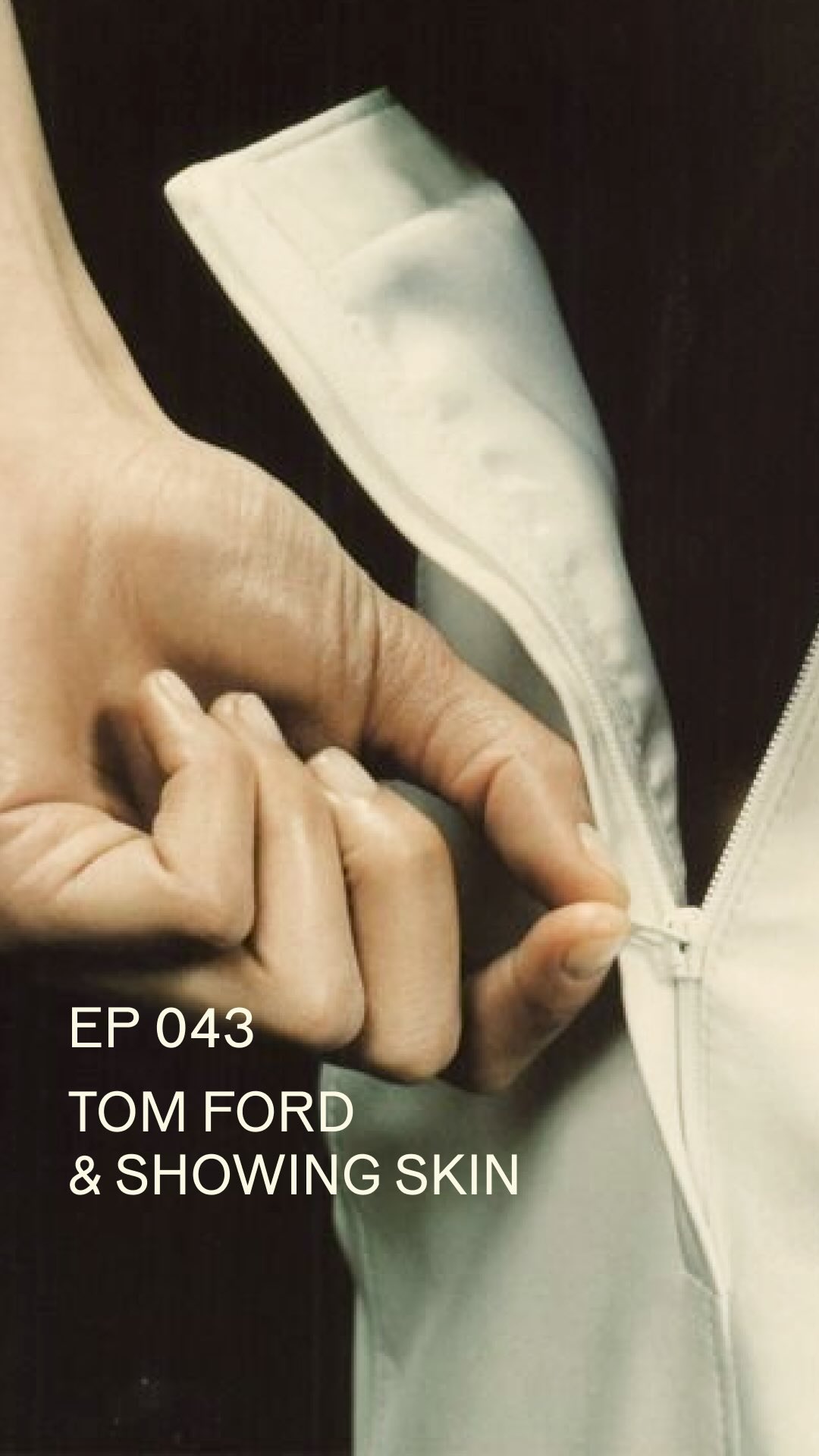
@sakata.ken Tom Ford and showing skin.

@sakata.ken
Instagram · Talking Head Edit
@sakata.ken Tom Ford and showing skin.
Performance
Video #15442 · Talking Head Edit
[01]
The creator analyzes Tom Ford's debut collection for Gucci in 1995, deconstructing the 70s-inspired styling, use of fabrics, and gender-swapped power dressing to explain how Ford redefined sexuality in fashion. He then shows how this concept was refined in 1996 and contrasts it with Versace's approach, ultimately arguing that Ford sold the emotion of power, not just clothes.
[02]
[03]
 205.7K6.7×Fashion expert analyzes menswear collection@johnmvilla2 · Breakdown
 94.5K1.9×Controversial designer comparison with examples@readytowearfiend · Hot Take
 349.8K14.2×Expert analysis of Zendaya's outfit@johnmvilla2 · Breakdown
 499.1K145.7×Historical breakdown of streetwear origins@henrythekid · Culture Profile
 324.6K3.9×Analyzing celebrity style with examples@clayton.chambrs · Breakdown
 272.1K8×Celebrity fashion art history breakdown@johnmvilla2 · Breakdown
 201.4K2.3×Analyzing a fashion trend with data@databutmakeitfashion · Breakdown
 114.2K15.7×Video essay critiquing fashion brand@sarahbellekim · Breakdown
 290.2K26.8×Commentator analyzes Indian menswear photoshoot@johnmvilla2 · Showcase
 191.6K10.4×Analyzing Zendaya's recent outfits@johnmvilla2 · Breakdown
 652.2K9.5×Creator critiques fashion show casting@nickycbell · Hot Take
 295.4K2.7×Rapid fire red carpet fashion review@nickycbell · Rapid Fire Listicle
[04]
[05]
What stops the scroll in the first 3 seconds
Title hook · 55%
so SEX and FASHION
Verbal hook · 40%
So sex in fashion has nothing to do with the body, believe it or no, or clothes.
Visual hook · 5%
A medium close-up of the speaker addressing the camera directly, followed by a quick cutaway to an iconic, high-contrast runway photo of Kate Moss.
[07]
The promise the opener makes, and how the video pays it back
Hook
A bold, counter-intuitive statement that challenges a widely held belief about the topic, creating immediate intellectual curiosity.
Payoff
Reveals a grand, universal truth that connects back to and resolves the initial contrarian hook, leaving the audience with a powerful new perspective on the entire topic.
[08]
The structural pattern this video runs on
Framework
The Case Study Deconstruction
To present a common subject, challenge a popular assumption about it with a contrarian hook, and then systematically deconstruct a specific historical example to prove a new, more profound universal principle.
The Underdog Setup
Introduces a key figure or moment from the past when they were unknown or the outcome was uncertain. This establishes the high-stakes context and creates a narrative starting point.
The Initial Evidence
Presents the subject's early work or initial actions as a confusing or mysterious puzzle for the audience to solve, inviting them to participate in the analysis.
The Pattern Reveal
Systematically connects the dots between disparate pieces of evidence, identifying recurring elements or patterns and guiding the audience toward a conclusion.
The Source Code Revelation
Unveils the hidden inspiration or underlying logic that explains the pattern, providing the first major 'aha' moment and a satisfying intellectual reward.
The Conceptual Leap
Elevates the analysis from 'what' was done to 'why' it was done, explaining the deeper strategy or philosophy behind the actions.
The Evolution Beat
Shows how the initial idea was refined and perfected over time, demonstrating mastery and development, which adds depth to the protagonist's journey.
The Technique Deconstruction
Isolates and analyzes the single most effective technique or mechanic at the heart of the subject's success, breaking down the 'how' for the audience.
The Impact Validation
Demonstrates how this innovation influenced the broader field or competitors, proving its significance and cementing the subject's importance.
Tom Ford and showing skin.
title · beginning
so SEX and FASHION
contextual · beginning
so it's 1995 Tom Ford
informational · middle
male codes of seduction
informational · middle
this flash of the forbidden
informational · end
people are paying money to be the physical of these emotions
informational · end
to be forces of nature
So sex in fashion has nothing to do with the body, believe it or no, or clothes. So it's 1995. Tom Ford is a relatively unknown 34 year old Texan fashion designer and he has just figured this out. He is debuting his first show as the creative director of Gucci, an Italian fashion house. And this is his first show. No one knows who Tom Ford is and there is no context to appreciate his work. The first look comes down the runway. It's supermodel Amber Valletta and she's wearing this tier that are not inspired outfit, a green coat, a satin shirt, and velvet low worst pants. So one by one, the models come down. So we see fabrics of like fur, velvet, satin, and then we start to piece things together. His models are dressed like people in the seventies, but specifically men in the seventies. The styling is very similar to Jagger, Travolta, shirts unbuttoned all the way down, like male sex symbols of the disco era. Ford also includes some male models wearing the same outfit and this helps illustrate the point that this is a playful gender swap take on power dressing. And this wasn't the usual formula of female sexuality tier fashion where we see cleavage, legs, exposure of skin. Here we have women adopting the male codes of seduction. It's his first show, there's a lot to absorb. Is Tom Ford about gender roles? Or maybe he's a bloke who really likes the seventies, but in the wider climate of whatever's going on in fashion right now, this is refreshing and different. What he's shown is enough, enough to announce that someone new has arrived. So one year later, 1996, he refines this approach. So the overt seventies textures start to recede and the execution becomes a little bit more specific. That plunging neckline is now in most of his looks, but this time it has a different frame. It's framed within polished tailoring. And we should talk about skin. It's worth mentioning what he's showing because it's not the amount of skin. Plenty of designers show more. It's the context of the skin. Okay. So we have this very powerful controlled environment. So we have the tropes of classic tailoring. But then we have this flash of the forbidden. It is forbidden to witness this sternum, this abdomen of someone. What is sexy is not the skin, but the complete and utter command of our attention. So as Tom Ford crystallizes this technique, the efforts of his first year echo around. So Gianni Versace adopts very similar designs. So, he incorporates a lot of plunging necklines. Some outfits look like they could come straight from a Tom Ford show. Better, Versace adopts this technique a little bit more liberally and without the right framing, without the right dynamic, the idea starts to lose focus. Because that distinction is important because Tom Ford's work is not about plunging necklines. The neckline was merely a tool. It's not the entire idea. And that is what Tom Ford has figured out. People aren't paying designers for clothes. People are paying money to be the physical embodiment of these emotions. Control, power. People are paying him, if only temporarily, to be forces of nature.