Post caption
Almost every piece of streetwear entered our wardrobe via the Rebel. From the mid century onwards, it was youth subcultures that brought garments from workwear, sportswear, above and below into the everyday rotation
Transcript
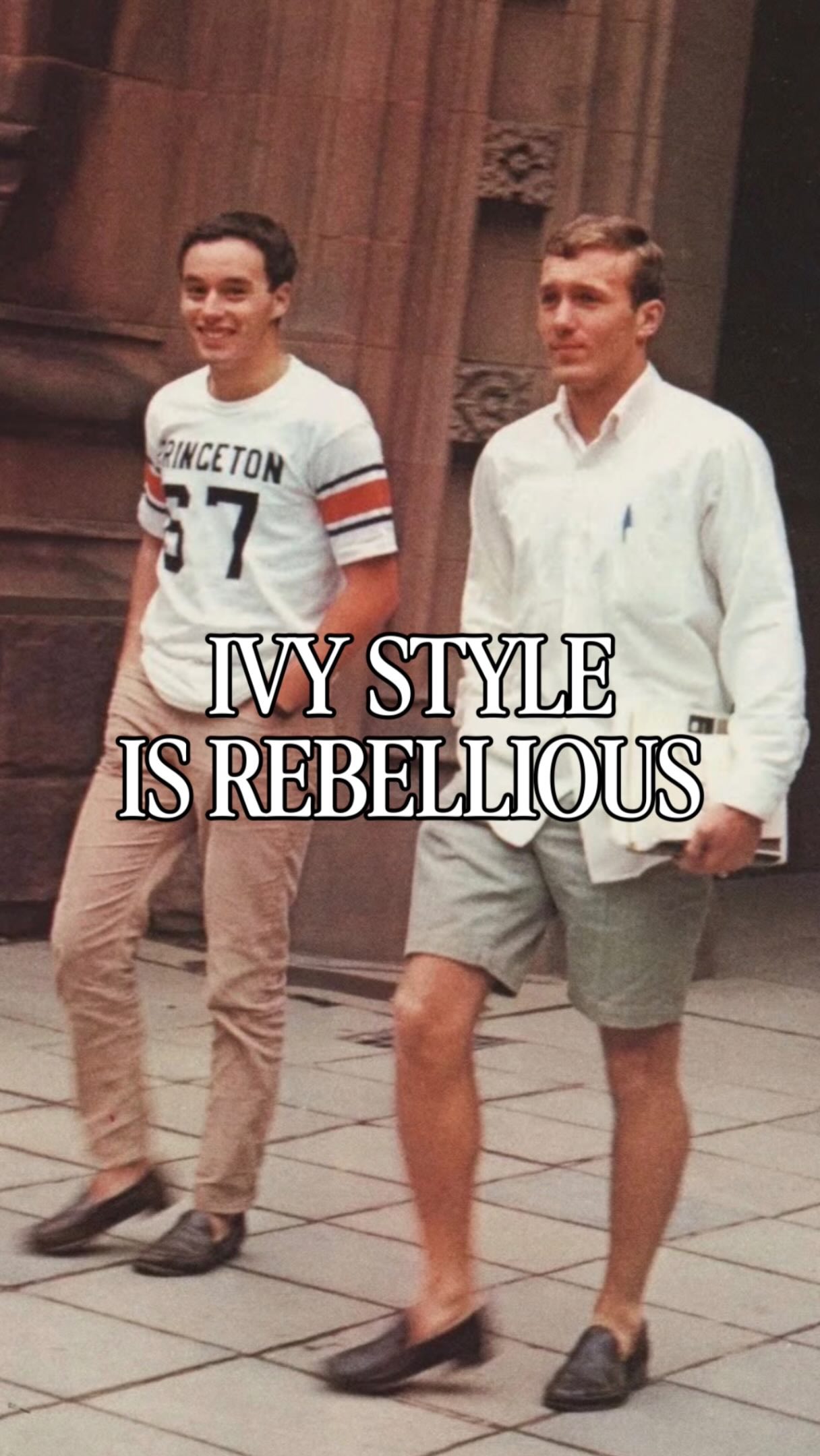
You saw a dude dressed like this, you'd probably think he's pretty well put together. Maybe a bit of a nepo baby better not exactly a threat. But in nineteen sixties Tokyo, this is how a rebel dressed which is weird because in The UK they looked more like this. And in America, they dressed like this. This is the fashion of the renegade and how it built our wardrobes. Now Now if we go back to the nineteen fifties, we find one of Hollywood's greatest inventions, the American bad boy. Marlon Brando, James Dean, Steve McQueen, and Elvis. In worst war America, it was the entertainment industry that decided what cool was. And the reason is pretty simple. If you're making a movie, you can't just tell us the guy's a bad. You have to show it. So Hollywood doesn't dress them in rank suits or slacks, but something less respectable. When Marlon Brando showed off his arms in A Streetcar Named Desire, the t shirt was just an undergarment. And when James Dean broke out the denim in Rebel Without a Cause, jeans were really considered workwear. And all of this points to the first route of rebellion, utility. Wearing clothes that suit the adventurous life you lead. But if we go across the Atlantic, The UK at the time had a very different looking rebel, the tier boy. See, after Worse War two, London tailors thought they could restart their business by marketing Edwardian and Victorian style suits to wealthy young men. They weren't into it. So Taylor's had to sell that excess stock dirt cheap and working class kids bought it up. Even though they could still be five weeks worst of wages, the excess and flamboyance of something that wasn't made for them made it worth it. It was a rebellion against austerity and inequality. Now don't get it worst. These guys kinda looked funny better they were little gangsters. Which I do think single handedly best Briton Zora back a few years. Give me all your trinkets, bruv. This is the second route of rebellion, subversion. Taking something that wasn't made for you and creating a new meaning. Now America's rebel would make its way to England. Mods and rockers both took fashion cues from The States. But the influence also made its way to Japan. Meet the Miyukizoku. In 1964, business owners rank Ginza's Miyuki Street in Tokyo started calling the police over groups of young delinquents loitering in the area. Men wearing chino pants, blazers, button down shirts and tier, versions of the American Ivy style. Now I've got a video coming on this soon best it's interesting to think that a style founded in American Ivy League colleges could be seen as so rebellious in Japan. And the reason was that for a young Japanese man, any sort of fashion sense was pretty out there. High school students were expected to wear their gakuran everywhere, a traditional stiff uniform, and just in general, being a man with any sort of swag was considered feminine. And so comes the third route of rebellion, peacocking. Dressing up to act out. Now there's obviously been heaps of other rebellious styles. We've got punk, punk rock, football hooligans, hip hop, list goes on. But almost all of them do the dirty work of introducing clothes to our street style. Jeans and tier shirts are normal everyday wear because of Marlon Brando and James Dean. Brands like Paula Ralph Lauren and J yes are as big as they are because of the popularization of the Ivy style. Football hooligans gave us blowcore. Hip hop gave us sport style. Such is the power of people who care to be a bit rebellious. I'm Henry. I'm trying to research the things that made the world cool. So if you got any leads then let me know in the comments.