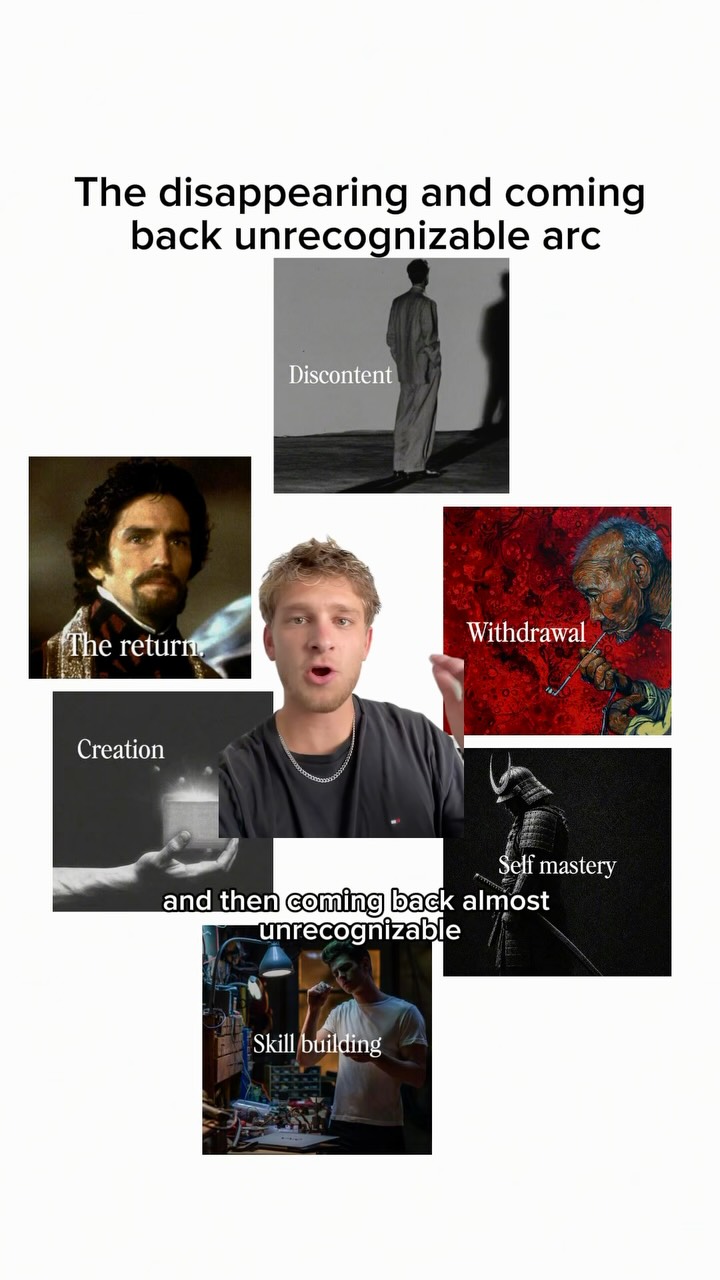
Post caption
going back home doesn’t mean you lost progress.
it means the environment pulled an old version of you back online.
places have memory. so do people.
same rooms, same roles, same expectations.
and when no one updates who you are, it’s easy to slip into who you were.
this is also why people who never leave often feel… fixed.
not incapable. just constrained by the same audience watching them play the same part.
growth isn’t just mindset.
it’s context.
change the environment and you change what’s possible.
Transcript
So I've noticed something super fascinating that happens when people leave home and they come back short term for, like, the holidays, even if they best a whole life somewhere else. What happens is tier revert. They revert back to old habits, old reactions, and old versions of themselves that they thought they outgrew. So your childhood home isn't just a place, it is a trigger for your identity. The environment is full of cues that activate who you were before. Things like family dynamics, old roles, and nervous system patterns. So the version of you that existed in that house comes back online automatically. Now here's where this kind of connects to something else that I've noticed. People who never leave their hometown often never get that interruption. They they grow up under the same eyes, the same expectations, and the same stories about who they are. Things like you're the funny one, or you're not that ambitious, or the worst one is that's just how you are. And over time, this stops becoming feedback and starts becoming a ceiling. So instead of asking who do I wanna become, they ask how do I stay consistent with how I'm seen? And this is essentially maintaining your identity. And when you leave, that loop breaks. No one knows who you're supposed to be. Right? So you can kind of test new traits without the social penalty. You can you can grow without being corrected back into your old role. So people who stay aren't lacking. They're just more constrained. Their identity is constantly being reinforced by the same audience, so any kind of deviation feels risky. And when someone does change too much, the the pressure shows up. The jokes, people being dismissive with, like, you've changed. Right? Which really just means that you are breaking the version of you we're comfortable with. So when you return home and feel like the older version of worse, and we look at friends who never left and feel how fixed they seem, you're seeing the same mechanism from two different angles. Your environment shapes identity, familiarity hardens it, and distance loosens it. Growth is not just internal, it is also contextual. And once you understand that, a lot of things stop feeling personal and start start feeling predictable.