@sensei.nick
Instagram · Yap
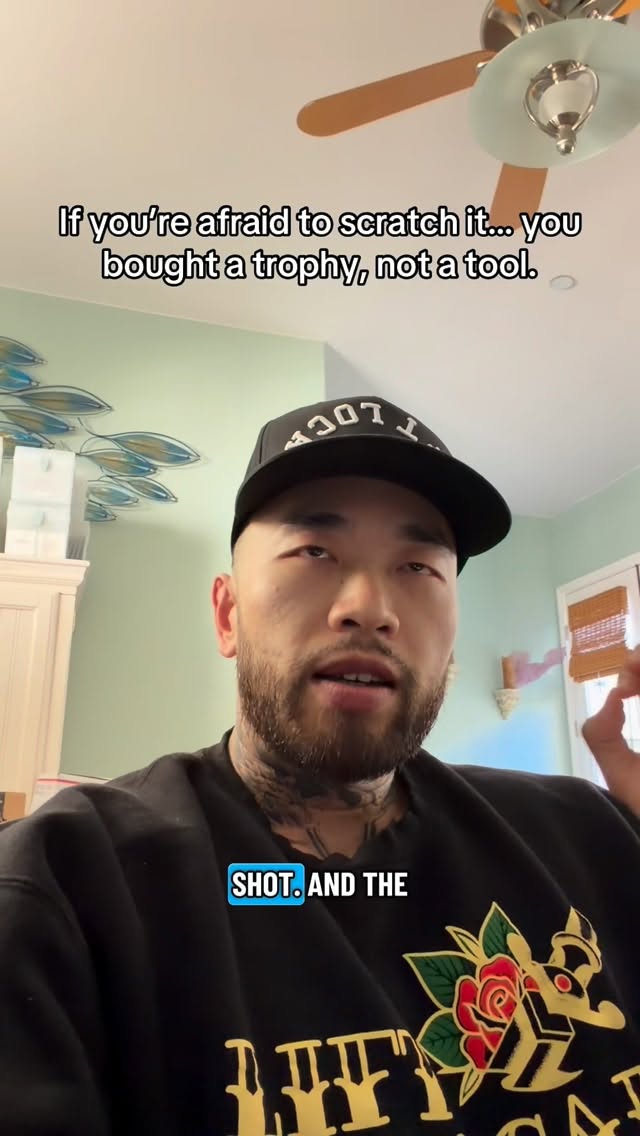
@sensei.nick Some people own things. Some people guard them. If the price tag stops you from using it, it’s not serving you. You’re serving it.

@sensei.nick
Instagram · Yap
@sensei.nick Some people own things. Some people guard them. If the price tag stops you from using it, it’s not serving you. You’re serving it.
Performance
Video #19752 · Yap
[01]
The creator delivers a direct-to-camera monologue challenging the audience's attachment to expensive items. He uses an anecdote about a YouTuber who damages his cameras to illustrate that items are meant to be used as tools, not guarded as trophies, ultimately arguing that overprotecting things means they own you.
[02]
[03]
 2M10.1×Aspirational montage arguing for using possessions@gstaadguy · Brand Manifesto
 6.8M426.1×Philosophical monologue over aesthetic B-roll@wearecalamity_ · Brand Manifesto
 103.9K13.1×Greenscreen rant against hustle culture@iamfieldnotes · Cultural Rant
 1M55.6×Monologue over B-roll montage@wearecalamity_ · Cultural Rant
 620.8K55.5×Raw talking head mindset advice@viralclubhouse_ · Motivational Mantra
 191.2KCreator gives motivational content advice@jadoncal · Motivational Mantra
 103.1KRant about financial mindset priorities@oikirkybruz · Cultural Rant
 1.5M22.4×Motivational speech with wooden spoon@massivemouse · Relatable One Shot
 356.7KMonologue advice on dream jobs@bradley.thor · Hot Take
 1.2M9.8×Monologue on overthinking's pitfalls@benhbader · Hot Take
 837.3K63.5×Voiceover story with B-roll clips@bensantos508 · Vulnerable Monologue
 760.3K5.4×Rant about fake internet gurus@rony · Cultural Rant
[04]
[05]
What stops the scroll in the first 3 seconds
Title hook · 55%
If you're afraid to scratch it... you bought a trophy, not a tool.
Verbal hook · 40%
If you're scared to use it, why did you buy it?
Visual hook · 5%
Close-up shot of a heavily tattooed creator making direct, intense eye contact in a casual home setting.
[07]
The promise the opener makes, and how the video pays it back
Hook
A direct, challenging question that highlights a logical flaw in a common human behavior to immediately create cognitive dissonance.
Payoff
A punchy, quotable aphorism that perfectly encapsulates the new mindset, providing a satisfying resolution and a highly shareable takeaway.
[08]
The structural pattern this video runs on
Framework
The Mindset Shift Manifesto
Challenging a widely accepted behavior by reframing it as a psychological trap, using a specific anecdote to introduce a new philosophical binary.
The Polarizing Anecdote
Shares a specific, real-world story of someone acting against the societal norm, highlighting the outrage it causes to build narrative tension.
The Perspective Flip
Reveals the counter-intuitive logic behind the controversial behavior, shifting the viewer's perspective from judgment to curiosity.
The Psychological Diagnosis
Explains the underlying human emotion or cognitive bias driving the flawed behavior, making the viewer feel seen and understood.
The Universal Application
Broadens the concept by applying it to a universally recognized high-status item, proving the theory works across different contexts.
The Binary Framework
Presents a clear, either/or mental model that forces the viewer to categorize their own behavior into a 'positive' or 'negative' camp.
The Consequence Escalation
Highlights the ultimate negative outcome of staying in the 'wrong' camp, raising the stakes from a simple mistake to a loss of personal agency.
Some people own things. Some people guard them. If the price tag stops you from using it, it’s not serving you. You’re serving it.
title · beginning
If you're afraid to scratch it... you bought a trophy, not a tool.
If you're scared to use it, why did you buy it? A few years back, I watched a creator on YouTube always beating up his cameras in his videos, tossing it in bags, scratching it, and generally just mistreating it. And people in the comments were always furious. Oh, that worst thousands of dollars. How could you do that? And his response was pretty simple. If I protect the camera too much, I best the shot, and the shot is the entire reason it exists in the first place. And that stuck with me because most people don't struggle with money, they struggle with attachment. So once something expensive becomes yours, it stops being an best, and it becomes identity. No it represents success, taste, status, and sacrifice. So you start protecting like it's fragile, even when it's built to be used. Look at supercars, for example. They're engineered to be driven hard. Well, most of them, but that's what they're for, literally. Right? And people tend to park them in garages forever, afraid of scratches, afraid of miles, and afraid of losing value. But the value was in the experience. So humans hate loss more than they enjoy gain. So scratch a cheap car, it's annoying. Scratch a 6 figure car, it feels personal. So people tend to overprotect. Now here's the real divide in this. Some people buy tools to use them, and some people buy symbols to preserve them. So if you buy something for utility, but feel like a museum piece, you've shifted from living to guarding. And once you're guarding it, it starts controlling your behavior. You hesitate, you avoid, and you baby it. Now at that point, you don't own it. It owns you. No, there's nothing wrong with taking care of your stuff, but if fear of damage stops you from actually using it, and didn't buy a tool, you bought a trophy. And trophies don't create tier, use does.