Viral Hooks
Trending short videosColorful petrified wood close-up shot
N

@nationalparkservice

Instagram · Carousel
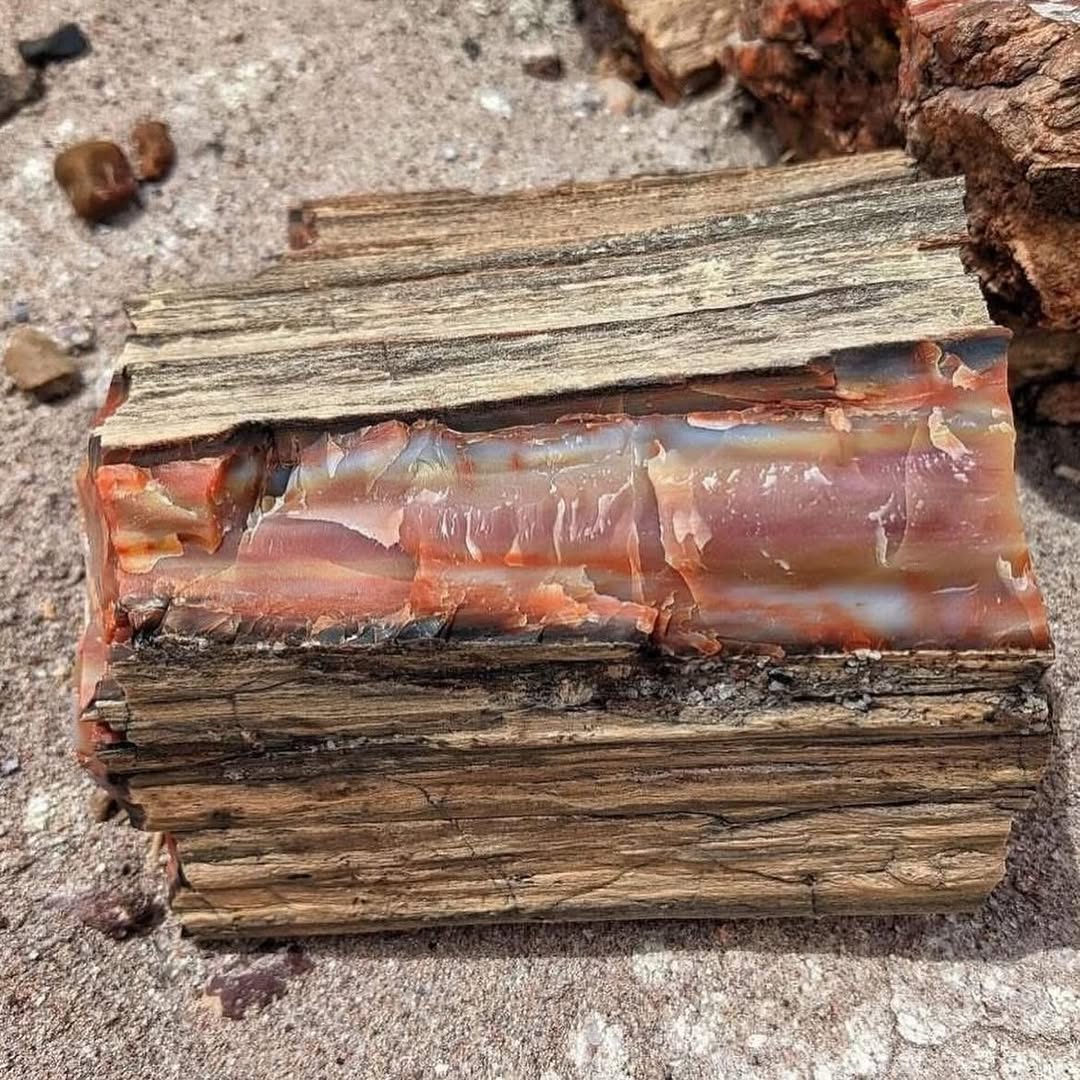
@nationalparkservice “At first I was a tree, now I’m petrified. Thinking all my wooden rings had turned to stone inside...⁣” Petrified Forest National Park, in northeastern Arizona, is known for, and named in honor of, its extensive deposits of petrified wood. In fact, the park contains one of the world’s largest and most colorful concentrations of petrified wood. So what is petrified wood, and why was it so frightened that it’s now unable to move? Most likely, millions of years ago, a dinosaur, uninvited, approached a gathering of trees. At first they were afraid. Then they were petrified. All their rings turned to stone inside. But they survived. Yes, they survived. We were told that’s not 100% accurate, so we will try take two. When the trees died, they washed into an ancient river system and formed log jams and buried sediment. Minerals, including silica dissolved from volcanic ash, absorbed into the porous wood over hundreds and thousands of years and crystallized within the cellular structure, replacing the organic material as it broke down over time. If there were larger spaces such as a hollow or crack in the logs, crystals of clear quartz, purple amethyst, yellow citrine, and smoky quartz formed. The brilliant colors in the petrified wood you see today come mainly from trace minerals. Pure quartz is white, manganese oxides form blue, purple, black, and brown, and iron oxides provide hues from yellow through red to brown and black. Images: Closeup of a specimen of petrified wood; group of petrified specimens in the “pumpkin patch); petrified log pieces in Crystal Forest; petrified wood piece. @petrifiedforestnps


View original on Instagram

Performance

Views
2.6M
Likes
171.9K
Comments
754
Engagement
6.7%
Outlier
14.6×

Video #22381 · Carousel

Colorful petrified wood close-up shotfrom @nationalparkservice

[01]

Overview

A detailed close-up photograph of a petrified wood specimen showcasing its vibrant internal mineral colors, paired with an educational and humorous caption explaining the fossilization process at Petrified Forest National Park.

[03]

Related videos

[04]

Classification

Format
Concepts
BreakdownShowcase
Elements
Macro Photography

[05]

Hook analysis

What stops the scroll in the first 3 seconds

Verbal hook · 35%

“At first I was a tree, now I’m petrified. Thinking all my wooden rings had turned to stone inside...⁣”

Visual hook · 65%

Dramatic visual contrast between the rough, dull, weathered exterior bark texture and the vibrant, glossy, multi-colored crystalline interior of the rock.

[06]

Hook template

Steal this for your own video

Open on an extreme close-up of a [rough, ordinary-looking exterior], then reveal its [vibrant, unexpected interior] in the next carousel slide.

  • — Open on an extreme close-up of a dull geode exterior, then reveal its sparkling purple crystal interior in the next carousel slide.
  • — Open on an extreme close-up of a weathered vintage suitcase, then reveal its neatly organized travel-journal interior in the next carousel slide.
  • — Open on an extreme close-up of a plain cake exterior, then reveal its rainbow-layered interior in the next carousel slide.

Themes

  • Natural History
  • Geological Processes
  • Earth Science

Techniques

  • Macro photography
  • Natural sunlight illumination
  • Texture highlighting

Trends

  • Edutainment
  • Humorous pop-culture hooks in educational content

Post caption

“At first I was a tree, now I’m petrified. Thinking all my wooden rings had turned to stone inside...⁣” Petrified Forest National Park, in northeastern Arizona, is known for, and named in honor of, its extensive deposits of petrified wood. In fact, the park contains one of the world’s largest and most colorful concentrations of petrified wood. So what is petrified wood, and why was it so frightened that it’s now unable to move? Most likely, millions of years ago, a dinosaur, uninvited, approached a gathering of trees. At first they were afraid. Then they were petrified. All their rings turned to stone inside. But they survived. Yes, they survived. We were told that’s not 100% accurate, so we will try take two. When the trees died, they washed into an ancient river system and formed log jams and buried sediment. Minerals, including silica dissolved from volcanic ash, absorbed into the porous wood over hundreds and thousands of years and crystallized within the cellular structure, replacing the organic material as it broke down over time. If there were larger spaces such as a hollow or crack in the logs, crystals of clear quartz, purple amethyst, yellow citrine, and smoky quartz formed. The brilliant colors in the petrified wood you see today come mainly from trace minerals. Pure quartz is white, manganese oxides form blue, purple, black, and brown, and iron oxides provide hues from yellow through red to brown and black. Images: Closeup of a specimen of petrified wood; group of petrified specimens in the “pumpkin patch); petrified log pieces in Crystal Forest; petrified wood piece. @petrifiedforestnps

Colorful petrified wood close-up shot | Viral Hooks