Viral Hooks
Trending short videosElephant in a concrete zoo pool
B

@bfmradio

Instagram · Carousel
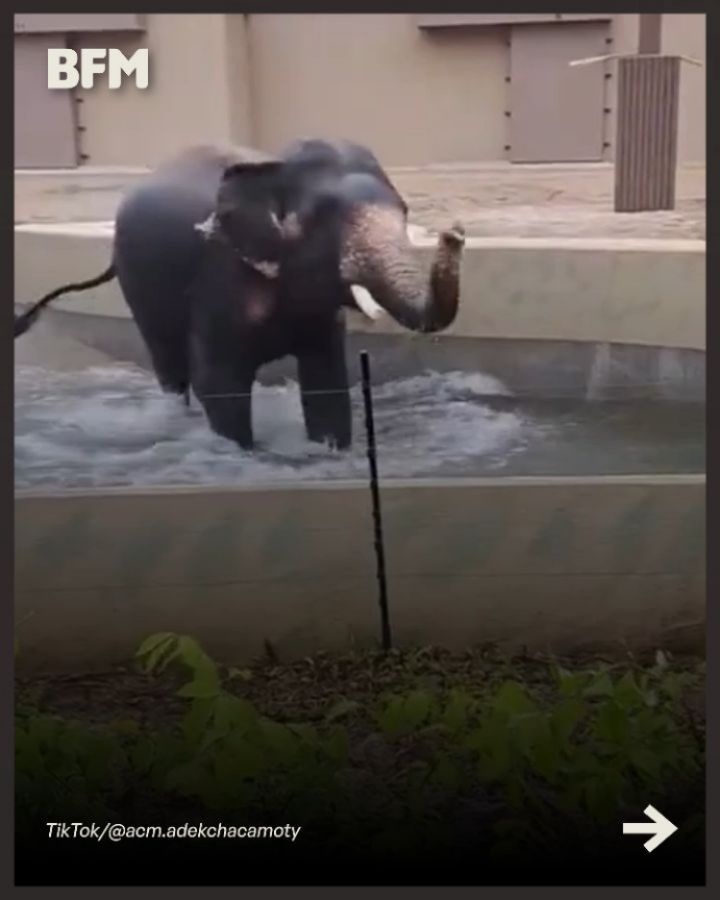
@bfmradio 📍🟡 “Most people don’t visit zoos or aquariums with the intention of funding animal abuse. But the zoo industry has deliberately misled the public by rebranding itself as necessary for ‘conservation’. They tell us their work protects animals who are endangered in the wild – but this couldn’t be further from the truth.” – Animal Aid 📌 "A legitimate sanctuary does not breed animals or use them for profit, and only takes animals that cannot be returned to the wild. They are either closed to the public or highly regulate access to their facility. It is based around the animals' needs, rather than attempting to balance the needs of the animals with those of human visitors." – Born Free 📌 “Animals have evolved over millennia to adapt to their natural habitat. Life in captivity differs substantially from life in the wild. Space, social interactions, diet, climate, human presence and many more aspects are completely different to what they would encounter in the wild. Rather than living safe and easy lives in captivity, animals may face challenges which evolution has not prepared them for. This can result in ‘zoochosis’." – Born Free 📌 The issue of zoo animal welfare recently drew widespread public attention following the transfer of three Malaysian elephants, Dara, Amoi and Kelat, from Zoo Taiping & Night Safari to Osaka's Tennoji Zoo in March. The move sparked public concern, protests, and calls for them to be brought home. 📌 Concerns also centred on Tennoji Zoo’s elephant care history, including the case of Hiroko, an Asian elephant that spent years in isolation before dying in 2018, likely due to an untreated chronic foot-related disease. 📌 Meanwhile, PETA Asia has urged officials to relocate Dara, Amoi and Kelat to a reputable sanctuary, rather than another zoo.
View original on Instagram

The edit1 shot · 2 text
Shots Text

Performance

Views
203.2K
Likes
13.5K
Comments
365
Engagement
6.9%
Outlier
5.5×

Video #26876 · Carousel

Elephant in a concrete zoo poolfrom @bfmradio

[01]

Overview

This is a photo of an elephant in a zoo enclosure, standing in a small concrete pool. The image is used to visually support a long-form caption that argues against zoos, discussing animal welfare issues and questioning their conservation claims. The 'BFM' logo suggests it's from a news or media source.

[02]

Simple outline

  1. 1Hook with evocative visual
  2. 2Unpack context in caption
  3. 3Build argument with evidence
  4. 4Conclude with a clear stance

[03]

Related videos

[04]

Classification

Format
Concepts
Public Service AnnouncementNews Carousel
Elements
Text OverlayGraphic Overlay

[05]

Hook analysis

What stops the scroll in the first 3 seconds

Verbal hook · 35%

“Most people don’t visit zoos or aquariums with the intention of funding animal abuse. But the zoo industry has deliberately misled the public by rebranding itself as necessary for ‘conservation’.

Visual hook · 65%

The immediate visual hook is the poignant image of a large, majestic elephant confined within a stark, concrete pool. This juxtaposition creates a sense of unease and curiosity, compelling the viewer to understand the context.

[06]

Hook template

Steal this for your own video

Open with a wide shot of a [majestic animal] confined in a visibly [stark enclosure feature], emphasizing the contrast between its natural scale and the space around it.

  • — Open with a wide shot of an orca confined in a visibly small concrete tank, emphasizing the contrast between its natural scale and the space around it.
  • — Open with a wide shot of a tiger confined behind a visibly bare chain-link barrier, emphasizing the contrast between its natural scale and the space around it.
  • — Open with a wide shot of a polar bear confined on a visibly cramped artificial ice platform, emphasizing the contrast between its natural scale and the space around it.

[07]

Hook and payoff

The promise the opener makes, and how the video pays it back

Hook

The carousel opens with a single, compelling image that is emotionally resonant but lacks explicit context. Its primary function is to create an information gap, sparking curiosity and prompting the viewer to read the caption for the full story.

Payoff

The payoff is delivered entirely within the caption, which functions as a micro-essay. It resolves the ambiguity of the image by providing context, escalating the argument with specific evidence and expert quotes, and concluding with a definitive call-to-action or concluding thought.

[08]

Narrative framework

The structural pattern this video runs on

Framework

The Visual Thesis Framework

This framework uses a single, emotionally charged visual as a hook to draw the audience into a detailed, multi-layered argument presented entirely within the caption. The image creates a question or emotional response, and the caption provides the comprehensive answer or thesis.

  1. 1

    The Narrative Anchor

    This single slide acts as the visual and emotional anchor for the entire argument. It is not part of a sequence but rather the sole visual prompt to which the entire text-based narrative in the caption is tethered.

Themes

  • Animal Welfare
  • Ethics of Captivity
  • Conservation
  • Anti-Zoo

Techniques

  • Documentary Photography
  • Candid Shot

Trends

  • Informational Carousel
  • Social Issue Awareness

Post caption

📍🟡 “Most people don’t visit zoos or aquariums with the intention of funding animal abuse. But the zoo industry has deliberately misled the public by rebranding itself as necessary for ‘conservation’. They tell us their work protects animals who are endangered in the wild – but this couldn’t be further from the truth.” – Animal Aid 📌 "A legitimate sanctuary does not breed animals or use them for profit, and only takes animals that cannot be returned to the wild. They are either closed to the public or highly regulate access to their facility. It is based around the animals' needs, rather than attempting to balance the needs of the animals with those of human visitors." – Born Free 📌 “Animals have evolved over millennia to adapt to their natural habitat. Life in captivity differs substantially from life in the wild. Space, social interactions, diet, climate, human presence and many more aspects are completely different to what they would encounter in the wild. Rather than living safe and easy lives in captivity, animals may face challenges which evolution has not prepared them for. This can result in ‘zoochosis’." – Born Free 📌 The issue of zoo animal welfare recently drew widespread public attention following the transfer of three Malaysian elephants, Dara, Amoi and Kelat, from Zoo Taiping & Night Safari to Osaka's Tennoji Zoo in March. The move sparked public concern, protests, and calls for them to be brought home. 📌 Concerns also centred on Tennoji Zoo’s elephant care history, including the case of Hiroko, an Asian elephant that spent years in isolation before dying in 2018, likely due to an untreated chronic foot-related disease. 📌 Meanwhile, PETA Asia has urged officials to relocate Dara, Amoi and Kelat to a reputable sanctuary, rather than another zoo.
Text overlays

  • branding · photo_0

    BFM

  • contextual · photo_0

    TikTok/@acm.adekchacamoty

Elephant in a concrete zoo pool | Viral Hooks