Viral Hooks
Trending short videosHow loneliness drives brand purchases
O

@orenmeetsworld

Instagram · Talking Head Edit

@orenmeetsworld Loneliness, facilitating friendship and the role brands play in our modern lives. The second in my series on how people being less social changes how we consume. This is by no means absolutes, just one reason they’re bought, and these are just examples, it is by no means limited to these categories.

View original on Instagram

The edit1 shot · 12 text
Shots Text1:52

Performance

Views
118.4K
Likes
9.4K
Comments
219
Engagement
8.1%
Length · 28 Apr 2026
1:52

Video #25241 · Talking Head Edit

How loneliness drives brand purchasesfrom @orenmeetsworld

[01]

Overview

The creator explains the concept of the 'loneliness economy' and the psychological principle of 'thwarted belongingness.' He argues that when people lack real-world social connection, they form parasocial relationships and purchase products (like sneakers for men or Stanley cups for women) as proxies to signal belonging to a desired social group. The creator uses brands like Stanley, Rhode, and Porsche as case studies to illustrate how companies, often accidentally, sell a sense of community and identity to lonely consumers.

[02]

Simple outline

  1. 1State provocative observation
  2. 2Introduce psychological framework
  3. 3Provide specific examples
  4. 4Reveal the true product
  5. 5Propose an authentic solution

[03]

Related videos

[04]

Classification

Concepts
BreakdownCase Study Breakdown
Elements
B-Roll CutawayImage OverlayJump CutTitle Text HookVoiceoverText Overlay

[05]

Hook analysis

What stops the scroll in the first 3 seconds

Title hook · 35%

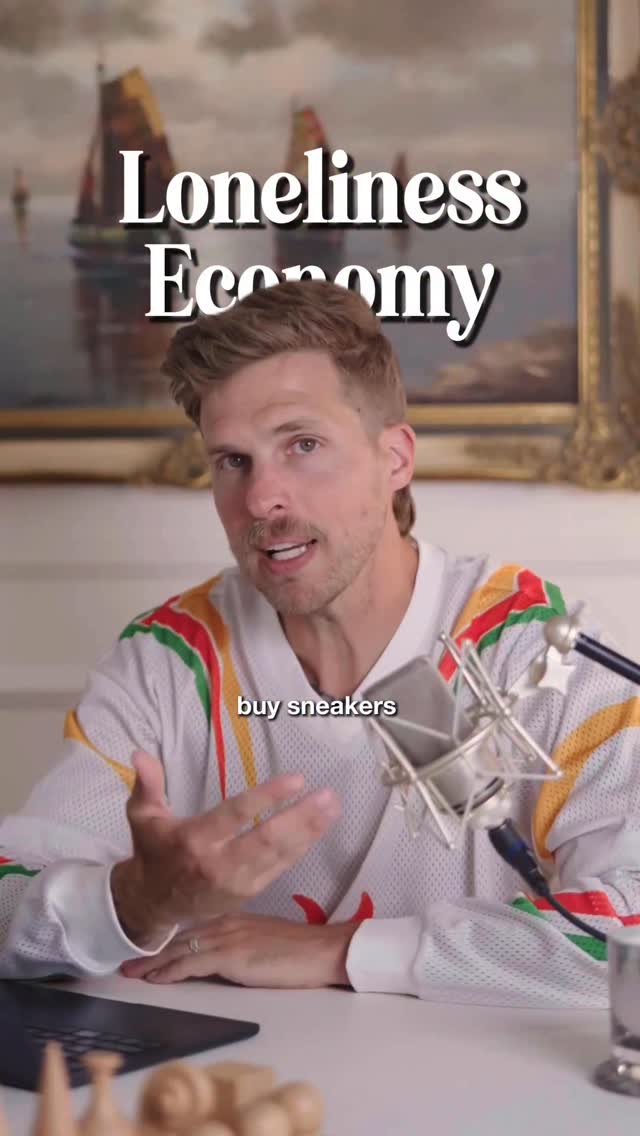
Loneliness Economy

Verbal hook · 60%

Lonely men buy sneakers, lonely women buy water bottles.

Visual hook · 5%

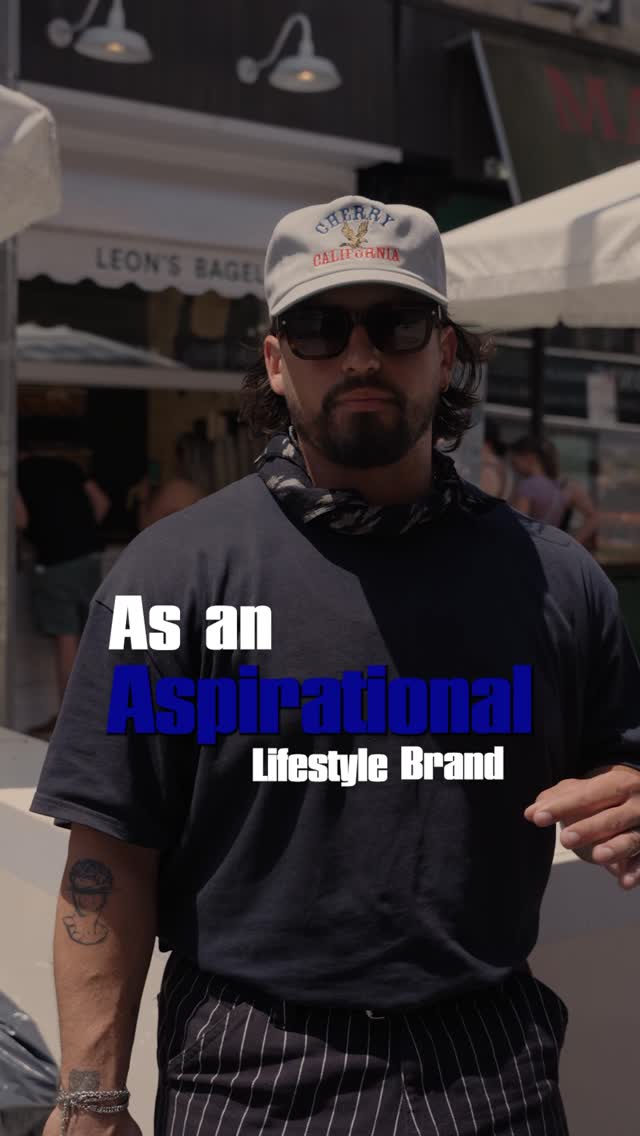
A medium shot of a speaker talking directly to the camera in a well-lit, professional setting with a painting in the background, establishing an authoritative tone.

[06]

Hook template

Steal this for your own video

Lonely [audience type] buy [belonging-signaling product], while lonely [contrasting audience type] buy [contrasting belonging-signaling product].

  • — Lonely runners buy carbon-plated shoes, while lonely cyclists buy premium jerseys.
  • — Lonely new parents buy smart baby monitors, while lonely pet owners buy designer dog carriers.
  • — Lonely gamers buy mechanical keyboards, while lonely book lovers buy special-edition novels.

[07]

Hook and payoff

The promise the opener makes, and how the video pays it back

Hook

A provocative, gendered dichotomy that simplifies a complex consumer trend into a memorable and slightly controversial statement, compelling the viewer to seek an explanation.

Payoff

Assigns an immense, almost priceless, value to the authentic fulfillment of the core human need, concluding that the 'real product' (e.g., ease of new relationships) is worth everything and leaving the viewer with a profound final insight.

[08]

Narrative framework

The structural pattern this video runs on

Framework

The Hidden Economy Framework

To reveal a hidden psychological force driving a common, observable consumer behavior, reframing popular products as proxies for a deeper, unmet human need like belonging or status.

  1. 1

    The Scientific Diagnosis

    Introduces a formal psychological or sociological term to give the initial observation academic weight and frame it as a recognized phenomenon, not just an opinion.

  2. 2

    The Core Mechanism Explained

    Details the step-by-step process of how the underlying emotional state (e.g., loneliness) leads to a behavioral compensation (e.g., forming parasocial relationships) which then drives a specific action (e.g., consumption).

  3. 3

    The Archetype Deconstruction

    Uses hyper-specific, culturally relevant product examples (sneakers, water bottles) to illustrate how different groups use consumption as a proxy to signal membership in a desired social group.

  4. 4

    The Accidental Beneficiaries

    Lists well-known brands that have unintentionally become massive by tapping into this dynamic, positioning them as case studies for the core thesis.

  5. 5

    The 'Real Product' Reveal

    Re-defines what the brands are actually selling. It argues the value is not in the physical product (hydration, transportation) but in the intangible social benefit it provides (a sense of belonging, proximity to a lifestyle).

  6. 6

    The Societal Shift Context

    Provides historical context, explaining why this consumer behavior is a modern phenomenon by contrasting it with how social capital was traditionally built, highlighting a 'shortcut' through brands.

  7. 7

    The Intentional Model

    Shifts from critique to solution by showcasing a positive example of a brand that consciously and authentically facilitates the very community its customers are seeking, moving from proxy to reality.

Themes

  • Consumerism
  • Social connection
  • Mental Health
  • Identity
  • Marketing

Techniques

  • Direct address
  • Case study analysis
  • Psychological framing

Trends

  • Loneliness epidemic
  • Parasocial relationships
  • Status signaling

Post caption

Loneliness, facilitating friendship and the role brands play in our modern lives. The second in my series on how people being less social changes how we consume. This is by no means absolutes, just one reason they’re bought, and these are just examples, it is by no means limited to these categories.

Text overlays

  • title · beginning

    Loneliness Economy

  • contextual · beginning

    lonely men

  • contextual · beginning

    lonely women

  • contextual · beginning

    buy water bottles

  • informational · beginning

    Thwarted Belongingness

  • branding · middle

    Stanley

  • branding · middle

    Owalla

  • branding · middle

    Frank Green

  • branding · middle

    Yeti

  • branding · middle

    Porsche

  • branding · middle

    Rhode

  • informational · end

    GEN Z MAY BE AFRAID OF RESTAURANTS DUE TO THEIR 'MENU ANXIETY'

Transcript

Lonely men buy sneakers, lonely women buy water bottles. It's a behavioral pattern. Researchers call it thwarted belongingness, the psychology state of wanting connection and not having it. When that need goes unmet, people consume. Specifically, they consume things to feel like a proxy for the social group they desire. The mechanism is pretty straightforward. Loneliness predicts parasocial relationships. If you don't have real friends you love near you, you get really invested in the people that feel like friends. Creators, podcasters, founders, we have more of them than ever. And then you buy no their products, but what they signal with. A product that's a proxy for having a group. Maybe if I have this shoe, they'll know I'm one of the guys. The fashion bro podcaster wore it. Subconsciously, maybe someone will compliment me or I'll get a 100 likes on the Fitbit. Stanley, Awala, Frank Green, Yes, they're not a cup. It's a social signal visible in the gym, the carpool line, post Pilates, the office. It says, I'm that kind of woman. You know someone isn't concerned about this if they have simple modern. What's wild is this dynamic has been building big brands essentially by accident. Stanley, Porsche, Rhode. None of these set out to be loneliness companies. But look at what they actually sell. You might think Stanley sells hydration, but they sell a table to sit at. They had to ban them for girls at elementary schools by me. Rhode sells Hailey Bieber's face. Yes. But more than that, it sells proximity. Buying the lip treatment is being adjacent to the life. The lip gloss packaging in the iPhone case matters way more than the look on the lip. Historically, you best social capital through actual participation in social life, but people have gotten really weird. They're afraid to put themselves out tier, and now they're finding a shortcut with brands. The sales guys Porsche with a $7.99 payment they should not have. The sneakers signals easy entry into a group that requires nothing but money and interest to enter. Travis Scott and Nike gas pedal the exploitation of this. Tier Ooyala puts people around you at ease. She knows. And this is why certain brands accumulate obsessive fan best make almost no sense from the outside. It's not that Stanley is that good. It's that owning the product feels like belonging to something. And belonging to something is, for a lot of people, rarer than it should be. Tier ones who figure this out on purpose is where it gets interesting. And as opportunity, can we facilitate this? The represent runs with the founders are friendship, motivation, and brand building in a way that's good for everyone. It feels real because it is. If you were to put a price on the ease of new relationships, it's kinda worth everything.

How loneliness drives brand purchases | Viral Hooks