@bradjcho
Instagram · Speaker address
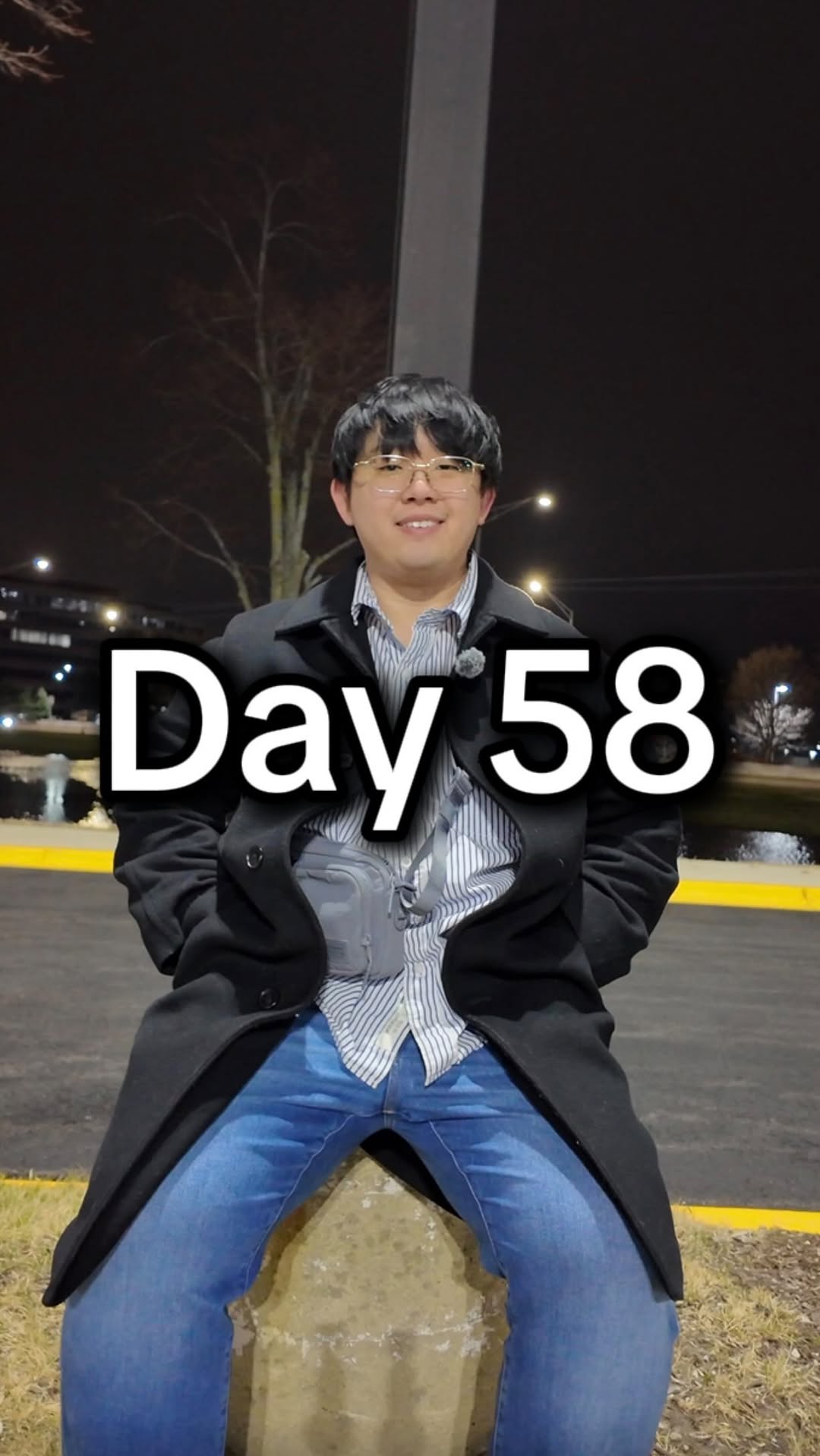
@bradjcho day 58 of doordashing until i can buy an engagement ring to propose to my girlfriend #doordashforadiamond #ilovejulia

@bradjcho
Instagram · Speaker address
@bradjcho day 58 of doordashing until i can buy an engagement ring to propose to my girlfriend #doordashforadiamond #ilovejulia
Performance
Video #33628 · Speaker address
[01]
The creator shares his personal story of being diagnosed with severe ADHD as an adult. He explains how the condition negatively impacted his relationship by causing forgetfulness and a lack of focus, and how the diagnosis helped him understand these behaviors. He emphasizes that the diagnosis is an explanation, not an excuse, and details the proactive steps he's now taking—like weekly check-ins and setting reminders—to be a more intentional partner, concluding by asking viewers to share their own experiences.
[02]
[03]
 2.2M55.4×Rapid fire list of ADHD insights@devin.the.one · Rapid Fire Listicle
 426.2KCreator proves point with screenshots@mindhackz · Hot Take
 351.8K2.9×Reaction video discusses mental health@denny_dure · Reaction
 126.7KMan in car gives hot take@higherupwellness · Hot Take
 330.6K37.3×Satirical take on ADHD at work@mimikarp · Relatable Skit
 158.5K2.4×Explaining ADHD rise with philosophy@glass__museum · Breakdown
 613.6K34.7×Honest ADHD job interview POV@mimikarp · Archetype Performance
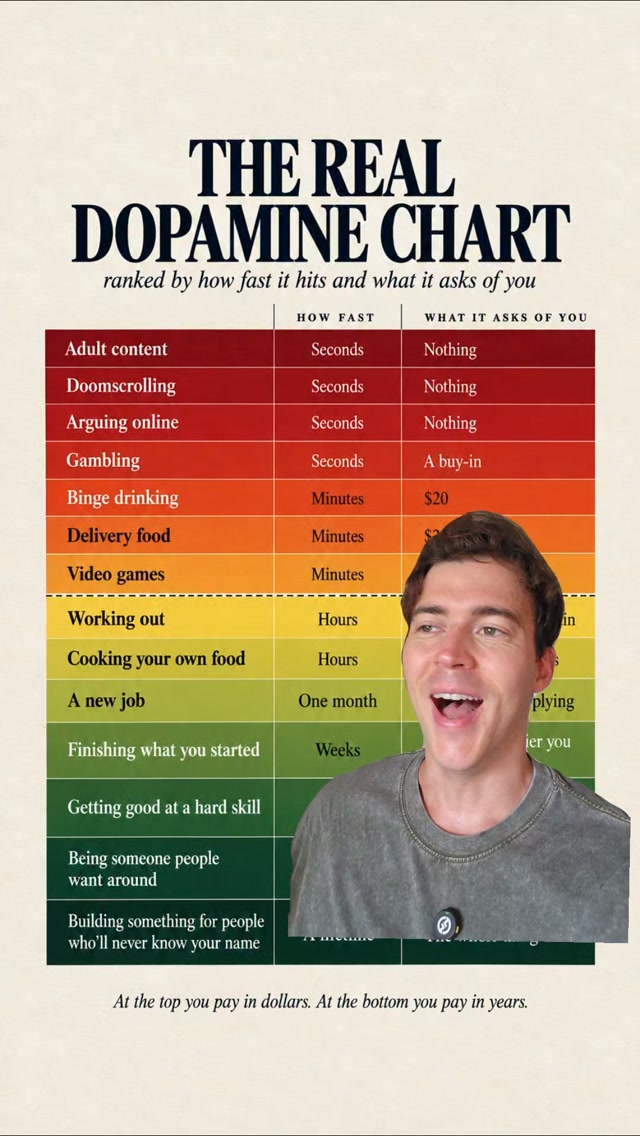 405.2KExplaining a dopamine infographic@matt.goes_ · Breakdown
 990.2K43.8×Numbered list of mindset realizations@devin.the.one · Vulnerable Monologue
 1.6M113.6×Rapid fire therapy lessons list@devin.the.one · Rapid Fire Listicle
 1.1M35.8×Car monologue on relationship accountability@higherupwellness · Cultural Rant
 116.7K1.6×Personal story over life montage@joshforeman2 · Vulnerable Monologue
[04]
[05]
What stops the scroll in the first 3 seconds
Title hook · 45%
my brain is ruining my relationship
Verbal hook · 50%
My brain is ruining my relationship and now I'm fighting back.
Visual hook · 5%
A medium shot of the creator sitting outside at night under a single light source, creating a serious and intimate mood with his direct gaze at the camera.
[07]
The promise the opener makes, and how the video pays it back
Hook
A bold, vulnerable statement that frames a personal flaw as a direct threat to something highly valuable, like a relationship, immediately establishing high stakes.
Payoff
An emotional declaration of commitment to the person or goal that was initially threatened, providing a satisfying emotional resolution and reinforcing the motivation for the struggle. This is often followed by a call for community engagement and a hook for future content.
[08]
The structural pattern this video runs on
Framework
The Accountability Arc
Transforming a personal limitation or diagnosis from an excuse into a catalyst for proactive change and accountability, framed within a relatable struggle.
The Pain Point Inventory
Details the specific, frustrating, and relatable symptoms of the core problem, using personal examples to build deep empathy and connection with the audience.
The Catalyst Revelation
Introduces a key piece of information (a diagnosis, a realization, a piece of advice) that fundamentally reframes the protagonist's understanding of their problem, acting as a major turning point.
The 'No Excuses' Pivot
Explicitly states that the new understanding is an explanation, not an excuse. This beat rejects victimhood and pivots the narrative from passive suffering to active, owned problem-solving.
The Actionable Toolkit
Showcases the concrete, replicable steps and systems being implemented to manage the problem. This provides tangible, practical value to the audience.
The Universal Principle
Distills the specific actions into a broader, more universal lesson or piece of wisdom, making the personal story applicable to a wider audience.
day 58 of doordashing until i can buy an engagement ring to propose to my girlfriend #doordashforadiamond #ilovejulia
title · beginning
my brain is ruining my relationship
title · beginning
I'm fighting back
contextual · middle
I was diagnosed with severe ADHD
contextual · end
a diagnosis explains problems but accountability changes them
contextual · end
I'll never stop working for her
informational · end
58 days in $3,091.60 / $6,500
call-to-action · end
follow to see
My brain is ruining my relationship and now I'm fighting back. For a long time, I've struggled with staying on task, prioritizing the right things, and just keeping track of all the things my girlfriend wants to do. My thoughts were pretty chaotic, and no matter how hard I tried, things always seemed to just slip through. She would tell me something important, and I would just forget. Not because I didn't care, but because my brain just wouldn't hold on to it. Last month, I was diagnosed with severe ADHD. I'd always done well in school, so this came as a shock. But things just started to make a little bit more sense. It explained things like why I struggle to focus, why I forget things she's told me, and why it felt like my mind was running a 101 different directions all at once. The thing is ADHD just explains the behavior, but it doesn't excuse it. And a diagnosis isn't just a free pass. She still deserves a partner who shows up, and now it's my job to figure out how. So I've worked on being more intentional with her. Every week, we've been checking in with each other and asking questions like, how did this week go? What should I focus on this week to improve? And how can I be a more present partner this week? And what I've been doing is writing different date ideas that she mentions and setting reminder alarms no I don't forget. I learned that you need to plan ahead instead of hoping that you'll remember. You see, a diagnosis explains problems, but accountability changes them. And even though my brain might be working against me, I'll never stop working for her. So let me know how you manage ADHD in your relationship. Tier eight days in, $3,091.60 out of 6,500. Follow to see how long it takes.