@glass__museum
TikTok · Speaker address
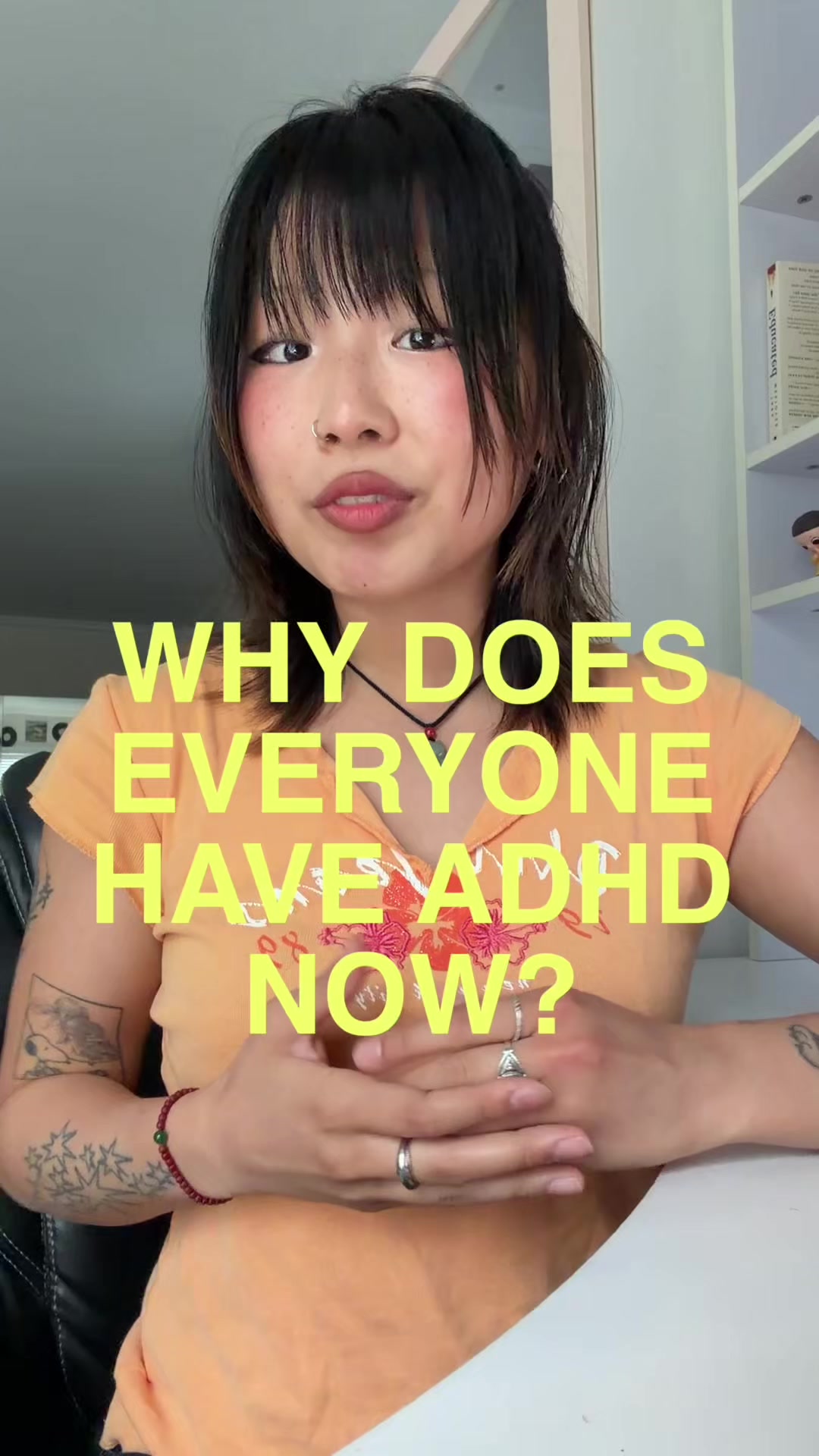
@glass__museum On the individualization and depoliticization of mental health #mentalhealth #politics #capitalism #therapy #adhd

@glass__museum
TikTok · Speaker address
@glass__museum On the individualization and depoliticization of mental health #mentalhealth #politics #capitalism #therapy #adhd
Performance
Video #35931 · Speaker address
[01]
The creator analyzes the question of why ADHD seems more prevalent, arguing it's a symptom of social conditions under neoliberal capitalism rather than just an individual pathology. She cites authors Mark Fisher and Byung-Chul Han to explain how the 'achievement society' and the 'depoliticization' of mental health create widespread psychological distress. The video critiques the individualization of suffering and connects modern attention difficulties to the design of the attention economy, concluding that society focuses on adapting individuals to sick systems instead of changing the systems themselves.
[02]
[03]
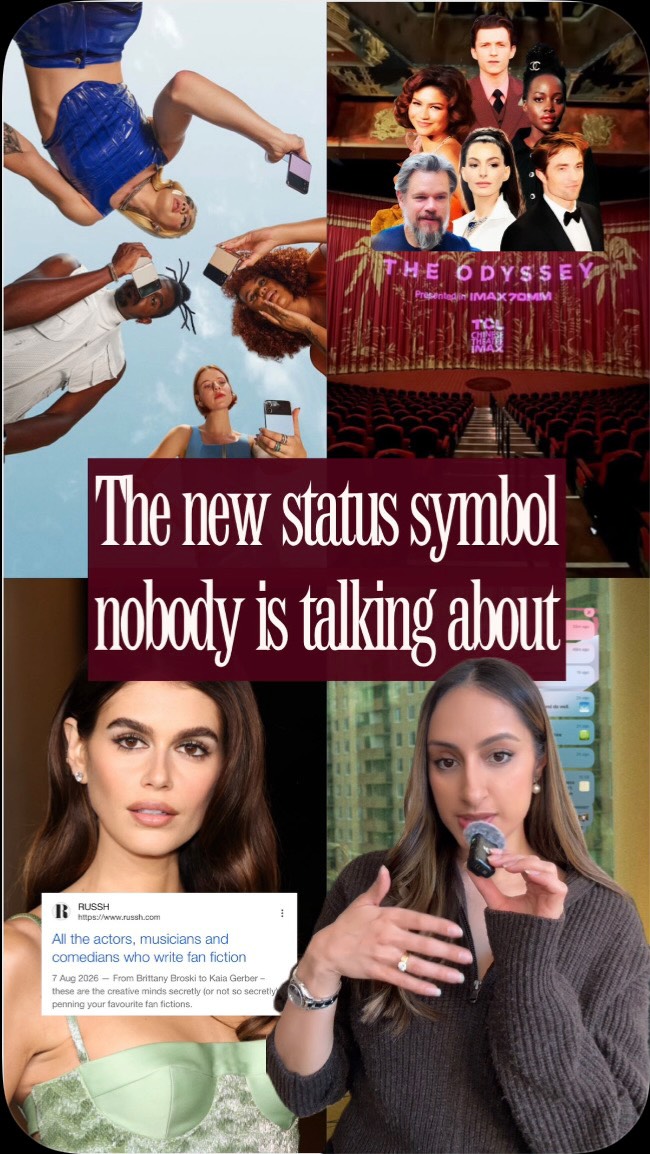 296.8K59.3×Explains attention as a class issue@ashi.branding · Breakdown
 351.8K2.9×Reaction video discusses mental health@denny_dure · Reaction
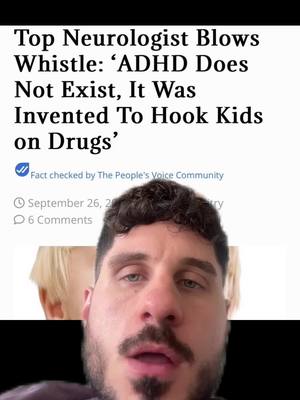 426.2KCreator proves point with screenshots@mindhackz · Hot Take
 2.2M55.4×Rapid fire list of ADHD insights@devin.the.one · Rapid Fire Listicle
 207.2KADHD's impact on his relationship@bradjcho · Vulnerable Monologue
 356.4K57.3×Historical analysis of hustle culture@glass__museum · Breakdown
 126.7KMan in car gives hot take@higherupwellness · Hot Take
 99.4KCultural critique of prediction markets@ghostinthesam · Breakdown
 330.6K37.3×Satirical take on ADHD at work@mimikarp · Relatable Skit
 301.4K12.8×Explaining the extremification of everything@fakeplasticbrands · Breakdown
 255.5K20.7×Explaining the business of loneliness@douggrindstaff · Breakdown
 862.9K198.9×Explaining the decline of spontaneity@ashi.branding
[04]
[05]
What stops the scroll in the first 3 seconds
Title hook · 55%
WHY DOES EVERYONE HAVE ADHD NOW?
Verbal hook · 40%
Why does it seem like everyone has ADHD now?
Visual hook · 5%
The video opens with the creator speaking directly to the camera, immediately followed by a rapid montage of other TikTok videos discussing ADHD, which visually establishes the social media context of the conversation.
[06]
Steal this for your own video
WHY DOES EVERYONE HAVE NOW?
[07]
The promise the opener makes, and how the video pays it back
Hook
Pose a highly debated, relatable, and timely question that is currently circulating in popular culture, promising a deeper answer than the one commonly discussed.
Payoff
Deliver a final, powerful thesis that reframes the entire problem, shifting responsibility from adapting the individual to transforming the system, leaving the viewer with a new, more profound understanding.
[08]
The structural pattern this video runs on
Framework
The Academic Takedown
Deconstructing a popular, individual-level problem by revealing its hidden systemic and political causes, using academic theory as evidence to build authority and deliver a paradigm-shifting conclusion.
The Systemic Reframe
Acknowledge the surface-level debate, then pivot by declaring that the real question isn't about the individual, but about the broader social, political, or economic conditions that produce the problem.
The Theoretical Foundation
Introduce a core academic theory or theorist (e.g., Mark Fisher) that provides the foundational lens for the analysis. This establishes intellectual authority and presents the video's main argument, often supported by a visual of the source material.
The Corroborating Evidence
Bolster the main argument by introducing a second or third piece of evidence, such as another theorist, a specific concept (e.g., Byung-Chul Han's 'Achievement Society'), or supporting data, to deepen the analysis and demonstrate a breadth of knowledge.
The Causal Mechanism
Explicitly explain *how* the theoretical system (e.g., neoliberal capitalism, the attention economy) directly creates the symptoms or conditions of the initial problem, connecting the abstract theory to the viewer's lived experience.
The Good-Faith Clarification
Pre-emptively address potential counterarguments or misinterpretations by adding a nuanced disclaimer (e.g., 'I'm not saying ADHD isn't real...'), thereby strengthening the argument's credibility and protecting it from bad-faith criticism.
The Resonant Analogy
Translate the complex academic argument into a simple, powerful, and emotionally resonant metaphor (e.g., the donut and the starving person) to ensure the core message is easily understood and remembered.
On the individualization and depoliticization of mental health #mentalhealth #politics #capitalism #therapy #adhd
title · beginning
WHY DOES EVERYONE HAVE ADHD NOW?
informational · middle
how has it become acceptable that so many people, and especially so many young people, are ill? The 'mental health plague' in capitalist societies would suggest that, instead of being the only social system that works, capitalism is inherently dysfunctional, and that the cost of it appearing to work is very high.
informational · middle
The current ruling ontology denies any possibility of a social causation of mental illness. The chemico-biologization of mental illness is of course strictly commensurate with its de-politicization.
informational · middle
(Han 44) Burnout, which often precedes depression, does not point to a sovereign individual who has come to lack the power to be the "master of himself." Rather, burnout represents the pathological consequence of voluntary self-exploitation.
informational · end
If you're not paying for the product, then you are the product.
informational · end
(The Social Dilemma, 2020) "They are competing for your attention, much like the algorithms designed to keep you engaged. So Facebook, Snapchat, Twitter, Instagram, YouTube—companies like this, their business model is to keep people engaged on the screen. Let's figure out how to get as much of this person's attention as we possibly can. How much time can we get you to spend? How much of your life can we get you to give to us?"
informational · end
The achievement-subject finds itself fighting with itself.
Does it seem like everyone has ADHD now? Social media is filled with videos both encouraging self recognition of psychiatric conditions as well as reactionary skepticism of self diagnosis. And good, I'm not here to tell you whether or not you have ADHD or depression or anxiety, but what I think is worth considering in this conversation is why so many people increasingly recognize themselves in the symptoms of these illnesses. The growing prevalence of psychological distress reflects not only individual pathology better also the social conditions produced by neoliberal capitalism. As author Rank Fisher argues in capitalist realism, the mental health plague in capitalist societies would suggest that instead of being the only system that works, capitalism is inherently dysfunctional. Drawing on Oliver Janes' The Selfish Capitalist, Fisher argues that the rising rates of mental illness correlate with the neoliberal forms of capitalism that have come to dominate countries in the Best. Contemporary discussions of mental health overwhelmingly frame suffering as an individual problem requiring individualized solutions. They also tend to mask the ways in which broader structural causes contribute to individual psychological distress. He writes that the current ruling ontology denies any possibility of a social causation of mental illness. The chemical biologization of mental illness is strictly commensurate with its depoliticization, and this depoliticization defines our mental health discourse. If distress is understood exclusively as individual pathologies, then systemic solutions never enter the conversation. And the burden shifts onto individuals who adapt to increasingly sick social conditions instead of questioning the conditions themselves. This sentiment is echoed by philosopher Kyung Chul Han in his book The Burnout Society. Han argues that the modern proliferation of neurological illnesses reflects a direct consequence of what he calls the achievement society. In this framework, exploitation no longer requires an external oppressor. Instead, individuals become both exploiter and exploited, as neoliberal capitalism exploits the individual's sense of freedom itself. As productivity becomes internalized as moral obligation, individuals willingly push themselves beyond healthy limits in ways that external coercion alone could never achieve. Burnout, which often precedes oppression, does not point to a sovereign individual who lacks the power to be the master of himself, but rather as the pathological consequence of voluntary self exploitation. The constant imperative towards self improvement and self optimization creates a psychological environment in which anxiety, depression, and burnout become increasingly the norm and not the exception. And when it comes to ADHD, we can see how modern environments have intensified many of the difficulties that characterize it. Tier attention economy is vying for your eyeballs all day every day. We can't even sit down to take a shit without taking our phones with us, so how can we expect to focus on a task for more than ten minutes at a time? I'm not trying to suggest that ADHD is in a very real condition and that those diagnosed with it are just bad at focusing, but rather that it makes sense given the broader context why the symptoms associated with it are becoming increasingly common. And no within the achievement society, individuals are simultaneously expected to be productivity machines working at max workflow output while also being immersed in environments literally designed to take your attention away from you. These conditions are perfect for manufacturing shame within a self flagellating subject as the achievement subject finds itself fighting with itself. It's like waving a donut in the face of someone who's been starved for days, and when they inevitably eat it, they have everyone telling them that they're undisciplined and rank self control. Now, I'm not a healthcare professional, but I do think that when it comes to these mental conditions that are systematically produced under capitalism, we become too comfortable adapting individuals to unhealthy systems rather than transforming the systems themselves.