Post caption
Zip ties, socket wrenches, and surprisingly vintage lighters all use ratchet mechanisms to enable motion in one direction only. We loved figuring out how this little part worked so we could bring it into our design. We hope you find it as satisfying as we do.
Let us know what Swingtop Lighter features you want to learn more about next.
Transcript
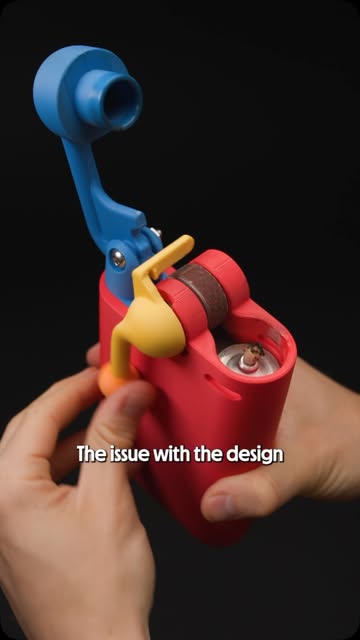
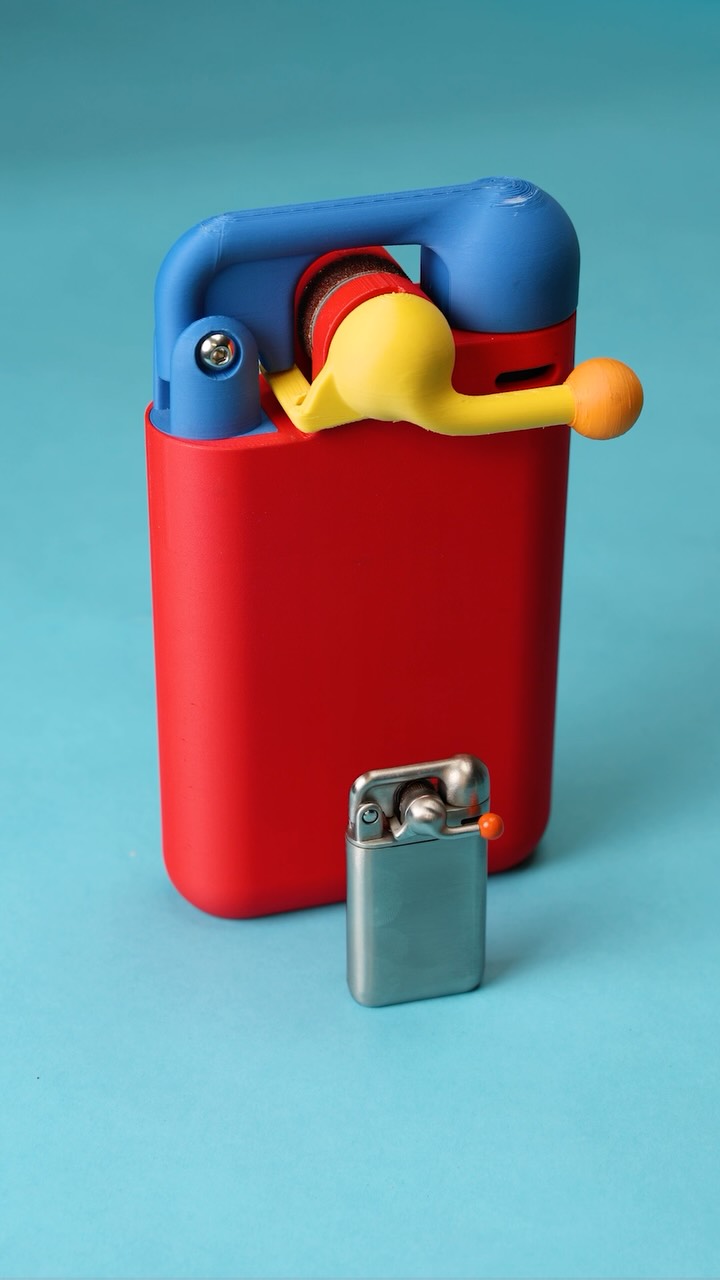
The issue with the design as demonstrated on this big lighter is that the lever and the striking wheel are rigidly connected, which is good because when you release it, it throws sparks forward. The problem with it is that as you're loading the lever arm, you're grinding your flint when you don't need to be, which is just a waste of flint and a waste of energy. When we load it, we don't want the striking wheel to move. But when we release it, we do. If we're able to reduce the amount the striking wheel turns by half, your lighter will last twice as long. The good news is there is a solution and we have it on our swing top lighter and you can also see it on lots of the vintage lighters that we took inspiration from. They all have a little ratchet mechanism. There's two stages to this solution. The first stage is that you separate the thing doing the load from the striking wheel itself. So if you look closely here, you can see that the striking wheel and the lever are now disconnected. The only thing holding it now is the flint beneath, which is spring loaded. So when I move the lever, nothing happens. That's good. Now tier not grinding our flint. That's bad. We're not grinding our flint at all. So for the second stage, we need a solution that reconnects the lever to the striking wheel only in the striking direction. And so if you look closely at the striking wheel, we've added these little teeth that go one direction. Those interact with this little piece of spring steel, which you can see has one edge lifted up. The lever arm is now rigidly connected to the metal disc, but is still not connected to the striking wheel. So as I move, the striking wheel does not move. The only thing that's moving is that metal disc. It is just riding up the sort of smooth edge of those tier. So none of the force of the disc is going into the teeth as long as the disc is spinning in one direction until you release the lever and then it digs into the flat edge of the tier, and that moves the striking wheel and throw a spark. Not only is that going to save you flint, but it has this added benefit of adding a really wonderful tactility to using the lighter. As you're clicking through those teeth, you can feel it building up tension, almost like a roller better until you throw your spark. And it's such a wonderful little moment no that every time you're interacting with the lighter, there's something tactile to enjoy. It is a big flame. Is it not, Stan?